Tsilhqotʼin Erotic
The Chilcotin Plateau and the Chilcotin, Chilko and Taseko river drainages of west-central British Columbia, Canada
Tsilhqotʼin, also called Chilcotin (Northern Athabaskan, Na-Dene)
Roman Catholic since the Oblate missions of the 1860s, alongside continuing Tsilhqotʼin practice and law
Northern Athabaskan (Dene); six communities: Xeni Gwetʼin, Tlʼetinqox, Yunesitʼin, Tsi Deldel, Tlʼesqox and ʔEsdilagh
About Tsilhqotʼin People
The Tsilhqotʼin are a Dene people who live a Plateau life. Their language sits in the Northern Athabaskan family, which ties them to the Dakelh immediately north of them and, at a much greater distance, to the Navajo and Apache. Their country, though, is the dry open plateau between the Fraser River and the Coast Mountains of west-central British Columbia: lodgepole pine, bunchgrass, and the hard blue water coming out of Chilko Lake. Winter pit houses, a salmon economy built on the sockeye runs, grease trails over the passes to the coast: those they share with Salish-speaking neighbors who cannot understand a word they say. Tsilhqotʼin is a difficult language even by Athabaskan standards, with a set of flattened consonants that reshape the vowels near them. A few hundred fluent speakers remain, most of them older, and the six communities teach it in their schools.
Two events fix the nation in Canadian public memory, and they are exactly 150 years apart. In 1864, two years after smallpox tore through the plateau, Tsilhqotʼin men under Lhatsʼasʔin killed fourteen workers on a crew cutting a road from Bute Inlet toward the goldfields. Six chiefs were called to talks, arrested there, and hanged, five that fall and one the following year. British Columbia exonerated them in 2014, and Canada did the same in the House of Commons in 2018. In that same 2014, the Supreme Court of Canada decided Tsilhqotʼin Nation v. British Columbia and issued the first declaration of Aboriginal title in the country's history, over roughly 1,700 square kilometers of Xeni Gwetʼin territory. The ruling followed decades of the nation acting as though the answer were already settled: the 1989 Nemiah Declaration closed Xeni Gwetʼin land to commercial logging and mining by their own authority, and two federal reviews of a proposed copper and gold mine at Teẑtan Biny ended in rejection.
Catholic missions arrived in the 1860s and most Tsilhqotʼin families are at least nominally Catholic, a relationship complicated by St. Joseph's Mission near Williams Lake, the residential school many Tsilhqotʼin children were sent to, and by the searches of its grounds since 2021. Horses complicate the picture in a happier way. The people took to them early and never let go: free-roaming herds still work the Brittany Triangle west of the Chilko River, and a rider in a cowboy hat checking cattle on title land is the most ordinary sight in that country.
Related ethnic groups
Groups that share Tsilhqotʼin's homeland, region, language, or religious tradition. These are likely candidates for comparative phenotype reference.
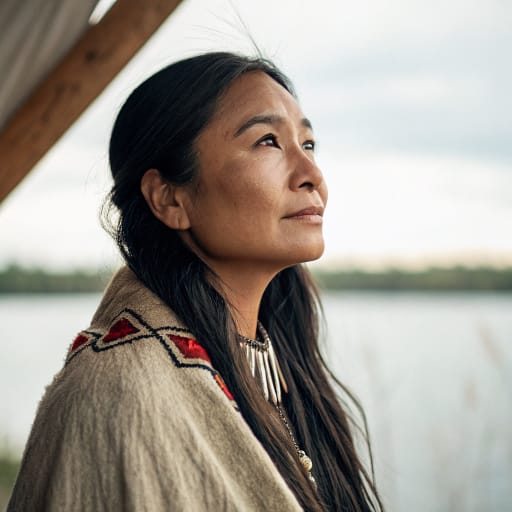
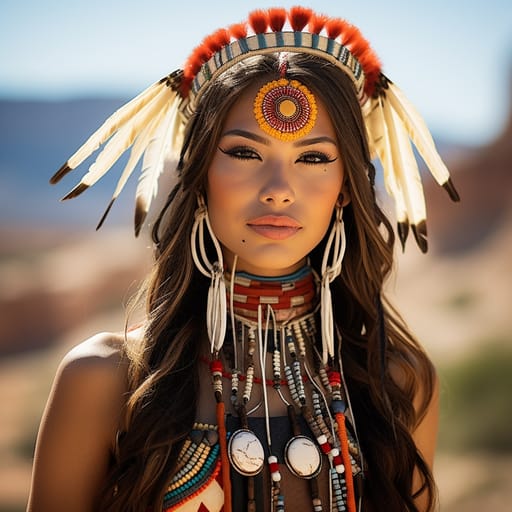
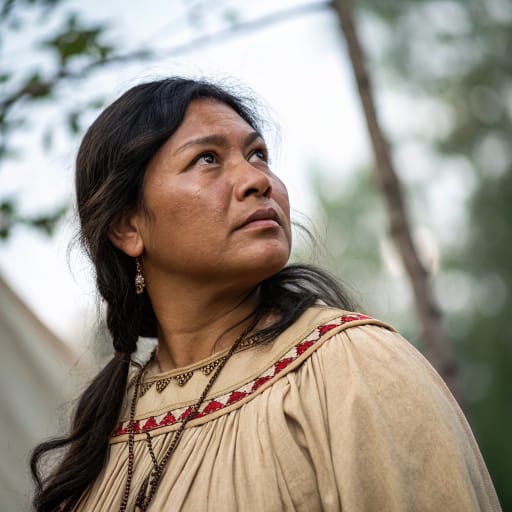
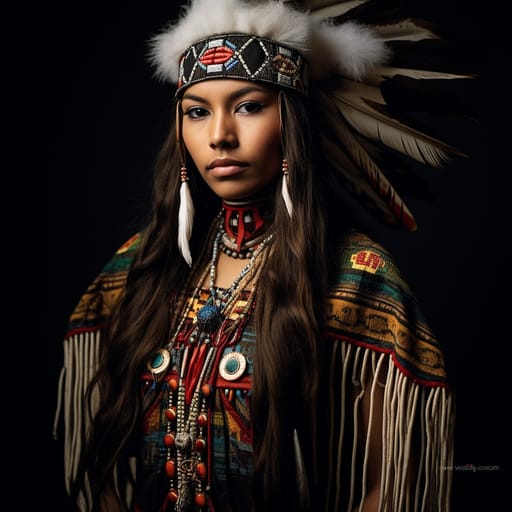
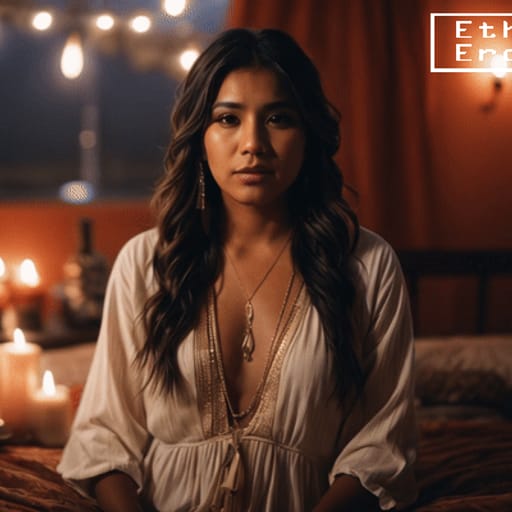
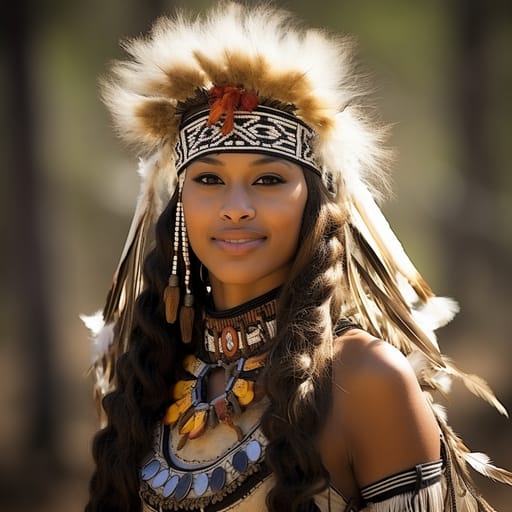
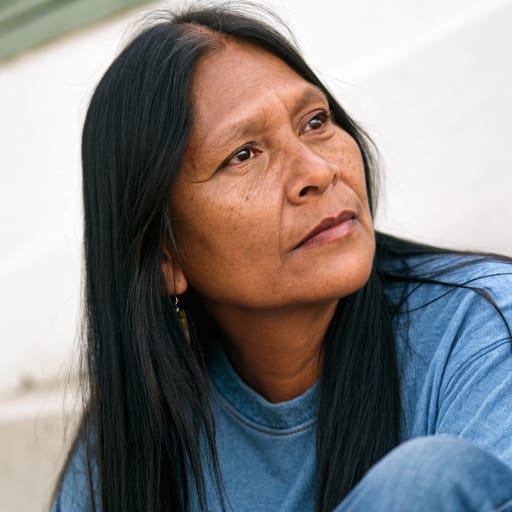
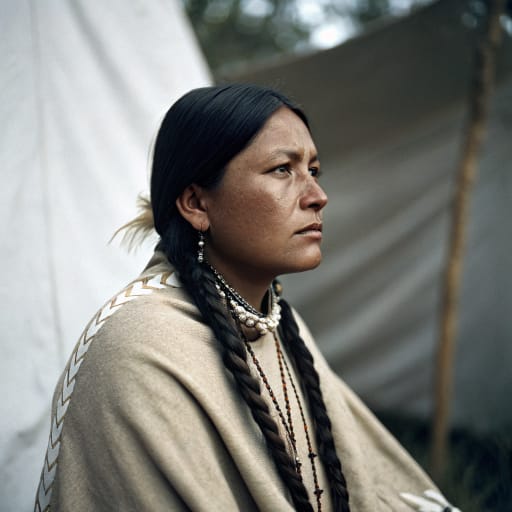
Typical Tsilhqotʼin Phenotypes
Reference for AI generation: hair, eyes, skin, facial structure, build
Tsilhqotʼin Body & Anatomy Reference
Indigenous Northern American / Algonquian-Iroquoian phenotype: anatomy reference for AI nude generation
Tsilhqotʼin Boobs & Breasts
Bust reference for Tsilhqotʼin women: medium cup, moderate projection, which is typical of Indigenous Northern American / Algonquian-Iroquoian ancestry. Areolas measure about 30-44mm across, with medium-brown pigmentation. Body type (mesomorph, broader frame in northern Indigenous populations) shapes the bust as well, so Tsilhqotʼin tits are usually full and moderate projection. In AI imagery, keep the forward-set shape rather than drifting toward the smaller East Asian bust.
Tsilhqotʼin Ass & Hips
The Tsilhqotʼin ass is typically medium, moderate-to-full projection, which sets it apart from the slim East Asian narrow-hip profile. Underneath, the pelvis shows medium iliac crests, part of the Indigenous Northern American / Algonquian-Iroquoian skeletal pattern. For Tsilhqotʼin butt pics and AI renders, match that silhouette and the overall build (mesomorph, broader frame in northern Indigenous populations).
Tsilhqotʼin Vagina & Pussy
Tsilhqotʼin pussy and vulvar anatomy presents medium-brown labial pigmentation, consistent with the Indigenous Northern American / Algonquian-Iroquoian phenotype's pigmentation pattern. Tsilhqotʼin pubic hair is typically straight medium-coarse texture, in the inverted-triangle pattern. For anatomically accurate Tsilhqotʼin pussy renders the labial coloration should match the surrounding copper to medium-brown skin tone with a continuous gradient, and the hair should keep its straight medium-coarse texture.
Tsilhqotʼin Dicks & Penis
Tsilhqotʼin dicks follow the Indigenous Northern American / Algonquian-Iroquoian reference data: regional mean ~13cm erect; moderate girth; medium-brown shaft pigmentation. Shaft color should track the copper to medium-brown skin tone with a smooth change toward the glans, and Tsilhqotʼin pubic hair keeps its straight medium-coarse texture.
Tsilhqotʼin Body, Curves & Build
Tsilhqotʼin body type and overall build presents as mesomorph, broader frame in northern Indigenous populations, with mean adult female BMI 25-28: the characteristic Indigenous Northern American / Algonquian-Iroquoian habitus. Tsilhqotʼin curves and proportions should keep the regional skeletal frame (height, shoulder-to-hip ratio, limb proportions) rather than a generic mesomorph default.
Tsilhqotʼin Skin Tone & Hair Texture
Tsilhqotʼin skin sits in the copper to medium-brown (Fitzpatrick III-V) band. Hair is typically straight 1A, dark-brown to black, often thick and dense, in keeping with the Indigenous Northern American / Algonquian-Iroquoian phenotype. In nude renders the skin should stay one even tone from face to body, and body, pubic and head hair should match.
Explore phenotype categories
Structured taxonomy with peer-reviewed scales · 22 anatomical categories
Erotic Poses & Sex Positions
From the pose catalog: 219 named positions with reference skeletons
Frequently asked questions about Tsilhqotʼin people
Where is the Tsilhqotʼin homeland?
The Tsilhqotʼin homeland is The Chilcotin Plateau and the Chilcotin, Chilko and Taseko river drainages of west-central British Columbia, Canada in North America.
What language do Tsilhqotʼin people speak?
Tsilhqotʼin people primarily speak Tsilhqotʼin, also called Chilcotin (Northern Athabaskan, Na-Dene).
What religion do Tsilhqotʼin people practice?
The predominant religion among Tsilhqotʼin people is Roman Catholic since the Oblate missions of the 1860s, alongside continuing Tsilhqotʼin practice and law.






Make your own Tsilhqotʼin images
Five a day, free, no credits to buy. The studio starts from this group's phenotype data, so you can set body type, pose and style and keep the traits accurate.
Start with Tsilhqotʼin