No portrait yet
Tagakaolo Erotic
Mountains and coast west of the Davao Gulf in southern Mindanao, Philippines: Davao Occidental, Davao del Sur and Sarangani provinces, around Malita, Santa Maria, Malalag and Malungon.
Tagakaulo (Austronesian, Central Philippine, Mansakan group); Cebuano and Filipino widely spoken as second languages.
Christianity (Catholic and Protestant) alongside traditional spirit beliefs; historically animist.
One of the Lumad peoples of Mindanao; closely related to the Kalagan, their Islamized coastal kin, and more distantly to the Mandaya and Mansaka.
About Tagakaolo People
The Tagakaolo carry their address in their name: taga means from, and olo is the head, here the head of a river. They are the people of the headwaters, upland farmers of the mountains that rise behind the western shore of the Davao Gulf in southern Mindanao. Their country runs through what is now Davao Occidental and Davao del Sur, around Malita, Santa Maria and Malalag, and over the ridges into Malungon and the Sarangani hills. The spelling wanders (Tagakaulo, Tagacaolo, Tagakaulu), but the meaning holds, and it marks a real line. Close relatives who settled the coast and took up Islam through contact with the Maguindanao became known as the Kalagan. Those who stayed upstream and kept the older religion stayed Tagakaolo.
Their language belongs to the Mansakan group of the Central Philippine languages, alongside Kalagan, Mandaya and Mansaka. That leaves it, oddly, closer kin to the Cebuano of the settlers than to the speech of the Blaan next door, whose language sits on a different branch of the Philippine family. Most Tagakaolo now speak Cebuano as well, and often Filipino, because the market, the school and the municipal hall all run on them.
Traditional life rested on swidden fields of upland rice, corn and root crops, with abaca grown for cloth and later for cash. Authority lay with datus and with men who had earned standing as warriors, and the spirit world was crowded, with spirits of forest, water and field who had to be consulted before land was cleared or seed went in. American rule brought plantations to the gulf coast and labor demands to go with them. In 1906 a Tagakaolo headman, Mangulayon, killed the district governor, Edward Bolton, near Malita. Davao City still remembers the episode in a street name, from the governor's side. The anthropologist Fay-Cooper Cole described the group a few years later in his 1913 survey of the Davao peoples.
The rest of the 20th century was mostly a story of land. Settlers from the Visayas and Luzon filled the lowlands, logging and plantations moved uphill, and the Tagakaolo were pushed farther toward the headwaters their name already claimed. Catholic and Protestant missions followed, and most families are now Christian in some form, with older ritual persisting around farming and healing. They count themselves among the Lumad, the non-Muslim indigenous peoples of Mindanao, and like other Lumad groups they press ancestral domain claims under the 1997 Indigenous Peoples Rights Act. Malita, now the capital of Davao Occidental, is the closest thing they have to a center.
Related ethnic groups
Groups that share Tagakaolo's homeland, region, language, or religious tradition. These are likely candidates for comparative phenotype reference.

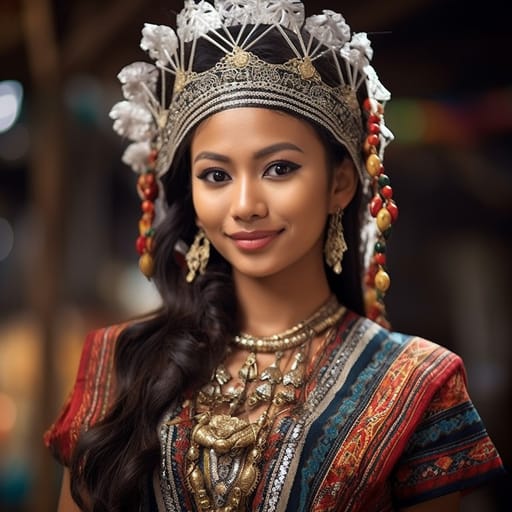
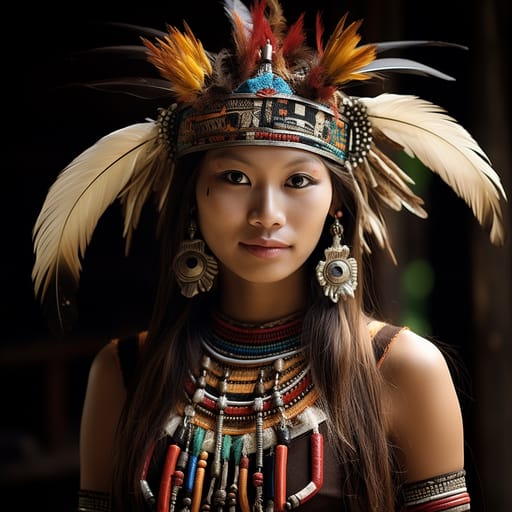


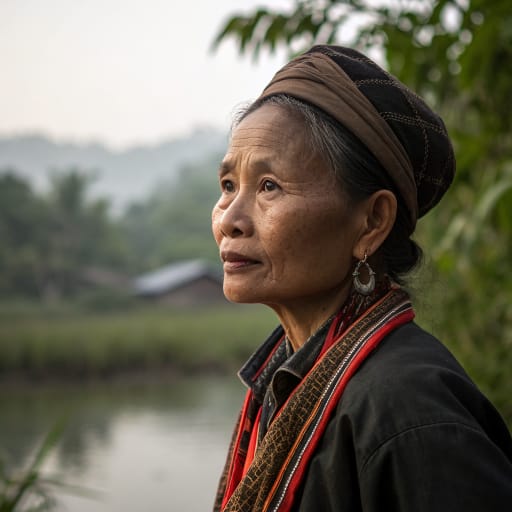
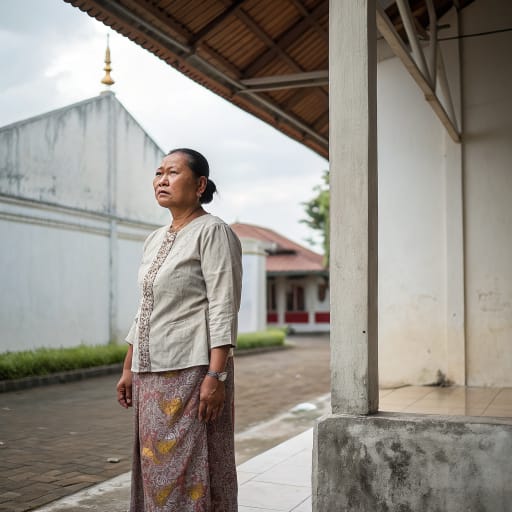

Typical Tagakaolo Phenotypes
Reference for AI generation: hair, eyes, skin, facial structure, build
Tagakaolo Body & Anatomy Reference
Anatomy by feature, Southeast Asian Austronesian / Austroasiatic phenotype
Tagakaolo Boobs & Breasts
The typical Tagakaolo bust is small-to-medium cup, modest projection, in line with the wider Southeast Asian Austronesian / Austroasiatic pattern. Areolas usually fall in the 26-38mm range, with medium-brown to dark-brown areolar pigmentation against the tan-to-medium-brown skin tone. Compared with the fuller South Asian or Polynesian bust, Tagakaolo breasts sit forward and are generally firm, modest projection. A faithful AI render of Tagakaolo tits keeps that shape and areola size.
Tagakaolo Ass & Hips
Butt shape among Tagakaolo women: small-to-medium, modest projection, narrower hip profile, over narrow-to-medium iliac crests. This follows Southeast Asian Austronesian / Austroasiatic ancestry and looks quite unlike the fuller glutes of the Pacific Islander phenotype. An accurate Tagakaolo ass in adult AI imagery keeps both the silhouette and the overall build (ectomorph, petite frame) instead of a generic average.
Tagakaolo Vagina & Pussy
Vulvar anatomy among Tagakaolo women: medium-brown to dark-brown labial pigmentation. Pubic hair tends to be straight-to-wavy fine-to-medium texture, in the usual inverted-triangle pattern. Both follow Southeast Asian Austronesian / Austroasiatic pigmentation, which is why Tagakaolo pussy renders should not fall back on a pale, sparse Western template.
Tagakaolo Dicks & Penis
The Tagakaolo cock profile, from Southeast Asian Austronesian / Austroasiatic anthropometric data: regional mean ~11cm erect; moderate girth; medium-brown shaft pigmentation. Pubic hair has a straight-to-wavy fine-to-medium texture and forms the usual inverted-V pattern. Whether Tagakaolo men are circumcised follows religious and cultural practice rather than phenotype.
Tagakaolo Body, Curves & Build
Build and curves among Tagakaolo women follow the Southeast Asian Austronesian / Austroasiatic pattern: ectomorph, petite frame, mean adult female BMI 20-23. Proportions matter as much as skin tone, so Tagakaolo figures should keep their regional height and limb ratios.
Tagakaolo Skin Tone & Hair Texture
The Tagakaolo skin range is tan to medium-brown (Fitzpatrick III-V), and hair tends to be straight-to-wavy 1A-2A, dark-brown to black. That combination marks the Southeast Asian Austronesian / Austroasiatic phenotype, and skin tone is the trait AI generators most often get wrong for Tagakaolo women.
Explore phenotype categories
Structured taxonomy with peer-reviewed scales · 22 anatomical categories
Erotic Poses & Sex Positions
From the pose catalog: 219 named positions with reference skeletons
Frequently asked questions about Tagakaolo people
Where is the Tagakaolo homeland?
The Tagakaolo homeland is Mountains and coast west of the Davao Gulf in southern Mindanao, Philippines: Davao Occidental, Davao del Sur and Sarangani provinces, around Malita, Santa Maria, Malalag and Malungon. in Southeast Asia.
What language do Tagakaolo people speak?
Tagakaolo people primarily speak Tagakaulo (Austronesian, Central Philippine, Mansakan group); Cebuano and Filipino widely spoken as second languages..
What religion do Tagakaolo people practice?
The predominant religion among Tagakaolo people is Christianity (Catholic and Protestant) alongside traditional spirit beliefs; historically animist..






Make your own Tagakaolo images
Five a day, free, no credits to buy. The studio starts from this group's phenotype data, so you can set body type, pose and style and keep the traits accurate.
Start with Tagakaolo