St'át'imc Erotic
Fraser Canyon around Lillooet and the Lillooet River valley through Mount Currie toward Harrison Lake, southwestern British Columbia, Canada.
St'át'imcets, also called Lillooet (Interior Salish, Salishan family), in upper and lower dialects; English is now dominant.
Largely Catholic since the Oblate missions, alongside continuing sweat lodge, winter dance and land-based practice.
Interior Salish. Divided into the Upper or Fraser River St'át'imc and the Lower St'át'imc, including the Lil'wat, across eleven communities.
About St'át'imc People
Ask a St'át'imc person where they are from and the answer puts them on one of two very different pieces of ground. The upper communities sit in the Fraser Canyon around Lillooet, sagebrush and ponderosa pine on dry rock, some of the hottest country in Canada. The lower communities run down the Lillooet River through Mount Currie and Pemberton into cedar rainforest and the lake chain above Harrison. Eleven communities, one language, two climates, and the difference works its way into everything. English used to call all of them Lillooet, after the lower group, and the town kept the name after the people took theirs back. The canyon wind explains the best known St'át'imc food: salmon caught at the rocks below the Bridge River rapids and hung in moving air rather than smoked, which makes a firm, sweet dried fish that traveled far past the territory as a trade good. Winters were spent in s7ístken, round semi-subterranean houses entered by ladder through the roof. The pit village at Keatley Creek above Lillooet holds hundreds of those depressions, some of them unusually large, and records several thousand years of people staying put in one place.
St'át'imcets is Interior Salish, a near relative of Secwepemctsín and Nlaka'pamuxcín, and it splits into upper and lower dialects that speakers can tell apart in a word. It has had an odd second life in academic linguistics, where its determiners, which mark whether the speaker is committing to something existing rather than whether it is definite, became a standard reference point in work on meaning. Fluent first-language speakers now number in the dozens, almost all of them elders, with immersion and school programs carrying the rest. Catholicism arrived with the Oblate missions in the nineteenth century and is genuinely held in many families, sitting alongside sweat lodge, winter dance and land practice without much visible friction. The gold rush of 1858 pushed thousands of miners up the canyon and the wagon road followed; nothing about the territory was the same afterward. In 1911 the chiefs signed the Declaration of the Lillooet Tribe, a blunt statement that the land was never surrendered, and it is still the spine of St'át'imc political argument. The century that followed brought the Bridge River hydro diversions, which took a river apart and were not settled with BC Hydro until 2011, and the Sutikalh camp, which has kept a proposed ski resort out of the Cayoosh valley by occupying it since 2000.
Related ethnic groups
Groups that share St'át'imc's homeland, region, language, or religious tradition. These are likely candidates for comparative phenotype reference.
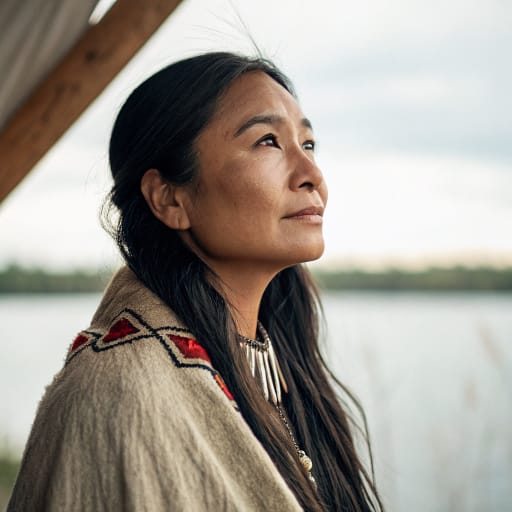
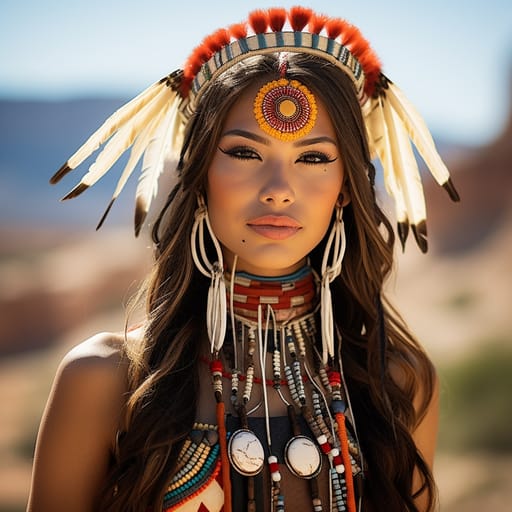
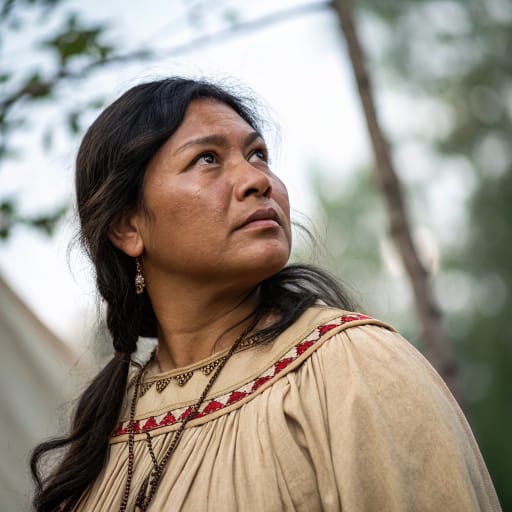
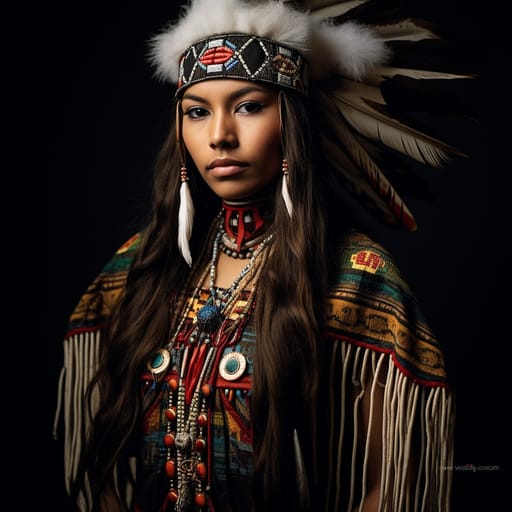
Typical St'át'imc Phenotypes
Reference for AI generation: hair, eyes, skin, facial structure, build
St'át'imc Body & Anatomy Reference
Anatomy by feature, Indigenous Northern American / Algonquian-Iroquoian phenotype
St'át'imc Boobs & Breasts
The typical St'át'imc bust is medium cup, moderate projection, in line with the wider Indigenous Northern American / Algonquian-Iroquoian pattern. Areolas usually fall in the 30-44mm range, with medium-brown areolar pigmentation against the copper-to-medium-brown skin tone. Compared with the smaller East Asian bust, St'át'imc breasts sit forward and are generally full and moderate projection. A faithful AI render of St'át'imc tits keeps that shape and areola size.
St'át'imc Ass & Hips
Butt shape among St'át'imc women: medium, moderate-to-full projection, over medium iliac crests. This follows Indigenous Northern American / Algonquian-Iroquoian ancestry and looks quite unlike the slim East Asian narrow-hip profile. An accurate St'át'imc ass in adult AI imagery keeps both the silhouette and the overall build (mesomorph, broader frame in northern Indigenous populations) instead of a generic average.
St'át'imc Vagina & Pussy
Vulvar anatomy among St'át'imc women: medium-brown labial pigmentation. Pubic hair tends to be straight medium-coarse texture, in the usual inverted-triangle pattern. Both follow Indigenous Northern American / Algonquian-Iroquoian pigmentation, which is why St'át'imc pussy renders should not fall back on a pale, sparse Western template.
St'át'imc Dicks & Penis
The St'át'imc cock profile, from Indigenous Northern American / Algonquian-Iroquoian anthropometric data: regional mean ~13cm erect; moderate girth; medium-brown shaft pigmentation. Pubic hair has a straight medium-coarse texture and forms the usual inverted-V pattern. Whether St'át'imc men are circumcised follows religious and cultural practice rather than phenotype.
St'át'imc Body, Curves & Build
Build and curves among St'át'imc women follow the Indigenous Northern American / Algonquian-Iroquoian pattern: mesomorph, broader frame in northern Indigenous populations, mean adult female BMI 25-28. Proportions matter as much as skin tone, so St'át'imc figures should keep their regional height and limb ratios.
St'át'imc Skin Tone & Hair Texture
The St'át'imc skin range is copper to medium-brown (Fitzpatrick III-V), and hair tends to be straight 1A, dark-brown to black, often thick and dense. That combination marks the Indigenous Northern American / Algonquian-Iroquoian phenotype, and skin tone is the trait AI generators most often get wrong for St'át'imc women.
Explore phenotype categories
Structured taxonomy with peer-reviewed scales · 22 anatomical categories
Erotic Poses & Sex Positions
From the pose catalog: 219 named positions with reference skeletons
Frequently asked questions about St'át'imc people
Where is the St'át'imc homeland?
The St'át'imc homeland is Fraser Canyon around Lillooet and the Lillooet River valley through Mount Currie toward Harrison Lake, southwestern British Columbia, Canada. in North America.
What language do St'át'imc people speak?
St'át'imc people primarily speak St'át'imcets, also called Lillooet (Interior Salish, Salishan family), in upper and lower dialects; English is now dominant..
What religion do St'át'imc people practice?
The predominant religion among St'át'imc people is Largely Catholic since the Oblate missions, alongside continuing sweat lodge, winter dance and land-based practice..






Make your own St'át'imc images
Five a day, free, no credits to buy. The studio starts from this group's phenotype data, so you can set body type, pose and style and keep the traits accurate.
Start with St'át'imc