Help us get this right
Does this portrait look right for Solanki?
Nobody has judged this one yet. You would be the first.
Solanki Erotic
Gujarat and Rajasthan, India, with smaller communities elsewhere in northern India and abroad
Gujarati, Rajasthani dialects and Hindi (Indo-Aryan, Indo-European)
Mostly Hindu; the medieval dynasty also patronized Jainism
A clan of the Agnivanshi Rajputs, also found among Gurjars and Kolis; the Vaghela (Baghel) branch descends from it
About Solanki People
Solanki is less a single people than a name that travels. It is a clan identity and a surname shared by several communities of western and northern India. Rajputs are the best known, but Gurjars and Kolis carry it too, and it is found above all in Gujarat and Rajasthan. What holds the name together is memory. Solanki families trace themselves, one way or another, to the kings who ruled Gujarat from Anahilavada, today's Patan, for about three centuries. Historians call that dynasty the Chaulukyas. Mularaja founded it in the mid tenth century, and its reign was anything but quiet. Under Bhima I, Mahmud of Ghazni sacked the Somnath temple in 1025. Yet the same reign produced the Sun Temple at Modhera, and Bhima's widow Udayamati later commissioned Rani ki Vav at Patan. That stepwell is carved so densely it reads like a sculpture gallery sunk into the earth. Floods buried it in silt, which is partly why so much of it survived. Jayasimha Siddharaja and Kumarapala carried the kingdom to its height. Kumarapala, guided by the Jain scholar Hemachandra, became one of the great royal patrons of Jainism. Art historians still call the temple style of the period the Solanki style. A side branch, the Vaghelas, took power in the thirteenth century before Gujarat fell to the armies of Alauddin Khalji. The Baghels who later ruled Rewa in central India claim descent from that line.
Among Rajputs, Solankis count themselves one of the four Agnivanshi clans. Bardic tradition says these fire-born lineages rose from a sacrificial fire on Mount Abu, alongside the Chauhans, Parmars and Pratiharas. Historians read the tale as a later origin myth. Some families also claim kinship with the older Chalukyas of the Deccan, a link that remains unproven. That does not make these stories trivial to the families who keep them, often through genealogies maintained for generations by hereditary bards. Solankis speak the language of the land they settled: Gujarati in Gujarat, and Rajasthani dialects and Hindi further north. These are Indo-Aryan languages that shade into one another across the region. Most Solankis are Hindu. The old dynasty's habit of funding Shaiva shrines and Jain temples side by side still shapes how Gujarat remembers it. Today a Solanki might farm in rural Gujarat, serve in the army, run a business in Ahmedabad or live abroad among the Gujarati diaspora. The surname alone will not tell you which community they belong to. That ambiguity is part of the story, not a flaw in it.
Related ethnic groups
Groups that share Solanki's homeland, region, language, or religious tradition. These are likely candidates for comparative phenotype reference.
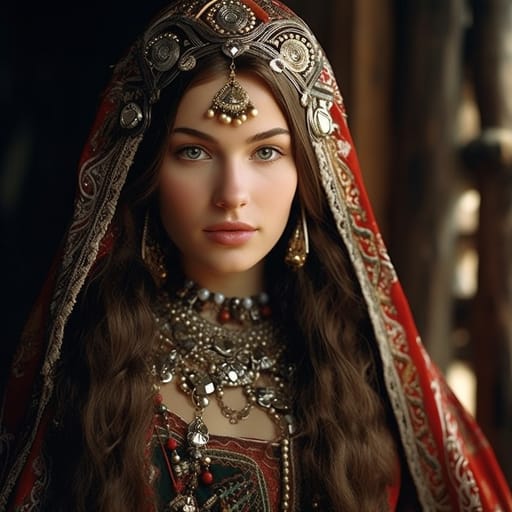
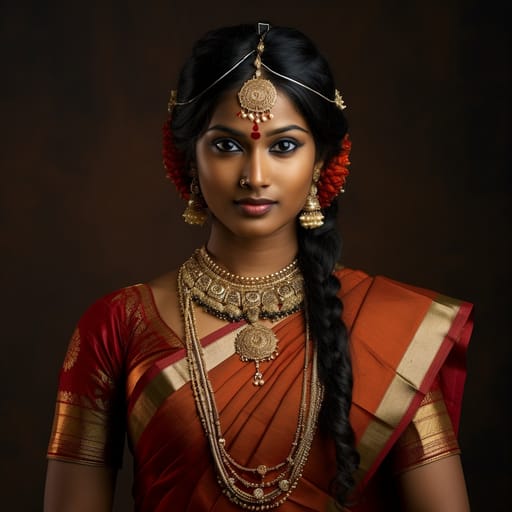
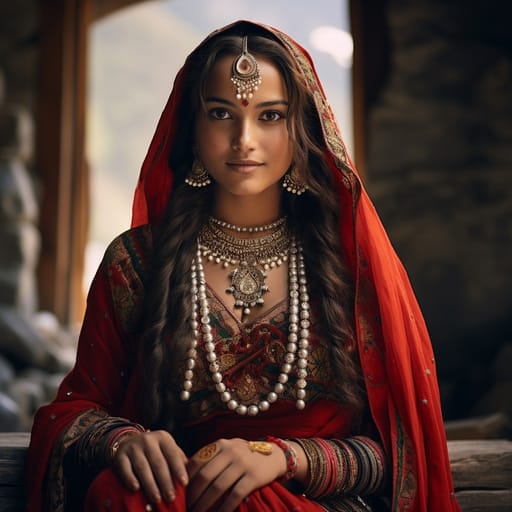
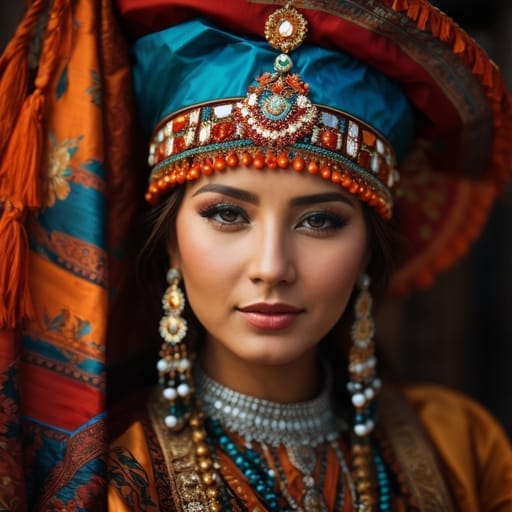
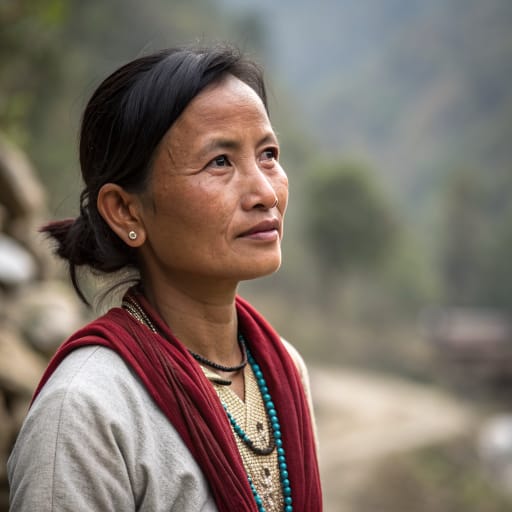
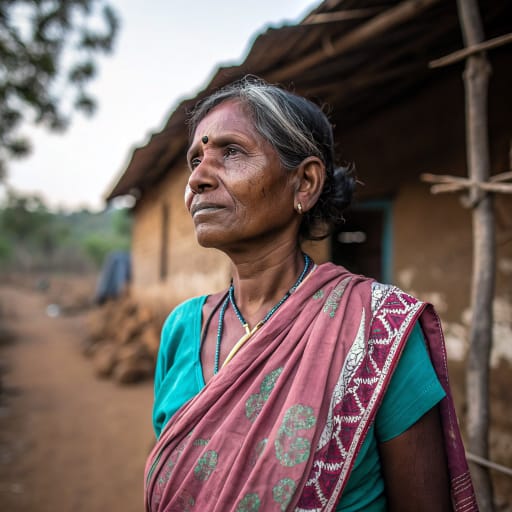
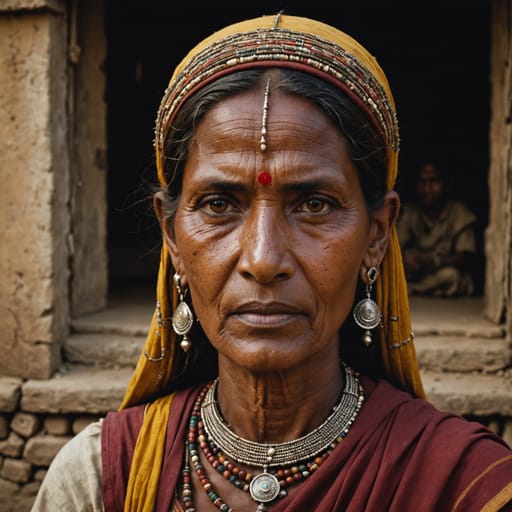
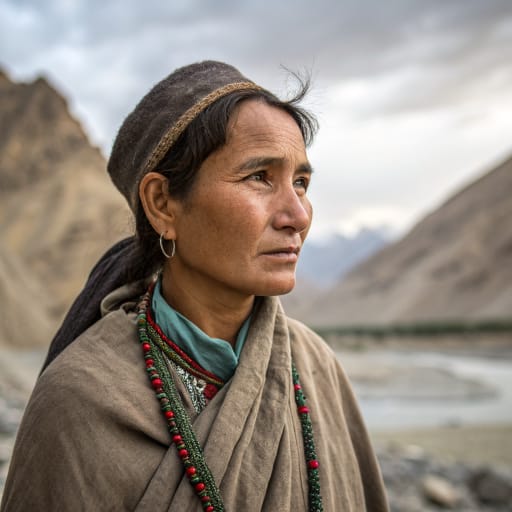
Typical Solanki Phenotypes
Reference for AI generation: hair, eyes, skin, facial structure, build
Solanki Body & Anatomy Reference
Indo-Aryan / Dravidian South Asian phenotype: anatomy reference for AI nude generation
Solanki Boobs & Breasts
The typical Solanki bust is medium-to-large cup, moderate-to-full projection, in line with the wider Indo-Aryan / Dravidian South Asian pattern. Areolas usually fall in the 32-46mm range, with medium-brown to dark-brown areolar pigmentation against the wheatish-to-brown skin tone. Compared with the smaller East Asian bust profile, Solanki breasts sit forward and are generally full and soft, generally fuller than the East Asian norm. A faithful AI render of Solanki tits keeps that shape and areola size.
Solanki Ass & Hips
Butt shape among Solanki women: medium-to-full, moderate-to-high projection, classic curvy hip profile, over medium-to-wide iliac crests, full gluteal-femoral fat distribution. This follows Indo-Aryan / Dravidian South Asian ancestry and looks quite unlike the slim hip profile of East Asian women. An accurate Solanki ass in adult AI imagery keeps both the silhouette and the overall build (endomorph-to-mesomorph with fuller hip deposition) instead of a generic average.
Solanki Vagina & Pussy
Vulvar anatomy among Solanki women: medium-brown to dark-brown labial pigmentation, fuller labia minora projection. Pubic hair tends to be straight-to-wavy coarse texture, dense distribution, in the usual inverted-triangle pattern. Both follow Indo-Aryan / Dravidian South Asian pigmentation, which is why Solanki pussy renders should not fall back on a pale, sparse Western template.
Solanki Dicks & Penis
The Solanki cock profile, from Indo-Aryan / Dravidian South Asian anthropometric data: regional mean ~13cm erect; moderate girth; medium-brown shaft pigmentation. Pubic hair has a straight-to-wavy coarse texture and forms the usual inverted-V pattern. Whether Solanki men are circumcised follows religious and cultural practice rather than phenotype.
Solanki Body, Curves & Build
Build and curves among Solanki women follow the Indo-Aryan / Dravidian South Asian pattern: endomorph-to-mesomorph with fuller hip deposition, mean adult female BMI 22-25. Proportions matter as much as skin tone, so Solanki figures should keep their regional height and limb ratios.
Solanki Skin Tone & Hair Texture
The Solanki skin range is wheatish to brown (Fitzpatrick III-V), and hair tends to be straight-to-wavy 1A-2B, dense, dark-brown to black. That combination marks the Indo-Aryan / Dravidian South Asian phenotype, and skin tone is the trait AI generators most often get wrong for Solanki women.
Explore phenotype categories
Structured taxonomy with peer-reviewed scales · 22 anatomical categories
Erotic Poses & Sex Positions
From the pose catalog: 219 named positions with reference skeletons
Frequently asked questions about Solanki people
Where is the Solanki homeland?
The Solanki homeland is Gujarat and Rajasthan, India, with smaller communities elsewhere in northern India and abroad in Southern Asia.
What language do Solanki people speak?
Solanki people primarily speak Gujarati, Rajasthani dialects and Hindi (Indo-Aryan, Indo-European).
What religion do Solanki people practice?
The predominant religion among Solanki people is Mostly Hindu; the medieval dynasty also patronized Jainism.






Make your own Solanki images
Five a day, free, no credits to buy. The studio starts from this group's phenotype data, so you can set body type, pose and style and keep the traits accurate.
Start with Solanki