Help us get this right
Does this portrait look right for Bahun?
Nobody has judged this one yet. You would be the first.
Bahun Erotic
The middle hills of Nepal, from the Karnali and Bheri basins east through the Gandaki to the Kathmandu Valley; also Darjeeling and Sikkim in India, and Bhutan.
Nepali, also called Khas Kura (Indo-European, Indo-Aryan, Eastern Pahari), with Sanskrit as the liturgical language.
Hindu, near universally, with Shaivite and Vaishnavite household practice, Sanskrit liturgy and kuldevta worship.
The Brahmin rung of the Khas or Parbatiya cluster alongside Chhetris, Thakuris and hill Dalit castes; internally Upadhyaya and Jaisi, and Kumai versus Purbiya lineages.
About Bahun People
Nepalis rarely say hill Brahmin. They say Bahun, and the word does more work than a caste name usually does: a priestly caste, a body of surnames, a political accusation, and for many families a set of rules about the kitchen. Bahuns are the Brahmin rung of the Parbatiya order of Nepal's middle hills, ritually the highest, and the outward mark of that standing, shared with the Chhetris, is a length of cotton cord. The janai is worn against the skin over the left shoulder, put on at a boy's bratabandha and replaced once a year at Janai Purnima. Thread wearers were tagadhari in the old legal language, and the Muluki Ain of 1854 wrote them into the top of a national caste hierarchy that stood until its caste provisions were struck out in 1963. The homeland is the middle hills, neither the Terai plain nor the high Himalaya: terraced ridges from the Karnali and Bheri in the west, where the Khasa kingdom once ran, east across the Gandaki and on into Darjeeling, Sikkim and Bhutan. Nepali is Indo-Aryan, an eastern Pahari relative of Kumaoni and Garhwali rather than of the Tibeto-Burman speech of most of their hill neighbors, and it became the national language largely because the Gorkha conquest of the 1760s carried it, with its Brahmin scribes and priests, into every valley it took.
Bahuns divide themselves in ways outsiders miss. Upadhyaya families may serve as household priests; Jaisi families, descended from unions the caste ruled irregular, historically could not, and many took up the astrologer's work their name is usually traced to. Kumai lineages came from Kumaon in the west, Purbiya from the east, and the two long avoided marrying. What shapes a Bahun household day to day is mostly food and touch: boiled rice takes jutho, ritual pollution, from a used spoon or the wrong hands, while anything fried in ghee resists it, so the kitchen runs on a logic that looks arbitrary until you learn it. Buffalo is off the menu, liquor off the table, the clean line between tagadhari and the matwali, the drinking castes of the same hills. Married women wear red, a pote of glass beads at the throat and often a gold tilhari strung on it; men had the daura suruwal and the dhaka topi. In Kathmandu, and across a labor diaspora reaching the Gulf and Malaysia, most of that now surfaces at weddings and at Teej. Bahuns are roughly one Nepali in nine and hold far more than that share of the ministries, courts and newsrooms, which is why bahunbad, Brahminism, has been one of the country's loudest political words since 1990.
Related ethnic groups
Groups that share Bahun's homeland, region, language, or religious tradition. These are likely candidates for comparative phenotype reference.
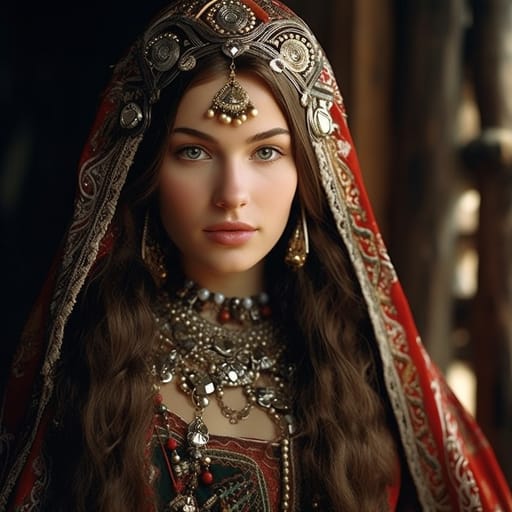
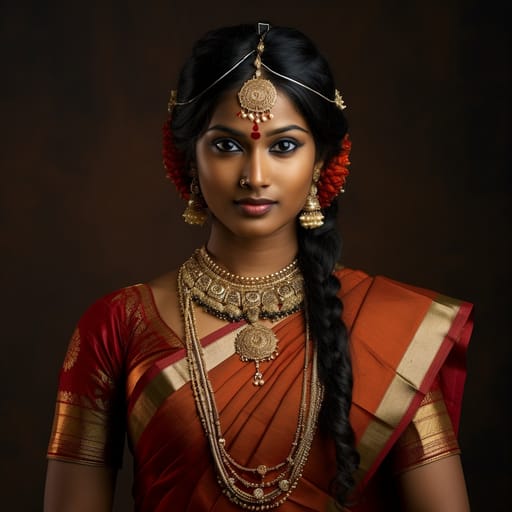
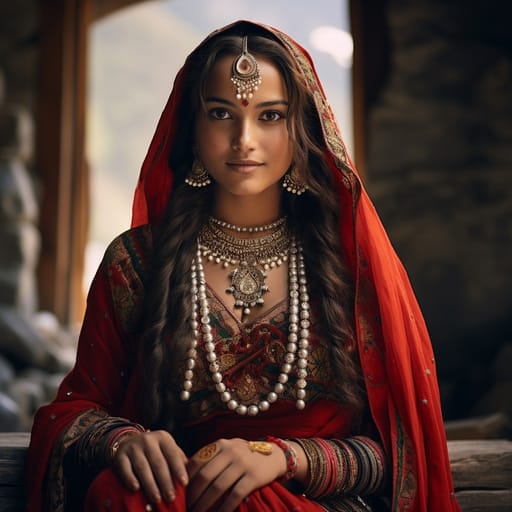
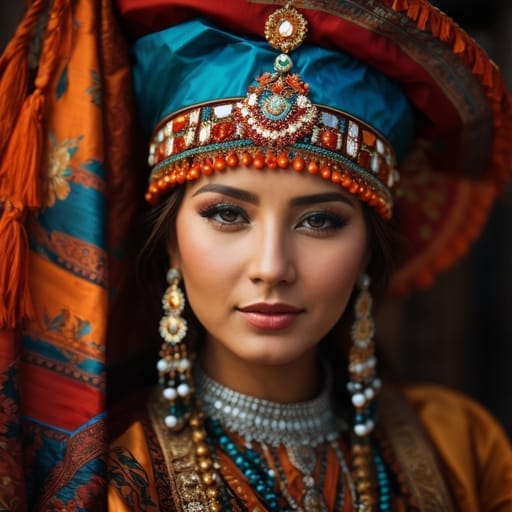
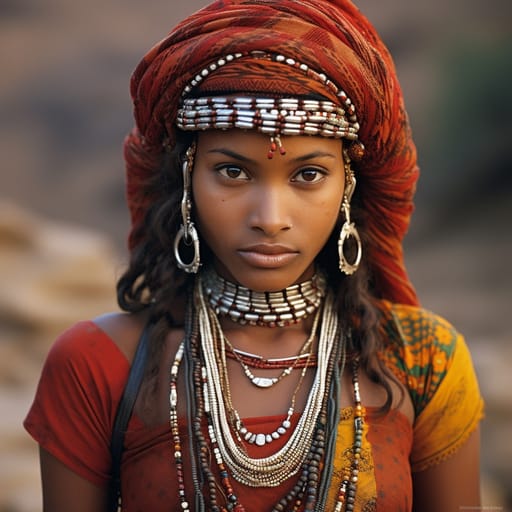
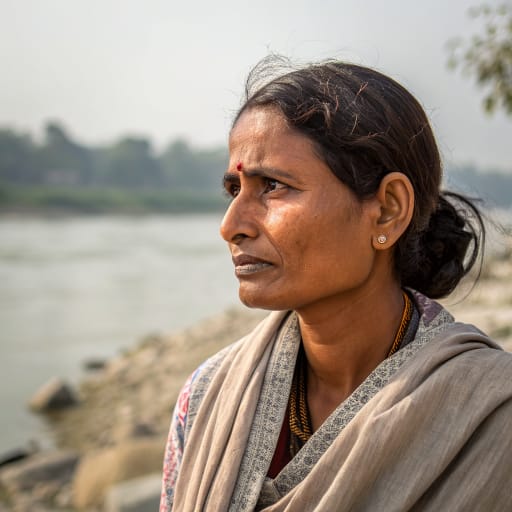
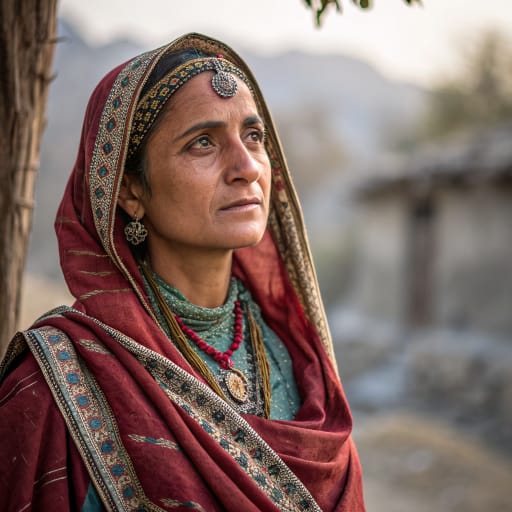
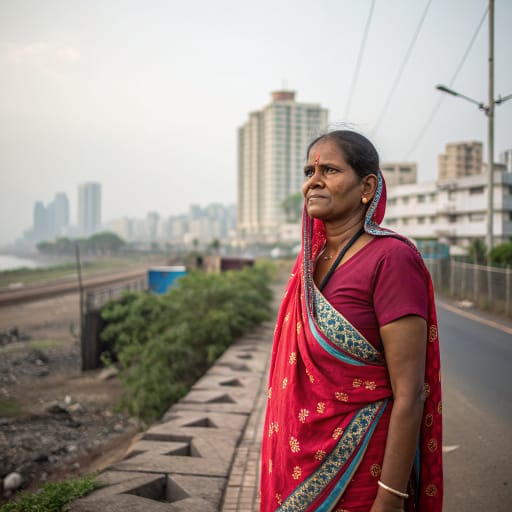
Typical Bahun Phenotypes
Reference for AI generation: hair, eyes, skin, facial structure, build
Bahun Body & Anatomy Reference
Indo-Aryan / Dravidian South Asian phenotype: anatomy reference for AI nude generation
Bahun Boobs & Breasts
Bahun tits and boobs run medium-to-large cup, moderate-to-full projection, the classic Indo-Aryan / Dravidian South Asian bust profile. Bahun nipples and areolas show medium-brown to dark-brown areolar pigmentation against the wheatish-to-brown skin tone, with areolar diameter typically in the 32-46mm range and forward-set positioning rather than the smaller East Asian bust profile. Bahun breasts trend full and soft, generally fuller than the East Asian norm, a function of the endomorph-to-mesomorph with fuller hip deposition body habitus and the mean adult female BMI 22-25. For anatomically accurate AI-generated Bahun nudes the render preserves the medium-to-large cup, moderate-to-full projection shape, 32-46mm areolas with medium-brown to dark-brown pigmentation, and the torso proportions of the Indo-Aryan / Dravidian South Asian phenotype.
Bahun Ass & Hips
Bahun hips and butt usually read as medium-to-full, moderate-to-high projection, classic curvy hip profile. The skeletal base is medium-to-wide iliac crests, full gluteal-femoral fat distribution, the Indo-Aryan / Dravidian South Asian pattern. Set against the slim hip profile of East Asian women, the difference is easy to see, and the hip-to-waist ratio is often what identifies Bahun women in photos.
Bahun Vagina & Pussy
Expect medium-brown to dark-brown labial pigmentation, fuller labia minora projection on Bahun women, in keeping with Indo-Aryan / Dravidian South Asian ancestry. The pubic hair is straight-to-wavy coarse texture, dense distribution. Coloring should run evenly from the wheatish to brown skin of the thighs to the labia, and Bahun nude imagery should keep the hair's straight-to-wavy coarse texture.
Bahun Dicks & Penis
Bahun dick and penile anatomy in adult AI generation should anchor on the regional reference data: regional mean ~13cm erect, moderate girth, and medium-brown shaft pigmentation. The Bahun cock profile reflects the Indo-Aryan / Dravidian South Asian population's anthropometric measurements. The shaft pigmentation should track the surrounding wheatish to brown skin tone, and the pubic hair should keep its straight-to-wavy coarse texture in the typical inverted-V escutcheon.
Bahun Body, Curves & Build
Bahun body type: endomorph-to-mesomorph with fuller hip deposition, with mean adult female BMI 22-25. This is the typical Indo-Aryan / Dravidian South Asian build. Height range, shoulder-to-hip ratio and fat distribution all follow from it, which is what an accurate Bahun nude body should show.
Bahun Skin Tone & Hair Texture
Bahun skin tone falls in the wheatish to brown (Fitzpatrick III-V) band, the surface signal most often miscalibrated by generic AI nude generators. Bahun hair texture is typically straight-to-wavy 1A-2B, dense, dark-brown to black, characteristic of the Indo-Aryan / Dravidian South Asian phenotype. In Bahun nude renders the skin should hold that band consistently across the body.
Explore phenotype categories
Structured taxonomy with peer-reviewed scales · 22 anatomical categories
Erotic Poses & Sex Positions
From the pose catalog: 219 named positions with reference skeletons
Frequently asked questions about Bahun people
Where is the Bahun homeland?
The Bahun homeland is The middle hills of Nepal, from the Karnali and Bheri basins east through the Gandaki to the Kathmandu Valley; also Darjeeling and Sikkim in India, and Bhutan. in Southern Asia.
What language do Bahun people speak?
Bahun people primarily speak Nepali, also called Khas Kura (Indo-European, Indo-Aryan, Eastern Pahari), with Sanskrit as the liturgical language..
What religion do Bahun people practice?
The predominant religion among Bahun people is Hindu, near universally, with Shaivite and Vaishnavite household practice, Sanskrit liturgy and kuldevta worship..






Make your own Bahun images
Five a day, free, no credits to buy. The studio starts from this group's phenotype data, so you can set body type, pose and style and keep the traits accurate.
Start with Bahun