No portrait yet
Simalungun Erotic
Simalungun Regency and the city of Pematangsiantar, east of Lake Toba in North Sumatra, Indonesia
Simalungun (Austronesian, Batak branch); Indonesian widely used
Mostly Protestant Christian, with Muslim and Catholic minorities and traces of indigenous belief
One of the Batak peoples of North Sumatra, alongside Toba, Karo, Pakpak, Angkola and Mandailing; four main clans: Sinaga, Saragih, Damanik and Purba
About Simalungun People
The Simalungun are the Batak of the hill country east of Lake Toba. Much of what makes them a people is their insistence that they are not just a variant of their better-known Toba neighbors. They have their own language, their own church, their own royal history and their own clans. Nearly every Simalungun family belongs to one of four great marga: Sinaga, Saragih, Damanik and Purba. The set is so familiar locally that people shorten it to Sisadapur. People still give their clan name early when they meet, because it settles who counts as kin and how to address them.
Their land runs from the cool highlands near the lake down toward the plantation belt of Sumatra's east coast, with Pematangsiantar as its market town. The Simalungun language belongs to the Batak branch of Austronesian. It sits between the northern Batak languages, such as Karo, and the southern ones, such as Toba, and shares features with both. Before colonial rule the region was divided into small kingdoms, and by the Dutch period seven were recognized: Siantar, Panei, Dolog Silou, Tanoh Jawa, Raya, Purba and Silimakuta. Two blows reshaped that world. First, Dutch rubber, tea and later oil palm estates brought in so many Javanese laborers and Toba migrants that the Simalungun became a minority across much of their own homeland. Then the 1946 social revolution in East Sumatra overthrew the royal houses, and many nobles were killed. The restored royal longhouse at Pematang Purba, the Rumah Bolon, is one of the few physical traces of that order.
Religion shows the same mix of borrowing and self-assertion. German missionaries arrived in the early 1900s, and most Simalungun today are Protestant. Their church, the GKPS, split from the Toba-dominated HKBP in 1963 and holds services in Simalungun, which keeps the language in regular use. Muslims are a sizable minority, especially in the lowlands closer to the old Malay coast. An older moral vocabulary survives in the regency's motto, Habonaron do Bona, roughly meaning that truth is the foundation. Weddings and funerals run on Tolu Sahundulan, a three-way relationship between your own clan, the clan your wives come from and the clan your daughters marry into, and each side has set duties. Ceremonies call for handwoven hiou cloth rather than the Toba ulos, along with the gonrang drum ensemble. At some funerals of elders, performers do the masked huda-huda dance. The Rondang Bintang festival brings villages together for harvest thanksgiving, music and dance.
Related ethnic groups
Groups that share Simalungun's homeland, region, language, or religious tradition. These are likely candidates for comparative phenotype reference.
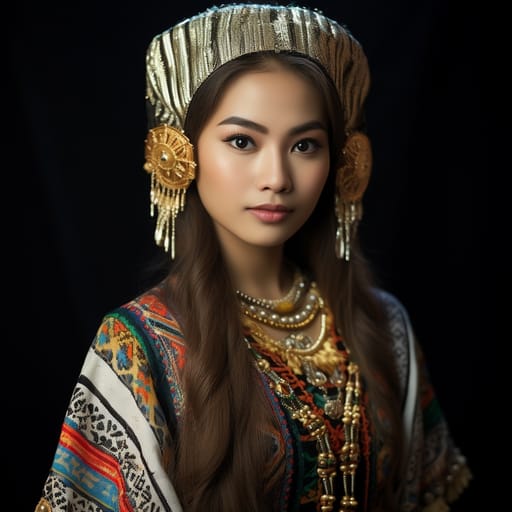
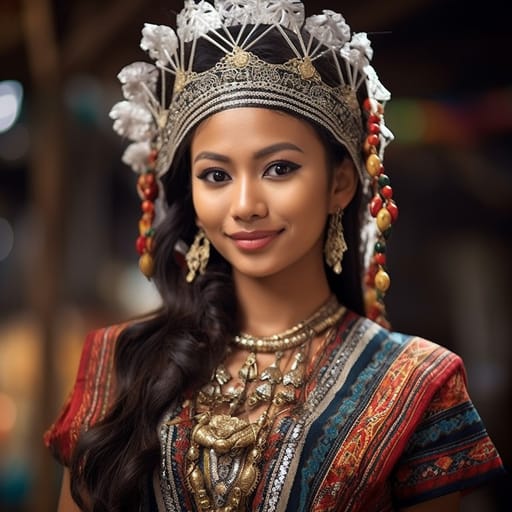
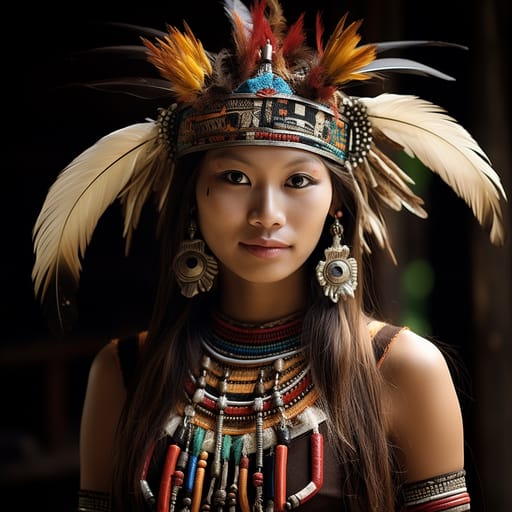
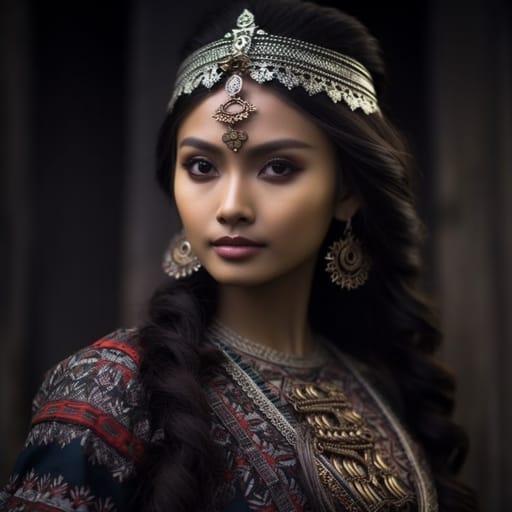
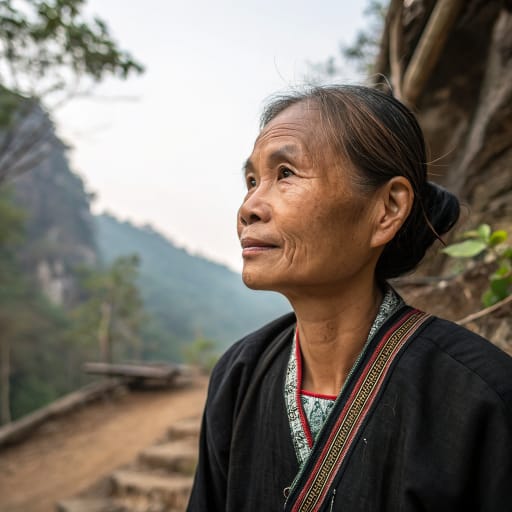
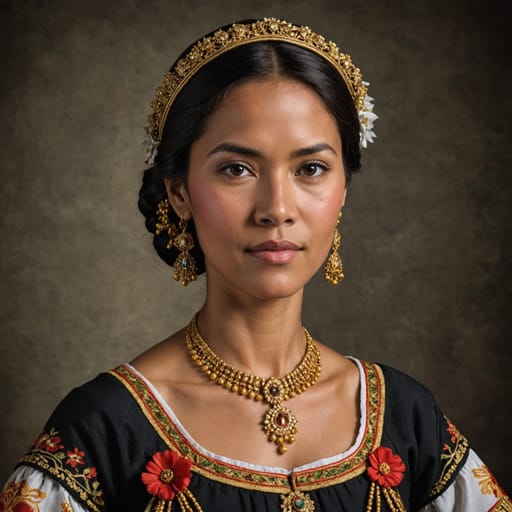
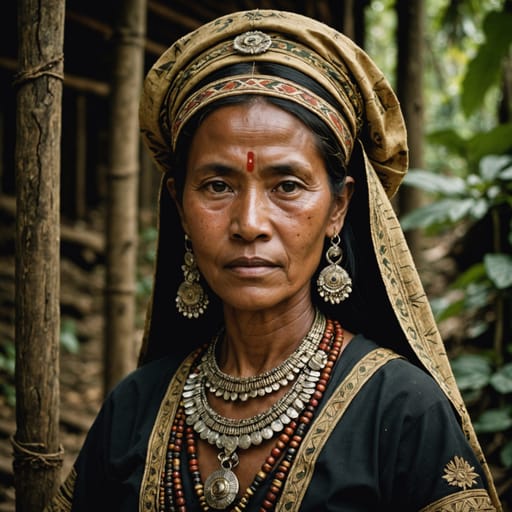
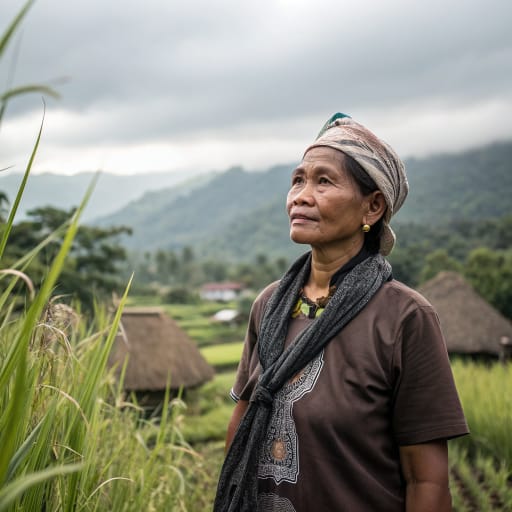
Typical Simalungun Phenotypes
Reference for AI generation: hair, eyes, skin, facial structure, build
Simalungun Body & Anatomy Reference
Anatomy by feature, Southeast Asian Austronesian / Austroasiatic phenotype
Simalungun Boobs & Breasts
Bust reference for Simalungun women: small-to-medium cup, modest projection, which is typical of Southeast Asian Austronesian / Austroasiatic ancestry. Areolas measure about 26-38mm across, with medium-brown to dark-brown pigmentation. Body type (ectomorph, petite frame) shapes the bust as well, so Simalungun tits are usually firm, modest projection. In AI imagery, keep the forward-set shape rather than drifting toward the fuller South Asian or Polynesian bust.
Simalungun Ass & Hips
The Simalungun ass is typically small-to-medium, modest projection, narrower hip profile, which sets it apart from the fuller glutes of the Pacific Islander phenotype. Underneath, the pelvis shows narrow-to-medium iliac crests, part of the Southeast Asian Austronesian / Austroasiatic skeletal pattern. For Simalungun butt pics and AI renders, match that silhouette and the overall build (ectomorph, petite frame).
Simalungun Vagina & Pussy
Simalungun pussy and vulvar anatomy presents medium-brown to dark-brown labial pigmentation, consistent with the Southeast Asian Austronesian / Austroasiatic phenotype's pigmentation pattern. Simalungun pubic hair is typically straight-to-wavy fine-to-medium texture, in the inverted-triangle pattern. For anatomically accurate Simalungun pussy renders the labial coloration should match the surrounding tan to medium-brown skin tone with a continuous gradient, and the hair should keep its straight-to-wavy fine-to-medium texture.
Simalungun Dicks & Penis
Simalungun dicks follow the Southeast Asian Austronesian / Austroasiatic reference data: regional mean ~11cm erect; moderate girth; medium-brown shaft pigmentation. Shaft color should track the tan to medium-brown skin tone with a smooth change toward the glans, and Simalungun pubic hair keeps its straight-to-wavy fine-to-medium texture.
Simalungun Body, Curves & Build
Simalungun body type and overall build presents as ectomorph, petite frame, with mean adult female BMI 20-23: the characteristic Southeast Asian Austronesian / Austroasiatic habitus. Simalungun curves and proportions should keep the regional skeletal frame (height, shoulder-to-hip ratio, limb proportions) rather than a generic mesomorph default.
Simalungun Skin Tone & Hair Texture
Simalungun skin sits in the tan to medium-brown (Fitzpatrick III-V) band. Hair is typically straight-to-wavy 1A-2A, dark-brown to black, in keeping with the Southeast Asian Austronesian / Austroasiatic phenotype. In nude renders the skin should stay one even tone from face to body, and body, pubic and head hair should match.
Explore phenotype categories
Structured taxonomy with peer-reviewed scales · 22 anatomical categories
Erotic Poses & Sex Positions
From the pose catalog: 219 named positions with reference skeletons
Frequently asked questions about Simalungun people
Where is the Simalungun homeland?
The Simalungun homeland is Simalungun Regency and the city of Pematangsiantar, east of Lake Toba in North Sumatra, Indonesia in Southeast Asia.
What language do Simalungun people speak?
Simalungun people primarily speak Simalungun (Austronesian, Batak branch); Indonesian widely used.
What religion do Simalungun people practice?
The predominant religion among Simalungun people is Mostly Protestant Christian, with Muslim and Catholic minorities and traces of indigenous belief.






Make your own Simalungun images
Five a day, free, no credits to buy. The studio starts from this group's phenotype data, so you can set body type, pose and style and keep the traits accurate.
Start with Simalungun