Help us get this right
Does this portrait look right for Siddi?
One tap. It takes a second and it is recorded.
0 say it looks right, 1 says it looks off.
Siddi Erotic
Pakistan (Baluchistan, Sindh), India (Karnataka, Gujarat, Hyderabad)
Islam
About Siddi People
The Siddi are the descendants of East Africans who reached the Indian subcontinent over the course of roughly a thousand years — some as sailors and merchants riding the monsoon trade, some as soldiers, many as enslaved people moved through the Indian Ocean slave networks that ran parallel to the better-known Atlantic system. Today they live in scattered communities across western India and Pakistan: clusters in Karnataka's Uttara Kannada forests, in Gujarat around Junagadh and the old Nawabi town of Sachin, in Hyderabad, and across the Sindh and Makran coasts of Pakistan. They are not a single migration story but the sediment of many, settled in pockets that often had no contact with each other for generations.
That fragmentation shows up in language. Most Siddi today speak the language of wherever they live — Konkani, Kannada, or Gujarati in India, Sindhi or Balochi in Pakistan — and the ancestral Bantu speech survives mainly in fragments: ritual phrases, song lyrics, kinship terms passed down without their original grammar. The vast majority are Muslim, with smaller Hindu and Catholic populations in India reflecting whichever local faith their ancestors converted into. Religious life is generally indistinguishable from that of their neighbors at the level of practice, but Siddi communities maintain devotion to Bava Gor, a Sufi saint of Ethiopian origin whose shrine in Gujarat functions as the spiritual center for Siddis across the subcontinent.
What has survived most clearly is music. The Siddi Goma or Dhamal — a circle dance built on hand-struck drums, call-and-response singing, and a propulsive collective rhythm — is unmistakably East African in structure, even after centuries of distance from its source. It is performed at weddings, at the Bava Gor shrine, and increasingly on stages where Siddis are invited to represent themselves to outsiders. Some Siddi communities in Karnataka also keep distinct foodways and a tradition of forest knowledge tied to the regions they were settled in during the colonial period.
Politically the Siddi occupy an awkward position: visibly different from the populations around them, often marginal in caste-stratified or ethnically defined societies, and small enough that their concerns rarely surface in national conversation. India recognizes the Karnataka and Gujarat Siddis as Scheduled Tribes, which provides some legal footing. In Pakistan the Sheedi communities of Karachi and Sindh have begun organizing more visibly in recent decades, claiming the African heritage that earlier generations had reasons to keep quiet.
Related ethnic groups
Groups that share Siddi's homeland, region, language, or religious tradition. These are likely candidates for comparative phenotype reference.
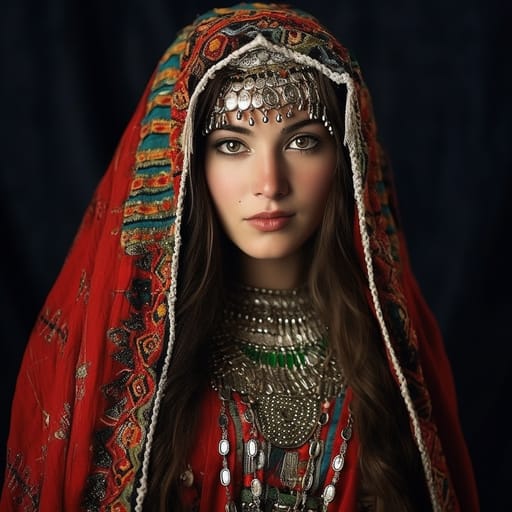
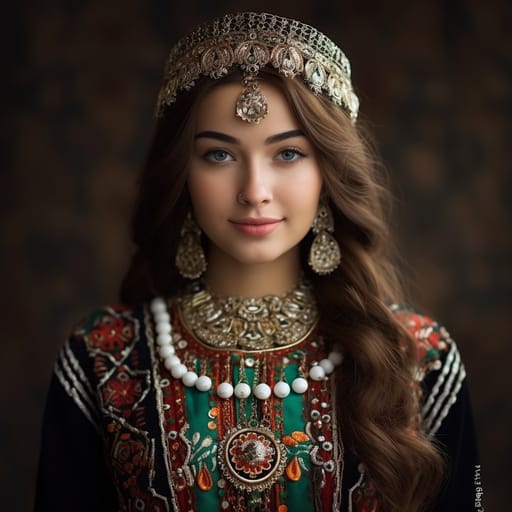
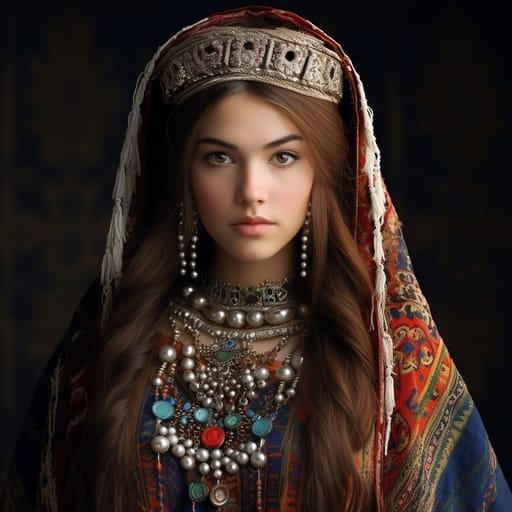
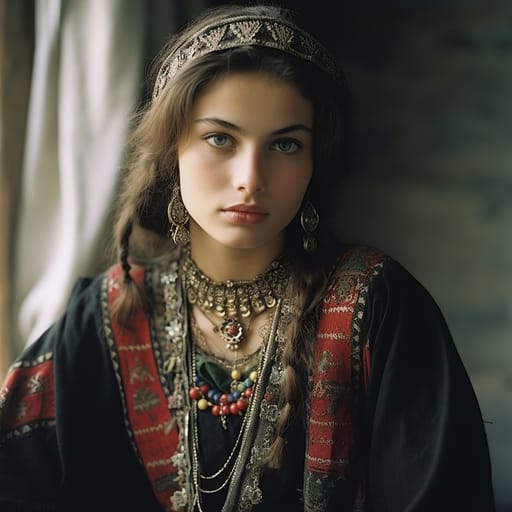
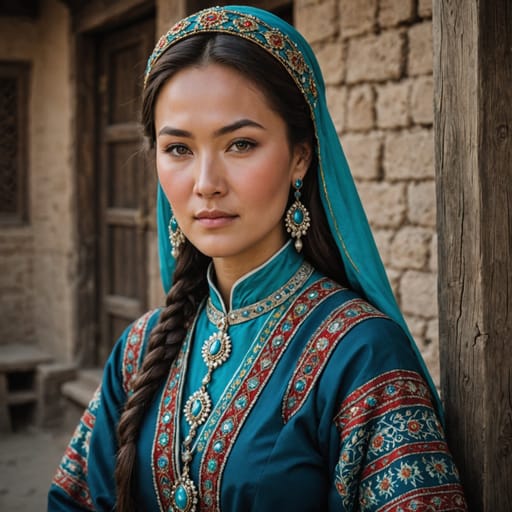
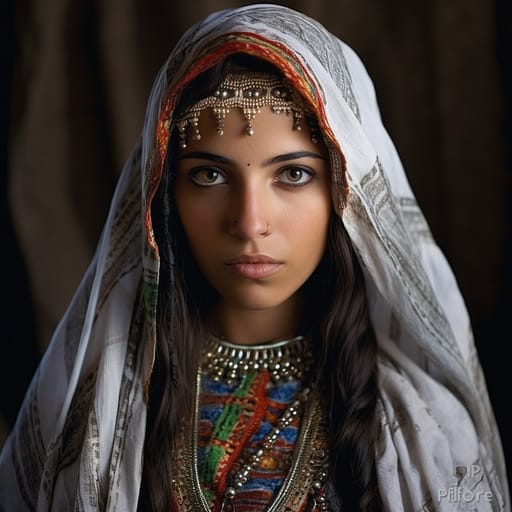
Typical Siddi Phenotypes
Reference for AI generation: hair, eyes, skin, facial structure, build
The Siddi are descendants of Bantu-speaking East Africans — primarily from the Swahili coast, Mozambique, and the Great Lakes region — brought to the Indian subcontinent over roughly a thousand years through Indian Ocean trade, Portuguese slave routes, and military service under the Deccan sultanates. Their phenotype reflects that African substrate filtered through fifteen-plus generations of intermarriage with Gujarati, Konkani, Sindhi, and Baluch populations, producing a recognizably African-rooted look layered with South Asian admixture that varies sharply by community.
Hair is typically Type 4 — tightly coiled to kinky — in jet black, often worn close-cropped by men and braided or covered by women. Looser Type 3 curl patterns appear in mixed-heritage individuals, particularly in Hyderabadi and urban Karnataka Siddis. Greying tends to come late. Eyes run dark brown to near-black, almond-shaped, with no epicanthic fold; the brow ridge is typically pronounced and the lashes thick and curled. Skin spans a wide band — Fitzpatrick V to VI — from deep umber through reddish-brown to near-black, with warm undertones. The Karnataka Siddis (Yellapur, Haliyal, Mundgod forest belts) preserve the darkest, most uniformly African complexions; Gujarati Siddis around Junagadh and Jambur show somewhat lighter skin and more frequent admixture features.
Facial structure is the clearest African signature: broad nasal alar base with a low-to-medium bridge, full everted lips with pronounced vermilion border, prognathic jaw in a meaningful minority, and high zygomatic arches. The combination of distinctly Sub-Saharan craniofacial morphology with South Asian dress, Sufi-Islamic religious practice, and Konkani or Gujarati speech is what makes the Siddi visually unmistakable.
Build is generally lean and wiry, with the muscular density and shoulder breadth associated with East African ancestry — Siddis have historically been recruited as wrestlers, soldiers, and athletes (the community produced national-level track athletes through Karnataka's Special Area Games scheme). Stature averages slightly below the regional South Asian mean for women and roughly equivalent for men, with low body fat and long limbs proportional to torso.
Data depth
0/100Coverage of image-grounded phenotype observations · drives AI generation diversity
- Sample size
- 0/40· 0 images
- Image quality
- 0/30· 0% high
- Confidence
- 0/20
- Source diversity
- 0/10
- ·No image observations yet
Explore phenotype categories
Structured taxonomy with peer-reviewed scales · 22 anatomical categories
Notable Siddi People
5 reference figures, sourced from Wikipedia
- Malik Ambar, military leader
- Hassan Ali Mirza, first nawab of Murshidabad
- Shantaram Siddi, politician; first ever Indian legislator of African descent
- Jamal-ud-Din Yaqut, slave-turned-nobleman and a close confidant of Delhi Sultanate monarch Razia …
- Zamor, French revolutionary
Erotic Poses & Sex Positions
From the pose catalog: 219 named positions with reference skeletons
Frequently asked questions about Siddi people
Where is the Siddi homeland?
The Siddi homeland is Pakistan (Baluchistan, Sindh), India (Karnataka, Gujarat, Hyderabad) in Central Asia.
What language do Siddi people speak?
Siddi people primarily speak Niger-Congo / Bantu / Swahili / Sidi.
What religion do Siddi people practice?
The predominant religion among Siddi people is Islam.






Make your own Siddi images
Five a day, free, no credits to buy. The studio starts from this group's phenotype data, so you can set body type, pose and style and keep the traits accurate.
Start with Siddi