Help us get this right
Does this portrait look right for Pashayi?
One tap. It takes a second and it is recorded.
1 says it looks right, 0 say it looks off.
Pashayi Erotic
Afghanistan (Laghman, Kapisa and Nangarhar Provinces)
Islam
About Pashayi People
The Pashayi live in the forested side-valleys of eastern Afghanistan — the back country of Laghman, Kapisa, Kunar, and Nangarhar — where the land folds up off the Kabul River plain into oak and cedar slopes. They are an Indo-Aryan people surrounded by Iranian-speaking neighbors, which is the first thing worth knowing about them: their language belongs to the Dardic branch, a small and fractured group that includes Kashmiri and the Kohistani tongues to the east, and it has held its ground in pockets where larger languages, Pashto in particular, press in from every direction. Pashayi is not one tidy speech but a cluster of regional varieties — broadly grouped into northeastern, southeastern, northwestern, and southwestern dialects — different enough that speakers from opposite ends of the territory often switch to Pashto to talk to each other.
The Pashayi are Sunni Muslims today, and have been for centuries, but their corner of the Hindu Kush was one of the last to convert. The region overlapped with the area medieval Muslim writers called Kafiristan — "the land of the unbelievers" — and the Pashayi were drawn into Islam earlier than the Kalasha and Nuristani groups further north and east, but later than most of Afghanistan. Echoes of that earlier religious world surface in folklore, in shrine practices, and in the sense of distance some Pashayi keep from more orthodox plains religion. Identity here is layered: a person is from a particular valley first, a particular dialect group second, Pashayi third, and Afghan fourth, in roughly that order.
Subsistence is mountain subsistence — terraced fields of wheat and maize, walnut and mulberry orchards, goats grazed up the slopes in summer and brought down before snow. Houses are stone and timber, often stacked into the hillside so the roof of one is the courtyard of the next. The decades of war that flattened so much of Afghan public life passed through these valleys too; many Pashayi fought in the resistance, many migrated to Kabul or Peshawar, and the dialect map has been reshaped by displacement and return. Census numbers are rough — somewhere between several hundred thousand and over a million — and the group has long been undercounted because Pashayi-speakers in mixed districts are often recorded simply as Pashtuns. They are quieter than their neighbors in the national story, and that quietness is partly chosen.
Related ethnic groups
Groups that share Pashayi's homeland, region, language, or religious tradition. These are likely candidates for comparative phenotype reference.
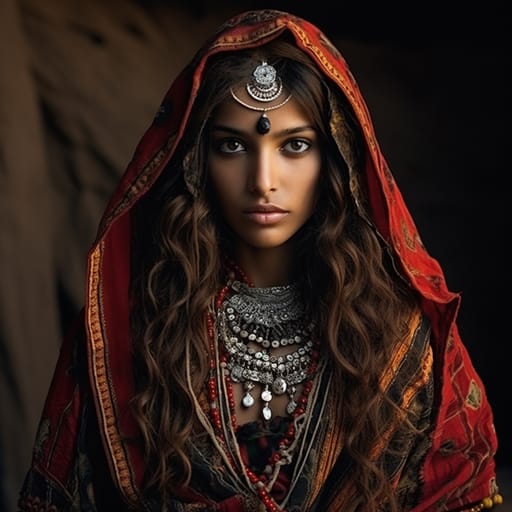
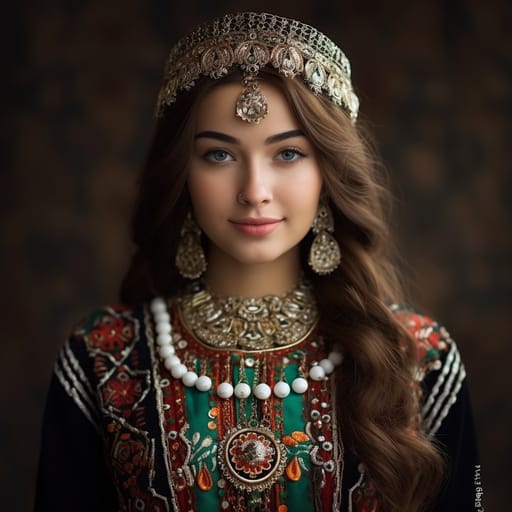
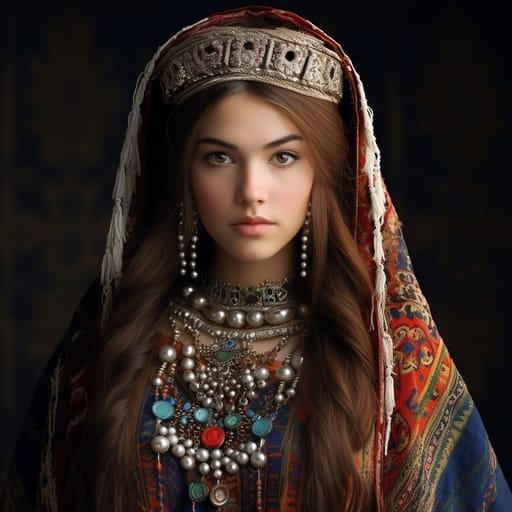
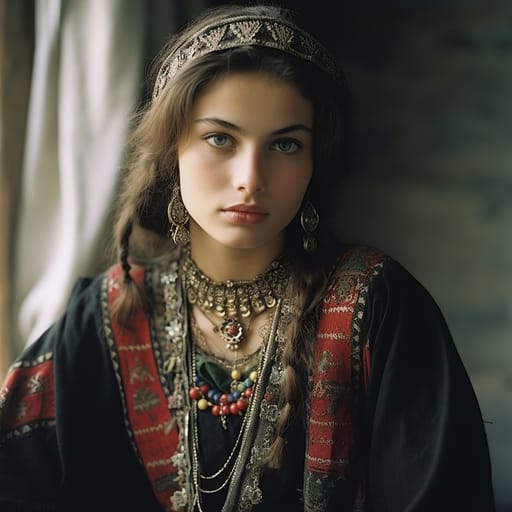
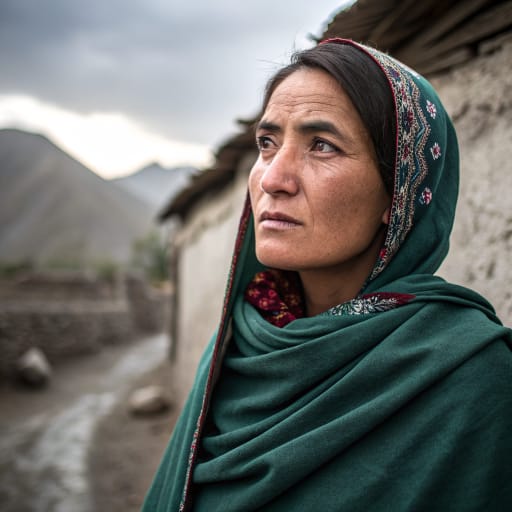
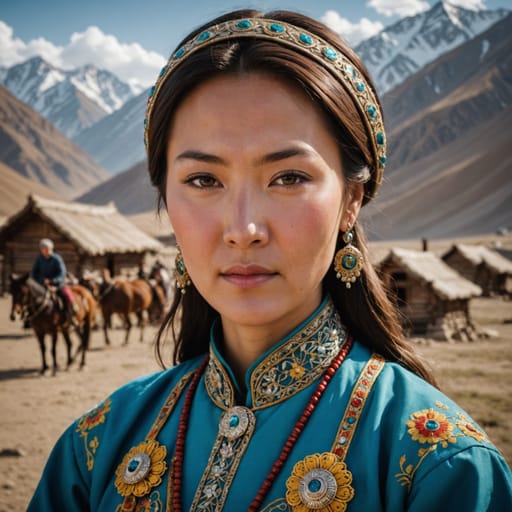
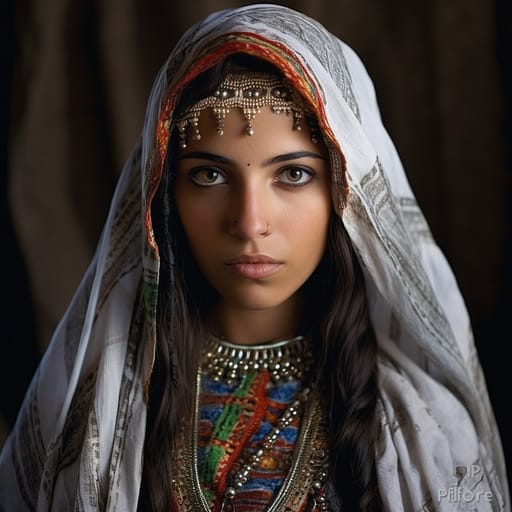
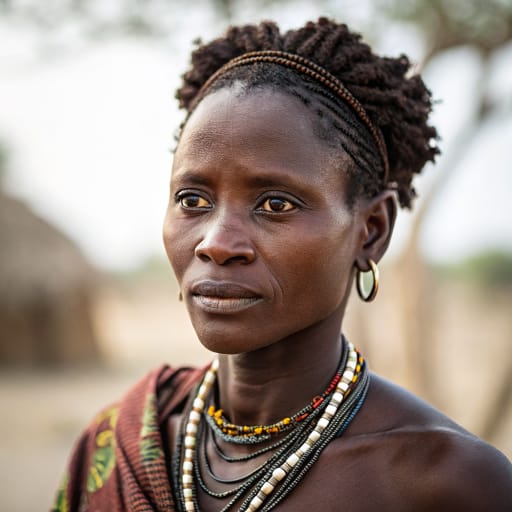
Typical Pashayi Phenotypes
Reference for AI generation: hair, eyes, skin, facial structure, build
The Pashayi are a Dardic-speaking population of the eastern Afghan highlands — Laghman, Kapisa, and Nangarhar — and their phenotype reflects that mountain-Dardic lineage more than the Pashtun majority that surrounds them. Hair is typically dark brown to near-black, with a meaningful minority showing chestnut or auburn cast in sunlight; texture runs straight to loosely wavy, rarely tightly curled, and male facial hair grows in dense and is usually worn full. Beards going salt-and-pepper or fully grey by the forties is common and often striking against still-dark scalp hair.
Eyes are predominantly brown across a wide range — from almost-black to a warm honey — but light eyes (hazel, green, grey, occasionally pale blue) appear at noticeably higher rates than in lowland Afghan groups, a trait Pashayi share with neighbouring Nuristanis and Kalash. The eye is set deep under a strong, often continuous brow ridge; epicanthic folds are absent. Skin sits mostly in Fitzpatrick III–IV with a warm olive undertone; uncovered faces and forearms tan to a deeper bronze from high-altitude sun, while protected skin can be quite fair, giving the characteristic two-tone look seen in farmers and herders.
Facial structure is angular and vertically long: high, fairly narrow cheekbones, a straight or gently aquiline nose with a high bridge and moderate alar width, medium lips, and a defined jaw that reads square in men and oval in women. The overall impression is closer to a Hindu Kush mountain face than a Persianate or South Asian one. Builds tend to be lean and wiry — medium stature, roughly 165–175 cm in men, with low body fat from terraced-farming and pastoral life rather than bulk; commander-type figures like Hazrat Ali show the broader-shouldered end of that range. Sub-group variation between Northern (Kohistani) and Southern Pashayi is mostly linguistic, but Northern valleys produce the highest frequency of light eyes and the lightest skin in the group.
Data depth
0/100Coverage of image-grounded phenotype observations · drives AI generation diversity
- Sample size
- 0/40· 0 images
- Image quality
- 0/30· 0% high
- Confidence
- 0/20
- Source diversity
- 0/10
- ·No image observations yet
Explore phenotype categories
Structured taxonomy with peer-reviewed scales · 22 anatomical categories
Notable Pashayi People
4 reference figures, sourced from Wikipedia
- Hazrat Ali, Northern Alliance commander
- Rafiullah Bidar, IEC Commissioner
- Muhammad Alim Qarar, Hezb-e Islami commander
- Abdul Rahman Rahmani, Kabul Eagles cricketer
Erotic Poses & Sex Positions
From the pose catalog: 219 named positions with reference skeletons
Frequently asked questions about Pashayi people
Where is the Pashayi homeland?
The Pashayi homeland is Afghanistan (Laghman, Kapisa and Nangarhar Provinces) in Central Asia.
What language do Pashayi people speak?
Pashayi people primarily speak Indo-European / Indo-Aryan / Dardic / Pashayi.
What religion do Pashayi people practice?
The predominant religion among Pashayi people is Islam.






Make your own Pashayi images
Five a day, free, no credits to buy. The studio starts from this group's phenotype data, so you can set body type, pose and style and keep the traits accurate.
Start with Pashayi