No portrait yet
Sayan Samoyeds Erotic
Eastern and Western Sayan Mountains and their northern foothills, southern Siberia, Russia: today's southern Krasnoyarsk Krai, Khakassia, Tuva, and nearby parts of Irkutsk Oblast and Buryatia.
Mator, with Taigi and Karagas dialects, and Kamassian, with a Koibal dialect (Samoyedic branch of Uralic). All extinct: Mator by the 1840s, Kamassian in 1989.
Shamanism and animist beliefs; nominal Russian Orthodox baptism in the 18th and 19th centuries.
Mators (Motors), Taigis, Karagas, Kamasins (taiga and steppe divisions) and Koibals, sometimes also the Soyots. Part of the wider Samoyedic peoples with the Nenets, Enets, Nganasans and Selkups.
About Sayan Samoyeds People
The Sayan Samoyeds were a cluster of small taiga peoples who lived in the Sayan Mountains of southern Siberia until the nineteenth and early twentieth centuries, when the last of them were absorbed by their Turkic and Russian neighbors; their descendants are found today among the Khakas, Tofalars, Todzha Tuvans, Soyots and the Russian villagers of southern Krasnoyarsk Krai. What made them a group was language. The Mators, Taigis, Karagas, Kamasins and Koibals all spoke Samoyedic tongues, relatives of Nenets and Nganasan on the Arctic coast, yet they lived over a thousand kilometers to the south, in mountain forest along the upper Yenisei and its tributaries: the Tuba, the Kan, the Mana.
That position is why scholars care about them. Since Matthias Castrén traveled through in the 1840s, the Sayan has been argued over as a possible cradle of the whole Samoyedic family, with these peoples as the ones who stayed while others drifted north. They hunted sable and elk, fished, dug lily bulbs, and kept small herds of reindeer for riding, packing and milk rather than meat. Some researchers count the Sayan among the earliest centers of reindeer domestication. Families lived in conical tents covered with birch bark in summer and hides in winter, and shamans handled illness, hunting luck and the spirit world.
From the seventeenth century they were squeezed between powers. Russian forts on the Yenisei demanded fur tribute, and so did the Yenisei Kyrgyz and the Mongol and Dzungar khans to the south, leaving some bands paying twice. Surrounded by larger Turkic populations, most shifted language within a few generations. The Koibals became a division of the Khakas, the Karagas became the Tofalars, and Mator was already gone when Castrén went looking for it: what survives was pieced together from eighteenth century word lists. The Kamasins split in two, steppe dwellers who took up stock raising and Turkic speech, and taiga hunters who held on to Kamassian longest.
Kamassian is the one Sayan Samoyedic language with a real record. The Finnish linguist Kai Donner worked with its last speaking community between 1912 and 1914 in the village of Abalakovo, where the taiga Kamasins had given up their reindeer and farmed like their Russian neighbors. The final speaker, Klavdiya Plotnikova, was recorded by Estonian linguists in the 1960s and 1970s and died in 1989. With nobody left to talk to, she reportedly kept the language alive by praying in it. The languages are gone, but the Sayan Samoyeds remain in Sayan river names, in clan names carried by Khakas, Tofalars and Tuvans, and in the reindeer riding that Tofalar and Todzha herders still practice.
Related ethnic groups
Groups that share Sayan Samoyeds's homeland, region, language, or religious tradition. These are likely candidates for comparative phenotype reference.
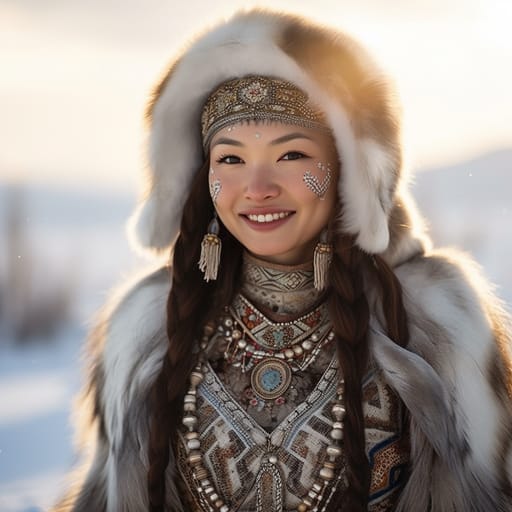
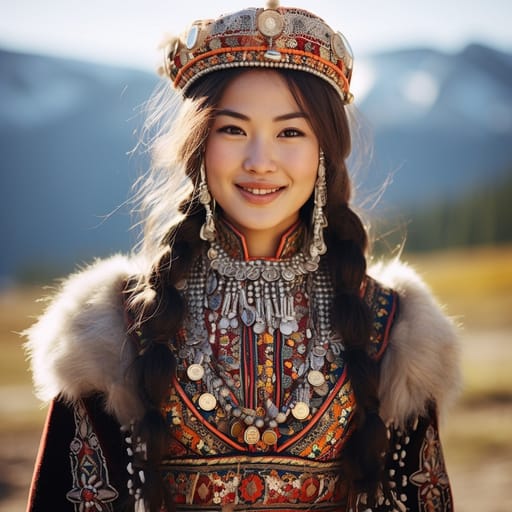
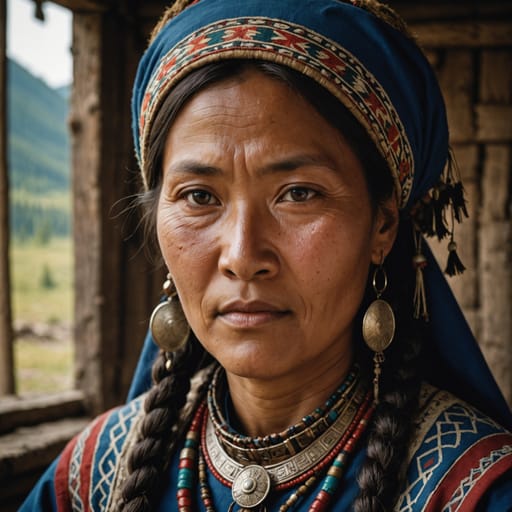
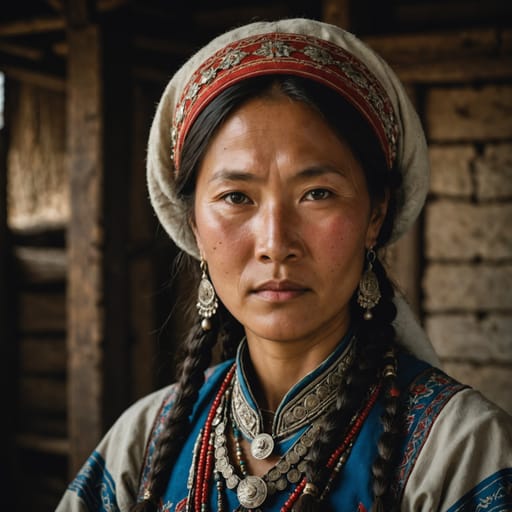
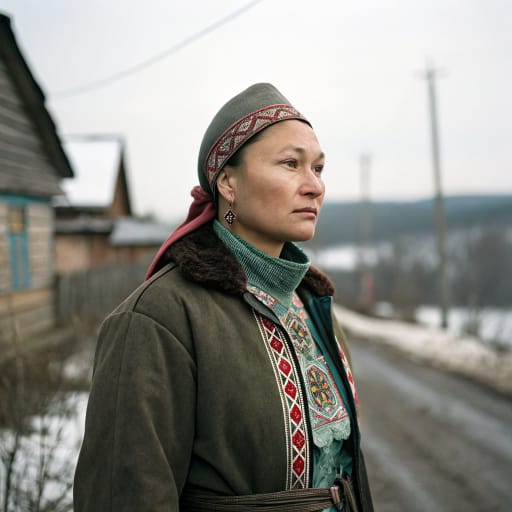
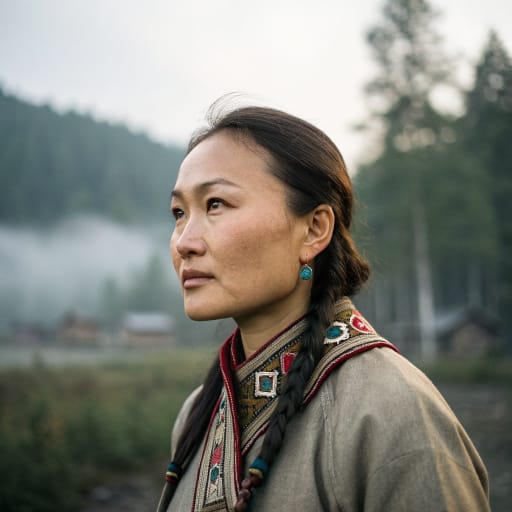
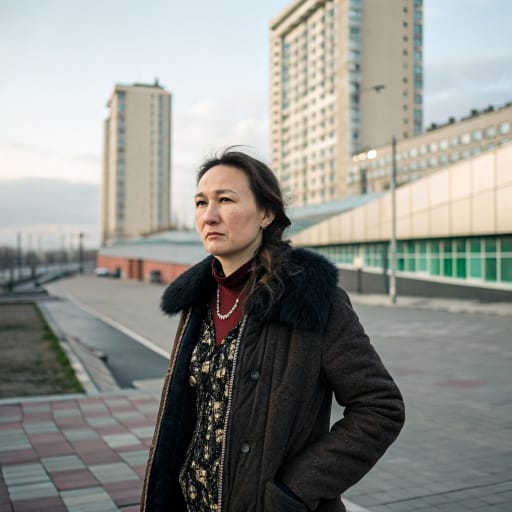
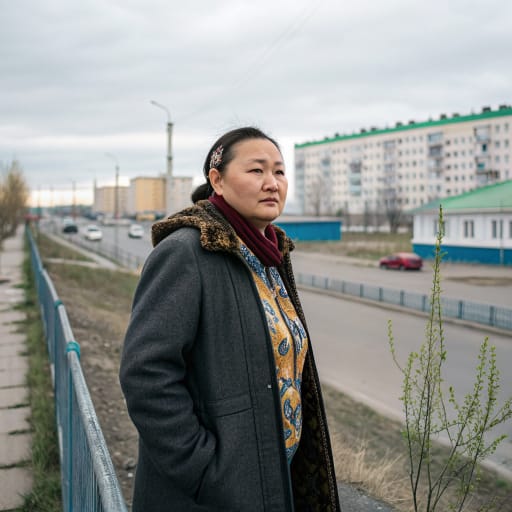
Typical Sayan Samoyeds Phenotypes
Reference for AI generation: hair, eyes, skin, facial structure, build
Sayan Samoyeds Body & Anatomy Reference
Per-feature anatomical profile for AI nude generation: Siberian Indigenous / Tungusic phenotype
Sayan Samoyeds Boobs & Breasts
The typical Sayan Samoyeds bust is small-to-medium cup, modest projection, in line with the wider Siberian Indigenous / Tungusic pattern. Areolas usually fall in the 26-38mm range, with medium-brown areolar pigmentation against the light-to-medium skin tone. Compared with the fuller Central Asian or East Asian bust, Sayan Samoyeds breasts sit forward and are generally firm, modest projection. A faithful AI render of Sayan Samoyeds tits keeps that shape and areola size.
Sayan Samoyeds Ass & Hips
Butt shape among Sayan Samoyeds women: small-to-medium, modest projection, over narrow-to-medium iliac crests. This follows Siberian Indigenous / Tungusic ancestry and looks quite unlike the broader Central Asian hip profile. An accurate Sayan Samoyeds ass in adult AI imagery keeps both the silhouette and the overall build (mesomorph, broader stocky frame adapted to cold climate) instead of a generic average.
Sayan Samoyeds Vagina & Pussy
Vulvar anatomy among Sayan Samoyeds women: medium-brown labial pigmentation. Pubic hair tends to be straight fine-to-medium texture, sparser distribution, in the usual inverted-triangle pattern. Both follow Siberian Indigenous / Tungusic pigmentation, which is why Sayan Samoyeds pussy renders should not fall back on a pale, sparse Western template.
Sayan Samoyeds Dicks & Penis
The Sayan Samoyeds cock profile, from Siberian Indigenous / Tungusic anthropometric data: regional mean ~12cm erect; moderate girth; medium-brown shaft pigmentation. Pubic hair has a straight fine-to-medium texture and forms the usual inverted-V pattern. Whether Sayan Samoyeds men are circumcised follows religious and cultural practice rather than phenotype.
Sayan Samoyeds Body, Curves & Build
Build and curves among Sayan Samoyeds women follow the Siberian Indigenous / Tungusic pattern: mesomorph, broader stocky frame adapted to cold climate, mean adult female BMI 22-25. Proportions matter as much as skin tone, so Sayan Samoyeds figures should keep their regional height and limb ratios.
Sayan Samoyeds Skin Tone & Hair Texture
The Sayan Samoyeds skin range is light to medium (Fitzpatrick II-IV), and hair tends to be straight 1A, dark-brown to black. That combination marks the Siberian Indigenous / Tungusic phenotype, and skin tone is the trait AI generators most often get wrong for Sayan Samoyeds women.
Explore phenotype categories
Structured taxonomy with peer-reviewed scales · 22 anatomical categories
Erotic Poses & Sex Positions
From the pose catalog: 219 named positions with reference skeletons
Frequently asked questions about Sayan Samoyeds people
Where is the Sayan Samoyeds homeland?
The Sayan Samoyeds homeland is Eastern and Western Sayan Mountains and their northern foothills, southern Siberia, Russia: today's southern Krasnoyarsk Krai, Khakassia, Tuva, and nearby parts of Irkutsk Oblast and Buryatia. in Northern Asia.
What language do Sayan Samoyeds people speak?
Sayan Samoyeds people primarily speak Mator, with Taigi and Karagas dialects, and Kamassian, with a Koibal dialect (Samoyedic branch of Uralic). All extinct: Mator by the 1840s, Kamassian in 1989..
What religion do Sayan Samoyeds people practice?
The predominant religion among Sayan Samoyeds people is Shamanism and animist beliefs; nominal Russian Orthodox baptism in the 18th and 19th centuries..






Make your own Sayan Samoyeds images
Five a day, free, no credits to buy. The studio starts from this group's phenotype data, so you can set body type, pose and style and keep the traits accurate.
Start with Sayan Samoyeds