No portrait yet
Rangrez Erotic
North India, chiefly Uttar Pradesh, Rajasthan, Bihar, Delhi, Madhya Pradesh and Gujarat; a Partition-era branch in Karachi and other towns of Sindh, Pakistan.
Urdu and Hindi (Indo-Aryan, Indo-European), plus regional speech such as Marwari and Bhojpuri; no distinct community language.
Sunni Islam, with both Barelvi and Deobandi orientations.
A Muslim occupational biradari of North India, split into regional marriage circles by state; closely related to the Nilgar (indigo dyers) and Chhipa (cloth printers); counted among Pasmanda Muslims. The Pakistani branch sits within the Muhajir community.
About Rangrez People
The name is the job. Rangrez comes from Persian: rang, color, and rez, to pour. The Muslim Rangrez are the hereditary dyers of North India, a community whose identity formed around the dye vat and held together long after most of its members stopped working at one. They live across Uttar Pradesh, Rajasthan, Bihar, Delhi, Madhya Pradesh and Gujarat, mostly in the old quarters of towns and cities. A branch that left at Partition in 1947 now lives in Karachi and the towns of Sindh among Pakistan's Urdu-speaking Muhajirs. Some families use Sabbagh, the Arabic word for dyer, as a surname.
There is no Rangrez language. They speak what their neighbors speak: Urdu and Hindi nearly everywhere, Marwari and other Rajasthani dialects in the west, Bhojpuri further east. They are Sunni Muslims, with both Barelvi and Deobandi leanings represented. The community works the way most North Indian Muslim occupational groups do, as a biradari: a brotherhood that marries within itself, keeps track of its own, and traditionally settled disputes through a council of elders. Those councils carry less weight than they once did, but marriage inside the community is still the norm. In Indian politics the Rangrez count among the Pasmanda, the artisan and laboring Muslim castes whose movement argues that they are most of India's Muslims and very little of its Muslim leadership. Several states list them as an Other Backward Class.
The craft itself was always a cross-community business. Rangrez dyers colored turbans, saris, veils and wedding cloth to order, and their customers were as likely to be Hindu as Muslim. In Rajasthan that trade is still alive. The diagonal wave patterns of leheriya and the dotted tie-dye of bandhej sold in Jaipur and Jodhpur pass through Rangrez hands, the tying often done by women at home and the dyeing in family workshops. Elsewhere the hand dyer lost ground from the late nineteenth century on, first to synthetic dyes, then to mill cloth that arrived already colored. Families moved into dry cleaning, tailoring, small shops and wage labor, and the younger generation into schooling and salaried work. Closely related groups include the Nilgar, who specialized in indigo, and the Chhipa cloth printers, and in some places the lines between them blur.
Related ethnic groups
Groups that share Rangrez's homeland, region, language, or religious tradition. These are likely candidates for comparative phenotype reference.
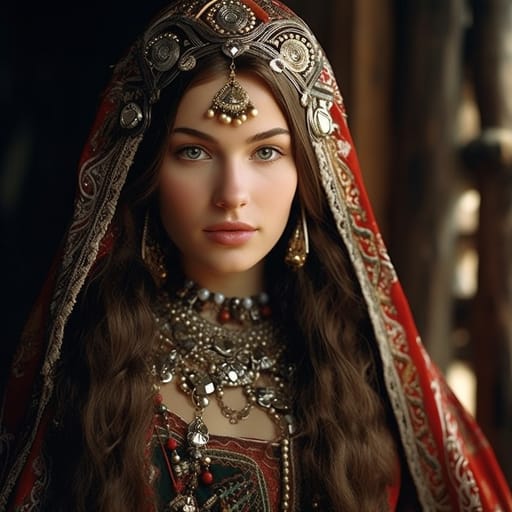
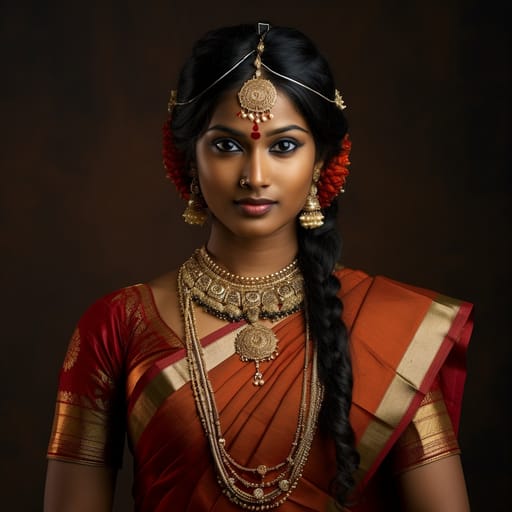
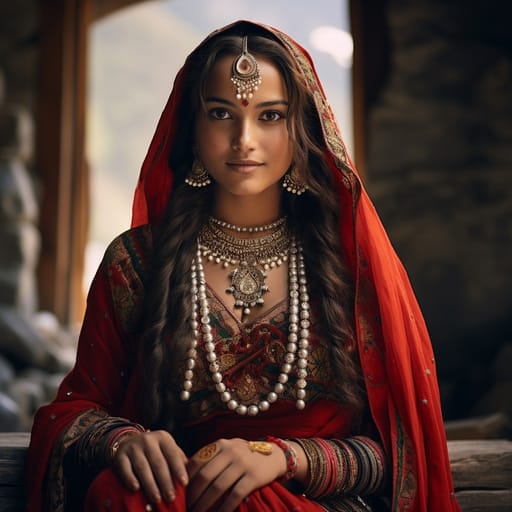
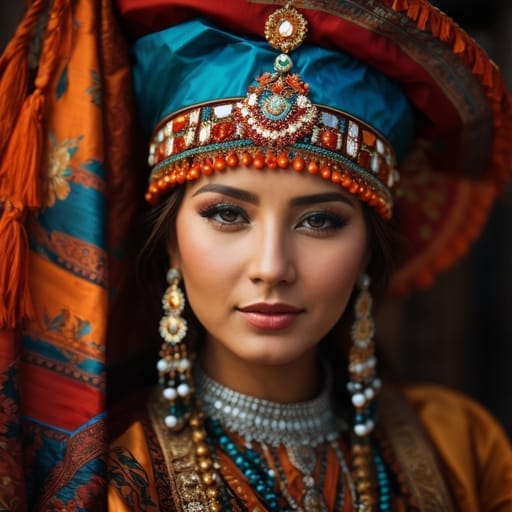
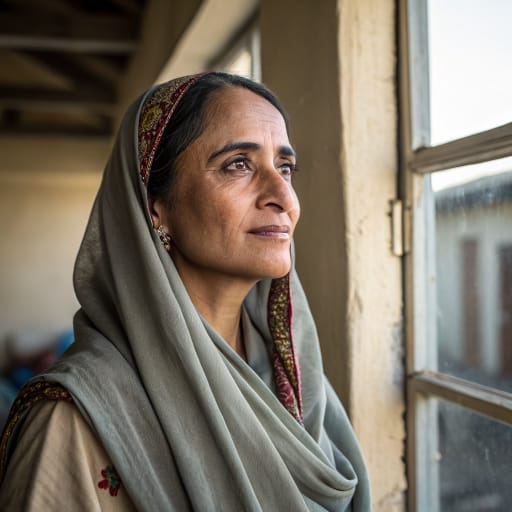
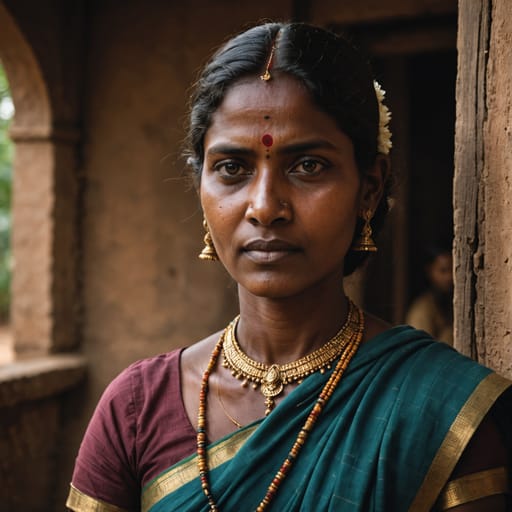
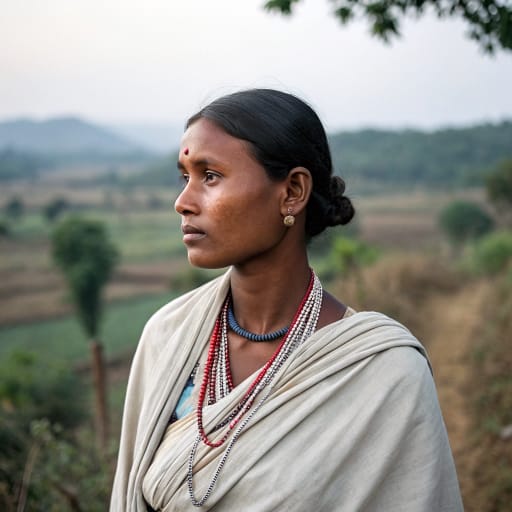
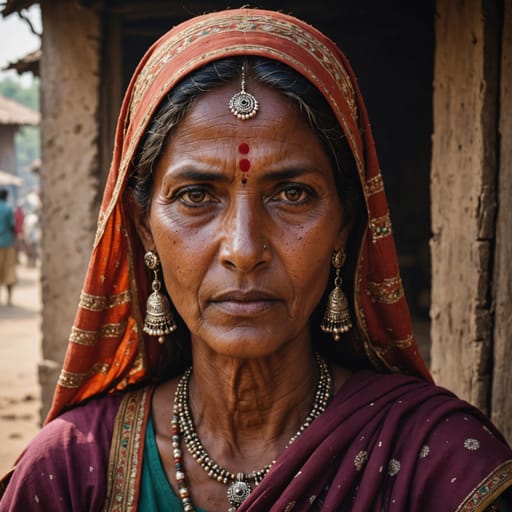
Typical Rangrez Phenotypes
Reference for AI generation: hair, eyes, skin, facial structure, build
Rangrez Body & Anatomy Reference
Indo-Aryan / Dravidian South Asian phenotype: anatomy reference for AI nude generation
Rangrez Boobs & Breasts
Bust reference for Rangrez women: medium-to-large cup, moderate-to-full projection, which is typical of Indo-Aryan / Dravidian South Asian ancestry. Areolas measure about 32-46mm across, with medium-brown to dark-brown pigmentation. Body type (endomorph-to-mesomorph with fuller hip deposition) shapes the bust as well, so Rangrez tits are usually full and soft, generally fuller than the East Asian norm. In AI imagery, keep the forward-set shape rather than drifting toward the smaller East Asian bust profile.
Rangrez Ass & Hips
The Rangrez ass is typically medium-to-full, moderate-to-high projection, classic curvy hip profile, which sets it apart from the slim hip profile of East Asian women. Underneath, the pelvis shows medium-to-wide iliac crests, full gluteal-femoral fat distribution, part of the Indo-Aryan / Dravidian South Asian skeletal pattern. For Rangrez butt pics and AI renders, match that silhouette and the overall build (endomorph-to-mesomorph with fuller hip deposition).
Rangrez Vagina & Pussy
Rangrez pussy and vulvar anatomy presents medium-brown to dark-brown labial pigmentation, fuller labia minora projection, consistent with the Indo-Aryan / Dravidian South Asian phenotype's pigmentation pattern. Rangrez pubic hair is typically straight-to-wavy coarse texture, dense distribution, in the inverted-triangle pattern. For anatomically accurate Rangrez pussy renders the labial coloration should match the surrounding wheatish to brown skin tone with a continuous gradient, and the hair should keep its straight-to-wavy coarse texture.
Rangrez Dicks & Penis
Rangrez dicks follow the Indo-Aryan / Dravidian South Asian reference data: regional mean ~13cm erect; moderate girth; medium-brown shaft pigmentation. Shaft color should track the wheatish to brown skin tone with a smooth change toward the glans, and Rangrez pubic hair keeps its straight-to-wavy coarse texture.
Rangrez Body, Curves & Build
Rangrez body type and overall build presents as endomorph-to-mesomorph with fuller hip deposition, with mean adult female BMI 22-25: the characteristic Indo-Aryan / Dravidian South Asian habitus. Rangrez curves and proportions should keep the regional skeletal frame (height, shoulder-to-hip ratio, limb proportions) rather than a generic mesomorph default.
Rangrez Skin Tone & Hair Texture
Rangrez skin sits in the wheatish to brown (Fitzpatrick III-V) band. Hair is typically straight-to-wavy 1A-2B, dense, dark-brown to black, in keeping with the Indo-Aryan / Dravidian South Asian phenotype. In nude renders the skin should stay one even tone from face to body, and body, pubic and head hair should match.
Explore phenotype categories
Structured taxonomy with peer-reviewed scales · 22 anatomical categories
Erotic Poses & Sex Positions
From the pose catalog: 219 named positions with reference skeletons
Frequently asked questions about Rangrez people
Where is the Rangrez homeland?
The Rangrez homeland is North India, chiefly Uttar Pradesh, Rajasthan, Bihar, Delhi, Madhya Pradesh and Gujarat; a Partition-era branch in Karachi and other towns of Sindh, Pakistan. in Southern Asia.
What language do Rangrez people speak?
Rangrez people primarily speak Urdu and Hindi (Indo-Aryan, Indo-European), plus regional speech such as Marwari and Bhojpuri; no distinct community language..
What religion do Rangrez people practice?
The predominant religion among Rangrez people is Sunni Islam, with both Barelvi and Deobandi orientations..






Make your own Rangrez images
Five a day, free, no credits to buy. The studio starts from this group's phenotype data, so you can set body type, pose and style and keep the traits accurate.
Start with Rangrez