Q’anjob’al Erotic
The Cuchumatanes highlands of northern Huehuetenango, Guatemala, centered on Soloma, Santa Eulalia, San Juan Ixcoy and Santa Cruz Barillas; migrant communities in Mexico and the United States
Q’anjob’al (Mayan, Q’anjob’alan branch), with Spanish widely spoken as a second language
Roman Catholic and evangelical Protestant, with traditional Maya ritual and calendar practice surviving in some communities
Maya; closely related to the Akateko and Popti’ (Jakaltek) peoples within the Q’anjob’alan language group
About Q’anjob’al People
The Q’anjob’al are a Maya people of the Cuchumatanes, the steep limestone ranges of northern Huehuetenango in Guatemala’s northwest. They are held together by a shared language and a cluster of mountain towns where it is spoken: San Pedro Soloma, Santa Eulalia, San Juan Ixcoy, and Santa Cruz Barillas, where the highlands drop toward the wetter Ixcán lowlands. For most families, life here has meant growing maize on hard slopes, cold mornings, and for generations, seasonal work on plantations down on the Pacific coast. Today, the money that builds a new house is just as likely to come from a job in the United States.
Q’anjob’al belongs to the western branch of the Mayan family. Its closest relatives are Akateko and Popti’, spoken in neighboring towns, and Akateko is so close that it was long counted as just a dialect of Q’anjob’al. Chuj is spoken just to the north and Mam to the south, so a day’s walk can take you through several languages whose speakers can’t understand each other. Q’anjob’al also has its own literature. Gaspar Pedro González, who grew up in Soloma, wrote La otra cara, often called the first novel published by a Maya author, and it exists in both Spanish and Q’anjob’al.
Most Q’anjob’al today are Catholic or evangelical Protestant, and the evangelical share has grown for decades. Older beliefs still run beneath both. When the anthropologist Oliver La Farge worked in Santa Eulalia in the early 1930s, he found prayer-makers keeping the 260-day ritual calendar and honoring the year bearers, the day signs that rule each year. That knowledge faded under pressure from missionaries and from the war, but it did not disappear.
The civil war is the turning point of modern Q’anjob’al history. In the early 1980s the army’s campaigns against the guerrillas burned villages across northern Huehuetenango, and thousands fled into refugee camps in Chiapas. Many kept going north. Indiantown, Florida, became an early Q’anjob’al settlement in the 1980s, and others followed in Los Angeles and beyond. Q’anjob’al is now one of the Mayan languages US immigration courts most often need interpreters for. At home, the fight has moved to land and water. In 2012, protests against a hydroelectric dam in Santa Cruz Barillas led the government to declare a state of siege there.
Related ethnic groups
Groups that share Q’anjob’al's homeland, region, language, or religious tradition. These are likely candidates for comparative phenotype reference.
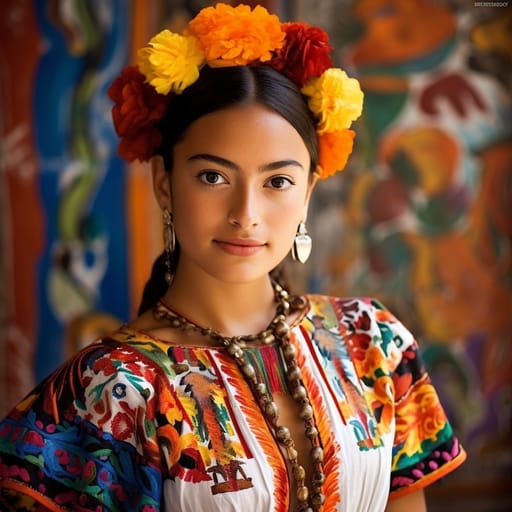
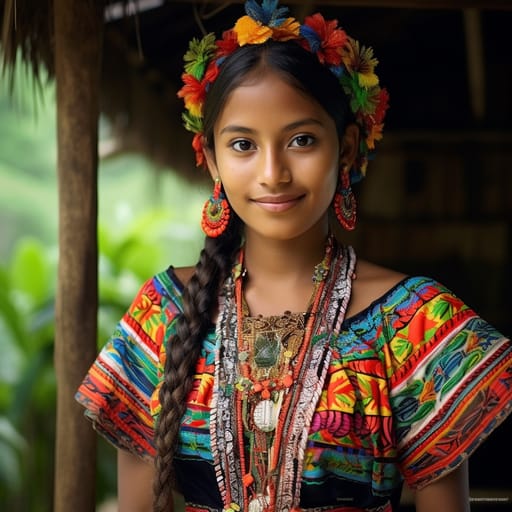
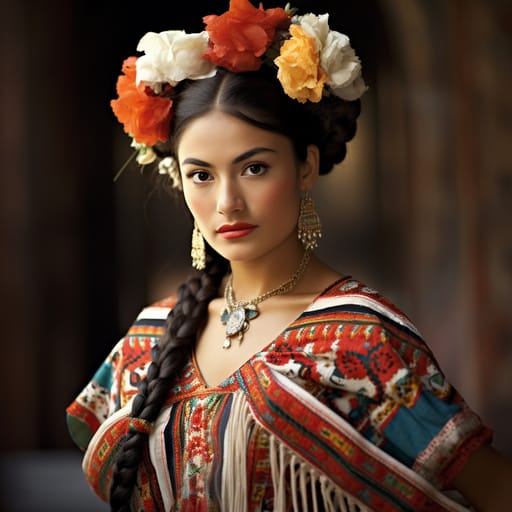
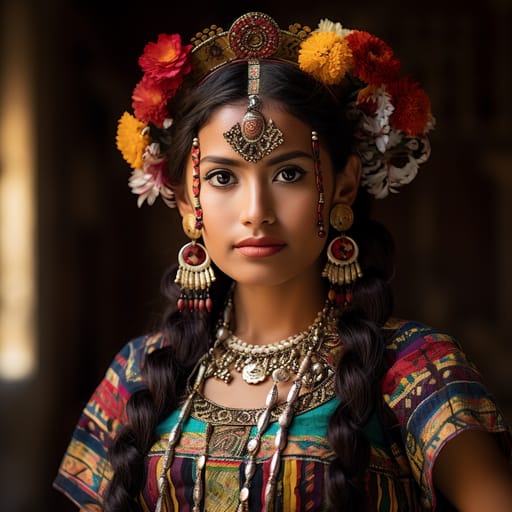
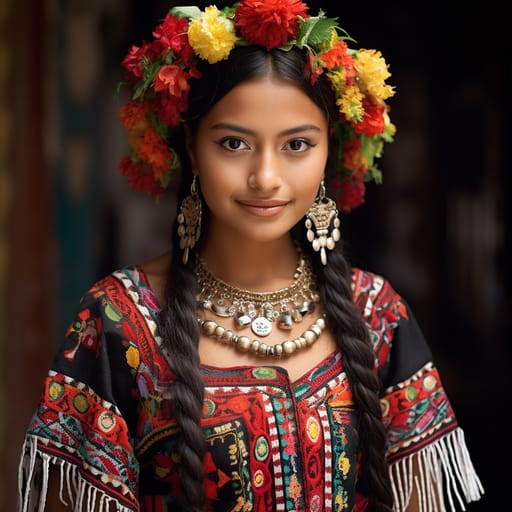
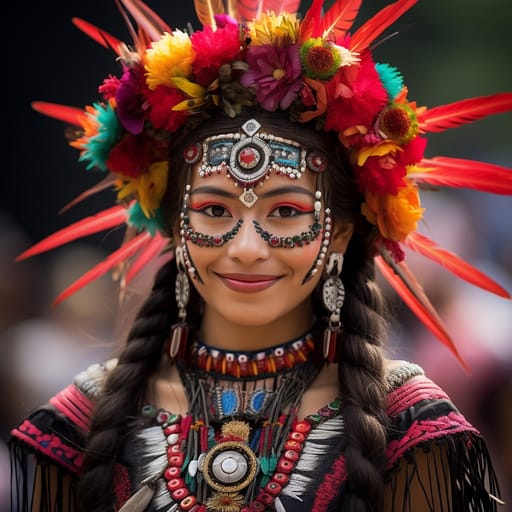
Typical Q’anjob’al Phenotypes
Reference for AI generation: hair, eyes, skin, facial structure, build
Q’anjob’al Body & Anatomy Reference
Per-feature anatomical profile for AI nude generation: Mesoamerican Indigenous / Mestizo phenotype
Q’anjob’al Boobs & Breasts
Q’anjob’al tits and boobs run medium-to-large cup, full, moderate-to-high projection, the classic Mesoamerican Indigenous / Mestizo bust profile. Q’anjob’al nipples and areolas show medium-brown to dark-brown areolar pigmentation against the tan-to-medium-brown skin tone, with areolar diameter typically in the 32-46mm range and forward-set positioning rather than the smaller East Asian bust. Q’anjob’al breasts trend full and projecting, classic Latina curvy bust profile, a function of the endomorph-to-mesomorph with strong hip-and-bust deposition body habitus and the mean adult female BMI 26-29. For anatomically accurate AI-generated Q’anjob’al nudes the render preserves the medium-to-large cup, full, moderate-to-high projection shape, 32-46mm areolas with medium-brown to dark-brown pigmentation, and the torso proportions of the Mesoamerican Indigenous / Mestizo phenotype.
Q’anjob’al Ass & Hips
Q’anjob’al hips and butt usually read as medium-to-full, high projection, classic Latina curvy hip profile. The skeletal base is wide iliac crests, full gluteal-femoral fat deposition, the Mesoamerican Indigenous / Mestizo pattern. Set against the slim narrow-hip East Asian profile, the difference is easy to see, and the hip-to-waist ratio is often what identifies Q’anjob’al women in photos.
Q’anjob’al Vagina & Pussy
Expect medium-brown to dark-brown labial pigmentation, fuller labia minora on Q’anjob’al women, in keeping with Mesoamerican Indigenous / Mestizo ancestry. The pubic hair is straight-to-wavy coarse dark texture, dense distribution. Coloring should run evenly from the tan to medium-brown skin of the thighs to the labia, and Q’anjob’al nude imagery should keep the hair's straight-to-wavy coarse dark texture.
Q’anjob’al Dicks & Penis
Q’anjob’al dick and penile anatomy in adult AI generation should anchor on the regional reference data: regional mean ~13cm erect, moderate girth, and medium-brown shaft pigmentation. The Q’anjob’al cock profile reflects the Mesoamerican Indigenous / Mestizo population's anthropometric measurements. The shaft pigmentation should track the surrounding tan to medium-brown skin tone, and the pubic hair should keep its straight-to-wavy coarse dark texture in the typical inverted-V escutcheon.
Q’anjob’al Body, Curves & Build
Q’anjob’al body type: endomorph-to-mesomorph with strong hip-and-bust deposition, with mean adult female BMI 26-29. This is the typical Mesoamerican Indigenous / Mestizo build. Height range, shoulder-to-hip ratio and fat distribution all follow from it, which is what an accurate Q’anjob’al nude body should show.
Q’anjob’al Skin Tone & Hair Texture
Q’anjob’al skin tone falls in the tan to medium-brown (Fitzpatrick III-V) band, the surface signal most often miscalibrated by generic AI nude generators. Q’anjob’al hair texture is typically straight-to-wavy 1A-2B, dense dark-brown to black, characteristic of the Mesoamerican Indigenous / Mestizo phenotype. In Q’anjob’al nude renders the skin should hold that band consistently across the body.
Explore phenotype categories
Structured taxonomy with peer-reviewed scales · 22 anatomical categories
Erotic Poses & Sex Positions
From the pose catalog: 219 named positions with reference skeletons
Frequently asked questions about Q’anjob’al people
Where is the Q’anjob’al homeland?
The Q’anjob’al homeland is The Cuchumatanes highlands of northern Huehuetenango, Guatemala, centered on Soloma, Santa Eulalia, San Juan Ixcoy and Santa Cruz Barillas; migrant communities in Mexico and the United States in Central America.
What language do Q’anjob’al people speak?
Q’anjob’al people primarily speak Q’anjob’al (Mayan, Q’anjob’alan branch), with Spanish widely spoken as a second language.
What religion do Q’anjob’al people practice?
The predominant religion among Q’anjob’al people is Roman Catholic and evangelical Protestant, with traditional Maya ritual and calendar practice surviving in some communities.






Make your own Q’anjob’al images
Five a day, free, no credits to buy. The studio starts from this group's phenotype data, so you can set body type, pose and style and keep the traits accurate.
Start with Q’anjob’al