Help us get this right
Does this portrait look right for Mazatec?
Nobody has judged this one yet. You would be the first.
Mazatec Erotic
Oaxaca (Mexico)
Oto-Manguean / Popolocan / Mazatecan
Christianity / Catholicism
Ayautla
About Mazatec People
The Mazatec live in the rugged Sierra Mazateca of northern Oaxaca, a folded country of cloud forest, ravines and coffee slopes that drops from highland villages like Huautla down toward the lowland communities along the Papaloapan basin. Altitude does most of the cultural sorting: the Mazatec themselves distinguish between highland and lowland branches — including smaller communities such as Ayautla in the foothills — and the Mazatec language varies enough across these zones that speakers from distant villages sometimes struggle to understand each other. The language belongs to the Popolocan branch of Oto-Manguean, related to Ixcatec and Chocho, and it is famously tonal; in some communities it is also whistled, with men carrying conversations across a valley by reproducing the tones of speech without the vowels.
Catholicism arrived with the colonial period and stuck, but it sits on top of an older religious framework rather than replacing it. Saints occupy chapels; the mountain, the spring and the cave still occupy the cosmology. The most internationally known expression of this layering is the velada, the night-long healing ceremony in which a curandera reads the body's troubles through chanted prayer and the ingestion of sacred mushrooms — a practice that the healer María Sabina brought into uncomfortable global view in the late 1950s after the visit of the banker-mycologist R. Gordon Wasson. The attention that followed was, by most Mazatec accounts, a wound: outsiders came looking for visions, the ceremony was pulled out of its ritual context, and Sabina herself was ostracized at home for what had been shared. Mazatec communities have spent the decades since trying to reassert that these are religious specialists working within a specific moral economy, not service providers for spiritual tourism.
Day-to-day life turns on coffee, maize and the local market circuit, with strong communal obligations expressed through the cargo system — rotating, unpaid civic-religious posts that bind adults into the running of their town. Migration to Mexico City and to the United States has reshaped many households, but remittances flow back into the same village fiestas, the same patron-saint days, the same long, sung, candle-lit ceremonies that the older generation conducted before anyone outside Oaxaca had heard the word Mazatec.
Related ethnic groups
Groups that share Mazatec's homeland, region, language, or religious tradition. These are likely candidates for comparative phenotype reference.
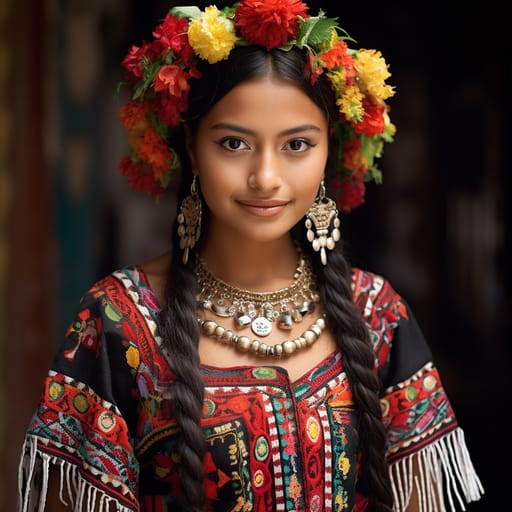
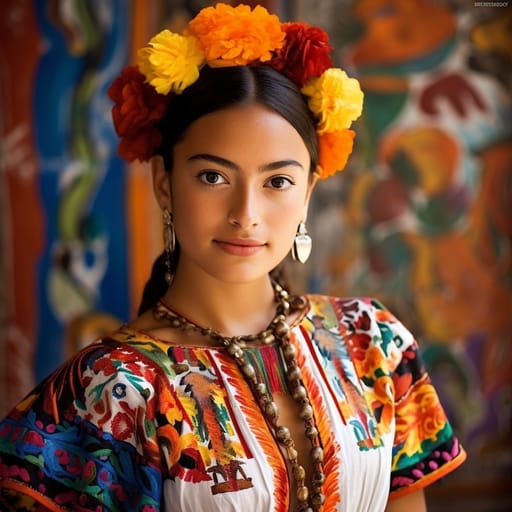
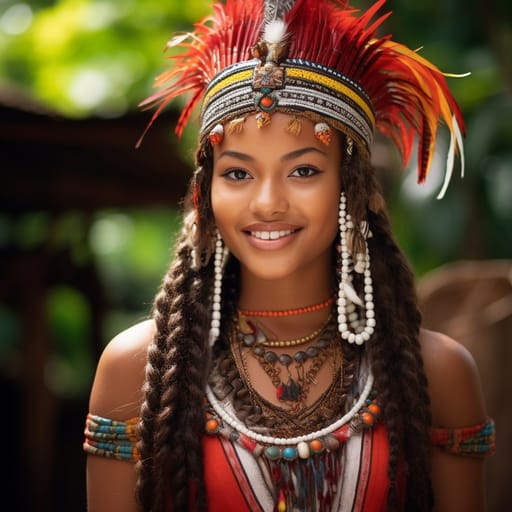
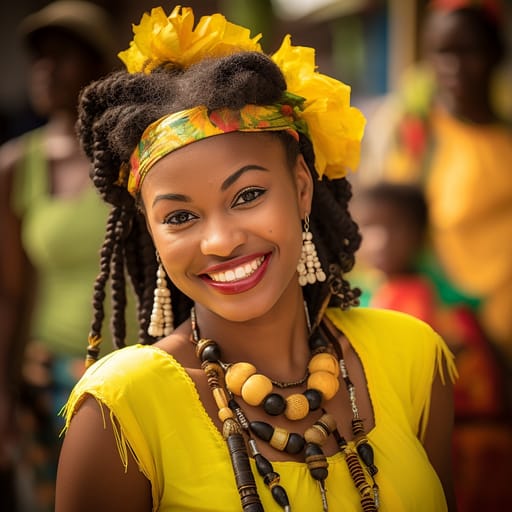
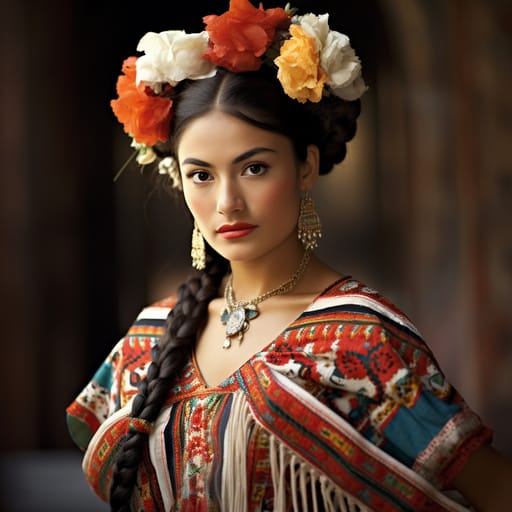
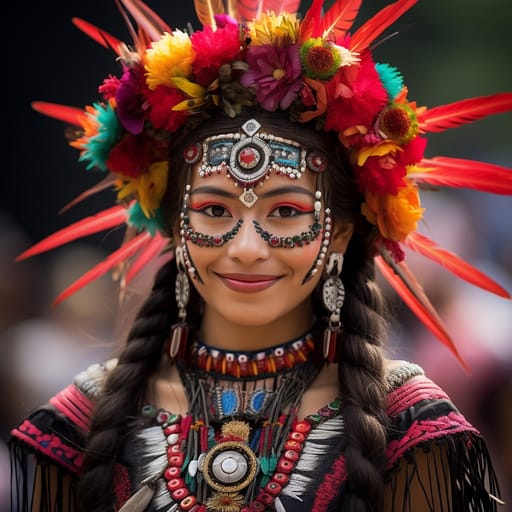
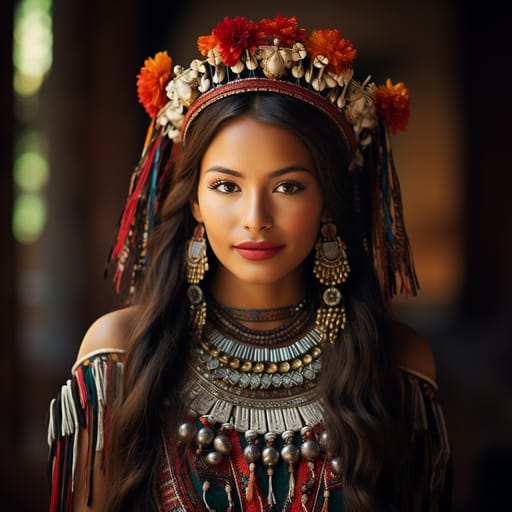
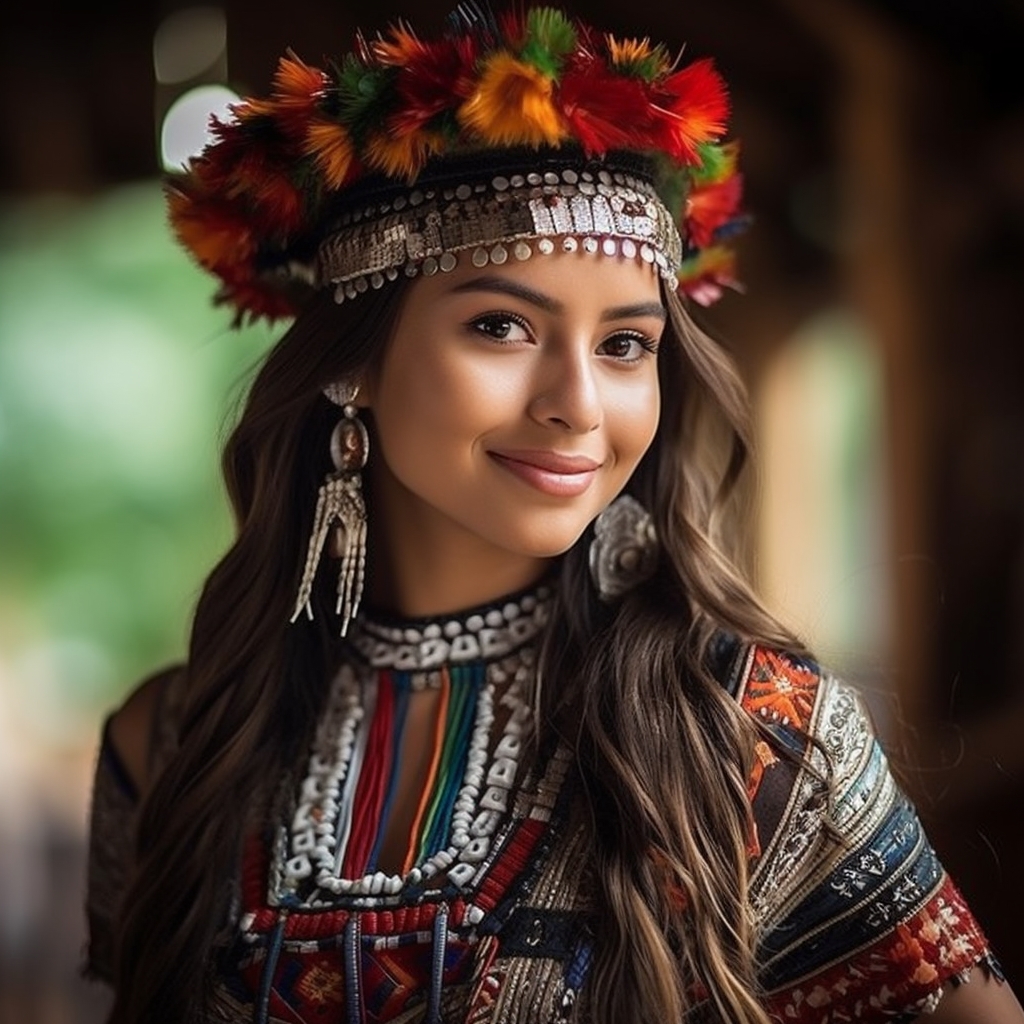
Geographic Distribution: Mazatec populations across 1 country
Each row is ranked by the group's share of that country's population, with the source citation drawn from published census and demographic surveys. Click through for the full per-country phenotype profile.
| Country | Share | Source |
|---|---|---|
| Mexico | 0.4% | INEGI 2020, Mazatec speakers and self-identifiers, primarily Oaxaca and Puebla (~240K aggregate, weighted down for the named-group aggregate) |
Typical Mazatec Phenotypes
Reference for AI generation: hair, eyes, skin, facial structure, build
The Mazatec are an Oto-Manguean people of the Sierra Mazateca in northern Oaxaca, and their phenotype is shaped by long isolation in cloud-forest highlands rather than by lowland Mesoamerican admixture. Hair is uniformly black to blue-black, thick, coarse, and straight to very faintly wavy — graying tends to come late, and curl is essentially absent. Cuts are typically blunt and heavy because the strand diameter is high. Body and facial hair on men is sparse; beards rarely come in fully.
Eyes run dark brown to near-black, with a high incidence of a soft epicanthic fold at the inner canthus — less pronounced than in East Asian populations but distinctly present, giving the eye an almond set with a slightly downturned outer corner. Skin sits in Fitzpatrick III–IV, a warm copper-bronze with yellow-olive undertones; women from upper villages who stay out of direct sun can read closer to III, while men working maize and coffee plots tan into a deeper IV with reddish overlay on the cheeks and forearms.
The face is broad across the zygomatic arch with low, wide cheekbones and a relatively short midface. The nose is the signature feature — a low, broad root, a straight or slightly concave bridge, and notably wide alae, often wider than the intercanthal distance. Lips are medium-full, with a fuller lower lip and a defined cupid's bow. Jaws are squared rather than tapered, and chins are short.
Build is short and compact. Adult men commonly fall around 1.55–1.62 m and women 1.43–1.50 m, among the shorter stature ranges documented in Mexico. Torsos are long relative to limbs, shoulders are moderate, and lower-body musculature is well-developed from terraced terrain. Highland Mazatec from Huautla tend toward darker, ruddier skin and stockier build than the Ayautla lowland branch, where features lengthen slightly and skin reads a shade lighter olive.
Mazatec Body & Anatomy Reference
Mesoamerican Indigenous / Mestizo phenotype: anatomy reference for AI nude generation
Mazatec Boobs & Breasts
The typical Mazatec bust is medium-to-large cup, full, moderate-to-high projection, in line with the wider Mesoamerican Indigenous / Mestizo pattern. Areolas usually fall in the 32-46mm range, with medium-brown to dark-brown areolar pigmentation against the tan-to-medium-brown skin tone. Compared with the smaller East Asian bust, Mazatec breasts sit forward and are generally full and projecting, classic Latina curvy bust profile. A faithful AI render of Mazatec tits keeps that shape and areola size.
Mazatec Ass & Hips
Butt shape among Mazatec women: medium-to-full, high projection, classic Latina curvy hip profile, over wide iliac crests, full gluteal-femoral fat deposition. This follows Mesoamerican Indigenous / Mestizo ancestry and looks quite unlike the slim narrow-hip East Asian profile. An accurate Mazatec ass in adult AI imagery keeps both the silhouette and the overall build (endomorph-to-mesomorph with strong hip-and-bust deposition) instead of a generic average.
Mazatec Vagina & Pussy
Vulvar anatomy among Mazatec women: medium-brown to dark-brown labial pigmentation, fuller labia minora. Pubic hair tends to be straight-to-wavy coarse dark texture, dense distribution, in the usual inverted-triangle pattern. Both follow Mesoamerican Indigenous / Mestizo pigmentation, which is why Mazatec pussy renders should not fall back on a pale, sparse Western template.
Mazatec Dicks & Penis
The Mazatec cock profile, from Mesoamerican Indigenous / Mestizo anthropometric data: regional mean ~13cm erect; moderate girth; medium-brown shaft pigmentation. Pubic hair has a straight-to-wavy coarse dark texture and forms the usual inverted-V pattern. Whether Mazatec men are circumcised follows religious and cultural practice rather than phenotype.
Mazatec Body, Curves & Build
Build and curves among Mazatec women follow the Mesoamerican Indigenous / Mestizo pattern: endomorph-to-mesomorph with strong hip-and-bust deposition, mean adult female BMI 26-29. Proportions matter as much as skin tone, so Mazatec figures should keep their regional height and limb ratios.
Mazatec Skin Tone & Hair Texture
The Mazatec skin range is tan to medium-brown (Fitzpatrick III-V), and hair tends to be straight-to-wavy 1A-2B, dense dark-brown to black. That combination marks the Mesoamerican Indigenous / Mestizo phenotype, and skin tone is the trait AI generators most often get wrong for Mazatec women.
Data depth
0/100Coverage of image-grounded phenotype observations · drives AI generation diversity
- Sample size
- 0/40· 0 images
- Image quality
- 0/30· 0% high
- Confidence
- 0/20
- Source diversity
- 0/10
- ·No image observations yet
Explore phenotype categories
Structured taxonomy with peer-reviewed scales · 22 anatomical categories
Erotic Poses & Sex Positions
From the pose catalog: 219 named positions with reference skeletons
Frequently asked questions about Mazatec people
Where is the Mazatec homeland?
The Mazatec homeland is Oaxaca (Mexico) in Central America.
What countries do Mazatec people live in?
Mazatec populations are documented across 1 country: Mexico.
What language do Mazatec people speak?
Mazatec people primarily speak Oto-Manguean / Popolocan / Mazatecan.
What religion do Mazatec people practice?
The predominant religion among Mazatec people is Christianity / Catholicism.






Make your own Mazatec images
Five a day, free, no credits to buy. The studio starts from this group's phenotype data, so you can set body type, pose and style and keep the traits accurate.
Start with Mazatec