Help us get this right
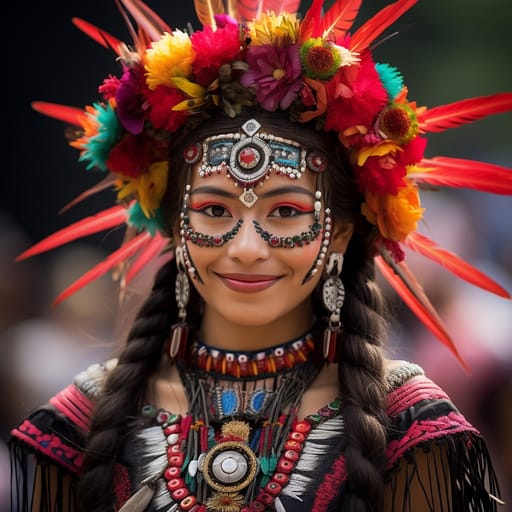
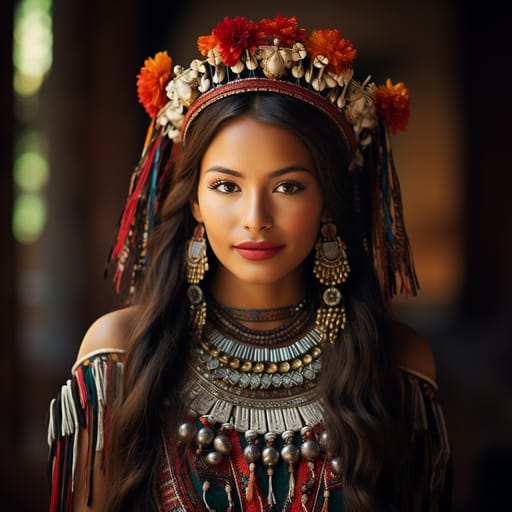
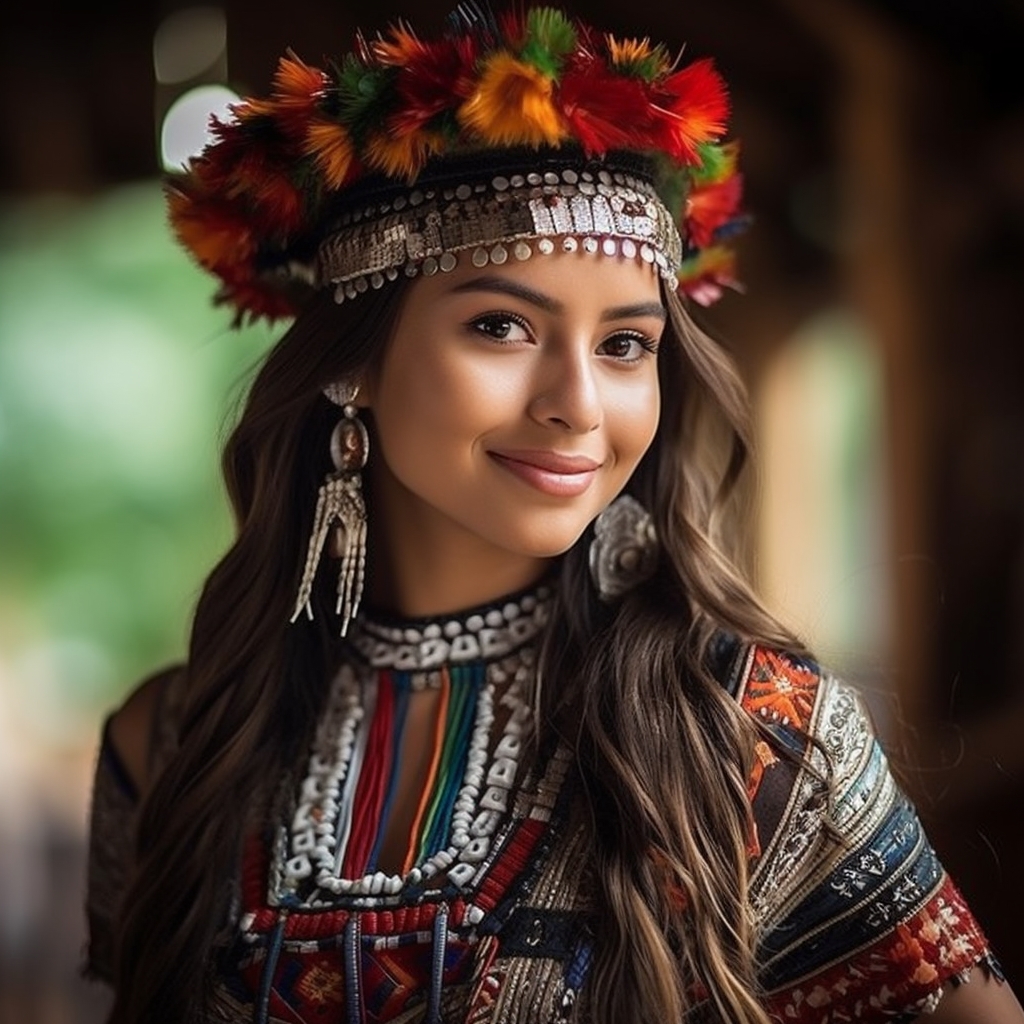
Does this portrait look right for Otomi?
One tap. It takes a second and it is recorded.
1 says it looks right, 0 say it looks off.
Otomi Erotic
Mexico (Hidalgo, Puebla, Veracruz, State of Mexico, Querétaro)
Oto-Manguean / Otomian / Otomi
Christianity / Catholicism
About Otomi People
The Otomi are one of the older continuous presences in central Mexico — a people whose ancestors were already settled across the highlands long before the Nahua expansions that produced the Aztec state. They live today in a scatter of communities across Hidalgo, Querétaro, the State of Mexico, Puebla, and Veracruz, occupying terrain that ranges from the cold, semi-arid Mezquital Valley to the cloud forests of the Sierra Gorda and the humid lowlands of the Huasteca. That geographic spread is part of why outsiders often miss how coherent the group actually is: an Otomi farmer in the Mezquital and a Ñuhu speaker in the Sierra de Puebla can look, at first glance, like they belong to different worlds.
What unites them is language, and the language is unusual. Otomi belongs to the Oto-Manguean family — a stock unrelated to Nahuatl or to the Mayan languages, and one of the deepest linguistic lineages in the Americas. It is tonal, with three tones in most varieties, which sets it apart from almost every other indigenous language a Mexican is likely to encounter. The Otomi themselves call their language Hñähñu, Ñuhu, or one of several related self-designations, and the variation between regional forms is wide enough that speakers from distant communities sometimes shift to Spanish to be understood. Linguists generally treat these as a cluster of closely related languages rather than a single tongue.
Catholicism arrived in the sixteenth century and was absorbed without displacing the older religious vocabulary underneath it. Saints' day cycles, godparenthood, and pilgrimage are the public face; behind them sit ritual specialists, offerings to hills and springs, and the cut paper figures — the famous muñecos of San Pablito in the Sierra Norte de Puebla — used in healing and agricultural ceremonies. The papermaking tradition itself is pre-Hispanic, made from the bark of the jonote tree, and survived suppression to become one of the few unbroken continuities of indigenous Mexican craft.
The Otomi were long stereotyped by their Nahua neighbors and later by colonial chroniclers as rustic and unsophisticated, a slander that stuck for centuries and is only now being undone by their own writers, anthropologists, and political organizers. Migration to Mexico City and across the U.S. border has reshaped community life since the 1980s, but the Mezquital remains the cultural and demographic core, and Hñähñu is still being passed to children there in numbers that most of Mexico's indigenous languages can no longer claim.
Related ethnic groups
Groups that share Otomi's homeland, region, language, or religious tradition. These are likely candidates for comparative phenotype reference.
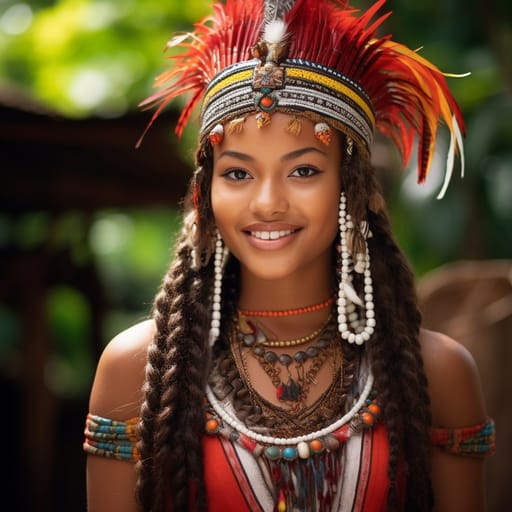

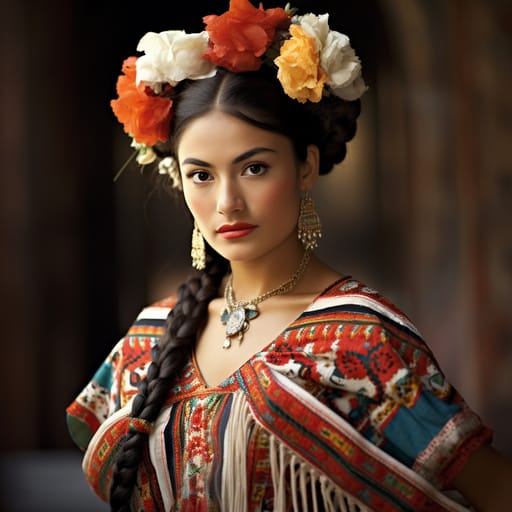
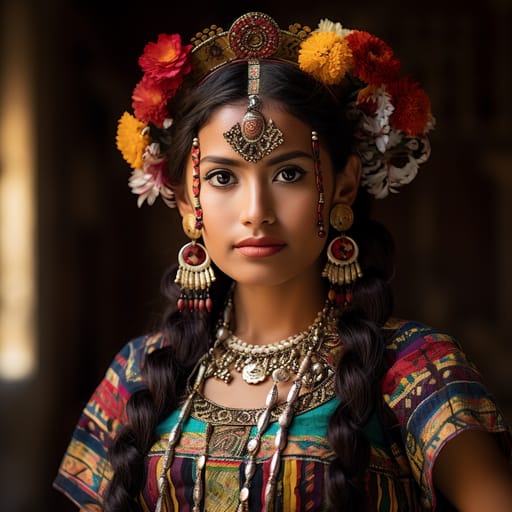
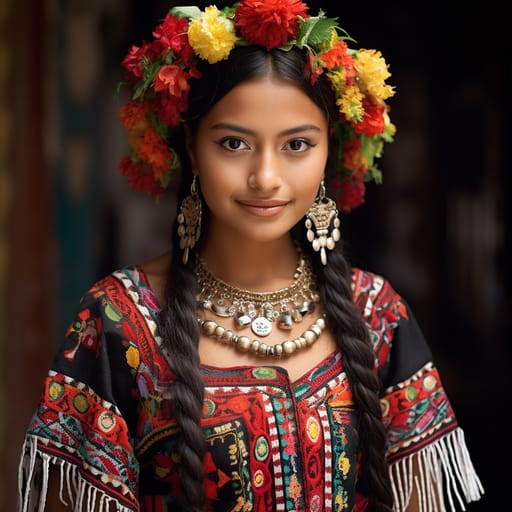
Geographic Distribution: Otomi populations across 1 country
Each row is ranked by the group's share of that country's population, with the source citation drawn from published census and demographic surveys. Click through for the full per-country phenotype profile.
| Country | Share | Source |
|---|---|---|
| Mexico | 1.4% | INEGI 2020, Otomi (Hñähñu) speakers and self-identifiers, primarily Hidalgo, México State, Querétaro (~300K) |
Typical Otomi Phenotypes
Reference for AI generation: hair, eyes, skin, facial structure, build
The Otomi (Hñähñu) phenotype reads as a Mesoamerican highland indigenous baseline with relatively low colonial admixture compared to mestizo Mexico — features tend to cluster more tightly than in surrounding populations, particularly in the older communities of the Mezquital Valley and the Sierra Otomí of Puebla and Veracruz. Hair is uniformly black to blue-black, coarse, and pin-straight or only faintly wavy; graying tends to come late. Body hair is sparse, and full beards are uncommon in men. Hair loss patterns are mild relative to European-admixed populations.
Eyes are dark brown to near-black, almond-shaped, often with a soft incomplete epicanthic fold — less pronounced than in East Asian groups but visibly present, giving a slightly hooded upper-lid line. Light eyes are essentially absent in unadmixed lineages. Skin spans Fitzpatrick III to V, with warm copper, ochre, and red-brown undertones rather than the olive cast common in mestizo Mexicans; sierra communities at higher altitude tend lighter, while Veracruz lowland Otomi run noticeably browner from sun exposure.
Facial structure is the clearest marker: broad zygomatic arches, a wide mid-face, and a relatively short forehead. Noses are medium to broad with a low-to-medium bridge and a fleshy, rounded tip — the classic Mesoamerican nose, distinct from the higher, sharper Aymara or Quechua bridge of the Andes. Lips run medium-full with a defined cupid's bow. Jaws are squarer in men, softer and rounder in women, and the chin tends to be small and slightly receded.
Build is short and compact. Adult women average roughly 150 cm and men around 160 cm, among the shortest stature ranges documented in Mexico. Bodies are stocky with broad shoulders, short limbs relative to torso length, and a tendency toward central adiposity in adulthood. The Sierra and Mezquital subgroups differ mainly in skin depth and build robustness, not in underlying facial morphology — anchor examples like Xiye Bastida show the lighter, finer-featured end of the range.
Otomi Body & Anatomy Reference
Anatomy by feature, Mesoamerican Indigenous / Mestizo phenotype
Otomi Boobs & Breasts
Otomi boobs follow the Mesoamerican Indigenous / Mestizo profile: medium-to-large cup, full, moderate-to-high projection. Areolar diameter is usually 32-46mm, and the coloring is medium-brown to dark-brown areolar pigmentation against the tan-to-medium-brown skin tone. Breast shape tracks body composition (endomorph-to-mesomorph with strong hip-and-bust deposition, mean adult female BMI 26-29), so Otomi breasts tend to be full and projecting, classic Latina curvy bust profile. Expect a forward-set shape, not the smaller East Asian bust.
Otomi Ass & Hips
Otomi ass and hip morphology presents as medium-to-full, high projection, classic Latina curvy hip profile, distinctly different from the slim narrow-hip East Asian profile. The Otomi pelvic profile shows wide iliac crests, full gluteal-femoral fat deposition, anchored in the Mesoamerican Indigenous / Mestizo skeletal pattern. Otomi butt shots in adult AI imagery should render the medium-to-full, high projection, classic Latina curvy hip profile silhouette with the overall build (endomorph-to-mesomorph with strong hip-and-bust deposition) and the fat distribution typical of the Mesoamerican Indigenous / Mestizo phenotype.
Otomi Vagina & Pussy
Otomi pussy anatomy typically shows medium-brown to dark-brown labial pigmentation, fuller labia minora. Pubic hair is usually straight-to-wavy coarse dark texture, dense distribution. In AI-generated Otomi nudes, labial color should blend into the tan to medium-brown skin with a gradual transition, and the hair should keep its straight-to-wavy coarse dark texture.
Otomi Dicks & Penis
Penis reference for Otomi men: regional mean ~13cm erect, moderate girth. Coloring: medium-brown shaft pigmentation. An accurate Otomi cock in AI imagery matches the surrounding tan to medium-brown skin rather than a generic porn default. Circumcision depends on religion and custom, not ancestry.
Otomi Body, Curves & Build
The Otomi figure is generally endomorph-to-mesomorph with strong hip-and-bust deposition, with mean adult female BMI 26-29, characteristic of Mesoamerican Indigenous / Mestizo ancestry. AI image tools tend to flatten regional body types into a few stock shapes; here the Otomi build is kept as its own reference.
Otomi Skin Tone & Hair Texture
Skin: tan to medium-brown (Fitzpatrick III-V). Hair: straight-to-wavy 1A-2B, dense dark-brown to black. Both are typical of Mesoamerican Indigenous / Mestizo ancestry. The most common mistake in AI nudes of Otomi women is a body rendered lighter than the face.
Data depth
49/100Coverage of image-grounded phenotype observations · drives AI generation diversity
- Sample size
- 14/40· 6 images
- Image quality
- 25/30· 50% high
- Confidence
- 10/20· mean 0.60
- Source diversity
- 0/10· wikipedia
- ·Small sample (n<10)
- ·Wikipedia-only source, not population-representative
Observed Distribution: Image Sample
Empirical observations from analyzed photographs · supplementary signal, not population truth
Sample: 6 images analyzed (6 wikipedia). Quality: 3 high, 2 medium, 1 low, 0 very_low. Avg analyzer confidence: 0.60.
Skin tone (Fitzpatrick): II (17%), III (17%), IV (50%), unclear (17%)
Hair color: gray/white (33%), black (33%), dark brown (17%), unclear (17%)
Hair texture: straight (33%), wavy (17%), curly (17%), covered (17%), unclear (17%)
Eye color: dark brown (67%), unclear (33%)
Epicanthic fold: 17% present, 50% absent, 33% unclear
Caveats: Sample size 6 is small, so the observed distribution should be treated as suggestive, not definitive. Sample is 100% Wikipedia notable people, which skews toward male, public-life, and modern figures, not population-representative.
Last aggregated: May 7, 2026
Explore phenotype categories
Structured taxonomy with peer-reviewed scales · 22 anatomical categories
Notable Otomi People
9 reference figures, sourced from Wikipedia
- Xiye Bastida, environmentalist
- Macedonia Blas Flores, human rights activist
- Macuilxochitzin, Aztec poet
- Kevin Álvarez (footballer, born 1999), [citation needed]
- Juventino Rosas, composer Sobre las Olas, violinist
- Otomi (military), an Aztec military order named after, if not composed of, Otomis
- Licence to Kill, 1989 James Bond movie shows the Centro Cultural Otomi.
- Montezuma's Daughter, a novel depicting the Spanish conquest of Mexico in which the capital city of…
- Instituto Nacional de Antropología e Historia, Garza Cuarón, Beatriz; Lastra, Yolanda (2000). "Lenguas en peligro de extinci…
Erotic Poses & Sex Positions
From the pose catalog: 219 named positions with reference skeletons
Frequently asked questions about Otomi people
Where is the Otomi homeland?
The Otomi homeland is Mexico (Hidalgo, Puebla, Veracruz, State of Mexico, Querétaro) in Central America.
What countries do Otomi people live in?
Otomi populations are documented across 1 country: Mexico.
What language do Otomi people speak?
Otomi people primarily speak Oto-Manguean / Otomian / Otomi.
What religion do Otomi people practice?
The predominant religion among Otomi people is Christianity / Catholicism.






Make your own Otomi images
Five a day, free, no credits to buy. The studio starts from this group's phenotype data, so you can set body type, pose and style and keep the traits accurate.
Start with Otomi