Help us get this right
Does this portrait look right for Mazahua?
One tap. It takes a second and it is recorded.
1 says it looks right, 0 say it looks off.
Mazahua Erotic
State of Mexico (Mexico)
Oto-Manguean / Oto-Pamean / Mazahua
Christianity / Catholicism
About Mazahua People
The Mazahua are the largest Indigenous people of the State of Mexico, concentrated in the highland municipalities west of the capital — Ixtlahuaca, San Felipe del Progreso, Atlacomulco, San José del Rincón — where pine ridges give way to maize fields at altitudes that punish careless farming. They call themselves Jñatjo, "those who speak"; "Mazahua" is the Nahuatl exonym, usually glossed as "people of the deer," and like most Nahuatl labels for non-Nahua peoples it stuck because the colonial administration found it convenient. Their language belongs to the Oto-Pamean branch of Oto-Manguean, sister to Otomí and more distantly related to Matlatzinca and Ocuilteco; speakers of Mazahua and Otomí can sometimes pick out cognates but cannot hold a conversation.
Mazahua country sits inside the orbit of Mexico City, and that proximity has shaped the group more than any single historical event. Men have circulated for generations into the construction trades and informal economy of the capital, while women — especially the Mazahua vendedoras who became a recognizable presence on Mexico City streets in the late twentieth century — built a parallel commerce in textiles, sweets, and seasonal crafts. The community is famously well-organized politically: the Movimiento Mazahua por la Defensa del Agua, led largely by women in the early 2000s, forced the federal government to negotiate over the Cutzamala system, which pipes Mazahua-region water to Mexico City while leaving many Mazahua villages without reliable supply themselves.
Catholicism arrived with the sixteenth-century friars and settled in deeply, but the practice on the ground is layered. Patron-saint fiestas, mayordomías, and pilgrimage circuits run on a calendar that braids the liturgical year with older agricultural rhythms; offerings to the hills and to the maize itself coexist with parish life rather than competing with it. Day of the Dead observances in Mazahua towns are notably elaborate, with household altars maintained over several days. Textile work — wool sashes, embroidered blouses, the heavy quechquémitl shoulder garments worked in counted stitch — remains a living craft rather than a heritage performance, partly because the same women who weave them often wear them. Mazahua identity today is bilingual, mobile, and politically articulate; the language is under pressure from Spanish, and revitalization efforts in local schools are uneven, but the group is not receding quietly.
Related ethnic groups
Groups that share Mazahua's homeland, region, language, or religious tradition. These are likely candidates for comparative phenotype reference.
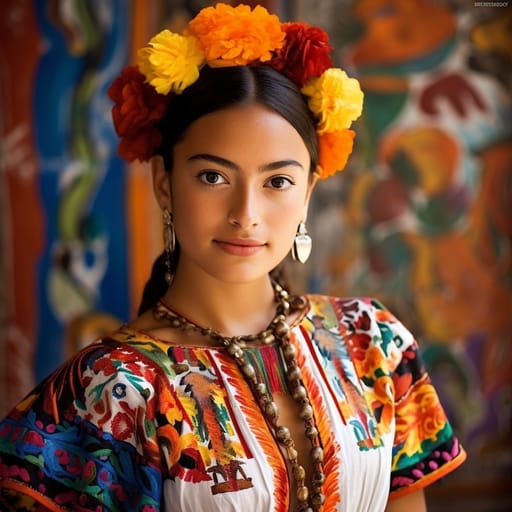
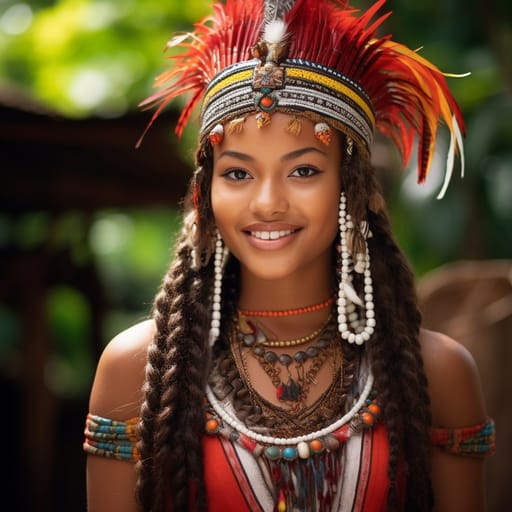
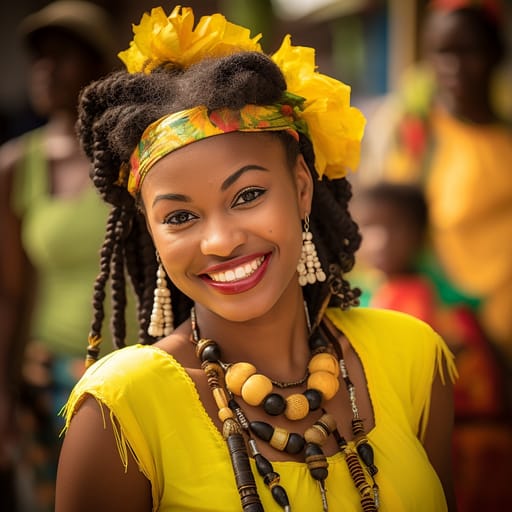
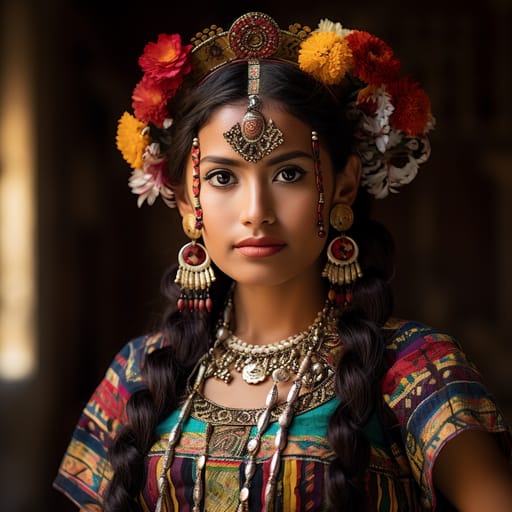
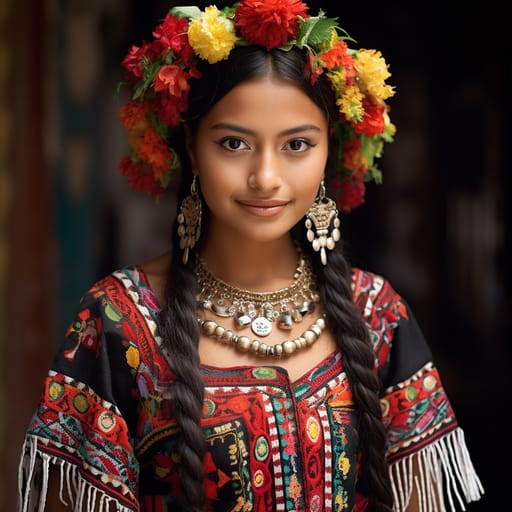
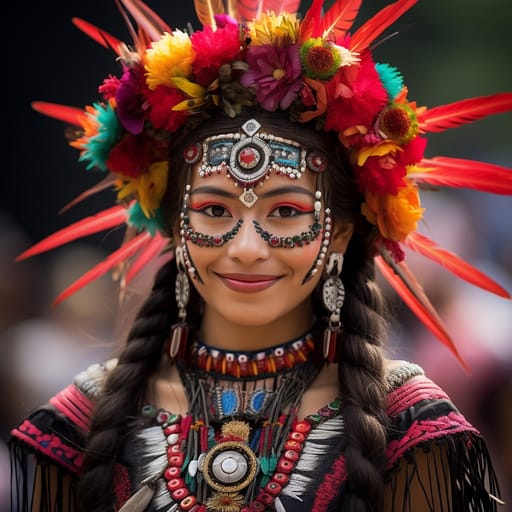
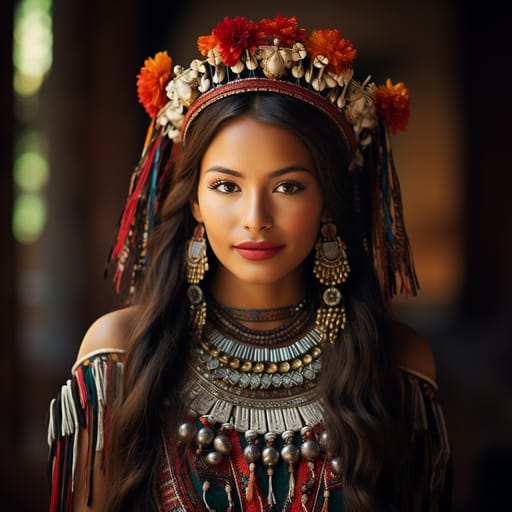
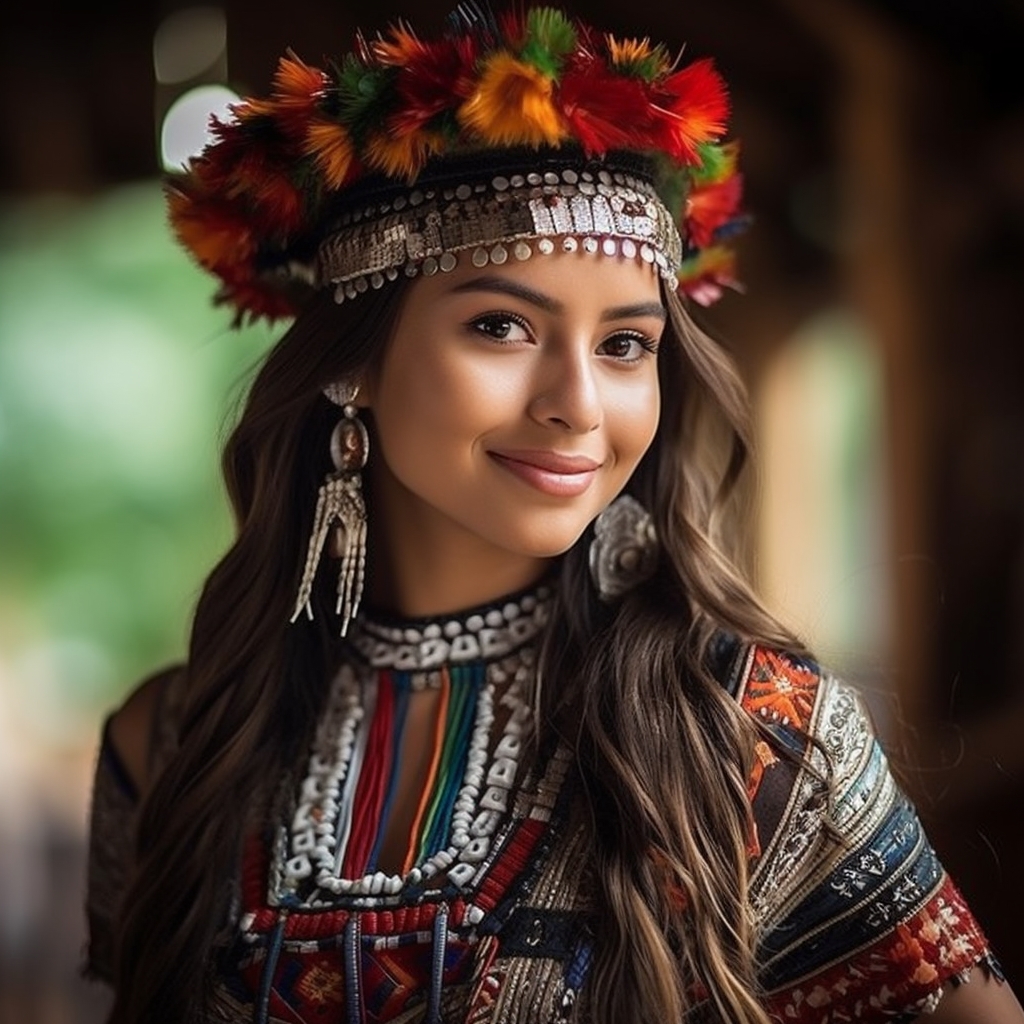
Geographic Distribution: Mazahua populations across 1 country
Each row is ranked by the group's share of that country's population, with the source citation drawn from published census and demographic surveys. Click through for the full per-country phenotype profile.
| Country | Share | Source |
|---|---|---|
| Mexico | 0.5% | INEGI 2020, Mazahua speakers and self-identifiers, primarily México State and Michoacán (~150K) |
Typical Mazahua Phenotypes
Reference for AI generation: hair, eyes, skin, facial structure, build
The Mazahua are an Oto-Pamean Indigenous people concentrated in the highland valleys of western State of Mexico and eastern Michoacán, and their phenotype reflects long isolation in cool, high-altitude basins around 2,500–2,800 meters. The dominant impression is of a compact, broad-faced highland Mesoamerican population with very little of the European admixture that softens features in mestizo Mexico — closer in build and bone structure to neighboring Otomí and Mazatec groups than to the taller Nahua populations of the central plateau.
Hair is uniformly black to blue-black, thick, coarse-stranded and pin-straight, with natural waves rare and curl essentially absent. Greying tends to come late and stays salt-and-pepper rather than going fully white. Eyes are dark brown to near-black; a partial epicanthic fold (the inner-corner mongoloid fold characteristic of Indigenous American populations) is common, giving the eye a slightly almond, downturned-outer-corner shape rather than the rounder set seen in mestizos. Brows are straight and moderately heavy, lashes short and dense.
Skin sits in the Fitzpatrick III–IV range — a warm coppery-bronze with yellow-olive undertones, darkening readily with sun exposure given that traditional Mazahua livelihoods are agricultural and outdoor. Faces are notably broad and short, with high, wide zygomatic arches, a flat midface, and a low, broad nasal bridge widening into a fleshy tip and moderately flared alae. Lips are medium-full and evenly proportioned, neither thin nor pronounced. Jaws are square but not heavy; chins are short and slightly receding rather than projecting.
Build is short and stocky. Adult women average roughly 1.48–1.55 m and men 1.58–1.65 m — among the shorter stature ranges in Mexico — with short limbs relative to torso, broad shoulders, and a tendency toward thickset, muscular legs developed by walking steep terrain. Body fat distributes centrally; cuerpo de tierra alta, the compact highland frame, is the recurring silhouette.
Mazahua Body & Anatomy Reference
Anatomy by feature, Mesoamerican Indigenous / Mestizo phenotype
Mazahua Boobs & Breasts
Bust reference for Mazahua women: medium-to-large cup, full, moderate-to-high projection, which is typical of Mesoamerican Indigenous / Mestizo ancestry. Areolas measure about 32-46mm across, with medium-brown to dark-brown pigmentation. Body type (endomorph-to-mesomorph with strong hip-and-bust deposition) shapes the bust as well, so Mazahua tits are usually full and projecting, classic Latina curvy bust profile. In AI imagery, keep the forward-set shape rather than drifting toward the smaller East Asian bust.
Mazahua Ass & Hips
The Mazahua ass is typically medium-to-full, high projection, classic Latina curvy hip profile, which sets it apart from the slim narrow-hip East Asian profile. Underneath, the pelvis shows wide iliac crests, full gluteal-femoral fat deposition, part of the Mesoamerican Indigenous / Mestizo skeletal pattern. For Mazahua butt pics and AI renders, match that silhouette and the overall build (endomorph-to-mesomorph with strong hip-and-bust deposition).
Mazahua Vagina & Pussy
Mazahua pussy and vulvar anatomy presents medium-brown to dark-brown labial pigmentation, fuller labia minora, consistent with the Mesoamerican Indigenous / Mestizo phenotype's pigmentation pattern. Mazahua pubic hair is typically straight-to-wavy coarse dark texture, dense distribution, in the inverted-triangle pattern. For anatomically accurate Mazahua pussy renders the labial coloration should match the surrounding tan to medium-brown skin tone with a continuous gradient, and the hair should keep its straight-to-wavy coarse dark texture.
Mazahua Dicks & Penis
Mazahua dicks follow the Mesoamerican Indigenous / Mestizo reference data: regional mean ~13cm erect; moderate girth; medium-brown shaft pigmentation. Shaft color should track the tan to medium-brown skin tone with a smooth change toward the glans, and Mazahua pubic hair keeps its straight-to-wavy coarse dark texture.
Mazahua Body, Curves & Build
Mazahua body type and overall build presents as endomorph-to-mesomorph with strong hip-and-bust deposition, with mean adult female BMI 26-29: the characteristic Mesoamerican Indigenous / Mestizo habitus. Mazahua curves and proportions should keep the regional skeletal frame (height, shoulder-to-hip ratio, limb proportions) rather than a generic mesomorph default.
Mazahua Skin Tone & Hair Texture
Mazahua skin sits in the tan to medium-brown (Fitzpatrick III-V) band. Hair is typically straight-to-wavy 1A-2B, dense dark-brown to black, in keeping with the Mesoamerican Indigenous / Mestizo phenotype. In nude renders the skin should stay one even tone from face to body, and body, pubic and head hair should match.
Data depth
0/100Coverage of image-grounded phenotype observations · drives AI generation diversity
- Sample size
- 0/40· 0 images
- Image quality
- 0/30· 0% high
- Confidence
- 0/20
- Source diversity
- 0/10
- ·No image observations yet
Explore phenotype categories
Structured taxonomy with peer-reviewed scales · 22 anatomical categories
Erotic Poses & Sex Positions
From the pose catalog: 219 named positions with reference skeletons
Frequently asked questions about Mazahua people
Where is the Mazahua homeland?
The Mazahua homeland is State of Mexico (Mexico) in Central America.
What countries do Mazahua people live in?
Mazahua populations are documented across 1 country: Mexico.
What language do Mazahua people speak?
Mazahua people primarily speak Oto-Manguean / Oto-Pamean / Mazahua.
What religion do Mazahua people practice?
The predominant religion among Mazahua people is Christianity / Catholicism.






Make your own Mazahua images
Five a day, free, no credits to buy. The studio starts from this group's phenotype data, so you can set body type, pose and style and keep the traits accurate.
Start with Mazahua