No portrait yet
Podunk Erotic
East bank of the Connecticut River in present Hartford County, Connecticut, United States: East Hartford, South Windsor, East Windsor and the nearby uplands.
An almost unrecorded Eastern Algonquian language, usually grouped with Quiripi (Algic, Algonquian branch)
Traditional Algonquian religion; refused Puritan missionary efforts in the 1650s
Three bands: Namferoke, Hockanum and Scanticook. One of the Eastern Algonquian river peoples of the Connecticut valley, alongside the Wangunk, Tunxis and others.
About Podunk People
The Podunk were an Algonquian-speaking people who lived on the east bank of the Connecticut River, in what is now East Hartford, South Windsor and East Windsor, Connecticut, until the late 1600s, when epidemic, land loss and war broke them up as a nation and their survivors folded into neighboring Native communities. They were a small river people, and their year moved with the water. Summers were spent on the floodplain meadows, planting corn, beans and squash and fishing the spring runs of shad and salmon. Winters took them into the wooded uplands to hunt. They called their country Nowashe, the land between the rivers. Podunk was a place word for boggy ground, roughly "where you sink in the mire," which the English attached to the people living there. Three bands made up the nation: the Namferoke near present Warehouse Point, the Hockanum along the river that still carries their name, and the Scanticook on the Scantic. Their language belonged to the Eastern Algonquian family, usually grouped with Quiripi, and sat close to the speech of neighboring river peoples such as the Wangunk and Tunxis. Almost none of it was written down beyond place names.
The name that outlived them
Their place in colonial history turns on an invitation. In 1631 a Podunk sachem, Wahginnacut, traveled to Boston and Plymouth to ask the English to settle the valley, hoping for a counterweight to the Pequot, who were pressing the river peoples for tribute. The governors declined. Settlers came anyway within a few years, as did a smallpox epidemic in 1633 and 1634 that emptied villages along the river. By the 1650s the Podunk were hemmed in between the Hartford and Windsor colonists and Uncas's Mohegans. When the missionary John Eliot preached to them in 1657 and asked whether they would accept Christianity, the colonial record has their leaders refusing flatly: the English had taken their land and now meant to make servants of them. In 1675 many Podunk men joined Metacom's rising, King Philip's War, and few came back. Over the following decades the remaining families joined other Native communities, by some accounts including the Tunxis and the Schaghticoke, and whatever Podunk descent survives is carried there. What remains in the valley is mostly on the map: the Podunk, Hockanum and Scantic rivers. The name took a stranger path. By the 1840s American newspapers were using "Podunk" as shorthand for any small, backward town in the middle of nowhere, and the joke stuck. Few who use it know it once named a particular place with particular people in it, a place that was, for them, the center of everything.
Related ethnic groups
Groups that share Podunk's homeland, region, language, or religious tradition. These are likely candidates for comparative phenotype reference.
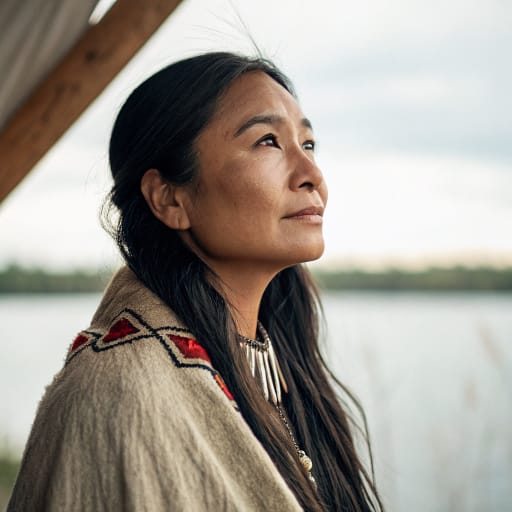
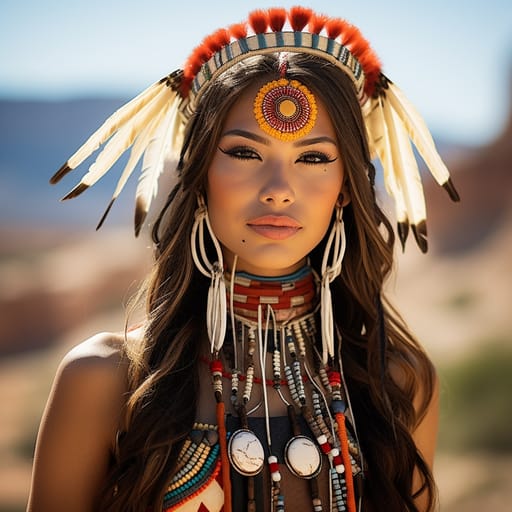
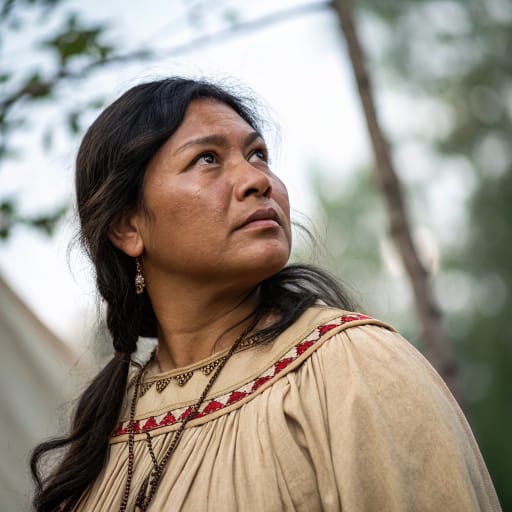
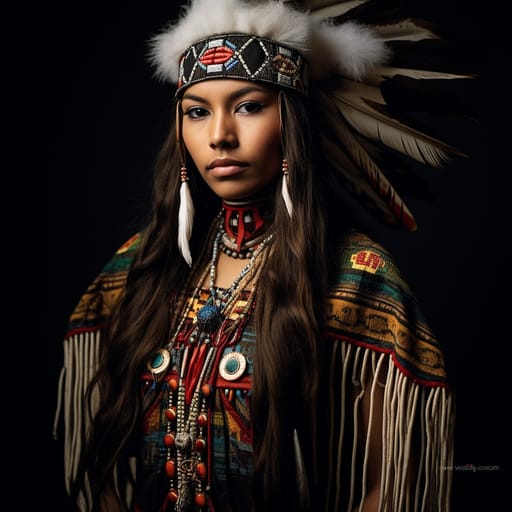

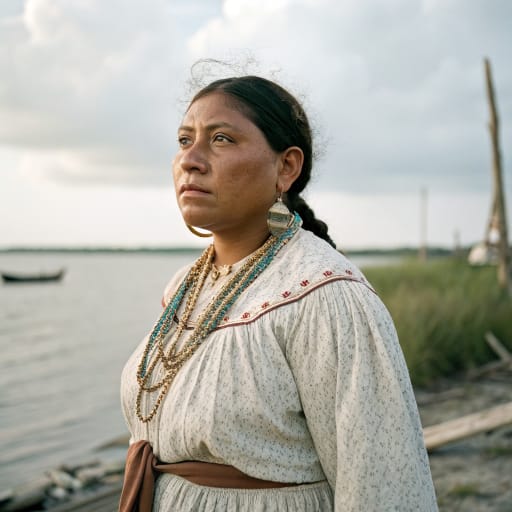
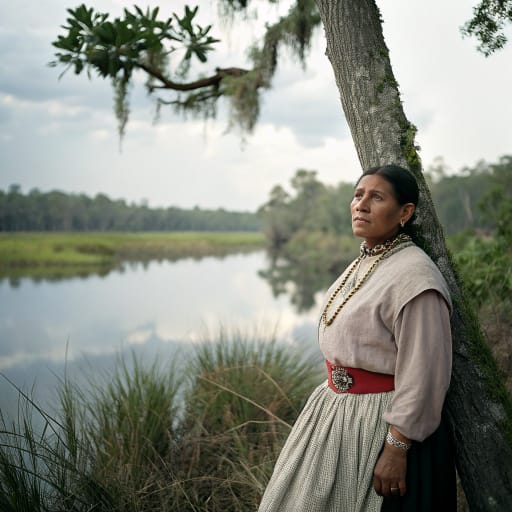
Typical Podunk Phenotypes
Reference for AI generation: hair, eyes, skin, facial structure, build
Podunk Body & Anatomy Reference
Per-feature anatomical profile for AI nude generation: Indigenous Northern American / Algonquian-Iroquoian phenotype
Podunk Boobs & Breasts
Bust reference for Podunk women: medium cup, moderate projection, which is typical of Indigenous Northern American / Algonquian-Iroquoian ancestry. Areolas measure about 30-44mm across, with medium-brown pigmentation. Body type (mesomorph, broader frame in northern Indigenous populations) shapes the bust as well, so Podunk tits are usually full and moderate projection. In AI imagery, keep the forward-set shape rather than drifting toward the smaller East Asian bust.
Podunk Ass & Hips
The Podunk ass is typically medium, moderate-to-full projection, which sets it apart from the slim East Asian narrow-hip profile. Underneath, the pelvis shows medium iliac crests, part of the Indigenous Northern American / Algonquian-Iroquoian skeletal pattern. For Podunk butt pics and AI renders, match that silhouette and the overall build (mesomorph, broader frame in northern Indigenous populations).
Podunk Vagina & Pussy
Podunk pussy and vulvar anatomy presents medium-brown labial pigmentation, consistent with the Indigenous Northern American / Algonquian-Iroquoian phenotype's pigmentation pattern. Podunk pubic hair is typically straight medium-coarse texture, in the inverted-triangle pattern. For anatomically accurate Podunk pussy renders the labial coloration should match the surrounding copper to medium-brown skin tone with a continuous gradient, and the hair should keep its straight medium-coarse texture.
Podunk Dicks & Penis
Podunk dicks follow the Indigenous Northern American / Algonquian-Iroquoian reference data: regional mean ~13cm erect; moderate girth; medium-brown shaft pigmentation. Shaft color should track the copper to medium-brown skin tone with a smooth change toward the glans, and Podunk pubic hair keeps its straight medium-coarse texture.
Podunk Body, Curves & Build
Podunk body type and overall build presents as mesomorph, broader frame in northern Indigenous populations, with mean adult female BMI 25-28: the characteristic Indigenous Northern American / Algonquian-Iroquoian habitus. Podunk curves and proportions should keep the regional skeletal frame (height, shoulder-to-hip ratio, limb proportions) rather than a generic mesomorph default.
Podunk Skin Tone & Hair Texture
Podunk skin sits in the copper to medium-brown (Fitzpatrick III-V) band. Hair is typically straight 1A, dark-brown to black, often thick and dense, in keeping with the Indigenous Northern American / Algonquian-Iroquoian phenotype. In nude renders the skin should stay one even tone from face to body, and body, pubic and head hair should match.
Explore phenotype categories
Structured taxonomy with peer-reviewed scales · 22 anatomical categories
Erotic Poses & Sex Positions
From the pose catalog: 219 named positions with reference skeletons
Frequently asked questions about Podunk people
Where is the Podunk homeland?
The Podunk homeland is East bank of the Connecticut River in present Hartford County, Connecticut, United States: East Hartford, South Windsor, East Windsor and the nearby uplands. in North America.
What language do Podunk people speak?
Podunk people primarily speak An almost unrecorded Eastern Algonquian language, usually grouped with Quiripi (Algic, Algonquian branch).
What religion do Podunk people practice?
The predominant religion among Podunk people is Traditional Algonquian religion; refused Puritan missionary efforts in the 1650s.






Make your own Podunk images
Five a day, free, no credits to buy. The studio starts from this group's phenotype data, so you can set body type, pose and style and keep the traits accurate.
Start with Podunk