Help us get this right
Does this portrait look right for Pnar?
One tap. It takes a second and it is recorded.
1 says it looks right, 0 say it looks off.
Pnar Erotic
Jaintia Hills (West and East Jaintia Hills districts) of Meghalaya, India, with smaller communities in neighboring Assam and Bangladesh
Pnar, also called Jaintia or Synteng (Austroasiatic, Khasic branch); Khasi and English widely used
Christianity (mainly Presbyterian and Catholic) and Niamtre, the indigenous Pnar faith
One of the Hynniewtrep peoples with the Khasi, War, Bhoi and Lyngngam; organized in exogamous matrilineal clans, with traditional territories headed by Dolloi chiefs
About Pnar People
Ask what makes the Pnar a people and the answer usually starts with the mother. Children take their mother's clan name, and the youngest daughter keeps the family house along with the duty of carrying on family rites. Older accounts describe husbands who visited their wives at night and went back to their own mothers' homes. The Pnar share this matrilineal order with the Khasi to their west. Both count themselves among the Hynniewtrep, the seven huts of Meghalaya's hill peoples. Still, the Pnar have their own language, their own ritual calendar and the memory of a kingdom that once reached down to the Bengal plains, and those things keep them distinct.
Their country is the Jaintia Hills in eastern Meghalaya: pine ridges, paddy valleys and limestone and coal country that drops steeply south toward Bangladesh. The town of Jowai is its center. Pnar, also called Jaintia or Synteng, belongs to the Khasic branch of the Austroasiatic family. It is close kin to standard Khasi, but the two are only partly understood across the line. Together they form an Austroasiatic pocket in a region where most neighbors speak Tibeto-Burman languages such as Garo and Karbi, or Indo-Aryan Bengali and Assamese.
For centuries the Jaintia kings ruled from the hills down to Jaintiapur on the Sylhet plain. At Nartiang, their upland seat, a field of standing stones and flat table stones is still there. The British annexed the kingdom in 1835. In the early 1860s, new colonial taxes and interference in religious life set off a revolt led by U Kiang Nongbah. He was hanged in Jowai in 1862, and the hills remember him as a hero.
Many Pnar are now Christian, mostly Presbyterian and Catholic. Even so, Niamtre, the indigenous faith, has a stronger public presence here than older religions have among many hill peoples of the Northeast. Its biggest event is Behdienkhlam, held each July in Jowai. The name refers to driving out plague with sticks, and men go through the neighborhoods beating house roofs with bamboo poles. Tall decorated structures called rots are carried through town, and teams fight over a wooden ball in a muddy pool, a contest read as an omen for the harvest. Because clan membership follows the mother whatever church a person attends, Christian and Niamtre relatives still belong to the same clans and turn out for the same public days.
Related ethnic groups
Groups that share Pnar's homeland, region, language, or religious tradition. These are likely candidates for comparative phenotype reference.

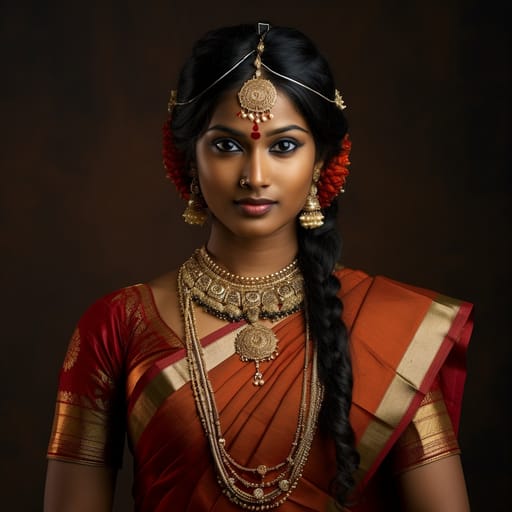
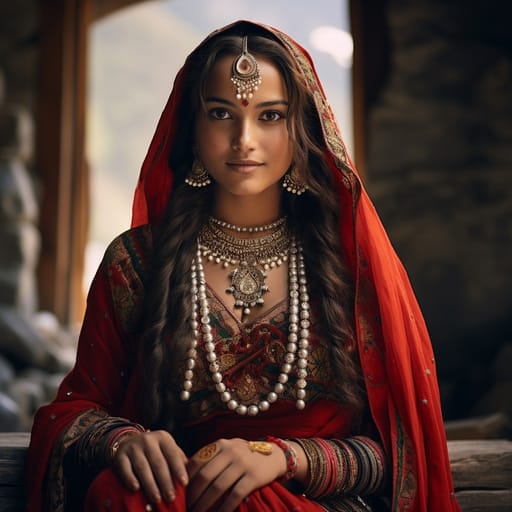
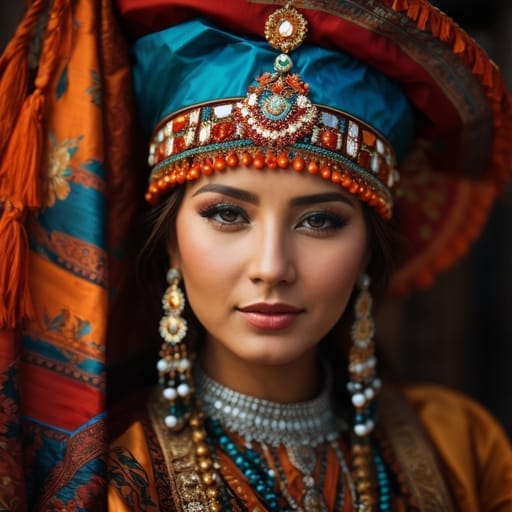
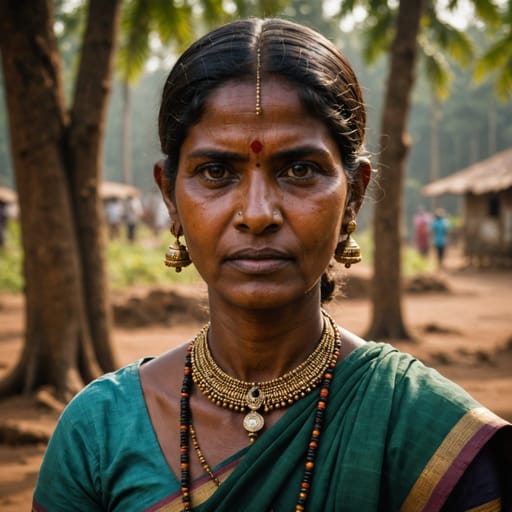
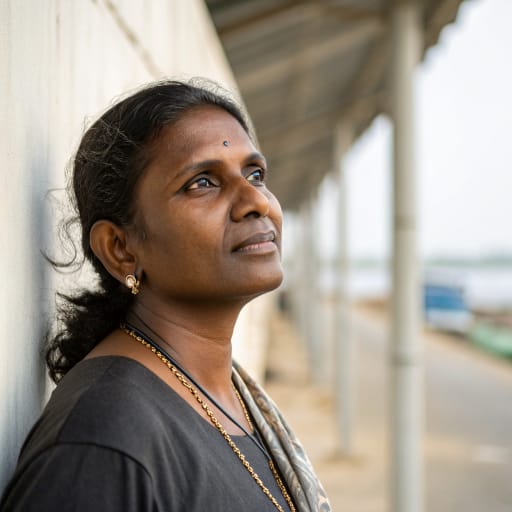
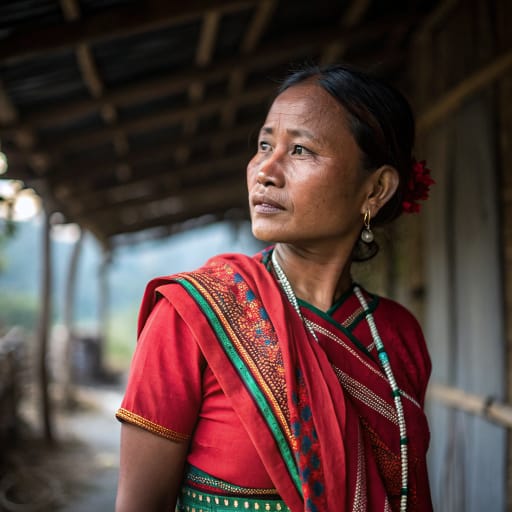
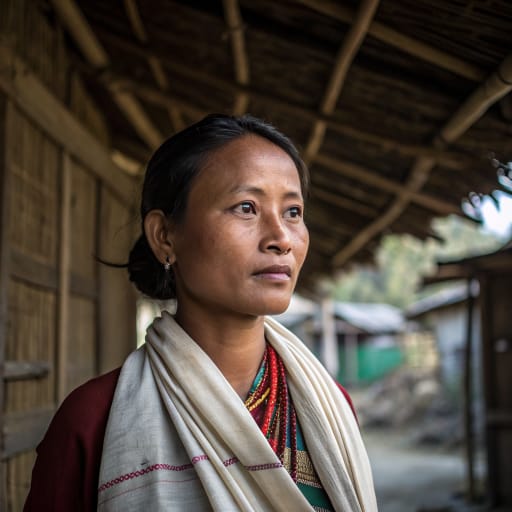
Typical Pnar Phenotypes
Reference for AI generation: hair, eyes, skin, facial structure, build
Pnar Body & Anatomy Reference
Per-feature anatomical profile for AI nude generation: Indo-Aryan / Dravidian South Asian phenotype
Pnar Boobs & Breasts
Bust reference for Pnar women: medium-to-large cup, moderate-to-full projection, which is typical of Indo-Aryan / Dravidian South Asian ancestry. Areolas measure about 32-46mm across, with medium-brown to dark-brown pigmentation. Body type (endomorph-to-mesomorph with fuller hip deposition) shapes the bust as well, so Pnar tits are usually full and soft, generally fuller than the East Asian norm. In AI imagery, keep the forward-set shape rather than drifting toward the smaller East Asian bust profile.
Pnar Ass & Hips
The Pnar ass is typically medium-to-full, moderate-to-high projection, classic curvy hip profile, which sets it apart from the slim hip profile of East Asian women. Underneath, the pelvis shows medium-to-wide iliac crests, full gluteal-femoral fat distribution, part of the Indo-Aryan / Dravidian South Asian skeletal pattern. For Pnar butt pics and AI renders, match that silhouette and the overall build (endomorph-to-mesomorph with fuller hip deposition).
Pnar Vagina & Pussy
Pnar pussy and vulvar anatomy presents medium-brown to dark-brown labial pigmentation, fuller labia minora projection, consistent with the Indo-Aryan / Dravidian South Asian phenotype's pigmentation pattern. Pnar pubic hair is typically straight-to-wavy coarse texture, dense distribution, in the inverted-triangle pattern. For anatomically accurate Pnar pussy renders the labial coloration should match the surrounding wheatish to brown skin tone with a continuous gradient, and the hair should keep its straight-to-wavy coarse texture.
Pnar Dicks & Penis
Pnar dicks follow the Indo-Aryan / Dravidian South Asian reference data: regional mean ~13cm erect; moderate girth; medium-brown shaft pigmentation. Shaft color should track the wheatish to brown skin tone with a smooth change toward the glans, and Pnar pubic hair keeps its straight-to-wavy coarse texture.
Pnar Body, Curves & Build
Pnar body type and overall build presents as endomorph-to-mesomorph with fuller hip deposition, with mean adult female BMI 22-25: the characteristic Indo-Aryan / Dravidian South Asian habitus. Pnar curves and proportions should keep the regional skeletal frame (height, shoulder-to-hip ratio, limb proportions) rather than a generic mesomorph default.
Pnar Skin Tone & Hair Texture
Pnar skin sits in the wheatish to brown (Fitzpatrick III-V) band. Hair is typically straight-to-wavy 1A-2B, dense, dark-brown to black, in keeping with the Indo-Aryan / Dravidian South Asian phenotype. In nude renders the skin should stay one even tone from face to body, and body, pubic and head hair should match.
Explore phenotype categories
Structured taxonomy with peer-reviewed scales · 22 anatomical categories
Erotic Poses & Sex Positions
From the pose catalog: 219 named positions with reference skeletons
Frequently asked questions about Pnar people
Where is the Pnar homeland?
The Pnar homeland is Jaintia Hills (West and East Jaintia Hills districts) of Meghalaya, India, with smaller communities in neighboring Assam and Bangladesh in Southern Asia.
What language do Pnar people speak?
Pnar people primarily speak Pnar, also called Jaintia or Synteng (Austroasiatic, Khasic branch); Khasi and English widely used.
What religion do Pnar people practice?
The predominant religion among Pnar people is Christianity (mainly Presbyterian and Catholic) and Niamtre, the indigenous Pnar faith.






Make your own Pnar images
Five a day, free, no credits to buy. The studio starts from this group's phenotype data, so you can set body type, pose and style and keep the traits accurate.
Start with Pnar