Help us get this right
Does this portrait look right for Palestinian Christians?
One tap. It takes a second and it is recorded.
0 say it looks right, 1 says it looks off.
Palestinian Christians Erotic
Historic Palestine: Bethlehem, Ramallah, Jerusalem and other West Bank towns, Gaza, and the Galilee in Israel (Nazareth, Haifa); large diaspora in Chile, Central America, the US and Jordan
Palestinian Arabic (Afro-Asiatic, Semitic); Hebrew as a second language in Israel; Greek, Latin, Syriac and Arabic in liturgy; Spanish in the Latin American diaspora
Christianity: Greek Orthodox and Latin Catholic in the West Bank and Jerusalem, Melkite Greek Catholic in the Galilee, plus Anglican, Lutheran, Maronite and smaller Syriac Orthodox communities
A Christian minority within the Palestinian Arab people and part of the wider Levantine Arab Christian world; includes Arab Christian citizens of Israel and a large diaspora, notably Palestinian Chileans and Hondurans
About Palestinian Christians People
Palestinian Christians are Arabs in speech, food, family life and politics, and Christians in a line that reaches back to the first churches of the region. They are not a product of modern missions or a foreign minority parked in the Holy Land. Many of their ancestors worshipped in Greek and Aramaic long before Arabic became the language of church and home, and plenty still attend liturgy within walking distance of places the Gospels name. The heartland is a string of towns: Bethlehem, Beit Jala and Beit Sahour south of Jerusalem, Ramallah, Birzeit and Taybeh to the north, the Old City of Jerusalem, and inside Israel, Nazareth, Haifa and the Galilee villages. A small community holds on in Gaza. They speak the same Palestinian Arabic as their Muslim neighbors, and those with Israeli citizenship also use Hebrew as a working second language. Church life is split. The Greek Orthodox are the largest church in the West Bank and Jerusalem, under a patriarchate whose senior clergy have long been Greek, a source of friction with Arab parishioners for more than a century. Melkite Greek Catholics are strongest in the Galilee, and Latin Catholics, Anglicans, Lutherans and Maronites make up most of the rest. Denomination is practical, not abstract: church courts still rule on marriage and divorce.
Their modern story turns on schooling and departure. Nineteenth-century mission schools gave Christian towns an early lead in literacy, and Christians were prominent among the editors and teachers who shaped Palestinian national feeling. The newspaper Filastin was founded in Jaffa in 1911 by two Orthodox cousins. Emigration started early too: families from Bethlehem and Beit Jala were settling in Chile, Honduras and El Salvador before the First World War, which is why Santiago has a football club called Palestino. The 1948 war scattered Christian families from Jaffa, Haifa and West Jerusalem, and the Galilee villages of Iqrit and Kafr Bir'im were emptied on a promise of return that was never kept. Since 1967, occupation, the separation barrier around Bethlehem and a stalled economy have kept the outflow going. What remains is stubbornly public. Bethlehem keeps Christmas three times, on December 25, January 7 and January 19, as the Western, Orthodox and Armenian calendars come around, and scout troops lead the processions with drums and bagpipes, a habit picked up under the British Mandate. Christians and Muslims alike seek blessings from Saint George, known locally as al-Khader, and Easter tables carry the same date-filled ma'amoul that Muslim households bake for Eid. Under Palestinian law, the mayors of Bethlehem and Ramallah must be Christian, a guarantee that says as much about shrinking numbers as about standing.
Related ethnic groups
Groups that share Palestinian Christians's homeland, region, language, or religious tradition. These are likely candidates for comparative phenotype reference.
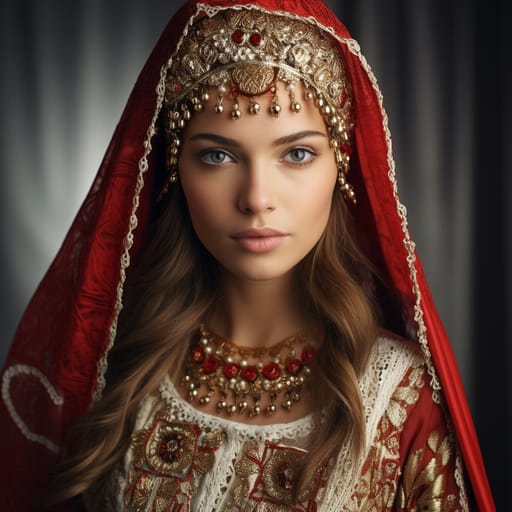
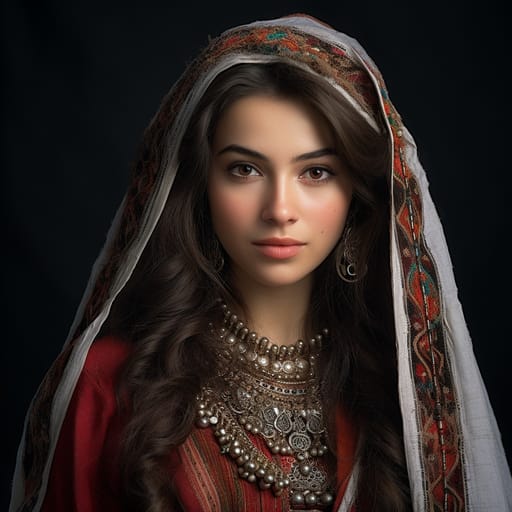
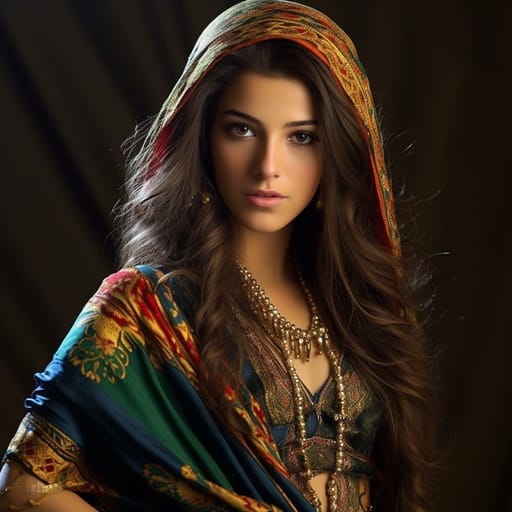
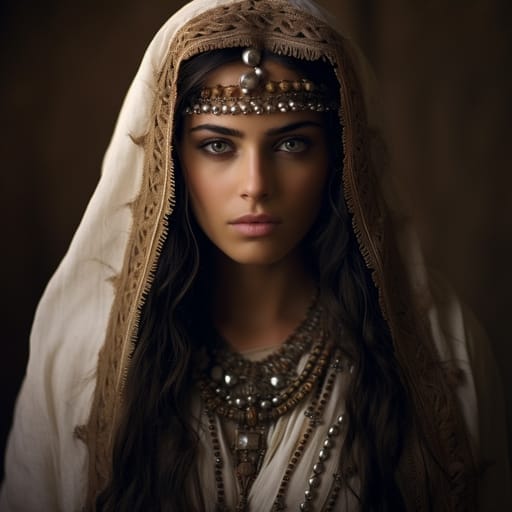
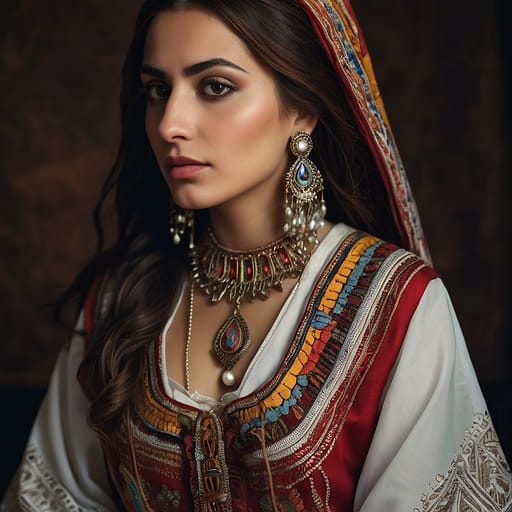
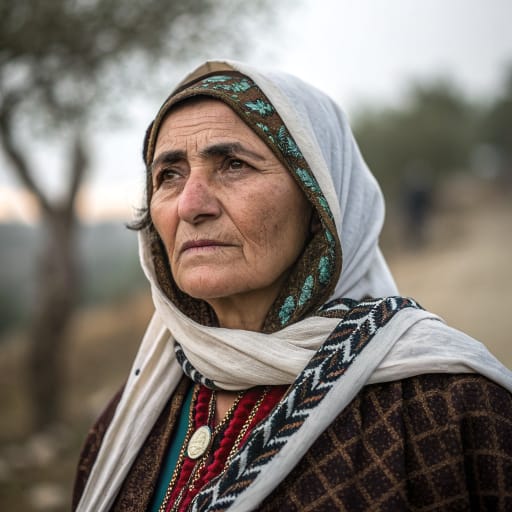
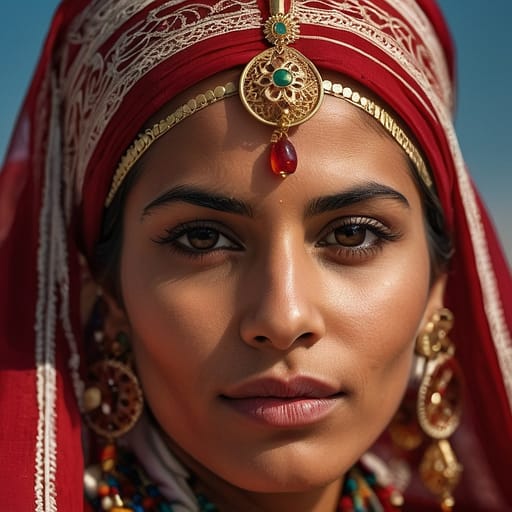
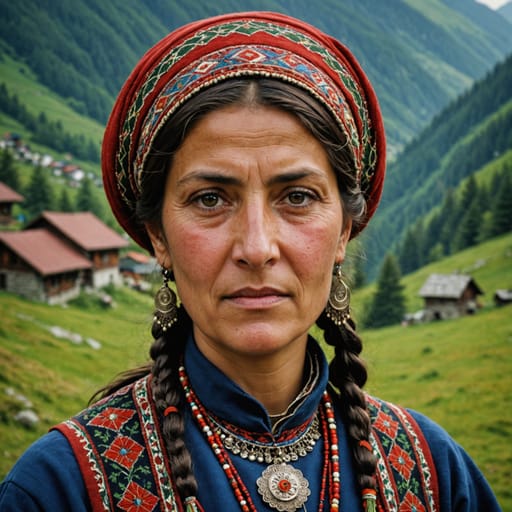
Typical Palestinian Christians Phenotypes
Reference for AI generation: hair, eyes, skin, facial structure, build
Palestinian Christians Body & Anatomy Reference
Per-feature anatomical profile for AI nude generation: Levantine / Mediterranean Middle Eastern phenotype
Palestinian Christians Boobs & Breasts
Palestinian Christians boobs follow the Levantine / Mediterranean Middle Eastern profile: medium-to-large cup, full, moderate-to-high projection. Areolar diameter is usually 32-46mm, and the coloring is medium-brown to dark-brown areolar pigmentation against the olive-to-light-brown skin tone. Breast shape tracks body composition (mesomorph with fuller hip-and-bust deposition, mean adult female BMI 25-28), so Palestinian Christians breasts tend to be full and soft, fuller projection than the North-African Berber norm. Expect a forward-set shape, not the smaller East Asian bust profile.
Palestinian Christians Ass & Hips
Palestinian Christians ass and hip morphology presents as medium-to-full, moderate projection, broader hip profile, distinctly different from the slim East Asian narrow-hip profile. The Palestinian Christians pelvic profile shows medium-to-wide iliac crests, fuller gluteal-femoral deposition, anchored in the Levantine / Mediterranean Middle Eastern skeletal pattern. Palestinian Christians butt shots in adult AI imagery should render the medium-to-full, moderate projection, broader hip profile silhouette with the overall build (mesomorph with fuller hip-and-bust deposition) and the fat distribution typical of the Levantine / Mediterranean Middle Eastern phenotype.
Palestinian Christians Vagina & Pussy
Palestinian Christians pussy anatomy typically shows medium-brown to dark-brown labial pigmentation, fuller labia minora. Pubic hair is usually wavy-to-coiled medium-coarse dark texture, dense distribution. In AI-generated Palestinian Christians nudes, labial color should blend into the olive to medium-brown skin with a gradual transition, and the hair should keep its wavy-to-coiled medium-coarse dark texture.
Palestinian Christians Dicks & Penis
Penis reference for Palestinian Christians men: regional mean ~14cm erect, moderate-to-above-average girth. Coloring: medium-brown shaft pigmentation. An accurate Palestinian Christians cock in AI imagery matches the surrounding olive to medium-brown skin rather than a generic porn default. Circumcision depends on religion and custom, not ancestry.
Palestinian Christians Body, Curves & Build
The Palestinian Christians figure is generally mesomorph with fuller hip-and-bust deposition, with mean adult female BMI 25-28, characteristic of Levantine / Mediterranean Middle Eastern ancestry. AI image tools tend to flatten regional body types into a few stock shapes; here the Palestinian Christians build is kept as its own reference.
Palestinian Christians Skin Tone & Hair Texture
Skin: olive to medium-brown (Fitzpatrick III-V). Hair: wavy-to-curly 2B-3B, predominantly dark-brown to black. Both are typical of Levantine / Mediterranean Middle Eastern ancestry. The most common mistake in AI nudes of Palestinian Christians women is a body rendered lighter than the face.
Explore phenotype categories
Structured taxonomy with peer-reviewed scales · 22 anatomical categories
Erotic Poses & Sex Positions
From the pose catalog: 219 named positions with reference skeletons
Frequently asked questions about Palestinian Christians people
Where is the Palestinian Christians homeland?
The Palestinian Christians homeland is Historic Palestine: Bethlehem, Ramallah, Jerusalem and other West Bank towns, Gaza, and the Galilee in Israel (Nazareth, Haifa); large diaspora in Chile, Central America, the US and Jordan in Western Asia.
What language do Palestinian Christians people speak?
Palestinian Christians people primarily speak Palestinian Arabic (Afro-Asiatic, Semitic); Hebrew as a second language in Israel; Greek, Latin, Syriac and Arabic in liturgy; Spanish in the Latin American diaspora.
What religion do Palestinian Christians people practice?
The predominant religion among Palestinian Christians people is Christianity: Greek Orthodox and Latin Catholic in the West Bank and Jerusalem, Melkite Greek Catholic in the Galilee, plus Anglican, Lutheran, Maronite and smaller Syriac Orthodox communities.






Make your own Palestinian Christians images
Five a day, free, no credits to buy. The studio starts from this group's phenotype data, so you can set body type, pose and style and keep the traits accurate.
Start with Palestinian Christians