Help us get this right
Does this portrait look right for Anatolians?
Nobody has judged this one yet. You would be the first.
Anatolians Erotic
Anatolia, the peninsula of modern Turkey, with Luwian and Neo-Hittite extensions into northern Syria
Anatolian branch of Indo-European: Hittite, Luwian, Palaic, Lydian, Lycian, Carian, Pisidian, Sidetic, all extinct
Polytheist. The thousand gods of Hatti, led by the storm god Tarhunna and the sun goddess of Arinna, with heavy Hattian and Hurrian borrowing; western cults later merged into Greek practice
Anatolian branch of Indo-European; Hittites, Luwians, Palaians, Lydians, Lycians, Carians, Pisidians
About Anatolians People
The Anatolians were never a single nation. They were a family of peoples speaking related Indo-European languages who held the peninsula that is now Turkey from about 2000 BCE until the last of their tongues died out under Greek in the early centuries CE. No community descends from them directly. What is left of them sits in the ground at Hattusa and Sardis, in the rock tombs cut into the cliffs of the Lycian coast, and in the deep ancestry of the people who live in Anatolia now.
Their hold on history is mostly linguistic. Anatolian was the first branch to break away from Proto-Indo-European and the earliest to be written down, which makes the cuneiform archives of the Hittite capital the oldest surviving record of anything in the family that later produced English, Hindi and Greek. Hittite also kept a set of consonants that every other branch lost, confirming a reconstruction linguists had argued for on paper decades before anyone could read the tablets. The Hittites did not use that name for themselves: they called their language Nesite, after the city of Kanesh, and took Hatti from the earlier Hattians, a non-Indo-European people whose land they moved into and whose language they went on using in ritual long after nobody spoke it. Their cousins fanned out across the peninsula. Luwians spread west and south and wrote in a hieroglyphic script of their own. Lydians at Sardis are credited with the first coinage. Lycians ran a federal league of cities and, Herodotus claims, named themselves after their mothers. Carians hired out as mercenaries and scratched their names on Egyptian monuments, which is how their script was eventually cracked.
Hittite religion was accumulative rather than exclusive: the thousand gods of Hatti, headed by a storm god and the sun goddess of Arinna, absorbed Hattian and Hurrian deities wholesale, and the rock sanctuary at Yazilikaya shows that imported pantheon walking in procession across a cliff face. Their law leaned on compensation where Mesopotamian codes leaned on mutilation, and the queen held an office, the Tawananna, in her own right rather than as a consort's courtesy. The end came in stages. Hattusa was abandoned around 1200 BCE in the Bronze Age collapse, small Luwian-speaking successor kingdoms in the southeast carried the tradition another four centuries until Assyria swallowed them, and Lydia fell to Cyrus in 546 BCE. Greek did the rest, slowly, one town at a time.
Related ethnic groups
Groups that share Anatolians's homeland, region, language, or religious tradition. These are likely candidates for comparative phenotype reference.
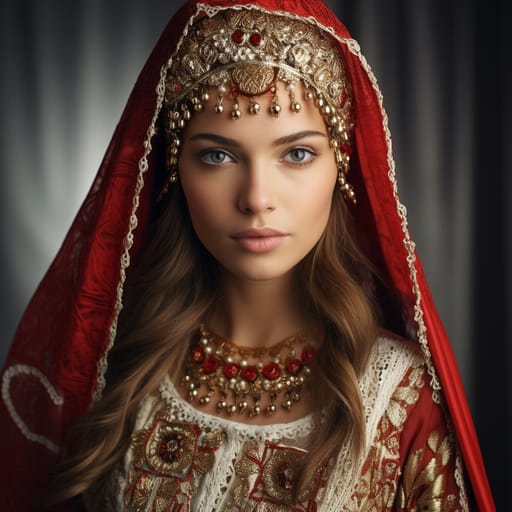
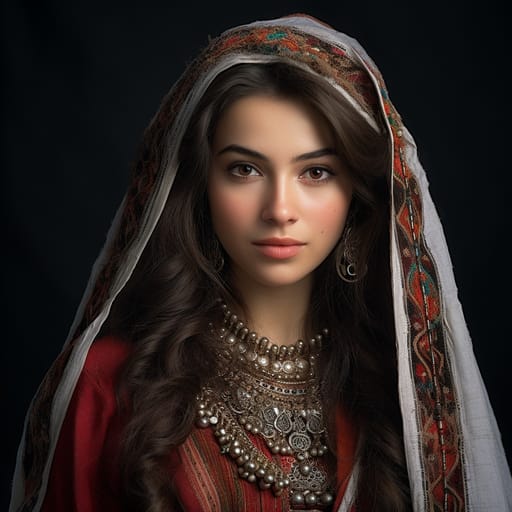
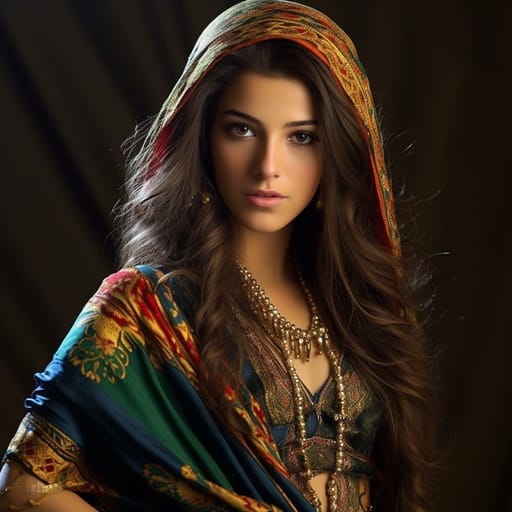
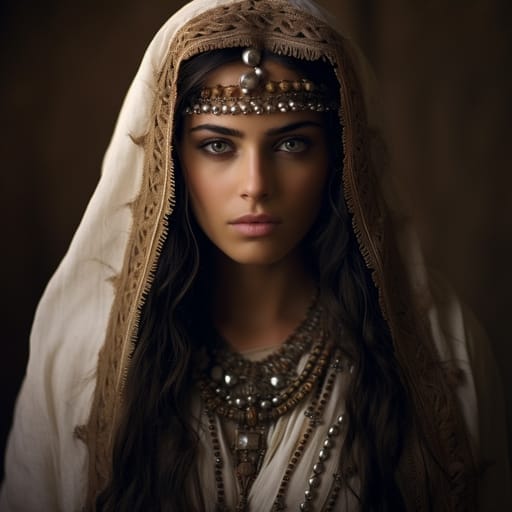
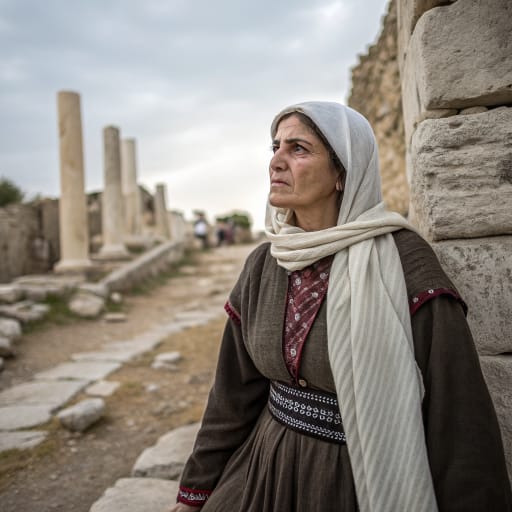
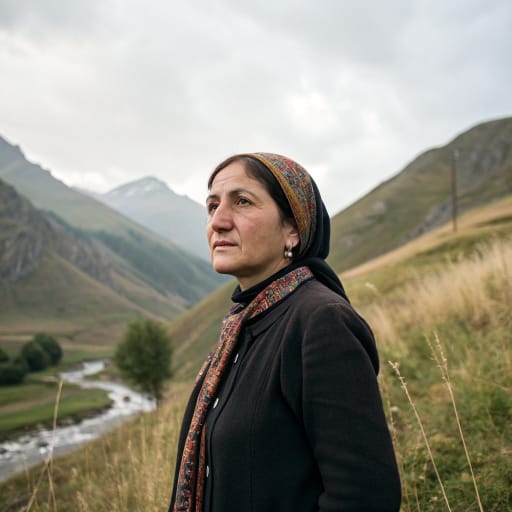
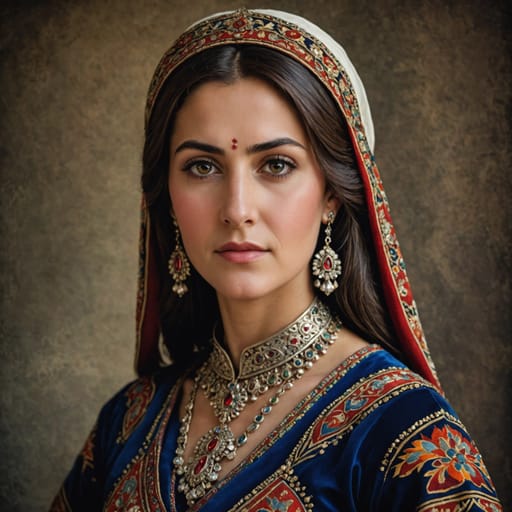
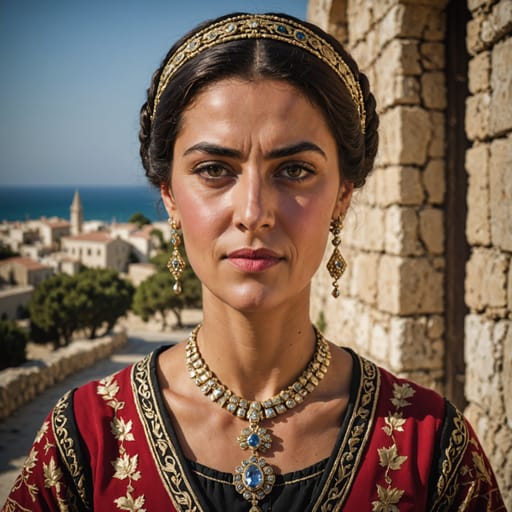
Typical Anatolians Phenotypes
Reference for AI generation: hair, eyes, skin, facial structure, build
Anatolians Body & Anatomy Reference
Per-feature anatomical profile for AI nude generation: Levantine / Mediterranean Middle Eastern phenotype
Anatolians Boobs & Breasts
Anatolians boobs follow the Levantine / Mediterranean Middle Eastern profile: medium-to-large cup, full, moderate-to-high projection. Areolar diameter is usually 32-46mm, and the coloring is medium-brown to dark-brown areolar pigmentation against the olive-to-light-brown skin tone. Breast shape tracks body composition (mesomorph with fuller hip-and-bust deposition, mean adult female BMI 25-28), so Anatolians breasts tend to be full and soft, fuller projection than the North-African Berber norm. Expect a forward-set shape, not the smaller East Asian bust profile.
Anatolians Ass & Hips
Anatolians ass and hip morphology presents as medium-to-full, moderate projection, broader hip profile, distinctly different from the slim East Asian narrow-hip profile. The Anatolians pelvic profile shows medium-to-wide iliac crests, fuller gluteal-femoral deposition, anchored in the Levantine / Mediterranean Middle Eastern skeletal pattern. Anatolians butt shots in adult AI imagery should render the medium-to-full, moderate projection, broader hip profile silhouette with the overall build (mesomorph with fuller hip-and-bust deposition) and the fat distribution typical of the Levantine / Mediterranean Middle Eastern phenotype.
Anatolians Vagina & Pussy
Anatolians pussy anatomy typically shows medium-brown to dark-brown labial pigmentation, fuller labia minora. Pubic hair is usually wavy-to-coiled medium-coarse dark texture, dense distribution. In AI-generated Anatolians nudes, labial color should blend into the olive to medium-brown skin with a gradual transition, and the hair should keep its wavy-to-coiled medium-coarse dark texture.
Anatolians Dicks & Penis
Penis reference for Anatolians men: regional mean ~14cm erect, moderate-to-above-average girth. Coloring: medium-brown shaft pigmentation. An accurate Anatolians cock in AI imagery matches the surrounding olive to medium-brown skin rather than a generic porn default. Circumcision depends on religion and custom, not ancestry.
Anatolians Body, Curves & Build
The Anatolians figure is generally mesomorph with fuller hip-and-bust deposition, with mean adult female BMI 25-28, characteristic of Levantine / Mediterranean Middle Eastern ancestry. AI image tools tend to flatten regional body types into a few stock shapes; here the Anatolians build is kept as its own reference.
Anatolians Skin Tone & Hair Texture
Skin: olive to medium-brown (Fitzpatrick III-V). Hair: wavy-to-curly 2B-3B, predominantly dark-brown to black. Both are typical of Levantine / Mediterranean Middle Eastern ancestry. The most common mistake in AI nudes of Anatolians women is a body rendered lighter than the face.
Explore phenotype categories
Structured taxonomy with peer-reviewed scales · 22 anatomical categories
Erotic Poses & Sex Positions
From the pose catalog: 219 named positions with reference skeletons
Frequently asked questions about Anatolians people
Where is the Anatolians homeland?
The Anatolians homeland is Anatolia, the peninsula of modern Turkey, with Luwian and Neo-Hittite extensions into northern Syria in Western Asia.
What language do Anatolians people speak?
Anatolians people primarily speak Anatolian branch of Indo-European: Hittite, Luwian, Palaic, Lydian, Lycian, Carian, Pisidian, Sidetic, all extinct.
What religion do Anatolians people practice?
The predominant religion among Anatolians people is Polytheist. The thousand gods of Hatti, led by the storm god Tarhunna and the sun goddess of Arinna, with heavy Hattian and Hurrian borrowing; western cults later merged into Greek practice.






Make your own Anatolians images
Five a day, free, no credits to buy. The studio starts from this group's phenotype data, so you can set body type, pose and style and keep the traits accurate.
Start with Anatolians