No portrait yet
Olmecs Erotic
Gulf Coast lowlands of southern Veracruz and western Tabasco, Mexico
Unattested, most likely an early Mixe-Zoquean language (Mixe-Zoquean)
Indigenous Mesoamerican, known only from iconography: were-jaguar and related supernatural figures, ritual offerings, bloodletting
Formative-period Mesoamerican civilization; succeeded by the Epi-Olmec culture; possible linguistic heirs among the Mixe, Zoque, and Popoluca
About Olmecs People
The Olmecs were the people who built the first large ceremonial centers in Mesoamerica, on the hot, river-cut Gulf lowlands of what is now southern Veracruz and western Tabasco, Mexico, between roughly 1200 and 400 BC. No living community calls itself Olmec, and the name itself is borrowed: it is Nahuatl for rubber people, a label that Nahuatl speakers of the Aztec era gave the region's inhabitants some two thousand years after the fact. What the Olmecs called themselves is unknown, and so is their language, though the most widely accepted guess is an early form of Mixe-Zoquean, the family still spoken by the Popoluca, Mixe, and Zoque of the same region today. That guess rests on loanwords for cacao, incense, and maize processing that spread from this area into Mayan and other Mesoamerican languages, a fair clue to who was teaching whom.
What makes the Olmecs recognizable is their sculpture. The colossal basalt heads, seventeen of them known, each cut from a single boulder quarried in the Tuxtla mountains and hauled tens of miles across swamp and river, show individual faces under close-fitting helmets, almost certainly portraits of rulers. Their two great capitals rose and fell in sequence: San Lorenzo, a plateau settlement with basalt drainage lines and monuments that were later deliberately smashed and buried, and then La Venta, on an island in the coastal marshes, with an earthen pyramid, buried pavements of serpentine mosaic, and caches of jade and polished iron-ore mirrors that no one was meant to see again. Their religion is read entirely from objects: the recurring figure that fuses a human infant with a jaguar, snarling and cleft-headed, is among the oldest deity images in Mesoamerica, stingray spines in offerings point to ritual bloodletting, and the rubber balls preserved in the spring shrine of El Manatí, the oldest found anywhere, point to a ballgame that later peoples would play for two thousand years. The Cascajal Block, a serpentine slab incised with signs around 900 BC, may be the earliest writing in the Americas, though not everyone agrees it is writing at all.
By about 400 BC the major centers were abandoned and the eastern heartland emptied out, for reasons still argued over: shifting river courses, volcanic ash falls, or the collapse of the elite order that held it all together. Whether the Olmecs were the mother culture of Mesoamerica or one ambitious sibling among several is an open debate, but the jade, the rulers carved in stone, and the deity images that define the region's later civilizations all appear here early and fully formed. Their legacy is less a bloodline than a template.
Related ethnic groups
Groups that share Olmecs's homeland, region, language, or religious tradition. These are likely candidates for comparative phenotype reference.
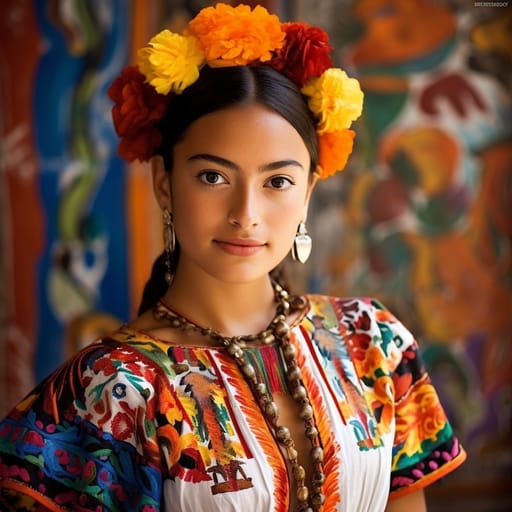
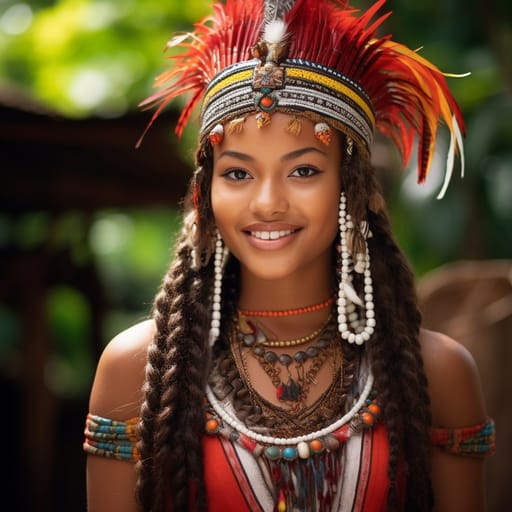
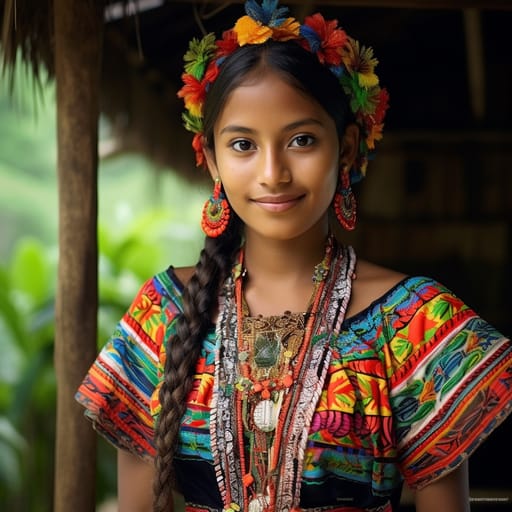
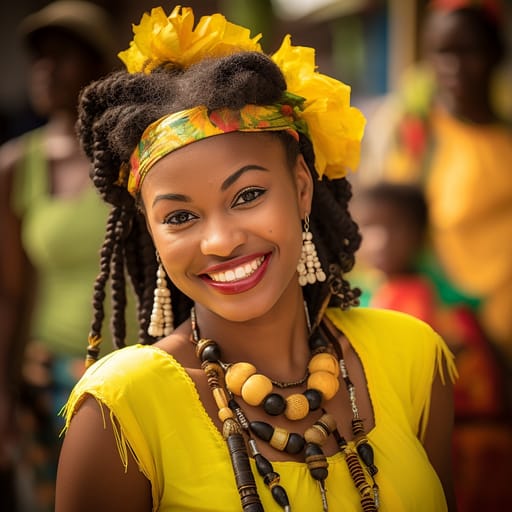
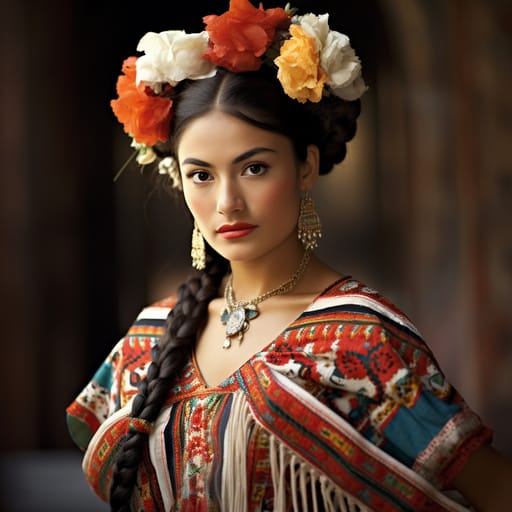
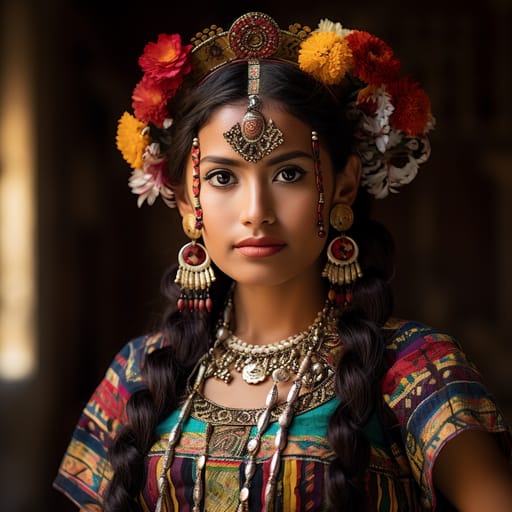
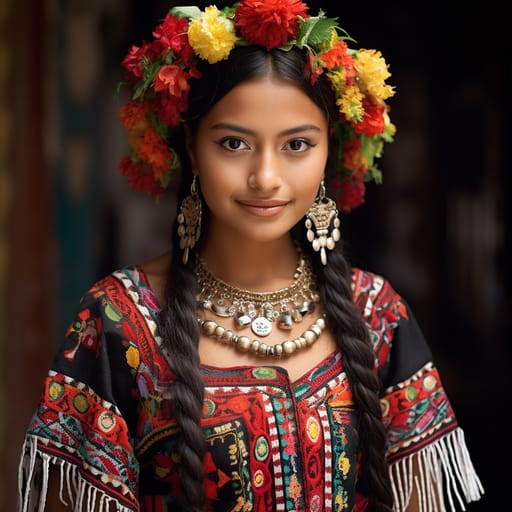
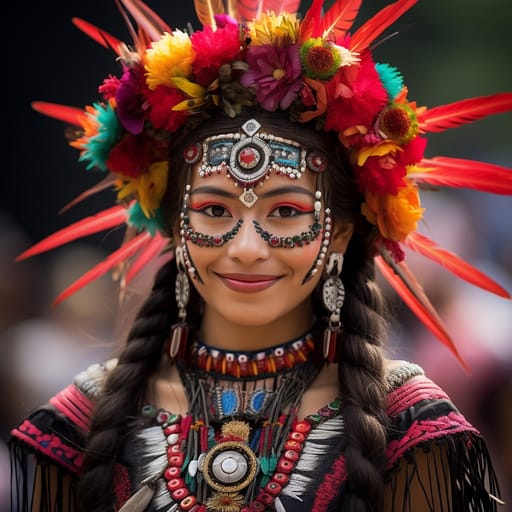
Typical Olmecs Phenotypes
Reference for AI generation: hair, eyes, skin, facial structure, build
Olmecs Body & Anatomy Reference
Per-feature anatomical profile for AI nude generation: Mesoamerican Indigenous / Mestizo phenotype
Olmecs Boobs & Breasts
The typical Olmecs bust is medium-to-large cup, full, moderate-to-high projection, in line with the wider Mesoamerican Indigenous / Mestizo pattern. Areolas usually fall in the 32-46mm range, with medium-brown to dark-brown areolar pigmentation against the tan-to-medium-brown skin tone. Compared with the smaller East Asian bust, Olmecs breasts sit forward and are generally full and projecting, classic Latina curvy bust profile. A faithful AI render of Olmecs tits keeps that shape and areola size.
Olmecs Ass & Hips
Butt shape among Olmecs women: medium-to-full, high projection, classic Latina curvy hip profile, over wide iliac crests, full gluteal-femoral fat deposition. This follows Mesoamerican Indigenous / Mestizo ancestry and looks quite unlike the slim narrow-hip East Asian profile. An accurate Olmecs ass in adult AI imagery keeps both the silhouette and the overall build (endomorph-to-mesomorph with strong hip-and-bust deposition) instead of a generic average.
Olmecs Vagina & Pussy
Vulvar anatomy among Olmecs women: medium-brown to dark-brown labial pigmentation, fuller labia minora. Pubic hair tends to be straight-to-wavy coarse dark texture, dense distribution, in the usual inverted-triangle pattern. Both follow Mesoamerican Indigenous / Mestizo pigmentation, which is why Olmecs pussy renders should not fall back on a pale, sparse Western template.
Olmecs Dicks & Penis
The Olmecs cock profile, from Mesoamerican Indigenous / Mestizo anthropometric data: regional mean ~13cm erect; moderate girth; medium-brown shaft pigmentation. Pubic hair has a straight-to-wavy coarse dark texture and forms the usual inverted-V pattern. Whether Olmecs men are circumcised follows religious and cultural practice rather than phenotype.
Olmecs Body, Curves & Build
Build and curves among Olmecs women follow the Mesoamerican Indigenous / Mestizo pattern: endomorph-to-mesomorph with strong hip-and-bust deposition, mean adult female BMI 26-29. Proportions matter as much as skin tone, so Olmecs figures should keep their regional height and limb ratios.
Olmecs Skin Tone & Hair Texture
The Olmecs skin range is tan to medium-brown (Fitzpatrick III-V), and hair tends to be straight-to-wavy 1A-2B, dense dark-brown to black. That combination marks the Mesoamerican Indigenous / Mestizo phenotype, and skin tone is the trait AI generators most often get wrong for Olmecs women.
Explore phenotype categories
Structured taxonomy with peer-reviewed scales · 22 anatomical categories
Erotic Poses & Sex Positions
From the pose catalog: 219 named positions with reference skeletons
Frequently asked questions about Olmecs people
Where is the Olmecs homeland?
The Olmecs homeland is Gulf Coast lowlands of southern Veracruz and western Tabasco, Mexico in Central America.
What language do Olmecs people speak?
Olmecs people primarily speak Unattested, most likely an early Mixe-Zoquean language (Mixe-Zoquean).
What religion do Olmecs people practice?
The predominant religion among Olmecs people is Indigenous Mesoamerican, known only from iconography: were-jaguar and related supernatural figures, ritual offerings, bloodletting.






Make your own Olmecs images
Five a day, free, no credits to buy. The studio starts from this group's phenotype data, so you can set body type, pose and style and keep the traits accurate.
Start with Olmecs