No portrait yet
Odia Erotic
Odisha in eastern India, with communities in neighboring West Bengal, Jharkhand, Chhattisgarh and Andhra Pradesh, and large migrant populations in Surat and other Indian cities
Odia (Eastern Indo-Aryan, Indo-European), with regional varieties such as Sambalpuri, Baleswari and Ganjami
Predominantly Hindu, centered on the worship of Jagannath at Puri; small Christian and Muslim minorities
Eastern Indo-Aryan peoples; regional communities include coastal Odias, Sambalpuri-speaking western Odias and Ganjami-speaking southern Odias
About Odia People
Ask an Odia what holds the community together and the answer may well involve a wooden god with enormous round eyes. Most Odias are Hindu, and Jagannath, worshipped at the great temple in Puri, is less a distant deity than a household presence: his image appears on shop walls and taxi dashboards, his temple kitchen feeds thousands every day, and each summer during Rath Yatra his towering chariots are hauled through the streets by crowds of devotees. Around that figure stands a people bound by a language, a coastline and a long memory of being Kalinga.
Their homeland, Odisha, runs along the Bay of Bengal between West Bengal and Andhra Pradesh, with rice-growing deltas on the coast and forested hills inland. The Odia language sits in the eastern branch of Indo-Aryan beside Bengali and Assamese, yet it has long kept its own identity and its own script, known for its rounded letters. A common explanation is that scribes wrote on palm leaves with an iron stylus, and straight horizontal strokes would have torn the leaf. In 2014 India declared Odia a classical language, recognizing its long written history.
History here turns on a few hinges. The Kalinga War, around 261 BCE, left the victorious emperor Ashoka remorseful, by his own inscribed account, and turned him toward Buddhism. Kings of the Eastern Ganga dynasty later raised the Jagannath temple and the sun temple at Konark, carved as a stone chariot on giant wheels. Sailors from this coast once traded across the sea with Sri Lanka, Java and Bali, and on the Kartika full moon families still float small boats before dawn to remember them, while Cuttack hosts the Bali Jatra fair. In 1936 Orissa became a separate province drawn on language lines, an anniversary marked each April 1 as Utkala Dibasa, and in 2011 the state and its language took their current spellings, Odisha and Odia.
In the hot months many households eat pakhala, cooked rice soaked and lightly fermented in water. Western Odisha, where Sambalpuri speech and identity run strong, celebrates Nuakhai to welcome the new rice, and its ikat saris, patterned by tying and dyeing the threads before weaving, are worn far beyond the region. Odissi dance grew out of temple ritual, and boy dancers called gotipua still perform in female costume. Raja Parba, a three-day festival in mid-June, treats the earth as a woman at rest: plowing stops, and girls wear new clothes and play on swings. Odisha is also home to dozens of Adivasi peoples, among them the Kondh and Santal; many speak Odia alongside their own languages, but they remain distinct communities.
Related ethnic groups
Groups that share Odia's homeland, region, language, or religious tradition. These are likely candidates for comparative phenotype reference.
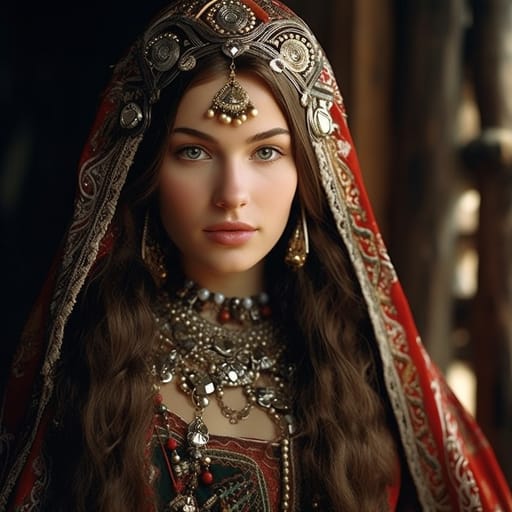
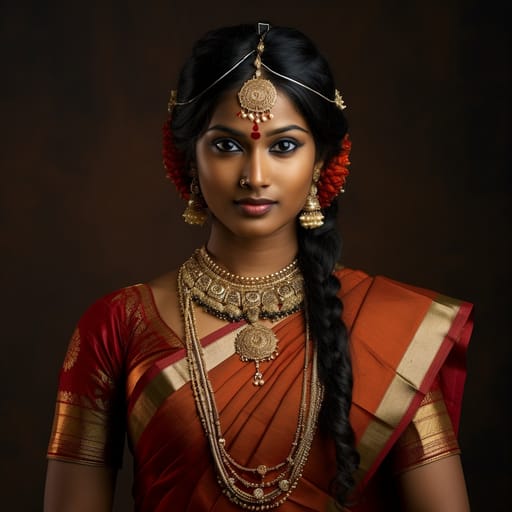
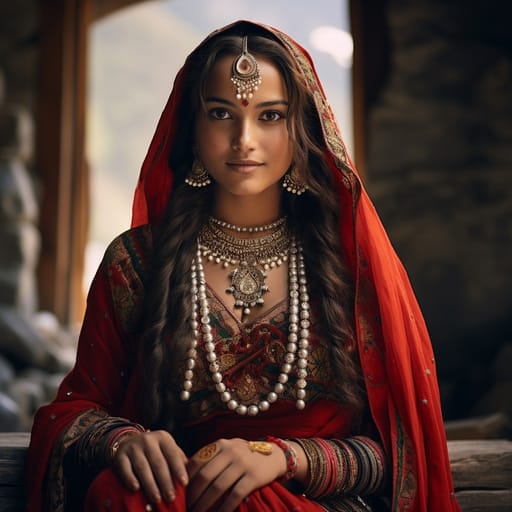
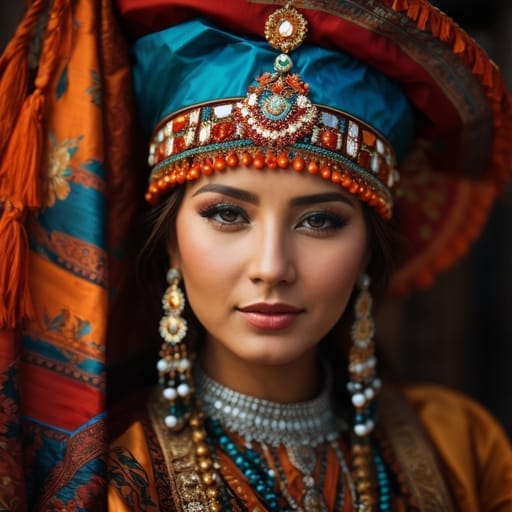
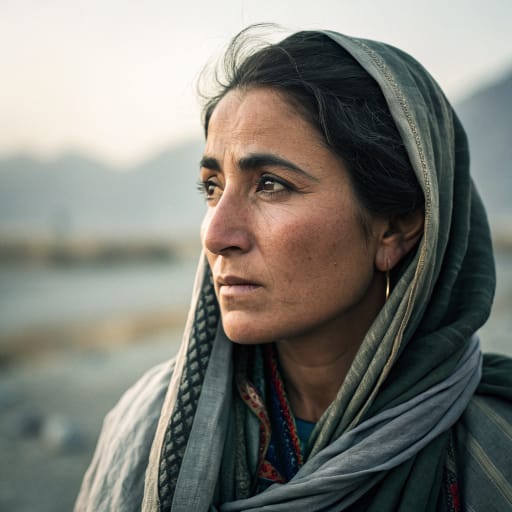
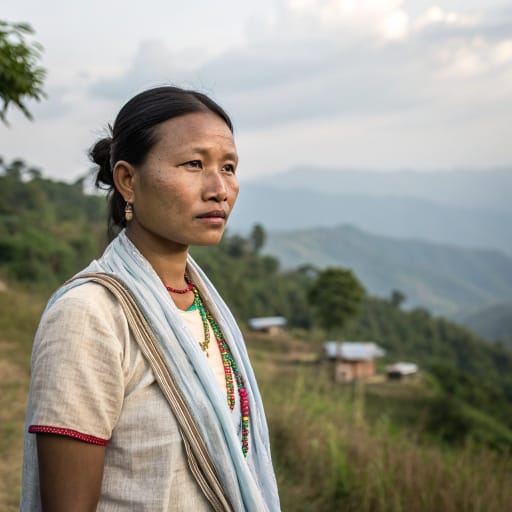
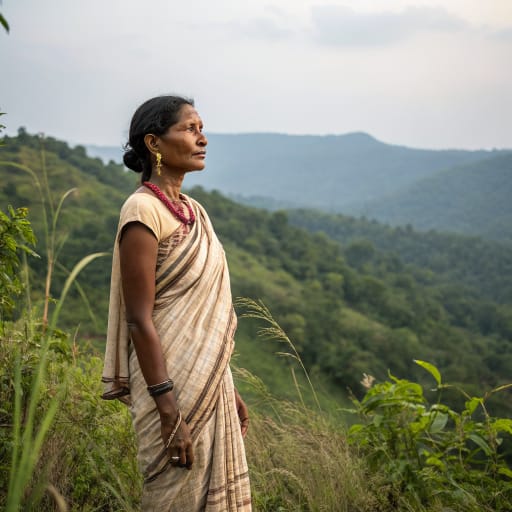
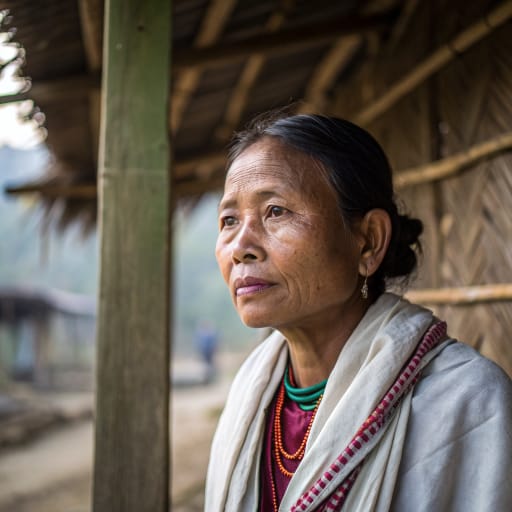
Typical Odia Phenotypes
Reference for AI generation: hair, eyes, skin, facial structure, build
Odia Body & Anatomy Reference
Per-feature anatomical profile for AI nude generation: Indo-Aryan / Dravidian South Asian phenotype
Odia Boobs & Breasts
Bust reference for Odia women: medium-to-large cup, moderate-to-full projection, which is typical of Indo-Aryan / Dravidian South Asian ancestry. Areolas measure about 32-46mm across, with medium-brown to dark-brown pigmentation. Body type (endomorph-to-mesomorph with fuller hip deposition) shapes the bust as well, so Odia tits are usually full and soft, generally fuller than the East Asian norm. In AI imagery, keep the forward-set shape rather than drifting toward the smaller East Asian bust profile.
Odia Ass & Hips
The Odia ass is typically medium-to-full, moderate-to-high projection, classic curvy hip profile, which sets it apart from the slim hip profile of East Asian women. Underneath, the pelvis shows medium-to-wide iliac crests, full gluteal-femoral fat distribution, part of the Indo-Aryan / Dravidian South Asian skeletal pattern. For Odia butt pics and AI renders, match that silhouette and the overall build (endomorph-to-mesomorph with fuller hip deposition).
Odia Vagina & Pussy
Odia pussy and vulvar anatomy presents medium-brown to dark-brown labial pigmentation, fuller labia minora projection, consistent with the Indo-Aryan / Dravidian South Asian phenotype's pigmentation pattern. Odia pubic hair is typically straight-to-wavy coarse texture, dense distribution, in the inverted-triangle pattern. For anatomically accurate Odia pussy renders the labial coloration should match the surrounding wheatish to brown skin tone with a continuous gradient, and the hair should keep its straight-to-wavy coarse texture.
Odia Dicks & Penis
Odia dicks follow the Indo-Aryan / Dravidian South Asian reference data: regional mean ~13cm erect; moderate girth; medium-brown shaft pigmentation. Shaft color should track the wheatish to brown skin tone with a smooth change toward the glans, and Odia pubic hair keeps its straight-to-wavy coarse texture.
Odia Body, Curves & Build
Odia body type and overall build presents as endomorph-to-mesomorph with fuller hip deposition, with mean adult female BMI 22-25: the characteristic Indo-Aryan / Dravidian South Asian habitus. Odia curves and proportions should keep the regional skeletal frame (height, shoulder-to-hip ratio, limb proportions) rather than a generic mesomorph default.
Odia Skin Tone & Hair Texture
Odia skin sits in the wheatish to brown (Fitzpatrick III-V) band. Hair is typically straight-to-wavy 1A-2B, dense, dark-brown to black, in keeping with the Indo-Aryan / Dravidian South Asian phenotype. In nude renders the skin should stay one even tone from face to body, and body, pubic and head hair should match.
Explore phenotype categories
Structured taxonomy with peer-reviewed scales · 22 anatomical categories
Erotic Poses & Sex Positions
From the pose catalog: 219 named positions with reference skeletons
Frequently asked questions about Odia people
Where is the Odia homeland?
The Odia homeland is Odisha in eastern India, with communities in neighboring West Bengal, Jharkhand, Chhattisgarh and Andhra Pradesh, and large migrant populations in Surat and other Indian cities in Southern Asia.
What language do Odia people speak?
Odia people primarily speak Odia (Eastern Indo-Aryan, Indo-European), with regional varieties such as Sambalpuri, Baleswari and Ganjami.
What religion do Odia people practice?
The predominant religion among Odia people is Predominantly Hindu, centered on the worship of Jagannath at Puri; small Christian and Muslim minorities.






Make your own Odia images
Five a day, free, no credits to buy. The studio starts from this group's phenotype data, so you can set body type, pose and style and keep the traits accurate.
Start with Odia