Help us get this right
Does this portrait look right for Thadou?
Nobody has judged this one yet. You would be the first.
Thadou Erotic
Hill districts of Manipur in northeast India, chiefly Kangpokpi, Churachandpur, Chandel and Tengnoupal, with communities in Nagaland, Assam and Mizoram and across the border in Myanmar's Sagaing Region and Chin State.
Thadou, also called Thadou-Kuki (Sino-Tibetan, Tibeto-Burman, Kuki-Chin branch); Meitei and English are widely used as second languages.
Christianity, mostly Protestant, with Baptist churches prominent; a small Bnei Menashe Jewish minority; formerly an indigenous religion centered on the creator Pathen.
Often classed within the Kuki or Kuki-Zo peoples, a classification some Thadou reject; clans include Haokip, Kipgen, Sitlhou, Doungel, Singson, Chongloi, Hangshing and Lhouvum.
About Thadou People
The Thadou are the largest of the hill peoples grouped under the Kuki name in Manipur, northeast India, and the argument over that label is part of their present. Every Thadou clan, among them Haokip, Kipgen, Sitlhou, Doungel and Singson, traces descent from a single ancestor called Thadou, and genealogy is working knowledge rather than trivia: it fixes seniority between lineages and decides who owes whom a share of meat from a kill. Some Thadou organizations insist the tribe stands alone and reject the Kuki name outright. Others call themselves Thadou-Kuki without discomfort. The dispute is live and political.
They live in the hills ringing the Imphal valley, mainly in Kangpokpi, Churachandpur, Chandel and Tengnoupal districts, with smaller communities in Nagaland, Assam and Mizoram and relatives across the border in Myanmar. Their language belongs to the Kuki-Chin branch of Tibeto-Burman and sits close enough to neighbors such as Paite, Vaiphei, Gangte and Zou that speakers can often get by without a translator. It is written in Roman script, a legacy of the missionaries who arrived around the turn of the twentieth century. Within a few generations nearly the whole people had become Christian, most of them Protestant, and the church now organizes much of village life. Pathen, the creator of the older religion, survives as the Thadou word for the Christian God. A small number identify as Bnei Menashe, claim descent from a lost tribe of Israel, and have emigrated there.
Villages traditionally sit on ridgetops under a hereditary chief, the haosa, who holds the land. The eldest son inherits, so younger sons historically walked off to found villages of their own, which helps explain why Thadou settlements are small, numerous and spread across such a wide arc of hills. Hill rice is still grown on slash-and-burn plots, traditionally worked by the lom, a youth labor cooperative that rotates from field to field. Status could be earned as well as inherited: a great hunter could hold the Sa-ai feast, and a woman with exceptional harvests could hold the Chang-ai, a rare public honor won by women in their own right.
Thadou chiefs led the Anglo-Kuki War of 1917 to 1919, refusing to supply laborers for the British war effort in France and holding out in the hills for two years. Conflict has returned since: clashes with Naga groups in the 1990s, and the violence that broke out in May 2023 between the valley's Meitei majority and the Kuki-Zo hill peoples, which drove Thadou families out of Imphal and left tens of thousands displaced. Chavang Kut, the harvest festival held each November 1, is the main public gathering.
Related ethnic groups
Groups that share Thadou's homeland, region, language, or religious tradition. These are likely candidates for comparative phenotype reference.
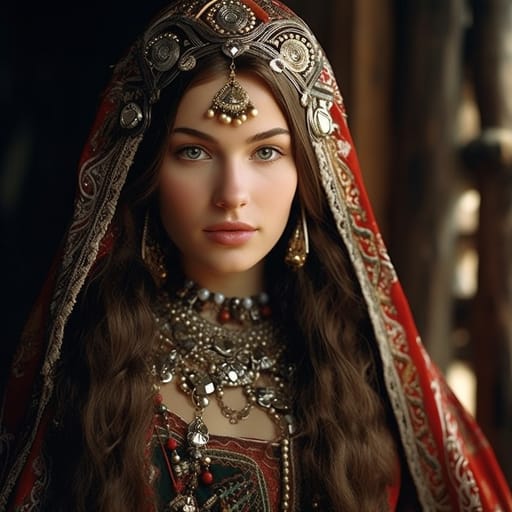
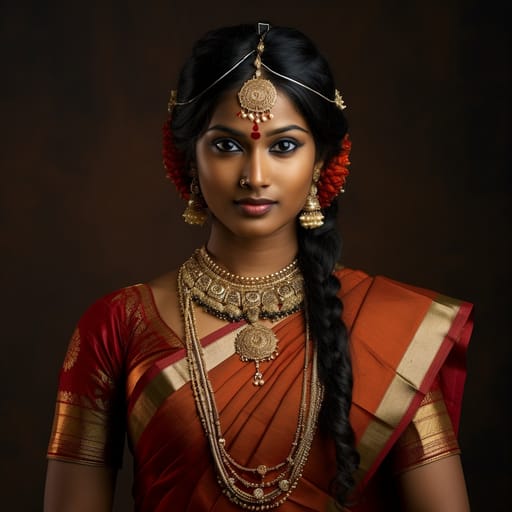
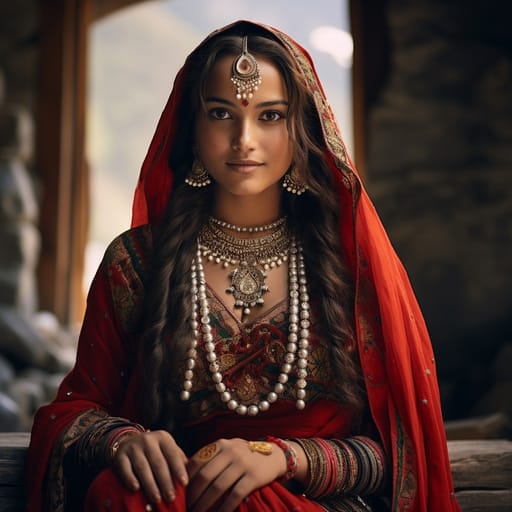
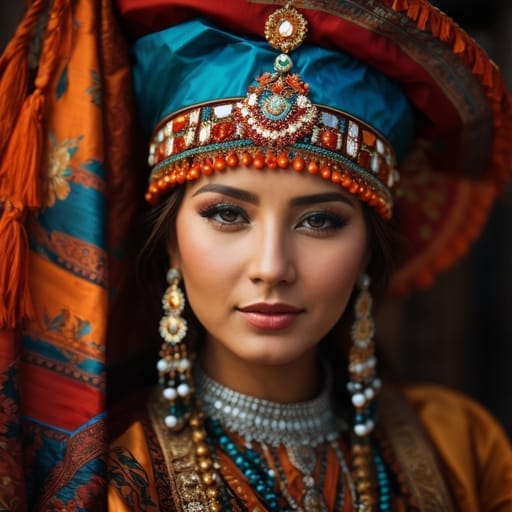
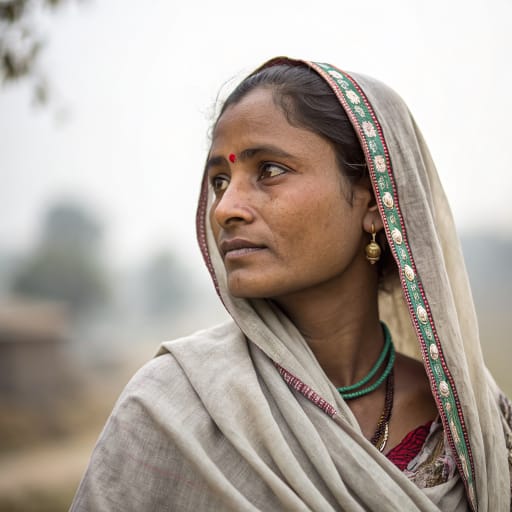
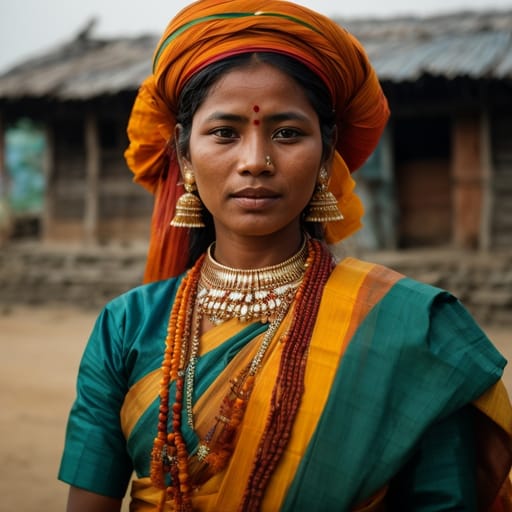
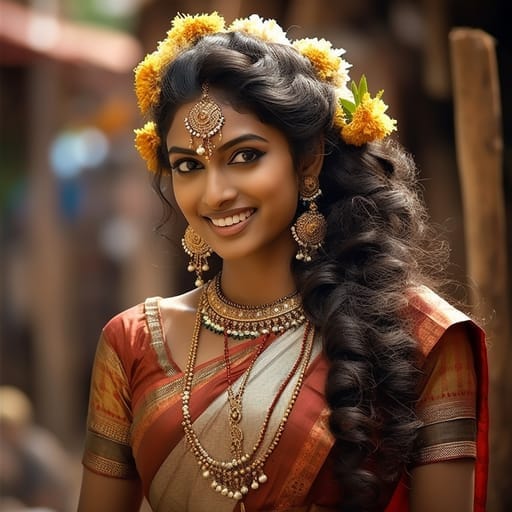
Typical Thadou Phenotypes
Reference for AI generation: hair, eyes, skin, facial structure, build
Thadou Body & Anatomy Reference
Indo-Aryan / Dravidian South Asian phenotype: anatomy reference for AI nude generation
Thadou Boobs & Breasts
Bust reference for Thadou women: medium-to-large cup, moderate-to-full projection, which is typical of Indo-Aryan / Dravidian South Asian ancestry. Areolas measure about 32-46mm across, with medium-brown to dark-brown pigmentation. Body type (endomorph-to-mesomorph with fuller hip deposition) shapes the bust as well, so Thadou tits are usually full and soft, generally fuller than the East Asian norm. In AI imagery, keep the forward-set shape rather than drifting toward the smaller East Asian bust profile.
Thadou Ass & Hips
The Thadou ass is typically medium-to-full, moderate-to-high projection, classic curvy hip profile, which sets it apart from the slim hip profile of East Asian women. Underneath, the pelvis shows medium-to-wide iliac crests, full gluteal-femoral fat distribution, part of the Indo-Aryan / Dravidian South Asian skeletal pattern. For Thadou butt pics and AI renders, match that silhouette and the overall build (endomorph-to-mesomorph with fuller hip deposition).
Thadou Vagina & Pussy
Thadou pussy and vulvar anatomy presents medium-brown to dark-brown labial pigmentation, fuller labia minora projection, consistent with the Indo-Aryan / Dravidian South Asian phenotype's pigmentation pattern. Thadou pubic hair is typically straight-to-wavy coarse texture, dense distribution, in the inverted-triangle pattern. For anatomically accurate Thadou pussy renders the labial coloration should match the surrounding wheatish to brown skin tone with a continuous gradient, and the hair should keep its straight-to-wavy coarse texture.
Thadou Dicks & Penis
Thadou dicks follow the Indo-Aryan / Dravidian South Asian reference data: regional mean ~13cm erect; moderate girth; medium-brown shaft pigmentation. Shaft color should track the wheatish to brown skin tone with a smooth change toward the glans, and Thadou pubic hair keeps its straight-to-wavy coarse texture.
Thadou Body, Curves & Build
Thadou body type and overall build presents as endomorph-to-mesomorph with fuller hip deposition, with mean adult female BMI 22-25: the characteristic Indo-Aryan / Dravidian South Asian habitus. Thadou curves and proportions should keep the regional skeletal frame (height, shoulder-to-hip ratio, limb proportions) rather than a generic mesomorph default.
Thadou Skin Tone & Hair Texture
Thadou skin sits in the wheatish to brown (Fitzpatrick III-V) band. Hair is typically straight-to-wavy 1A-2B, dense, dark-brown to black, in keeping with the Indo-Aryan / Dravidian South Asian phenotype. In nude renders the skin should stay one even tone from face to body, and body, pubic and head hair should match.
Explore phenotype categories
Structured taxonomy with peer-reviewed scales · 22 anatomical categories
Erotic Poses & Sex Positions
From the pose catalog: 219 named positions with reference skeletons
Frequently asked questions about Thadou people
Where is the Thadou homeland?
The Thadou homeland is Hill districts of Manipur in northeast India, chiefly Kangpokpi, Churachandpur, Chandel and Tengnoupal, with communities in Nagaland, Assam and Mizoram and across the border in Myanmar's Sagaing Region and Chin State. in Southern Asia.
What language do Thadou people speak?
Thadou people primarily speak Thadou, also called Thadou-Kuki (Sino-Tibetan, Tibeto-Burman, Kuki-Chin branch); Meitei and English are widely used as second languages..
What religion do Thadou people practice?
The predominant religion among Thadou people is Christianity, mostly Protestant, with Baptist churches prominent; a small Bnei Menashe Jewish minority; formerly an indigenous religion centered on the creator Pathen..






Make your own Thadou images
Five a day, free, no credits to buy. The studio starts from this group's phenotype data, so you can set body type, pose and style and keep the traits accurate.
Start with Thadou