No portrait yet
Ngumba Erotic
Southern Cameroon, mainly the Océan department of the South Region around Lolodorf and Bipindi, inland from Kribi
Kwasio, also called Ngumba or Mvumbo (Niger-Congo, Bantu, Makaa-Njem group); many also speak Bulu or Ewondo and French
Mostly Christian, Catholic and Protestant
Part of the Kwasio-speaking group with the Mabi (Mabea) of the Kribi coast and the Bujeba of Equatorial Guinea; the language is in the Makaa-Njem branch of Bantu
About Ngumba People
The Ngumba are a small forest people of southern Cameroon, and their language is what sets them apart most clearly. Linguists call it Kwasio. It separates the Ngumba from the Bulu, Fang and Ewondo speakers all around them and links them to a few scattered relatives: the Mabi on the coast near Kribi and the Bujeba across the border in Equatorial Guinea speak forms of the same language. Ngumba country is the green, hilly inland part of the Océan department, centered on the towns of Lolodorf and Bipindi. There, villages line the roads that climb away from the Atlantic.
Kwasio belongs to the Makaa-Njem branch of Bantu. The branch's other languages are spoken far to the east, which suggests an old movement west from the interior toward the sea. Many Ngumba also speak Bulu or Ewondo, the main languages of the region, as well as French, and switching between them in one conversation is normal. Lolodorf still has the German name it got under colonial rule, a reminder that traders, soldiers and missionaries came early to this route inland from Kribi. Today most Ngumba are Christian, some Catholic and some Protestant. Church services and funerals fill much of the social calendar.
You can't understand the Ngumba without the Bagyeli, forest foragers who live in camps near many Ngumba villages. Their language, Gyeli, is closely related to Kwasio. The two communities have traded with each other for a long time: game, honey and labor go one way, and crops and manufactured goods go the other. Some observers call this a partnership and others call it dependency, and there has been some truth in both. It still shapes arguments over land, work and who holds local authority.
Village life runs on farming: cassava, plantains and peanuts to eat, cocoa to sell, plus some hunting and river fishing. The Chad-Cameroon oil pipeline runs through this area on its way to the sea near Kribi. The deep-water port at Kribi has also brought new roads, jobs and pressure on land closer to the villages. Few outsiders ever learn the Ngumba language, and these changes make an old question more urgent: what will the next generation keep?
Related ethnic groups
Groups that share Ngumba's homeland, region, language, or religious tradition. These are likely candidates for comparative phenotype reference.
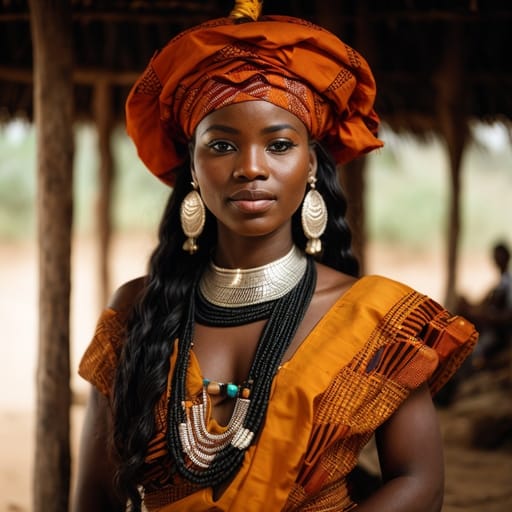
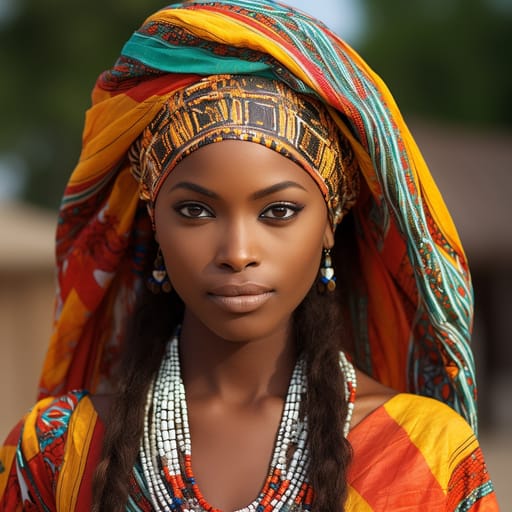
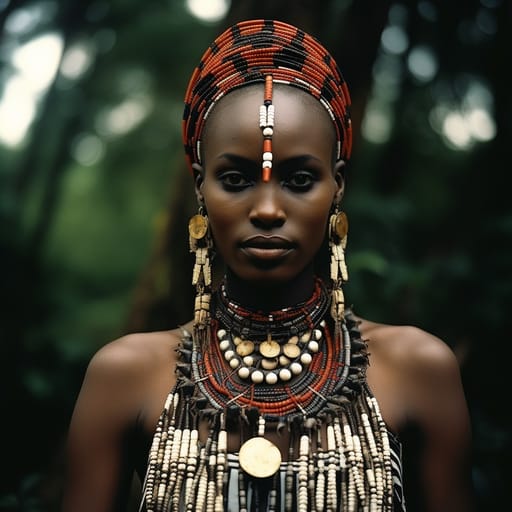
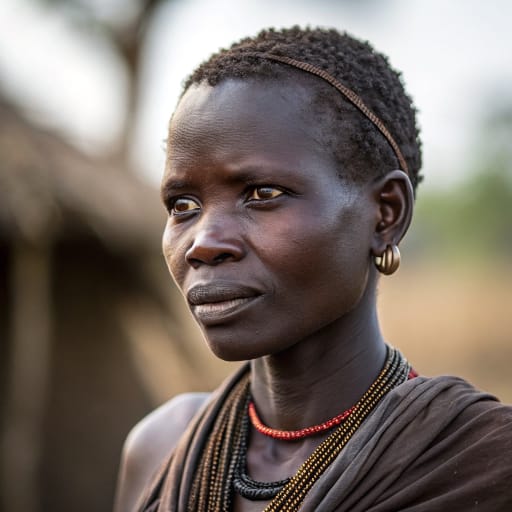
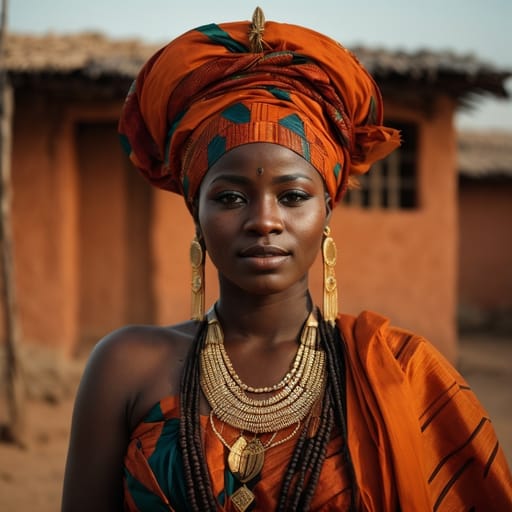
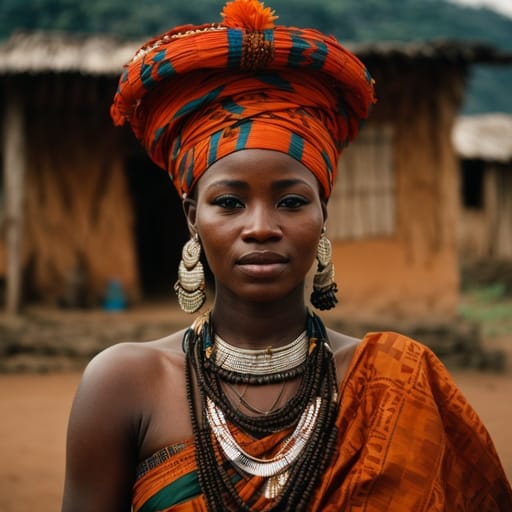
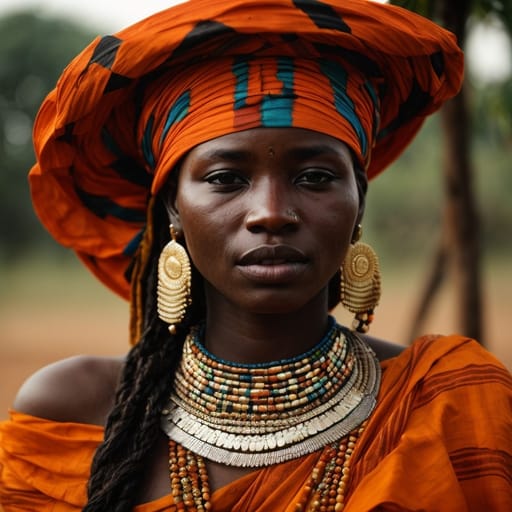
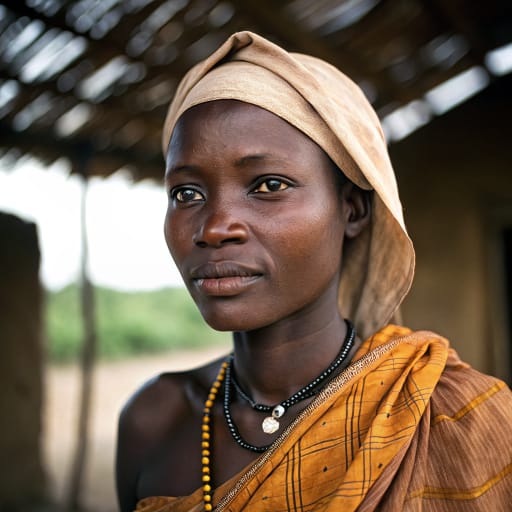
Typical Ngumba Phenotypes
Reference for AI generation: hair, eyes, skin, facial structure, build
Ngumba Body & Anatomy Reference
Per-feature anatomical profile for AI nude generation: Bantu / Central African Niger-Congo phenotype
Ngumba Boobs & Breasts
Ngumba boobs follow the Bantu / Central African Niger-Congo profile: medium-to-large cup, full, projecting. Areolar diameter is usually 32-48mm, and the coloring is deep-brown areolar pigmentation against the deep-brown skin tone. Breast shape tracks body composition (mesomorph with strong gluteal-femoral fat deposition, mean adult female BMI 23-26), so Ngumba breasts tend to be fuller projection than East African; comparable to West African norm. Expect a forward-set shape, not the smaller East African conical profile.
Ngumba Ass & Hips
Ngumba ass and hip morphology presents as full, projected, wide-set glutes, distinctly different from the slim narrow-hip Cushitic East African profile. The Ngumba pelvic profile shows broad iliac crests, gynoid pelvic pattern, anchored in the Bantu / Central African Niger-Congo skeletal pattern. Ngumba butt shots in adult AI imagery should render the full, projected, wide-set glutes silhouette with the overall build (mesomorph with strong gluteal-femoral fat deposition) and the fat distribution typical of the Bantu / Central African Niger-Congo phenotype.
Ngumba Vagina & Pussy
Ngumba pussy anatomy typically shows deep-brown labial pigmentation, fuller labia minora. Pubic hair is usually tightly-coiled coarse texture, dense distribution. In AI-generated Ngumba nudes, labial color should blend into the deep-brown skin with a gradual transition, and the hair should keep its tightly-coiled coarse texture.
Ngumba Dicks & Penis
Penis reference for Ngumba men: regional mean ~14cm erect, above-average girth. Coloring: deep-brown shaft pigmentation. An accurate Ngumba cock in AI imagery matches the surrounding deep-brown skin rather than a generic porn default. Circumcision depends on religion and custom, not ancestry.
Ngumba Body, Curves & Build
The Ngumba figure is generally mesomorph with strong gluteal-femoral fat deposition, with mean adult female BMI 23-26, characteristic of Bantu / Central African Niger-Congo ancestry. AI image tools tend to flatten regional body types into a few stock shapes; here the Ngumba build is kept as its own reference.
Ngumba Skin Tone & Hair Texture
Skin: deep-brown (Fitzpatrick VI). Hair: tight 4A-4C coil. Both are typical of Bantu / Central African Niger-Congo ancestry. The most common mistake in AI nudes of Ngumba women is a body rendered lighter than the face.
Explore phenotype categories
Structured taxonomy with peer-reviewed scales · 22 anatomical categories
Erotic Poses & Sex Positions
From the pose catalog: 219 named positions with reference skeletons
Frequently asked questions about Ngumba people
Where is the Ngumba homeland?
The Ngumba homeland is Southern Cameroon, mainly the Océan department of the South Region around Lolodorf and Bipindi, inland from Kribi in Central Africa.
What language do Ngumba people speak?
Ngumba people primarily speak Kwasio, also called Ngumba or Mvumbo (Niger-Congo, Bantu, Makaa-Njem group); many also speak Bulu or Ewondo and French.
What religion do Ngumba people practice?
The predominant religion among Ngumba people is Mostly Christian, Catholic and Protestant.






Make your own Ngumba images
Five a day, free, no credits to buy. The studio starts from this group's phenotype data, so you can set body type, pose and style and keep the traits accurate.
Start with Ngumba