Help us get this right
Does this portrait look right for Ndau?
Nobody has judged this one yet. You would be the first.
Ndau Erotic
Central Mozambique (Sofala and Manica provinces, Buzi and Save river valleys) and southeastern Zimbabwe (Chipinge and Chimanimani districts)
ChiNdau (Bantu, Shona group); Portuguese in Mozambique and Shona and English in Zimbabwe as second languages
Christianity, especially Apostolic, Zionist and mission churches, alongside ancestral religion and spirit mediumship
Part of the Shona-speaking cluster of Bantu peoples; local groupings include the Danda and Shanga
About Ndau People
The Ndau live on both sides of a border they had no hand in drawing. Their country runs from the hills of Chipinge and Chimanimani in southeastern Zimbabwe through the Buzi and Save river lowlands of central Mozambique toward the coast near Beira. The Anglo-Portuguese boundary of the 1890s split it between a British colony and a Portuguese one, and families and chiefdoms have straddled that line ever since. What holds the Ndau together is not a state. It is a shared speech, a shared history of being caught between larger powers, and a reputation for spiritual power that reaches far beyond their own districts.
ChiNdau is a Bantu language of the Shona cluster. Linguists long filed it as a Shona dialect, and speakers of standard Shona understand much of it. It also carries a heavy layer of Nguni vocabulary, and Zimbabwe's 2013 constitution names it an official language in its own right. The Nguni layer dates to the nineteenth century, when Soshangane's Gaza kingdom conquered the region. The name Ndau is usually traced to that encounter and is said to come from a greeting local people offered the newcomers. Gaza rulers drafted Ndau men into their regiments, and in 1889 Ngungunyane forced large numbers of Ndau to go south with him when he moved his capital to the Limpopo valley.
That history lives on. In southern Mozambique, among Tsonga-speaking families descended from the Gaza conquerors, spirits identified as Ndau are believed to possess the living and demand redress for old wrongs. People seek out Ndau healers and diviners well beyond Ndau country, including in Maputo and Johannesburg. At home, ancestral rites sit alongside Christianity rather than against it. The American Board mission at Mount Silinda, founded in the 1890s, built schools and churches in the Chipinge hills, and across Ndau country Apostolic congregations in white robes now gather to worship in the open air.
Muchongoyo, the dance most closely tied to Chipinge, keeps alive the shields, stamping and battle formations of the Gaza regiments. Politics has not left the Ndau alone either. Afonso Dhlakama, who led RENAMO for decades, was Ndau, and the movement's command relied heavily on Ndau speakers during Mozambique's civil war. Most Ndau today grow maize and sorghum, work the tea and coffee estates of the highlands, or go to South Africa to earn wages. In 2019 Cyclone Idai tore through Beira, Buzi, Chimanimani and Chipinge, hitting the Ndau heartland on both sides of the border in the same storm.
Related ethnic groups
Groups that share Ndau's homeland, region, language, or religious tradition. These are likely candidates for comparative phenotype reference.
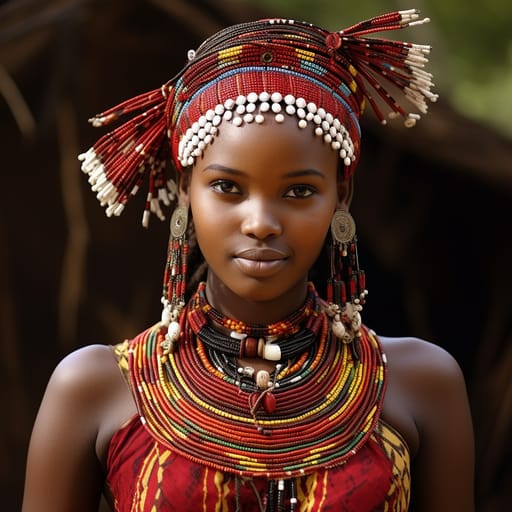
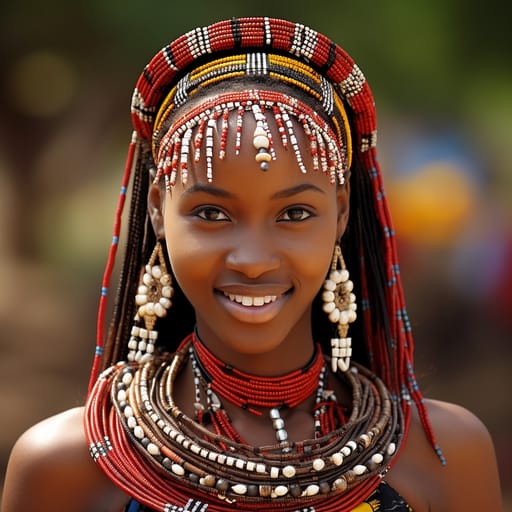
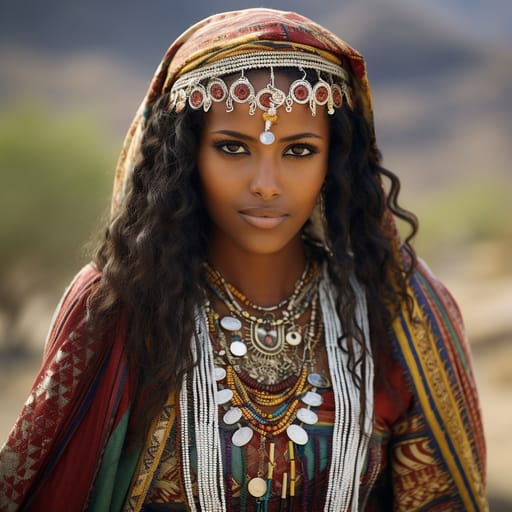
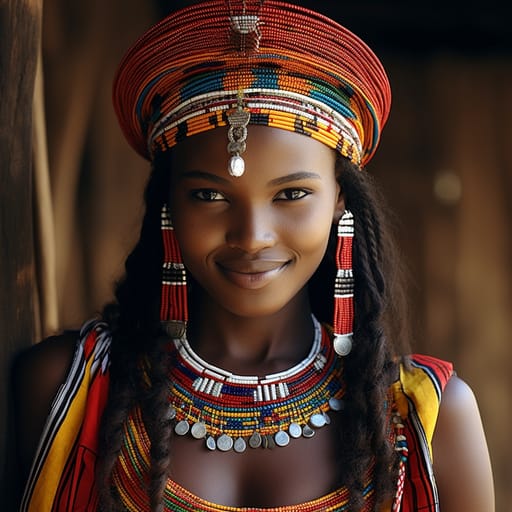
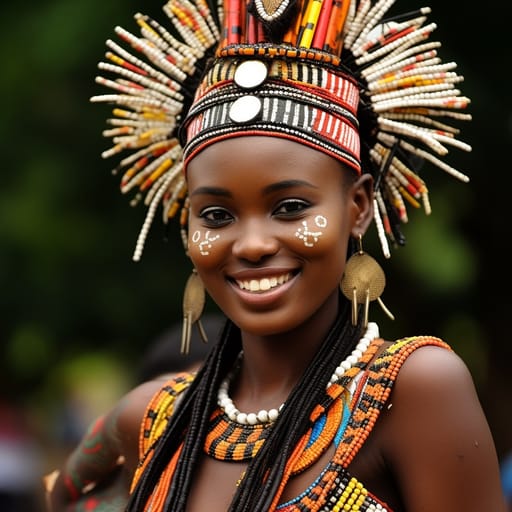
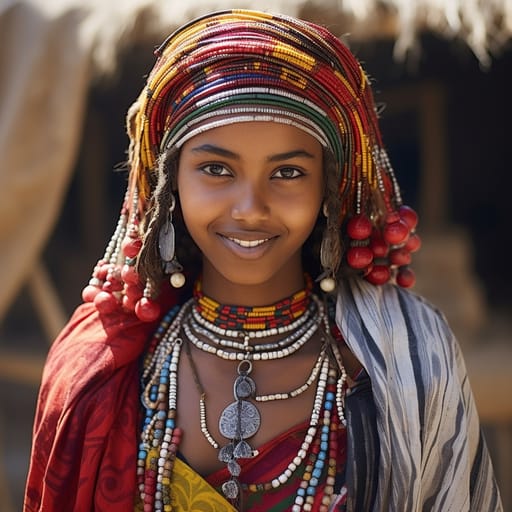
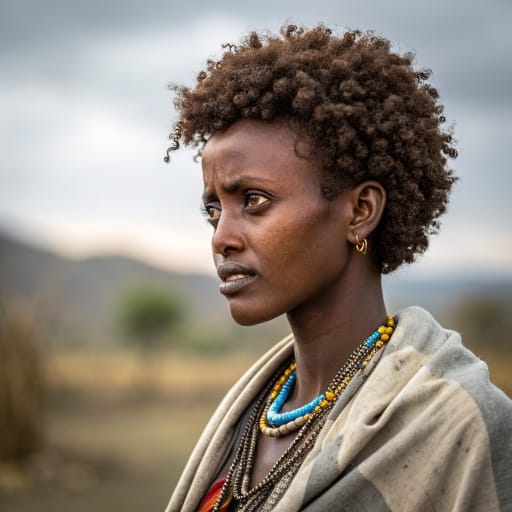
Typical Ndau Phenotypes
Reference for AI generation: hair, eyes, skin, facial structure, build
Ndau Body & Anatomy Reference
Anatomy by feature, Cushitic / Nilo-Cushitic East African phenotype
Ndau Boobs & Breasts
Ndau boobs follow the Cushitic / Nilo-Cushitic East African profile: small-to-medium-cup, high-set, conical. Areolar diameter is usually 28-38mm, and the coloring is moderate-to-high areolar pigmentation against the brown-to-deep-brown skin tone. Breast shape tracks body composition (lean ectomorph-to-mesomorph, mean adult female BMI 19-22), so Ndau breasts tend to be firmer and less projecting than the African-American or West African norm. Expect a forward-set shape, not the lateral spread of the West African phenotype.
Ndau Ass & Hips
Ndau ass and hip morphology presents as small-to-medium, high-set, rounded, distinctly different from the wide-set heavy-projection West African or African-American norm. The Ndau pelvic profile shows narrow-to-medium iliac crests, longer torso-to-leg ratio, anchored in the Cushitic / Nilo-Cushitic East African skeletal pattern. Ndau butt shots in adult AI imagery should render the small-to-medium, high-set, rounded silhouette with the overall build (lean ectomorph-to-mesomorph) and the fat distribution typical of the Cushitic / Nilo-Cushitic East African phenotype.
Ndau Vagina & Pussy
Ndau pussy anatomy typically shows brown-to-deep-brown labial pigmentation, narrow-to-medium labia minora projection. Pubic hair is usually tightly-coiled coarse texture, densely distributed. In AI-generated Ndau nudes, labial color should blend into the brown to deep brown skin with a gradual transition, and the hair should keep its tightly-coiled coarse texture.
Ndau Dicks & Penis
Penis reference for Ndau men: regional mean ~13.5cm erect, moderate girth, ~12cm circumference. Coloring: deeper-pigmented than the West African norm. An accurate Ndau cock in AI imagery matches the surrounding brown to deep brown skin rather than a generic porn default. Circumcision depends on religion and custom, not ancestry.
Ndau Body, Curves & Build
The Ndau figure is generally lean ectomorph-to-mesomorph, with mean adult female BMI 19-22, characteristic of Cushitic / Nilo-Cushitic East African ancestry. AI image tools tend to flatten regional body types into a few stock shapes; here the Ndau build is kept as its own reference.
Ndau Skin Tone & Hair Texture
Skin: brown to deep brown (Fitzpatrick V-VI). Hair: tight 4A-4C coil, often worn natural or in braided/twisted protective styles. Both are typical of Cushitic / Nilo-Cushitic East African ancestry. The most common mistake in AI nudes of Ndau women is a body rendered lighter than the face.
Explore phenotype categories
Structured taxonomy with peer-reviewed scales · 22 anatomical categories
Erotic Poses & Sex Positions
From the pose catalog: 219 named positions with reference skeletons
Frequently asked questions about Ndau people
Where is the Ndau homeland?
The Ndau homeland is Central Mozambique (Sofala and Manica provinces, Buzi and Save river valleys) and southeastern Zimbabwe (Chipinge and Chimanimani districts) in Eastern Africa.
What language do Ndau people speak?
Ndau people primarily speak ChiNdau (Bantu, Shona group); Portuguese in Mozambique and Shona and English in Zimbabwe as second languages.
What religion do Ndau people practice?
The predominant religion among Ndau people is Christianity, especially Apostolic, Zionist and mission churches, alongside ancestral religion and spirit mediumship.






Make your own Ndau images
Five a day, free, no credits to buy. The studio starts from this group's phenotype data, so you can set body type, pose and style and keep the traits accurate.
Start with Ndau