No portrait yet
Narragansett Erotic
Narragansett Bay and western Rhode Island, United States, centered today on Charlestown, Rhode Island.
English; Narragansett (Eastern Algonquian, Algic family), dormant since the nineteenth century and under active revival
Christian, organized around the Narragansett Indian Church, alongside revived traditional practice
Eastern Algonquian peoples of southern New England; historically incorporated the Coweset, Shawomet and Pawtuxet, and merged with the Eastern Niantic after 1676
About Narragansett People
The Narragansett are the people of the bay that carries their name, and through the early seventeenth century they were the dominant power in southern New England. The epidemics that emptied the Wampanoag coast between 1616 and 1619 mostly passed them by, so when English colonists arrived they met a populous nation with a working structure of sachems and tributary communities running from Narragansett Bay west to the Pawcatuck River. They sheltered Roger Williams after Massachusetts Bay banished him in 1636 and sold him the ground that became Providence. Williams repaid it strangely and permanently: his 1643 phrasebook, A Key into the Language of America, is now the central surviving record of the Narragansett language. That language sits in the Eastern Algonquian branch, close kin to Massachusett and Mohegan-Pequot, and it stopped being spoken day to day in the nineteenth century. Revival work today runs through Williams and through those neighboring tongues. Some of the vocabulary never left English at all: quahog, succotash, squash, samp, powwow. The quahog counts twice, because the purple rim of its shell supplied the wampum the Narragansett produced at scale, used first as diplomatic record and binding memory, then for a while as hard currency across the colonies.
Power made them a target. They helped the English against the Pequot in 1637 and were openly disturbed by how the English fought. A generation later, in King Philip's War, they tried to stay out of it and were attacked anyway. On a December day in 1675 colonial forces burned a fortified winter village in a South Kingstown swamp and killed hundreds of people, most of them not fighters. What survived reassembled around the Eastern Niantic, whose sachem Ninigret had stayed neutral, and the modern tribe descends from that merger. The next blow was bureaucratic: in 1880 Rhode Island declared the tribe dissolved, sold the land, and left roughly two acres around the Narragansett Indian Church in Charlestown. They kept meeting there regardless. The August Meeting, older than the stone church that now hosts it, works as church service, family reunion and political assembly at once. Land came back in 1978, federal recognition in 1983, and then in 2009 the Supreme Court held in Carcieri v. Salazar that Washington could not take that land into trust, a ruling aimed squarely at the Narragansett that has constrained tribes nationwide ever since.
Related ethnic groups
Groups that share Narragansett's homeland, region, language, or religious tradition. These are likely candidates for comparative phenotype reference.

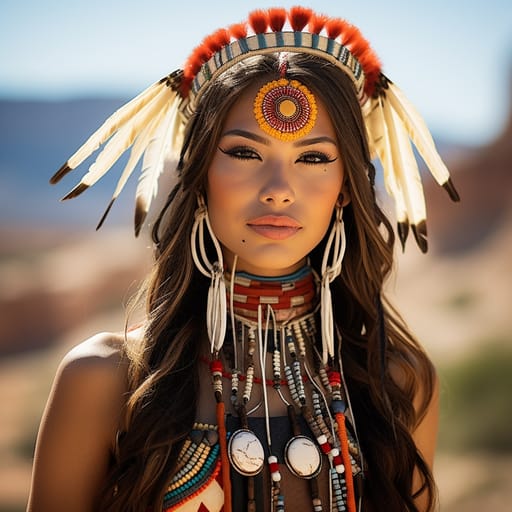
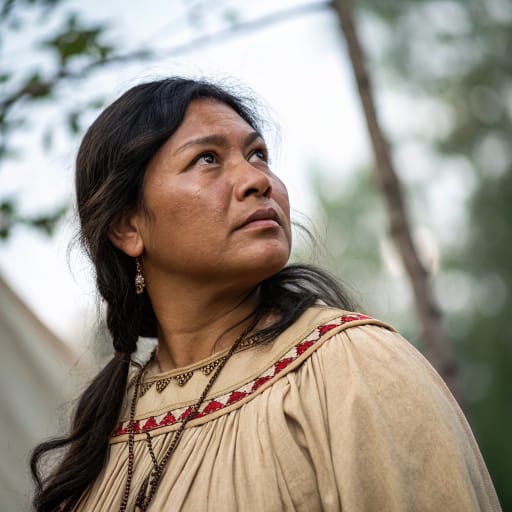
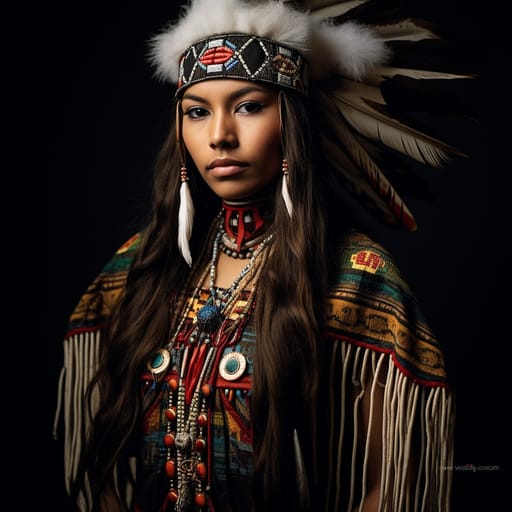

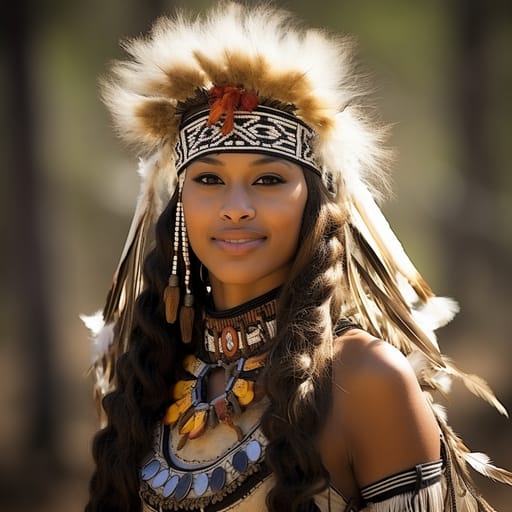
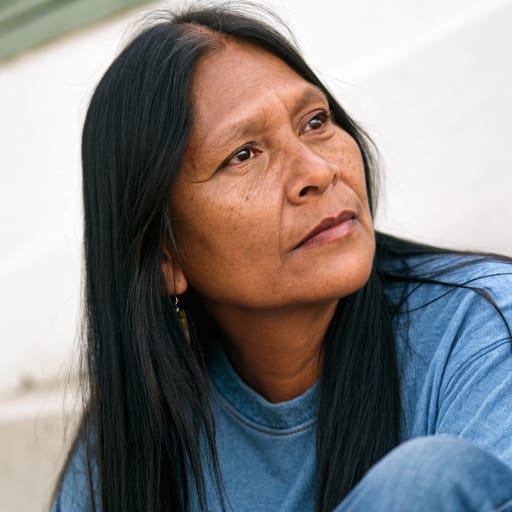
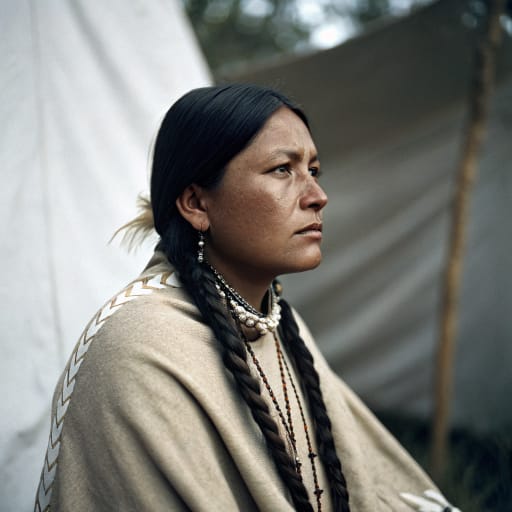
Typical Narragansett Phenotypes
Reference for AI generation: hair, eyes, skin, facial structure, build
Narragansett Body & Anatomy Reference
Per-feature anatomical profile for AI nude generation: Indigenous Northern American / Algonquian-Iroquoian phenotype
Narragansett Boobs & Breasts
Narragansett tits and boobs run medium cup, moderate projection, the classic Indigenous Northern American / Algonquian-Iroquoian bust profile. Narragansett nipples and areolas show medium-brown areolar pigmentation against the copper-to-medium-brown skin tone, with areolar diameter typically in the 30-44mm range and forward-set positioning rather than the smaller East Asian bust. Narragansett breasts trend full and moderate projection, a function of the mesomorph, broader frame in northern Indigenous populations body habitus and the mean adult female BMI 25-28. For anatomically accurate AI-generated Narragansett nudes the render preserves the medium cup, moderate projection shape, 30-44mm areolas with medium-brown pigmentation, and the torso proportions of the Indigenous Northern American / Algonquian-Iroquoian phenotype.
Narragansett Ass & Hips
Narragansett hips and butt usually read as medium, moderate-to-full projection. The skeletal base is medium iliac crests, the Indigenous Northern American / Algonquian-Iroquoian pattern. Set against the slim East Asian narrow-hip profile, the difference is easy to see, and the hip-to-waist ratio is often what identifies Narragansett women in photos.
Narragansett Vagina & Pussy
Expect medium-brown labial pigmentation on Narragansett women, in keeping with Indigenous Northern American / Algonquian-Iroquoian ancestry. The pubic hair is straight medium-coarse texture. Coloring should run evenly from the copper to medium-brown skin of the thighs to the labia, and Narragansett nude imagery should keep the hair's straight medium-coarse texture.
Narragansett Dicks & Penis
Narragansett dick and penile anatomy in adult AI generation should anchor on the regional reference data: regional mean ~13cm erect, moderate girth, and medium-brown shaft pigmentation. The Narragansett cock profile reflects the Indigenous Northern American / Algonquian-Iroquoian population's anthropometric measurements. The shaft pigmentation should track the surrounding copper to medium-brown skin tone, and the pubic hair should keep its straight medium-coarse texture in the typical inverted-V escutcheon.
Narragansett Body, Curves & Build
Narragansett body type: mesomorph, broader frame in northern Indigenous populations, with mean adult female BMI 25-28. This is the typical Indigenous Northern American / Algonquian-Iroquoian build. Height range, shoulder-to-hip ratio and fat distribution all follow from it, which is what an accurate Narragansett nude body should show.
Narragansett Skin Tone & Hair Texture
Narragansett skin tone falls in the copper to medium-brown (Fitzpatrick III-V) band, the surface signal most often miscalibrated by generic AI nude generators. Narragansett hair texture is typically straight 1A, dark-brown to black, often thick and dense, characteristic of the Indigenous Northern American / Algonquian-Iroquoian phenotype. In Narragansett nude renders the skin should hold that band consistently across the body.
Explore phenotype categories
Structured taxonomy with peer-reviewed scales · 22 anatomical categories
Erotic Poses & Sex Positions
From the pose catalog: 219 named positions with reference skeletons
Frequently asked questions about Narragansett people
Where is the Narragansett homeland?
The Narragansett homeland is Narragansett Bay and western Rhode Island, United States, centered today on Charlestown, Rhode Island. in North America.
What language do Narragansett people speak?
Narragansett people primarily speak English; Narragansett (Eastern Algonquian, Algic family), dormant since the nineteenth century and under active revival.
What religion do Narragansett people practice?
The predominant religion among Narragansett people is Christian, organized around the Narragansett Indian Church, alongside revived traditional practice.






Make your own Narragansett images
Five a day, free, no credits to buy. The studio starts from this group's phenotype data, so you can set body type, pose and style and keep the traits accurate.
Start with Narragansett