No portrait yet
Nahukuá Erotic
Upper Xingu headwaters, Xingu Indigenous Territory, Mato Grosso, Brazil
Nahukuá, a variety of Upper Xingu Carib shared with Kuikuro, Kalapalo and Matipu (Carib family); Portuguese as a second language
Traditional Upper Xingu cosmology and shamanism
One of the four Carib-speaking peoples of the Upper Xingu, alongside Kuikuro, Kalapalo and Matipu; closest to the Matipu
About Nahukuá People
The Nahukuá are one of the smallest peoples of the Upper Xingu, a few dozen households on the headwaters of the Xingu River in Mato Grosso, Brazil, and they only make sense as part of a larger whole. The Upper Xingu is a regional society of ten or so peoples speaking languages from three unrelated families plus one isolate, all sharing the same circular village plan, the same fish-and-manioc diet, the same ceremonies and the same ideas about how a chief should carry himself. What marks the Nahukuá within that system is their language, a Carib variety so close to Kuikuro, Kalapalo and Matipu that speakers understand one another without effort, yet kept apart on purpose. In the Xingu, holding onto your own way of talking is how a village stays a people. Marriages cross those lines constantly, and children grow up hearing several languages plus Portuguese, but each village has one that counts as its own.
Their village sits in the southern part of the Xingu Indigenous Territory near the Kurisevo, one of the streams that join to form the Xingu. After epidemics in the mid twentieth century cut their numbers to a few dozen, the Nahukuá spent years sharing a settlement with the equally reduced Matipu, and the two remain the closest of neighbors and kin. Numbers have climbed slowly since the park was created in 1961, but the Nahukuá still count only a little over a hundred people.
Daily life runs on the river and the manioc garden. Fish is the meat that matters. Most land animals are simply not considered food. Manioc becomes flatbread and a thin porridge, and pequi fruit from old orchards around the village sets the calendar for a season of feasting. The big ceremonies are shared across the region and hosted in turn: the Kuarup, in which carved and painted logs stand in the plaza for the honored dead, and the huka-huka wrestling that opens intervillage gatherings, where young men circle on their knees and grapple in front of everyone. Chiefship passes through recognized lines, and a chief is expected to be generous, slow to anger and able to speak well in the plaza. Illness and its cure belong to the shamans, who deal with the spirit beings that steal souls, and the fear of sorcery has shaped Xingu politics for as long as outsiders have recorded it.
Boys and girls both pass months in seclusion at puberty, emerging pale from the shade and dressed for presentation. The Carib villages of the Xingu are also the region's makers of shell belts and necklaces, the goods that move through the ceremonial trade tying the whole system together.
Related ethnic groups
Groups that share Nahukuá's homeland, region, language, or religious tradition. These are likely candidates for comparative phenotype reference.
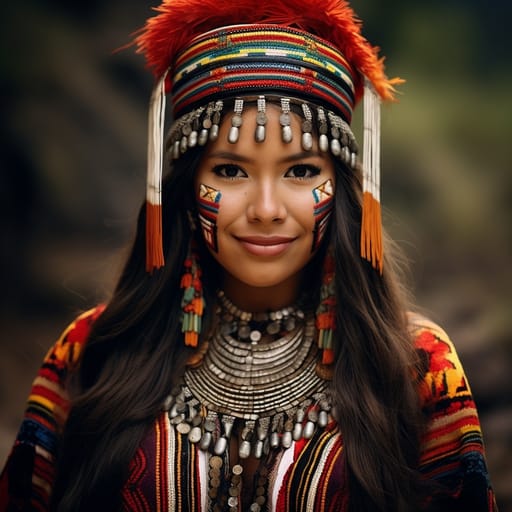
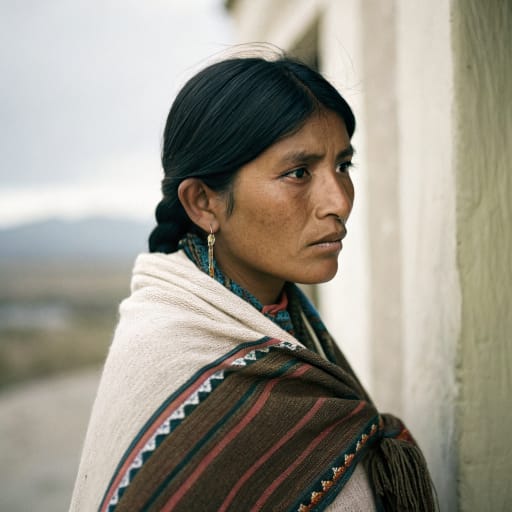
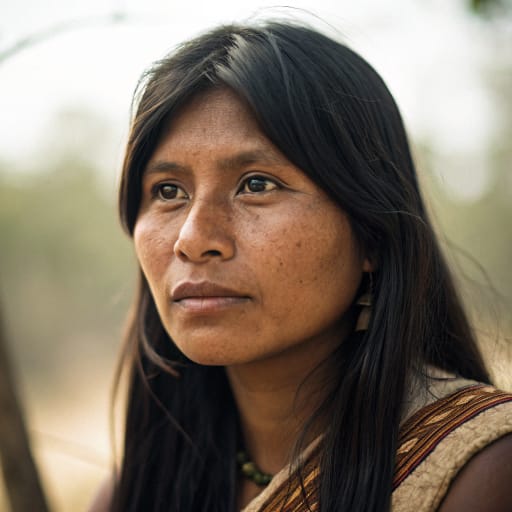
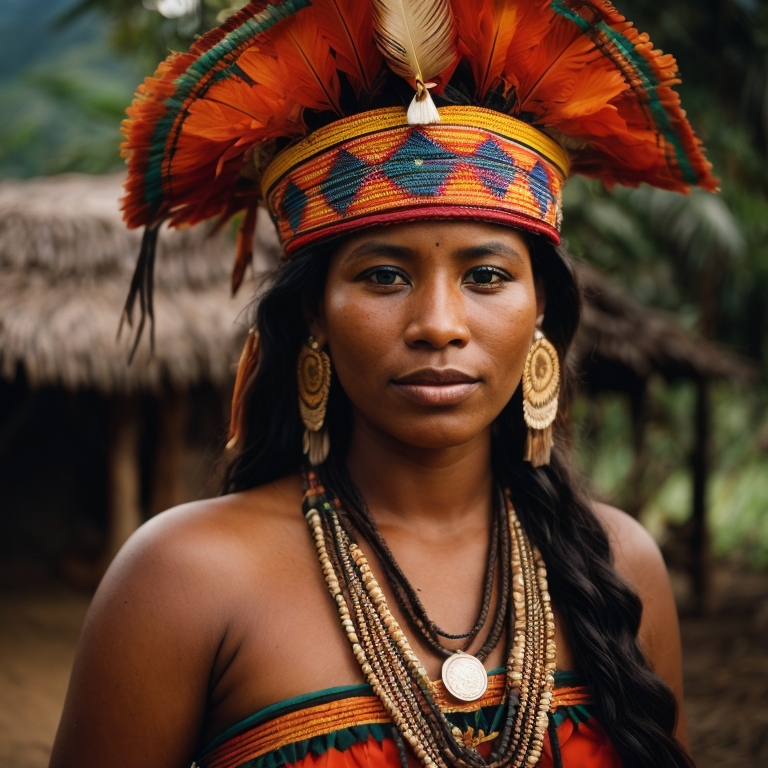
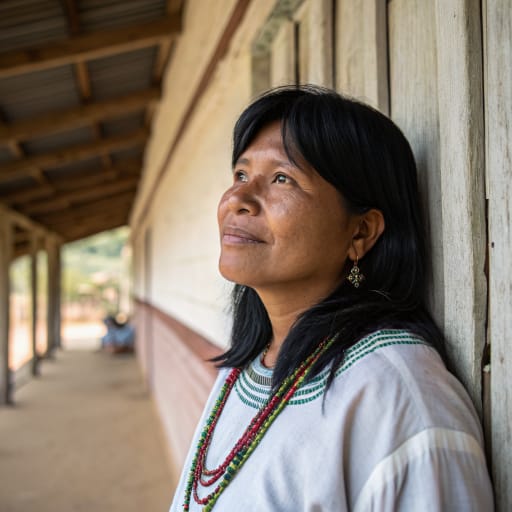
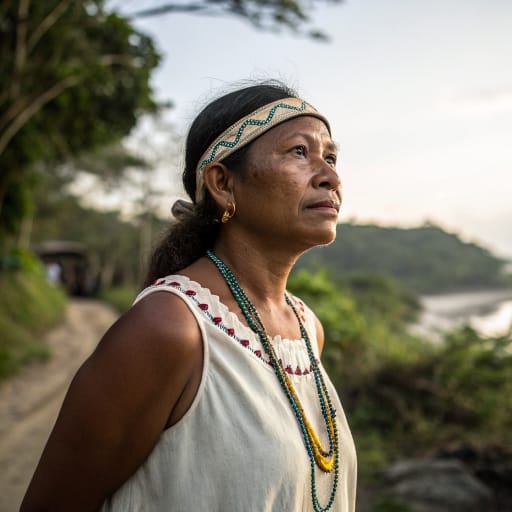
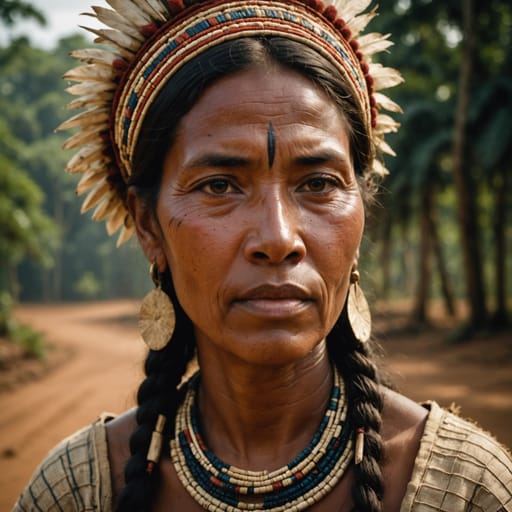
Typical Nahukuá Phenotypes
Reference for AI generation: hair, eyes, skin, facial structure, build
Nahukuá Body & Anatomy Reference
South American Indigenous / European-Mestizo / Afro-Latino mix phenotype: anatomy reference for AI nude generation
Nahukuá Boobs & Breasts
The typical Nahukuá bust is medium-to-large cup, full, high projection, in line with the wider South American Indigenous / European-Mestizo / Afro-Latino mix pattern. Areolas usually fall in the 32-46mm range, with medium-brown to dark-brown areolar pigmentation against the tan-to-deep-brown skin tone. Compared with the smaller bust profile of Andean Indigenous sub-populations, Nahukuá breasts sit forward and are generally the classic Brazilian / Latina curvy bust profile in lowland populations; smaller and shorter-set in Andean Indigenous populations. A faithful AI render of Nahukuá tits keeps that shape and areola size.
Nahukuá Ass & Hips
Butt shape among Nahukuá women: full, high projection, the famous Brazilian / Latina bunda profile, over wide iliac crests, very full gluteal-femoral fat deposition (the hallmark Brazilian / Latina hip-to-waist ratio). This follows South American Indigenous / European-Mestizo / Afro-Latino mix ancestry and looks quite unlike the slim narrow-hip East Asian profile. An accurate Nahukuá ass in adult AI imagery keeps both the silhouette and the overall build (endomorph-to-mesomorph with high gluteal-femoral deposition) instead of a generic average.
Nahukuá Vagina & Pussy
Vulvar anatomy among Nahukuá women: medium-brown to dark-brown labial pigmentation, fuller labia minora. Pubic hair tends to be wavy-to-curly coarse dark texture, dense distribution, in the usual inverted-triangle pattern. Both follow South American Indigenous / European-Mestizo / Afro-Latino mix pigmentation, which is why Nahukuá pussy renders should not fall back on a pale, sparse Western template.
Nahukuá Dicks & Penis
The Nahukuá cock profile, from South American Indigenous / European-Mestizo / Afro-Latino mix anthropometric data: regional mean ~13cm erect; moderate-to-above-average girth; medium-brown shaft pigmentation. Pubic hair has a wavy-to-curly coarse dark texture and forms the usual inverted-V pattern. Whether Nahukuá men are circumcised follows religious and cultural practice rather than phenotype.
Nahukuá Body, Curves & Build
Build and curves among Nahukuá women follow the South American Indigenous / European-Mestizo / Afro-Latino mix pattern: endomorph-to-mesomorph with high gluteal-femoral deposition, mean adult female BMI 25-28. Proportions matter as much as skin tone, so Nahukuá figures should keep their regional height and limb ratios.
Nahukuá Skin Tone & Hair Texture
The Nahukuá skin range is tan to deep-brown (Fitzpatrick III-VI), and hair tends to be straight-to-curly 1A-3C, varies widely by ancestral composition. That combination marks the South American Indigenous / European-Mestizo / Afro-Latino mix phenotype, and skin tone is the trait AI generators most often get wrong for Nahukuá women.
Explore phenotype categories
Structured taxonomy with peer-reviewed scales · 22 anatomical categories
Erotic Poses & Sex Positions
From the pose catalog: 219 named positions with reference skeletons
Frequently asked questions about Nahukuá people
Where is the Nahukuá homeland?
The Nahukuá homeland is Upper Xingu headwaters, Xingu Indigenous Territory, Mato Grosso, Brazil in South America.
What language do Nahukuá people speak?
Nahukuá people primarily speak Nahukuá, a variety of Upper Xingu Carib shared with Kuikuro, Kalapalo and Matipu (Carib family); Portuguese as a second language.
What religion do Nahukuá people practice?
The predominant religion among Nahukuá people is Traditional Upper Xingu cosmology and shamanism.






Make your own Nahukuá images
Five a day, free, no credits to buy. The studio starts from this group's phenotype data, so you can set body type, pose and style and keep the traits accurate.
Start with Nahukuá