Help us get this right
Does this portrait look right for Enawenê-nawê?
One tap. It takes a second and it is recorded.
1 says it looks right, 0 say it looks off.
Enawenê-nawê Erotic
Juruena River basin, northwestern Mato Grosso, Brazil
Enawené-nawé (Arawakan)
Traditional animism
About Enawenê-nawê People
The Enawenê-nawê (also written Enawené-nawé, and formerly called Salumã) are an Indigenous people of the forested headwaters of the Juruena River in northwestern Mato Grosso, Brazil. First contacted only in the mid-1970s, they speak an Arawakan language and are known for an intricate ceremonial calendar centered on the exchange of goods between people and spirits. They number roughly 600 to 900 and have traditionally lived together in a single large communal village.
Society and subsistence
The Enawenê-nawê are unusual in that they eat no red meat, avoiding land game entirely; their diet rests on fish, cultivated manioc, maize, and forest fruits. Fishing is organized on a grand scale during the Yãkwa ritual, when men travel to build large wooden dams and fish traps across seasonal rivers, then return to offer the smoked catch to the yakairiti (subterranean spirits) in months of feasting, music, and dance. Yãkwa, one of the longest ritual cycles in the Americas, has been recognized as intangible cultural heritage. Society is organized into ceremonial groups and clans that structure the exchange of salt, fish, and manioc. The people have faced serious pressure from hydroelectric dams built on the Juruena, which threaten the very fisheries their ritual life and livelihood depend upon.
Appearance and adornment
The Enawenê-nawê have copper-brown skin and straight black hair worn long by both men and women. For ritual they paint the body with red annatto and black dye and wear cotton bands at the arms and legs, feather ornaments, and headdresses crafted for the great festivals. Everyday dress is minimal, and personal adornment intensifies markedly during the ceremonial season, when the whole community is mobilized around the fishing dams and the long cycle of dance and offering.
Related ethnic groups
Groups that share Enawenê-nawê's homeland, region, language, or religious tradition. These are likely candidates for comparative phenotype reference.
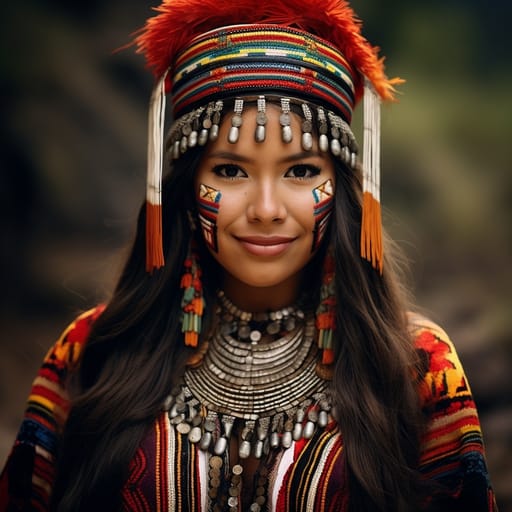
Quechua
same region (South America)
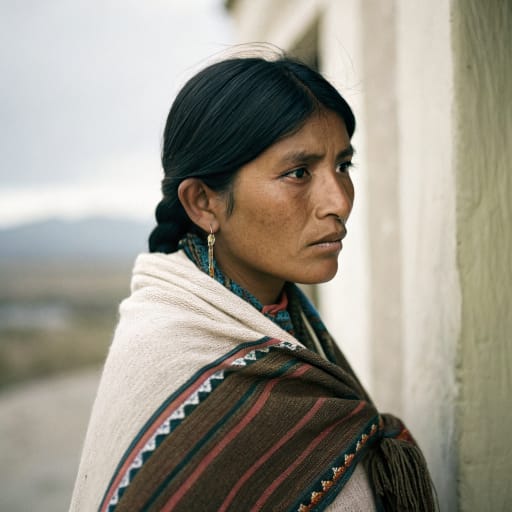
Aymara
same region (South America)
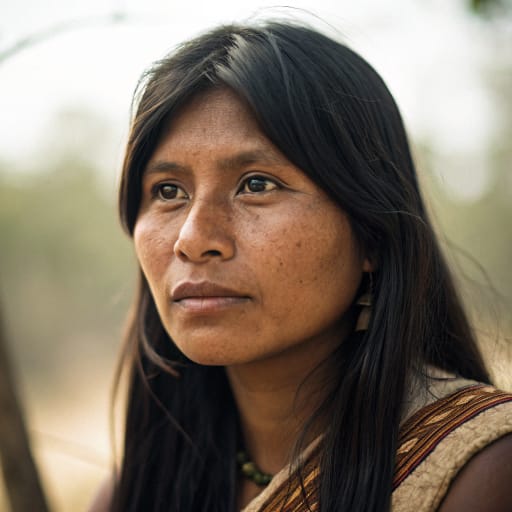
Guaraní
same region (South America)
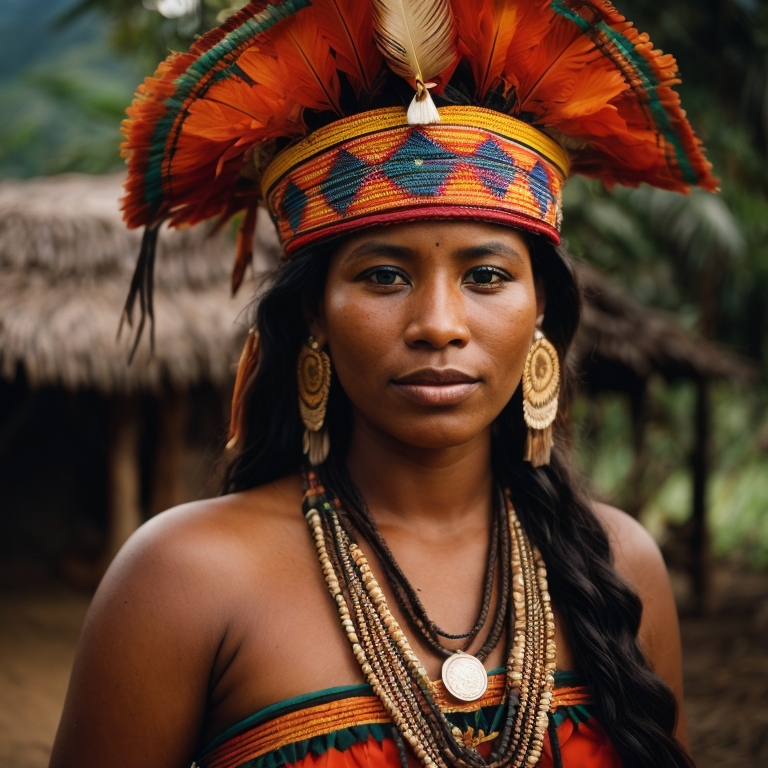
Emberá
same region (South America)
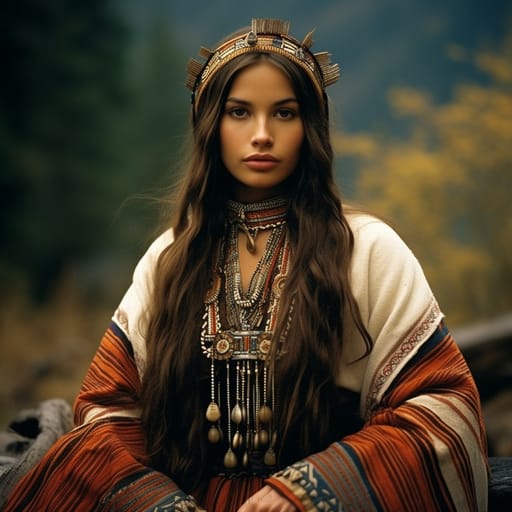
Mapuche
same region (South America)
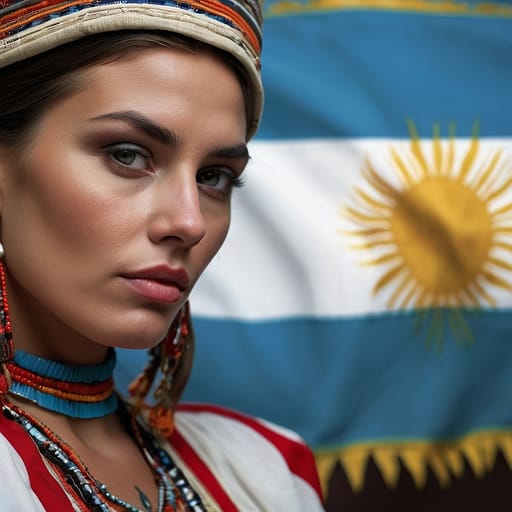
White Argentine
same region (South America)
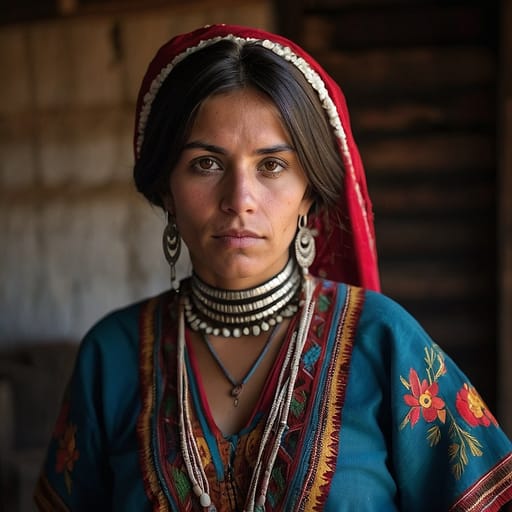
Mestizo Argentine
same region (South America)
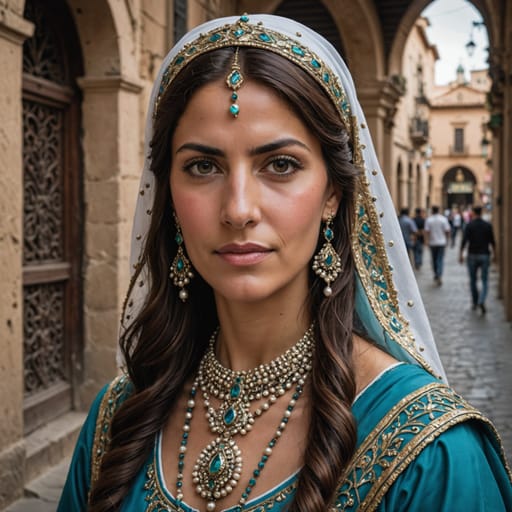
Middle Eastern Argentine
same region (South America)
Typical Enawenê-nawê Phenotypes
Reference for AI generation: hair, eyes, skin, facial structure, build
Enawenê-nawê Body & Anatomy Reference
Per-feature anatomical profile for AI nude generation: South American Indigenous / European-Mestizo / Afro-Latino mix phenotype
Enawenê-nawê Boobs & Breasts
Bust reference for Enawenê-nawê women: medium-to-large cup, full, high projection, which is typical of South American Indigenous / European-Mestizo / Afro-Latino mix ancestry. Areolas measure about 32-46mm across, with medium-brown to dark-brown pigmentation. Body type (endomorph-to-mesomorph with high gluteal-femoral deposition) shapes the bust as well, so Enawenê-nawê tits are usually the classic Brazilian / Latina curvy bust profile in lowland populations; smaller and shorter-set in Andean Indigenous populations. In AI imagery, keep the forward-set shape rather than drifting toward the smaller bust profile of Andean Indigenous sub-populations.
Enawenê-nawê Ass & Hips
The Enawenê-nawê ass is typically full, high projection, the famous Brazilian / Latina bunda profile, which sets it apart from the slim narrow-hip East Asian profile. Underneath, the pelvis shows wide iliac crests, very full gluteal-femoral fat deposition (the hallmark Brazilian / Latina hip-to-waist ratio), part of the South American Indigenous / European-Mestizo / Afro-Latino mix skeletal pattern. For Enawenê-nawê butt pics and AI renders, match that silhouette and the overall build (endomorph-to-mesomorph with high gluteal-femoral deposition).
Enawenê-nawê Vagina & Pussy
Enawenê-nawê pussy and vulvar anatomy presents medium-brown to dark-brown labial pigmentation, fuller labia minora, consistent with the South American Indigenous / European-Mestizo / Afro-Latino mix phenotype's pigmentation pattern. Enawenê-nawê pubic hair is typically wavy-to-curly coarse dark texture, dense distribution, in the inverted-triangle pattern. For anatomically accurate Enawenê-nawê pussy renders the labial coloration should match the surrounding tan to deep-brown skin tone with a continuous gradient, and the hair should keep its wavy-to-curly coarse dark texture.
Enawenê-nawê Dicks & Penis
Enawenê-nawê dicks follow the South American Indigenous / European-Mestizo / Afro-Latino mix reference data: regional mean ~13cm erect; moderate-to-above-average girth; medium-brown shaft pigmentation. Shaft color should track the tan to deep-brown skin tone with a smooth change toward the glans, and Enawenê-nawê pubic hair keeps its wavy-to-curly coarse dark texture.
Enawenê-nawê Body, Curves & Build
Enawenê-nawê body type and overall build presents as endomorph-to-mesomorph with high gluteal-femoral deposition, with mean adult female BMI 25-28: the characteristic South American Indigenous / European-Mestizo / Afro-Latino mix habitus. Enawenê-nawê curves and proportions should keep the regional skeletal frame (height, shoulder-to-hip ratio, limb proportions) rather than a generic mesomorph default.
Enawenê-nawê Skin Tone & Hair Texture
Enawenê-nawê skin sits in the tan to deep-brown (Fitzpatrick III-VI) band. Hair is typically straight-to-curly 1A-3C, varies widely by ancestral composition, in keeping with the South American Indigenous / European-Mestizo / Afro-Latino mix phenotype. In nude renders the skin should stay one even tone from face to body, and body, pubic and head hair should match.
Explore phenotype categories
Structured taxonomy with peer-reviewed scales · 22 anatomical categories
Erotic Poses & Sex Positions
From the pose catalog: 219 named positions with reference skeletons
Frequently asked questions about Enawenê-nawê people
Where is the Enawenê-nawê homeland?
The Enawenê-nawê homeland is Juruena River basin, northwestern Mato Grosso, Brazil in South America.
What language do Enawenê-nawê people speak?
Enawenê-nawê people primarily speak Enawené-nawé (Arawakan).
What religion do Enawenê-nawê people practice?
The predominant religion among Enawenê-nawê people is Traditional animism.






Make your own Enawenê-nawê images
Five a day, free, no credits to buy. The studio starts from this group's phenotype data, so you can set body type, pose and style and keep the traits accurate.
Start with Enawenê-nawê