Help us get this right
Does this portrait look right for Bushinengue?
Nobody has judged this one yet. You would be the first.
Bushinengue Erotic
Interior river basins of Suriname and French Guiana, especially the Maroni and Marowijne, Tapanahoni, Lawa, Suriname and Saramacca rivers, with large communities in Paramaribo, Saint Laurent du Maroni, Cayenne and the Netherlands.
Nengee, comprising Ndyuka, Aluku and Paamaka, plus Saramaccan and Matawai (Atlantic English lexifier creoles, Saramaccan heavily Portuguese lexified, with Gbe and Kikongo substrate); Dutch and French as school languages.
Ancestral religion centered on the dead, lineage spirits and possession, closely related to Winti; substantial Moravian and Catholic Christianity, usually practiced alongside it rather than in place of it.
Six groups: Ndyuka (Okanisi), Saamaka, Matawai, Paamaka, Aluku (Boni) and Kwinti. Part of the wider Maroon world of the Americas and of Afro Surinamese society.
About Bushinengue People
The Bushinengue descend from Africans who escaped the Dutch sugar plantations of Suriname in the seventeenth and eighteenth centuries and then did something more than hide. They went up the rivers past the rapids, built villages, and forced the colony to negotiate. The Dutch signed peace treaties with the Ndyuka in 1760 and the Saamaka in 1762, conceding territory and self government more than a century before Suriname abolished slavery, though the terms carried a bitter clause: the Maroons were to hand back anyone who ran afterward. The Aluku refused to sign and fought on under Boni into the 1790s, ending up on the French bank of the Maroni, which is why their descendants hold French passports. The name Bushinengue, forest people, is mainly how the community is known on the French Guianese side, and that side grew enormously after Suriname's Interior War of 1986 to 1992, when the army's campaign against the Jungle Commando emptied Ndyuka and Paamaka villages and pushed tens of thousands across the river. Saint Laurent du Maroni, Apatou and Maripasoula are Bushinengue towns now.
There are six groups: Ndyuka, Saamaka, Matawai, Paamaka, Aluku and the much smaller Kwinti. Their languages are cousins of Sranan Tongo that separated early and kept far more African structure. Saamaka is tonal and carries a thick Portuguese layer inherited from the Sephardic planters of the upper Suriname River, while the eastern varieties, grouped as Nengee, run English vocabulary over a Gbe frame. Descent is matrilineal. A person belongs to their mother's lo, a clan that traces itself to one specific breakout from one specific plantation, and above the village captains sits a gaanman, an office the old treaties recognized and modern governments still deal with. Religion runs through the dead. Ancestors are consulted and appeased, and a kunu is an avenging spirit bound to a lineage by a wrong done generations back, explaining suffering a family did not personally earn. Funerals are long, costly and socially unavoidable. Moravian and Catholic Christianity generally sits alongside all of this rather than replacing it. Two things rarely make the summaries: tembe, the carved and painted geometric work men traditionally made as gifts for women and which now marks Bushinengue identity on doors and boat hulls, and the Afaka syllabary, a script for Ndyuka invented in 1910 by a man who said it came to him in a dream. It is one of the very few writing systems ever created in the Americas.
Related ethnic groups
Groups that share Bushinengue's homeland, region, language, or religious tradition. These are likely candidates for comparative phenotype reference.
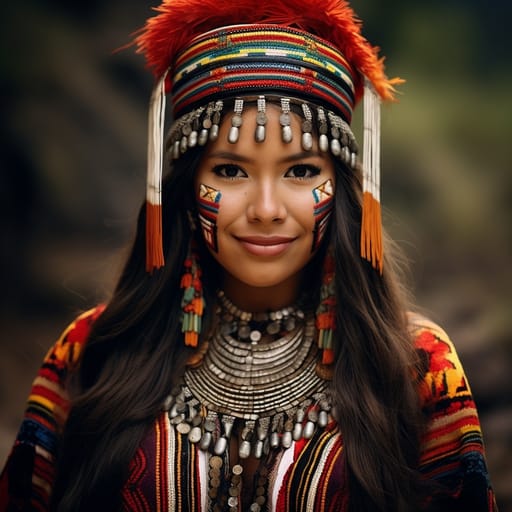
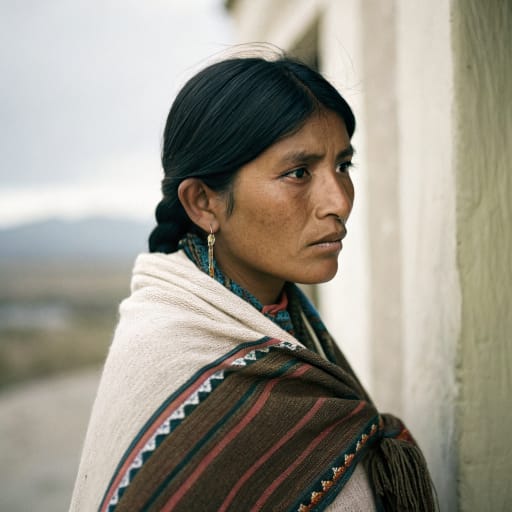
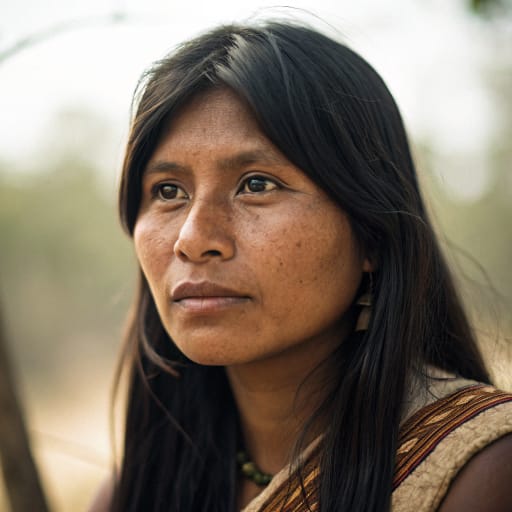
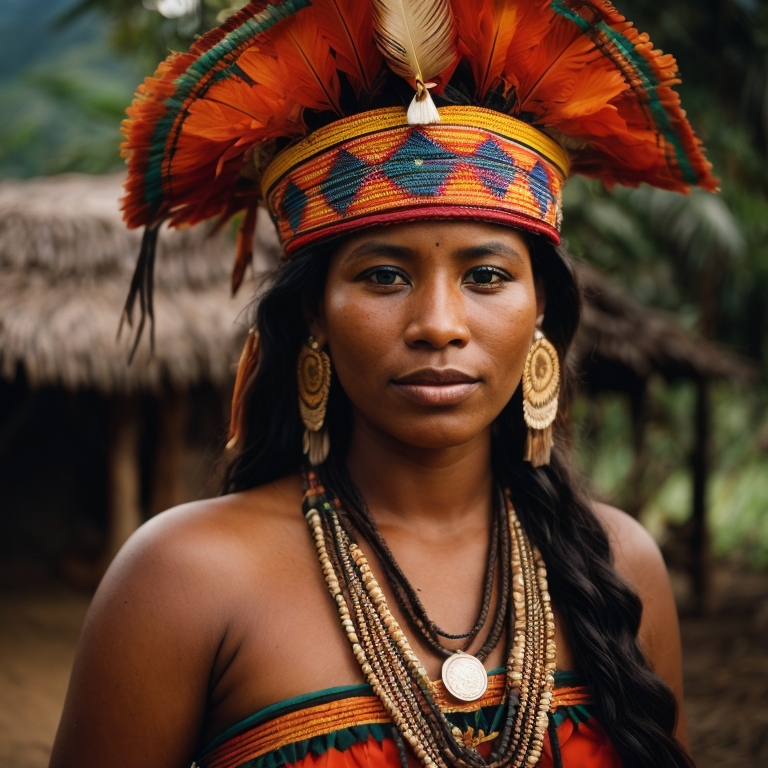
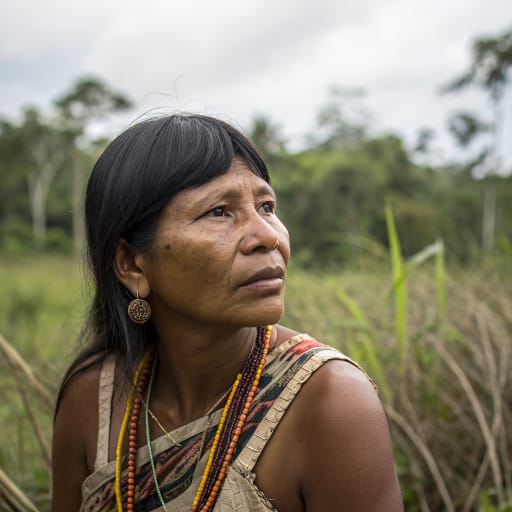
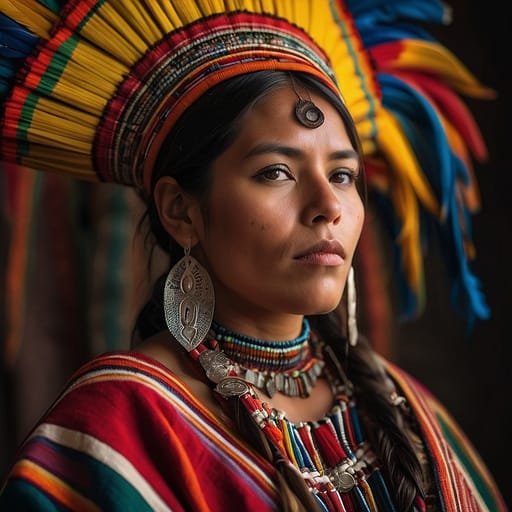
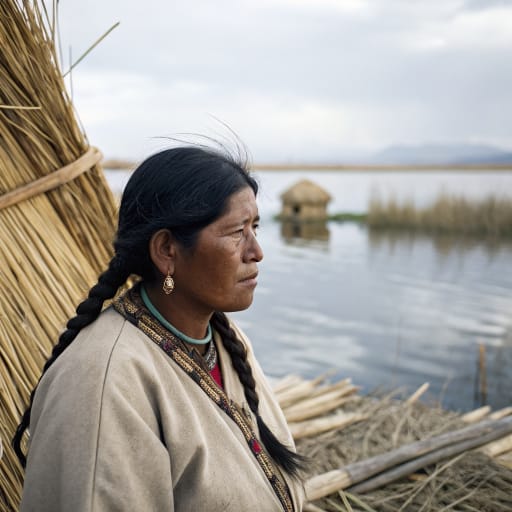
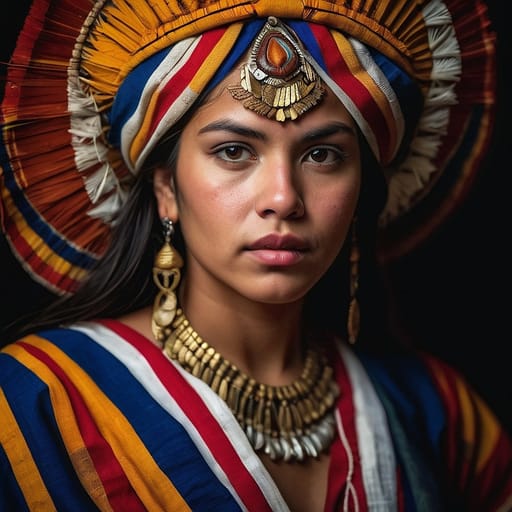
Typical Bushinengue Phenotypes
Reference for AI generation: hair, eyes, skin, facial structure, build
Bushinengue Body & Anatomy Reference
Anatomy by feature, South American Indigenous / European-Mestizo / Afro-Latino mix phenotype
Bushinengue Boobs & Breasts
The typical Bushinengue bust is medium-to-large cup, full, high projection, in line with the wider South American Indigenous / European-Mestizo / Afro-Latino mix pattern. Areolas usually fall in the 32-46mm range, with medium-brown to dark-brown areolar pigmentation against the tan-to-deep-brown skin tone. Compared with the smaller bust profile of Andean Indigenous sub-populations, Bushinengue breasts sit forward and are generally the classic Brazilian / Latina curvy bust profile in lowland populations; smaller and shorter-set in Andean Indigenous populations. A faithful AI render of Bushinengue tits keeps that shape and areola size.
Bushinengue Ass & Hips
Butt shape among Bushinengue women: full, high projection, the famous Brazilian / Latina bunda profile, over wide iliac crests, very full gluteal-femoral fat deposition (the hallmark Brazilian / Latina hip-to-waist ratio). This follows South American Indigenous / European-Mestizo / Afro-Latino mix ancestry and looks quite unlike the slim narrow-hip East Asian profile. An accurate Bushinengue ass in adult AI imagery keeps both the silhouette and the overall build (endomorph-to-mesomorph with high gluteal-femoral deposition) instead of a generic average.
Bushinengue Vagina & Pussy
Vulvar anatomy among Bushinengue women: medium-brown to dark-brown labial pigmentation, fuller labia minora. Pubic hair tends to be wavy-to-curly coarse dark texture, dense distribution, in the usual inverted-triangle pattern. Both follow South American Indigenous / European-Mestizo / Afro-Latino mix pigmentation, which is why Bushinengue pussy renders should not fall back on a pale, sparse Western template.
Bushinengue Dicks & Penis
The Bushinengue cock profile, from South American Indigenous / European-Mestizo / Afro-Latino mix anthropometric data: regional mean ~13cm erect; moderate-to-above-average girth; medium-brown shaft pigmentation. Pubic hair has a wavy-to-curly coarse dark texture and forms the usual inverted-V pattern. Whether Bushinengue men are circumcised follows religious and cultural practice rather than phenotype.
Bushinengue Body, Curves & Build
Build and curves among Bushinengue women follow the South American Indigenous / European-Mestizo / Afro-Latino mix pattern: endomorph-to-mesomorph with high gluteal-femoral deposition, mean adult female BMI 25-28. Proportions matter as much as skin tone, so Bushinengue figures should keep their regional height and limb ratios.
Bushinengue Skin Tone & Hair Texture
The Bushinengue skin range is tan to deep-brown (Fitzpatrick III-VI), and hair tends to be straight-to-curly 1A-3C, varies widely by ancestral composition. That combination marks the South American Indigenous / European-Mestizo / Afro-Latino mix phenotype, and skin tone is the trait AI generators most often get wrong for Bushinengue women.
Explore phenotype categories
Structured taxonomy with peer-reviewed scales · 22 anatomical categories
Erotic Poses & Sex Positions
From the pose catalog: 219 named positions with reference skeletons
Frequently asked questions about Bushinengue people
Where is the Bushinengue homeland?
The Bushinengue homeland is Interior river basins of Suriname and French Guiana, especially the Maroni and Marowijne, Tapanahoni, Lawa, Suriname and Saramacca rivers, with large communities in Paramaribo, Saint Laurent du Maroni, Cayenne and the Netherlands. in South America.
What language do Bushinengue people speak?
Bushinengue people primarily speak Nengee, comprising Ndyuka, Aluku and Paamaka, plus Saramaccan and Matawai (Atlantic English lexifier creoles, Saramaccan heavily Portuguese lexified, with Gbe and Kikongo substrate); Dutch and French as school languages..
What religion do Bushinengue people practice?
The predominant religion among Bushinengue people is Ancestral religion centered on the dead, lineage spirits and possession, closely related to Winti; substantial Moravian and Catholic Christianity, usually practiced alongside it rather than in place of it..






Make your own Bushinengue images
Five a day, free, no credits to buy. The studio starts from this group's phenotype data, so you can set body type, pose and style and keep the traits accurate.
Start with Bushinengue