Help us get this right
Does this portrait look right for Akawaio?
Nobody has judged this one yet. You would be the first.
Akawaio Erotic
Upper Mazaruni River basin, Cuyuni-Mazaruni region, western Guyana, with communities across the borders in eastern Venezuela and northern Brazil.
Akawaio (Cariban), closely related to Patamona and Pemon; English and Guyanese Creole widely used as second languages.
Alleluia, an Indigenous prophetic religion, alongside Anglican and Seventh-day Adventist congregations.
One of the two Kapon peoples, with the Patamona; part of the wider Kapon and Pemon grouping of the Guiana highlands.
About Akawaio People
The Akawaio call themselves Kapon, a word usually glossed as sky people, and they extend it to their close relatives the Patamona. Outsiders have written the name as Acawayo, Akawai and Waika, mostly because outsiders were not listening carefully. Their country is the upper Mazaruni River in western Guyana: fast brown water, granite falls and forested hills penned in by the Pakaraima range, hard enough to reach that most travel in or out is by small plane or by hauling boats over rapids. Villages sit along the river and its tributaries, among them Kako, Jawalla, Waramadong, Phillipai, Kamarang and Paruima, and smaller numbers live over the borders in Venezuela and northern Brazil. The language is Cariban, close enough to Patamona and Pemon that speakers can work their way through each other's talk, and it stands with Makushi among the surviving Cariban tongues of the Guiana highlands.
Religion is the thing an outsider notices first. Alleluia, spelled Hallelujah in older accounts, is an Indigenous prophetic faith that took shape in the nineteenth century when the words of missionaries were received, reworked and handed back as something the Kapon owned outright: revelation arriving in dreams, songs passed down from named prophets, all-night dancing in a circle inside the church house. It is not a mission church and never was, though Anglican and Seventh-day Adventist congregations also work in the area, and Paruima grew up around an Adventist station. Ordinary life still runs on bitter cassava, grated, pressed in a woven tube to squeeze out the poison, baked flat and fermented into cassava beer. Parakari, the version made across Guyana's interior, is started with a mold rather than with chewing or malt, a method with few parallels anywhere in the Americas. Two events shaped the last century. In the 1970s a proposed hydroelectric dam on the upper Mazaruni would have drowned the villages; the scheme was shelved, but the fight organized a generation. Since then the pressure has been gold and diamond dredging, which puts mercury and silt into the rivers people drink from and fish in. A land title case brought by Akawaio and Arekuna communities has sat in the Guyanese courts since 1998 without resolution, which tells you most of what you need to know about how the claim is treated.
Related ethnic groups
Groups that share Akawaio's homeland, region, language, or religious tradition. These are likely candidates for comparative phenotype reference.
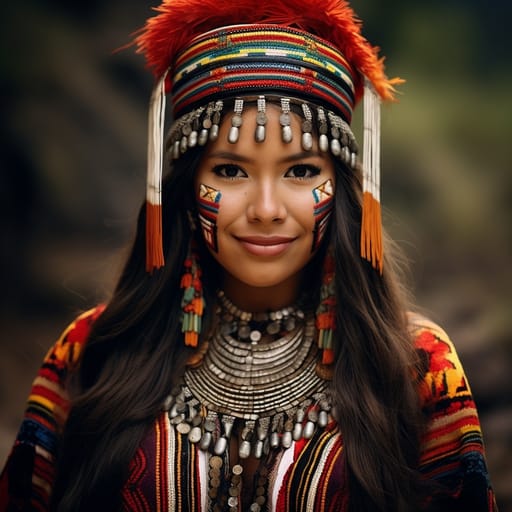
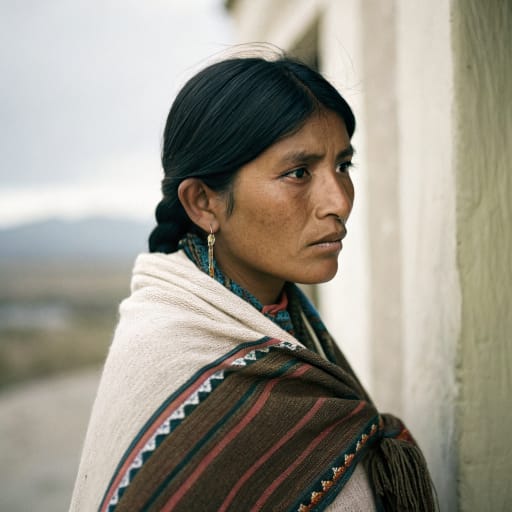
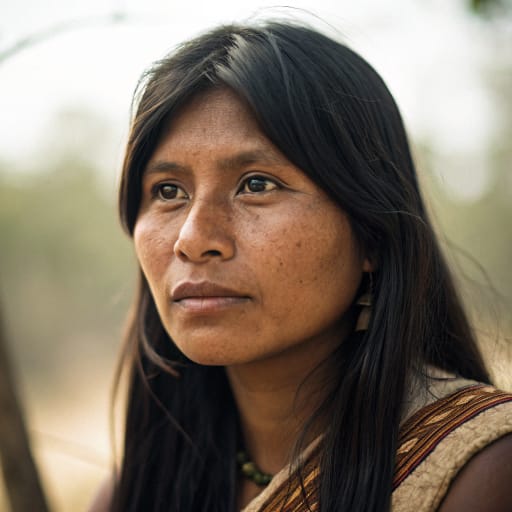
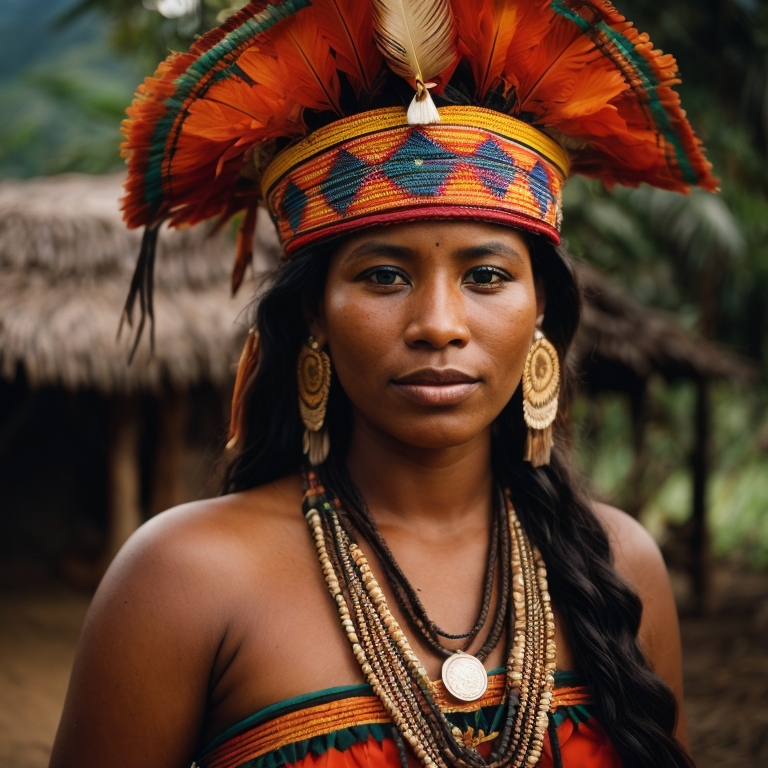
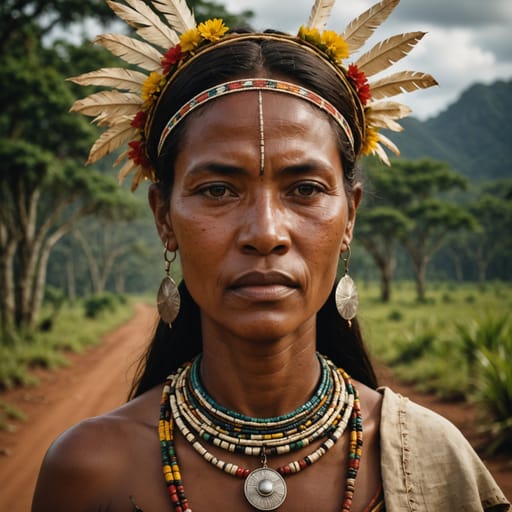
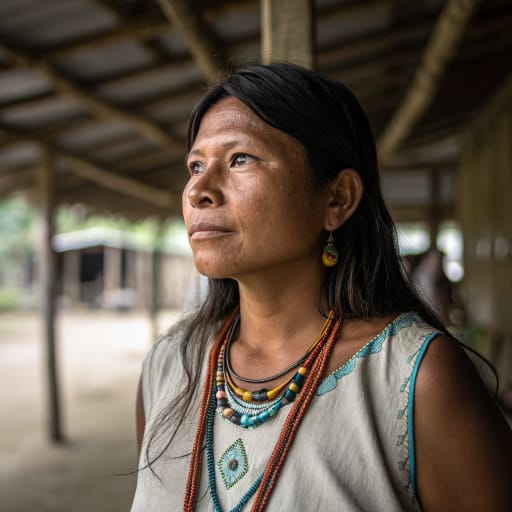
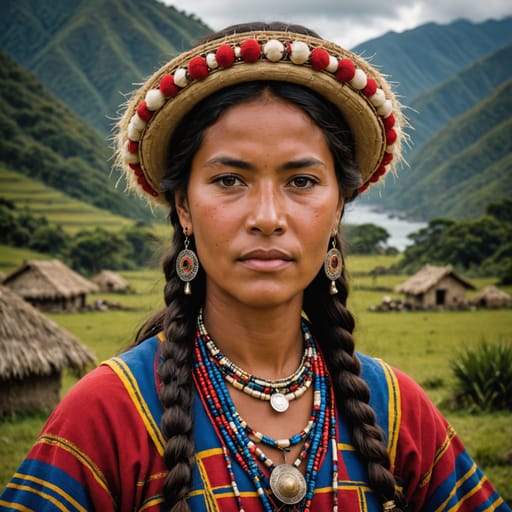
Typical Akawaio Phenotypes
Reference for AI generation: hair, eyes, skin, facial structure, build
Akawaio Body & Anatomy Reference
Per-feature anatomical profile for AI nude generation: South American Indigenous / European-Mestizo / Afro-Latino mix phenotype
Akawaio Boobs & Breasts
Bust reference for Akawaio women: medium-to-large cup, full, high projection, which is typical of South American Indigenous / European-Mestizo / Afro-Latino mix ancestry. Areolas measure about 32-46mm across, with medium-brown to dark-brown pigmentation. Body type (endomorph-to-mesomorph with high gluteal-femoral deposition) shapes the bust as well, so Akawaio tits are usually the classic Brazilian / Latina curvy bust profile in lowland populations; smaller and shorter-set in Andean Indigenous populations. In AI imagery, keep the forward-set shape rather than drifting toward the smaller bust profile of Andean Indigenous sub-populations.
Akawaio Ass & Hips
The Akawaio ass is typically full, high projection, the famous Brazilian / Latina bunda profile, which sets it apart from the slim narrow-hip East Asian profile. Underneath, the pelvis shows wide iliac crests, very full gluteal-femoral fat deposition (the hallmark Brazilian / Latina hip-to-waist ratio), part of the South American Indigenous / European-Mestizo / Afro-Latino mix skeletal pattern. For Akawaio butt pics and AI renders, match that silhouette and the overall build (endomorph-to-mesomorph with high gluteal-femoral deposition).
Akawaio Vagina & Pussy
Akawaio pussy and vulvar anatomy presents medium-brown to dark-brown labial pigmentation, fuller labia minora, consistent with the South American Indigenous / European-Mestizo / Afro-Latino mix phenotype's pigmentation pattern. Akawaio pubic hair is typically wavy-to-curly coarse dark texture, dense distribution, in the inverted-triangle pattern. For anatomically accurate Akawaio pussy renders the labial coloration should match the surrounding tan to deep-brown skin tone with a continuous gradient, and the hair should keep its wavy-to-curly coarse dark texture.
Akawaio Dicks & Penis
Akawaio dicks follow the South American Indigenous / European-Mestizo / Afro-Latino mix reference data: regional mean ~13cm erect; moderate-to-above-average girth; medium-brown shaft pigmentation. Shaft color should track the tan to deep-brown skin tone with a smooth change toward the glans, and Akawaio pubic hair keeps its wavy-to-curly coarse dark texture.
Akawaio Body, Curves & Build
Akawaio body type and overall build presents as endomorph-to-mesomorph with high gluteal-femoral deposition, with mean adult female BMI 25-28: the characteristic South American Indigenous / European-Mestizo / Afro-Latino mix habitus. Akawaio curves and proportions should keep the regional skeletal frame (height, shoulder-to-hip ratio, limb proportions) rather than a generic mesomorph default.
Akawaio Skin Tone & Hair Texture
Akawaio skin sits in the tan to deep-brown (Fitzpatrick III-VI) band. Hair is typically straight-to-curly 1A-3C, varies widely by ancestral composition, in keeping with the South American Indigenous / European-Mestizo / Afro-Latino mix phenotype. In nude renders the skin should stay one even tone from face to body, and body, pubic and head hair should match.
Explore phenotype categories
Structured taxonomy with peer-reviewed scales · 22 anatomical categories
Erotic Poses & Sex Positions
From the pose catalog: 219 named positions with reference skeletons
Frequently asked questions about Akawaio people
Where is the Akawaio homeland?
The Akawaio homeland is Upper Mazaruni River basin, Cuyuni-Mazaruni region, western Guyana, with communities across the borders in eastern Venezuela and northern Brazil. in South America.
What language do Akawaio people speak?
Akawaio people primarily speak Akawaio (Cariban), closely related to Patamona and Pemon; English and Guyanese Creole widely used as second languages..
What religion do Akawaio people practice?
The predominant religion among Akawaio people is Alleluia, an Indigenous prophetic religion, alongside Anglican and Seventh-day Adventist congregations..






Make your own Akawaio images
Five a day, free, no credits to buy. The studio starts from this group's phenotype data, so you can set body type, pose and style and keep the traits accurate.
Start with Akawaio