Help us get this right
Does this portrait look right for Wapishana?
Nobody has judged this one yet. You would be the first.
Wapishana Erotic
Rupununi savanna of southern Guyana, mainly south of the Kanuku Mountains, and the neighboring state of Roraima in northern Brazil
Wapishana, also Wapichan or Wapixana (Arawakan); English and Creolese in Guyana, Portuguese in Brazil
Mainly Christian, Catholic and evangelical, with herbal healing and older spirit beliefs persisting alongside the churches
Arawakan-speaking people of the Guiana savannas; Guyanese Wapichan and Brazilian Wapixana communities; absorbed the related Atorad
About Wapishana People
In southern Guyana, the villages south of the Kanuku Mountains are overwhelmingly Wapishana. The range divides the Rupununi savanna roughly in two: Makushi communities are the majority to the north and Wapishana communities to the south. The people increasingly use their own name, Wapichan, for themselves and for the land they hold in common. That land does not stop at the Takutu River. The boundary between British Guiana and Brazil, settled by arbitration in 1904, ran through Wapishana country. A large population lives on the Brazilian side in Roraima, where the name is spelled Wapixana and much of daily life happens in Portuguese.
Their language is Arawakan, which makes it unusual in a neighborhood where Cariban languages such as Makushi and Wai Wai dominate. Its closest relative, Atorad, belonged to a smaller people who merged into the Wapishana over time. In many Guyanese villages Wapishana is still spoken at home, alongside English and Creolese. On the Brazilian side, the shift to Portuguese has gone further.
Life centers on the village, the cassava farm and the open grassland. Families clear farms in forest patches and along the foothills. They turn cassava into flat bread, coarse toasted farine and parakari, a fermented drink served when neighbors gather to clear a field or build a house. In the dry season people fish in shrinking creeks and ponds, and in the rains much of the savanna floods. For generations Wapishana men have also worked as vaqueros on the big cattle ranches of the South Rupununi, Dadanawa above all, and the cowboy hat is as much a part of village life as the cassava grater.
Most Wapishana are Christian. Jesuit missionaries were working in the Rupununi by the early 1900s, and evangelical churches came later. Herbal healing and older beliefs about the spirits of forest and water still exist alongside church life. The twentieth century brought balata tapping and then the 1969 Rupununi Uprising, a ranchers' revolt that cast suspicion on Indigenous communities and pushed some families across the border. It also began a long fight over land titles. That fight has made the Wapichan unusually visible. Working through the South Rupununi District Council, villages mapped their customary territory themselves, published their own plan for looking after it, and trained community monitors to record mining incursions.
Related ethnic groups
Groups that share Wapishana's homeland, region, language, or religious tradition. These are likely candidates for comparative phenotype reference.
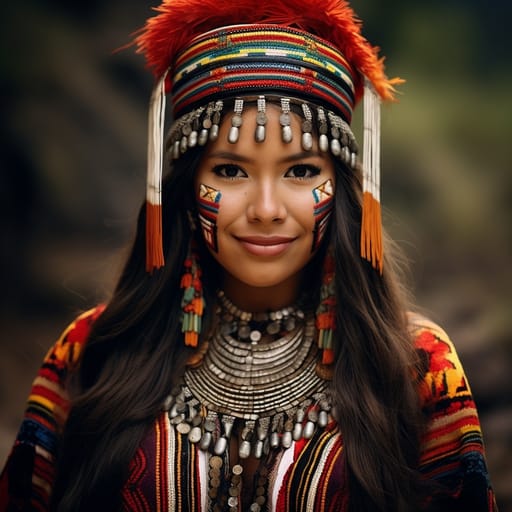
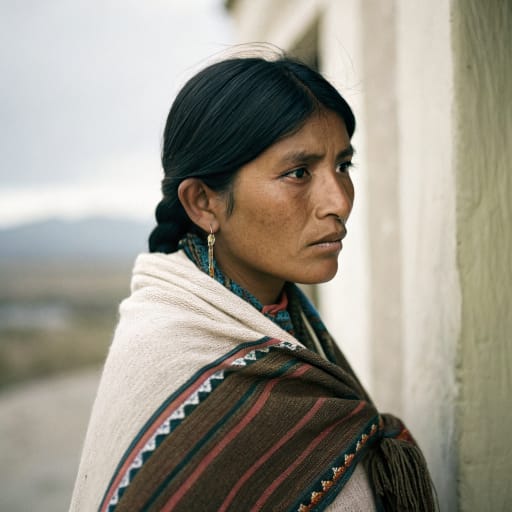
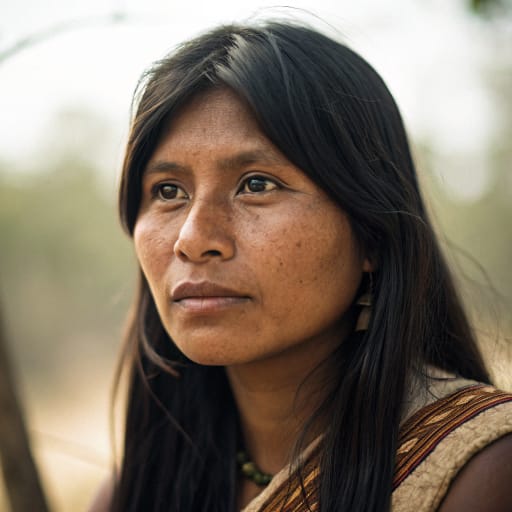
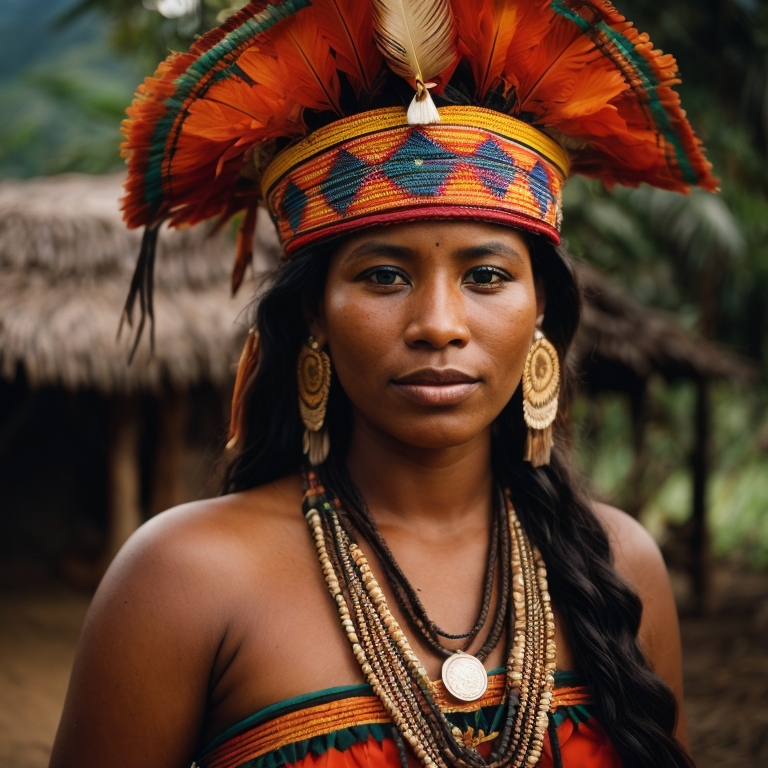
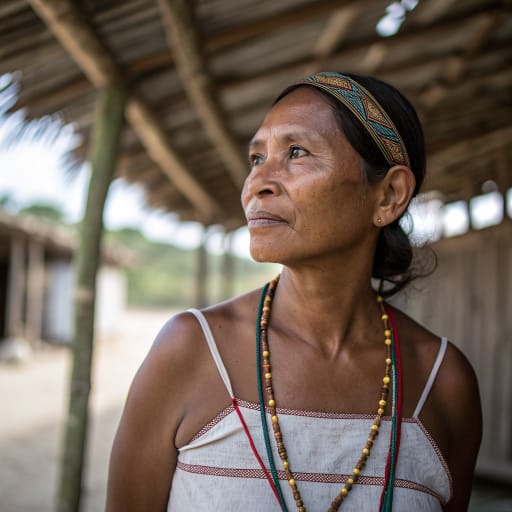
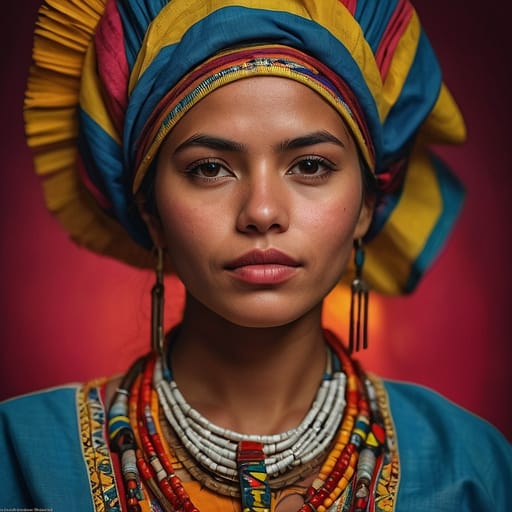
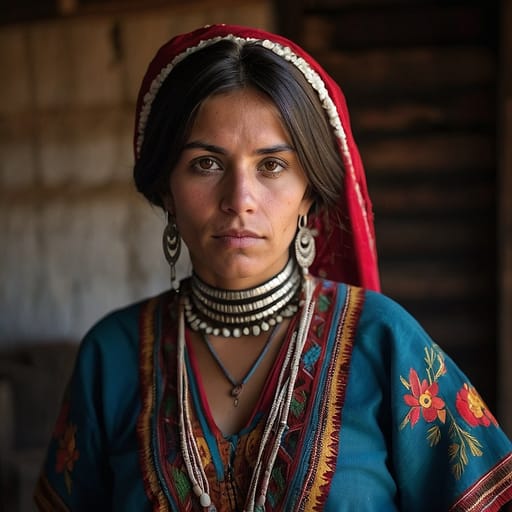
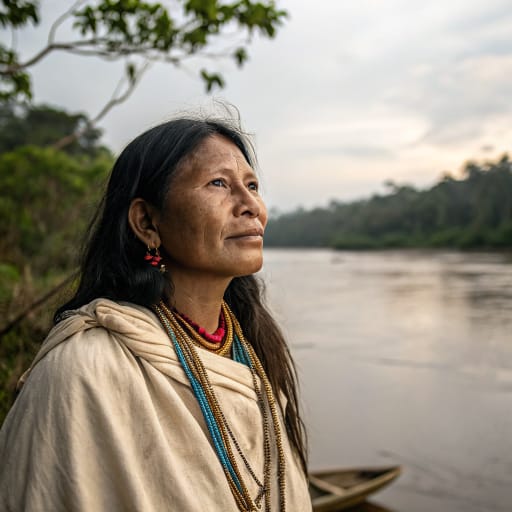
Typical Wapishana Phenotypes
Reference for AI generation: hair, eyes, skin, facial structure, build
Wapishana Body & Anatomy Reference
Per-feature anatomical profile for AI nude generation: South American Indigenous / European-Mestizo / Afro-Latino mix phenotype
Wapishana Boobs & Breasts
Wapishana boobs follow the South American Indigenous / European-Mestizo / Afro-Latino mix profile: medium-to-large cup, full, high projection. Areolar diameter is usually 32-46mm, and the coloring is medium-brown to dark-brown areolar pigmentation against the tan-to-deep-brown skin tone. Breast shape tracks body composition (endomorph-to-mesomorph with high gluteal-femoral deposition, mean adult female BMI 25-28), so Wapishana breasts tend to be the classic Brazilian / Latina curvy bust profile in lowland populations; smaller and shorter-set in Andean Indigenous populations. Expect a forward-set shape, not the smaller bust profile of Andean Indigenous sub-populations.
Wapishana Ass & Hips
Wapishana ass and hip morphology presents as full, high projection, the famous Brazilian / Latina bunda profile, distinctly different from the slim narrow-hip East Asian profile. The Wapishana pelvic profile shows wide iliac crests, very full gluteal-femoral fat deposition (the hallmark Brazilian / Latina hip-to-waist ratio), anchored in the South American Indigenous / European-Mestizo / Afro-Latino mix skeletal pattern. Wapishana butt shots in adult AI imagery should render the full, high projection, the famous Brazilian / Latina bunda profile silhouette with the overall build (endomorph-to-mesomorph with high gluteal-femoral deposition) and the fat distribution typical of the South American Indigenous / European-Mestizo / Afro-Latino mix phenotype.
Wapishana Vagina & Pussy
Wapishana pussy anatomy typically shows medium-brown to dark-brown labial pigmentation, fuller labia minora. Pubic hair is usually wavy-to-curly coarse dark texture, dense distribution. In AI-generated Wapishana nudes, labial color should blend into the tan to deep-brown skin with a gradual transition, and the hair should keep its wavy-to-curly coarse dark texture.
Wapishana Dicks & Penis
Penis reference for Wapishana men: regional mean ~13cm erect, moderate-to-above-average girth. Coloring: medium-brown shaft pigmentation. An accurate Wapishana cock in AI imagery matches the surrounding tan to deep-brown skin rather than a generic porn default. Circumcision depends on religion and custom, not ancestry.
Wapishana Body, Curves & Build
The Wapishana figure is generally endomorph-to-mesomorph with high gluteal-femoral deposition, with mean adult female BMI 25-28, characteristic of South American Indigenous / European-Mestizo / Afro-Latino mix ancestry. AI image tools tend to flatten regional body types into a few stock shapes; here the Wapishana build is kept as its own reference.
Wapishana Skin Tone & Hair Texture
Skin: tan to deep-brown (Fitzpatrick III-VI). Hair: straight-to-curly 1A-3C, varies widely by ancestral composition. Both are typical of South American Indigenous / European-Mestizo / Afro-Latino mix ancestry. The most common mistake in AI nudes of Wapishana women is a body rendered lighter than the face.
Explore phenotype categories
Structured taxonomy with peer-reviewed scales · 22 anatomical categories
Erotic Poses & Sex Positions
From the pose catalog: 219 named positions with reference skeletons
Frequently asked questions about Wapishana people
Where is the Wapishana homeland?
The Wapishana homeland is Rupununi savanna of southern Guyana, mainly south of the Kanuku Mountains, and the neighboring state of Roraima in northern Brazil in South America.
What language do Wapishana people speak?
Wapishana people primarily speak Wapishana, also Wapichan or Wapixana (Arawakan); English and Creolese in Guyana, Portuguese in Brazil.
What religion do Wapishana people practice?
The predominant religion among Wapishana people is Mainly Christian, Catholic and evangelical, with herbal healing and older spirit beliefs persisting alongside the churches.






Make your own Wapishana images
Five a day, free, no credits to buy. The studio starts from this group's phenotype data, so you can set body type, pose and style and keep the traits accurate.
Start with Wapishana