Help us get this right
Does this portrait look right for Karajá?
Nobody has judged this one yet. You would be the first.
Karajá Erotic
Middle Araguaia River valley and Bananal Island in central Brazil, across the states of Tocantins, Goiás, Mato Grosso and Pará.
Karajá, with Karajá, Javaé and Xambioá varieties (Macro-Jê); Portuguese widely spoken.
Indigenous beliefs with shamans and river spirit beings, alongside Catholic and evangelical Christianity.
Karajá proper, Javaé and Xambioá (Northern Karajá); speakers of a distinct branch of the Macro-Jê stock.
About Karajá People
The Karajá call themselves Iny, and who they are is bound up with one river. For as long as outsiders have written about them, they have lived along the middle Araguaia in central Brazil. The center of their territory is Bananal Island, a huge river island that floods in the wet season and turns up long white sand beaches when the water drops. In their origin story, the first people lived in a world at the bottom of the river before climbing up to the surface. Villages still sit on the riverbanks, and fishing and the rise and fall of the water shape much of the year.
There are three branches. The Karajá proper live along the Araguaia itself. The Javaé live on the Javaés River, which forms the island's eastern side. The Xambioá, sometimes called the Northern Karajá, live downstream in northern Tocantins. All speak forms of the Karajá language, which belongs to the broader Macro-Jê stock but is set apart from the Jê languages of neighbors like the Xavante and the Kayapó. Linguists single it out for one feature: men and women speak it differently. Women's speech keeps a consonant that men's speech drops, so the way a sentence sounds tells you who is talking before you know what it means. Portuguese is widely spoken as well.
Contact came early and it was rough. Slaving expeditions pushed up the Araguaia from the seventeenth century on. Missionaries, cattle ranchers and government posts followed, and later came sport fishers and tourists crowding the dry season beaches. Disease cut the population sharply before it slowly recovered. Shamans still hold a place in village life, alongside Catholic and evangelical churches.
The thing outsiders usually recognize first is the ritxòkò, the clay figures made by Karajá women. They started out as children's dolls and show people at work, in family life and in ritual dress. Today they are sold far beyond the river, and in 2012 Brazil registered them as national cultural heritage. Ritual life centers on Aruanã, in which masked dancers in palm fiber costumes take on the role of spirit beings visiting the village, and on Hetohoky, the long initiation that brings boys into the world of men. Many Karajá, older people especially, have circular marks on both cheekbones, a sign that once made someone recognizable as Iny at a glance.
Related ethnic groups
Groups that share Karajá's homeland, region, language, or religious tradition. These are likely candidates for comparative phenotype reference.
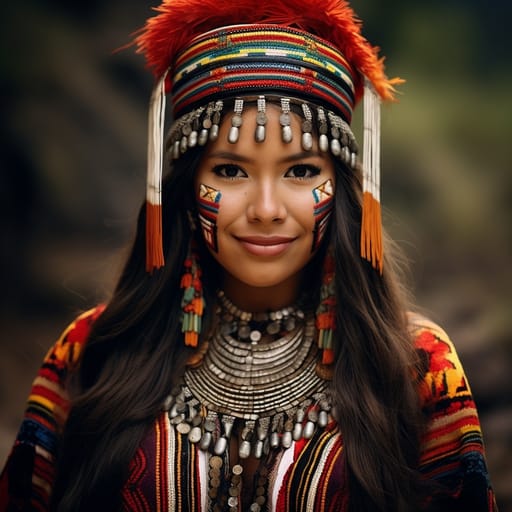
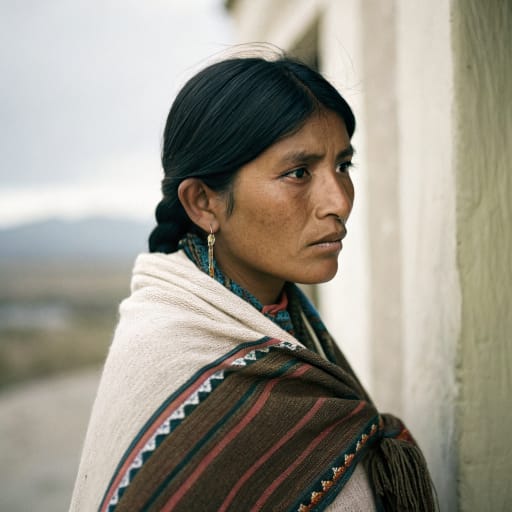
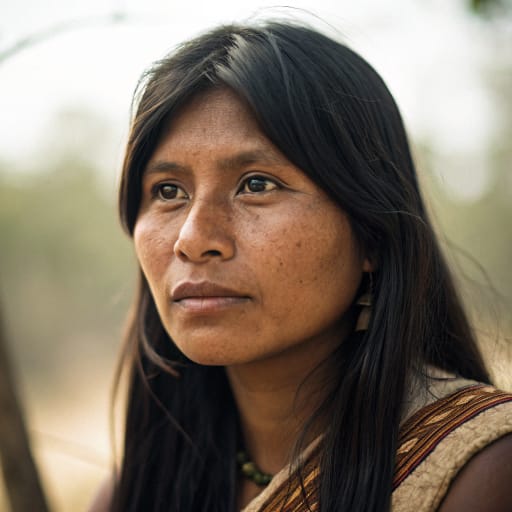
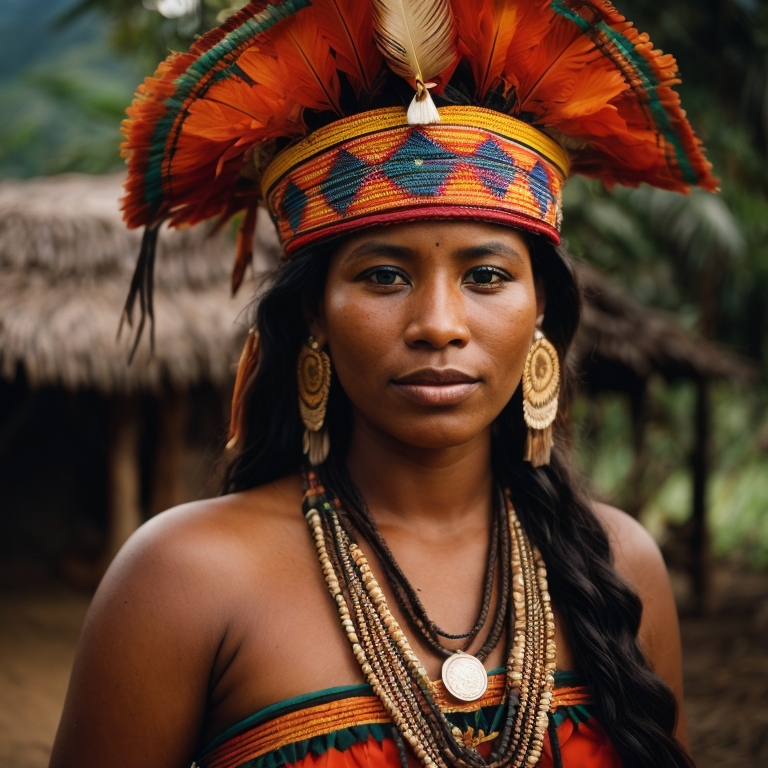
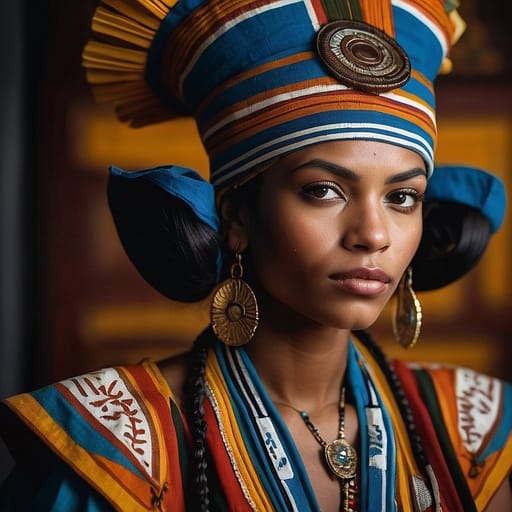
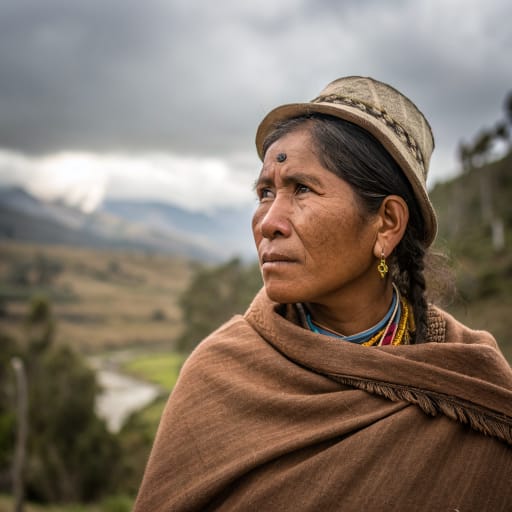
Typical Karajá Phenotypes
Reference for AI generation: hair, eyes, skin, facial structure, build
Karajá Body & Anatomy Reference
Anatomy by feature, South American Indigenous / European-Mestizo / Afro-Latino mix phenotype
Karajá Boobs & Breasts
Karajá boobs follow the South American Indigenous / European-Mestizo / Afro-Latino mix profile: medium-to-large cup, full, high projection. Areolar diameter is usually 32-46mm, and the coloring is medium-brown to dark-brown areolar pigmentation against the tan-to-deep-brown skin tone. Breast shape tracks body composition (endomorph-to-mesomorph with high gluteal-femoral deposition, mean adult female BMI 25-28), so Karajá breasts tend to be the classic Brazilian / Latina curvy bust profile in lowland populations; smaller and shorter-set in Andean Indigenous populations. Expect a forward-set shape, not the smaller bust profile of Andean Indigenous sub-populations.
Karajá Ass & Hips
Karajá ass and hip morphology presents as full, high projection, the famous Brazilian / Latina bunda profile, distinctly different from the slim narrow-hip East Asian profile. The Karajá pelvic profile shows wide iliac crests, very full gluteal-femoral fat deposition (the hallmark Brazilian / Latina hip-to-waist ratio), anchored in the South American Indigenous / European-Mestizo / Afro-Latino mix skeletal pattern. Karajá butt shots in adult AI imagery should render the full, high projection, the famous Brazilian / Latina bunda profile silhouette with the overall build (endomorph-to-mesomorph with high gluteal-femoral deposition) and the fat distribution typical of the South American Indigenous / European-Mestizo / Afro-Latino mix phenotype.
Karajá Vagina & Pussy
Karajá pussy anatomy typically shows medium-brown to dark-brown labial pigmentation, fuller labia minora. Pubic hair is usually wavy-to-curly coarse dark texture, dense distribution. In AI-generated Karajá nudes, labial color should blend into the tan to deep-brown skin with a gradual transition, and the hair should keep its wavy-to-curly coarse dark texture.
Karajá Dicks & Penis
Penis reference for Karajá men: regional mean ~13cm erect, moderate-to-above-average girth. Coloring: medium-brown shaft pigmentation. An accurate Karajá cock in AI imagery matches the surrounding tan to deep-brown skin rather than a generic porn default. Circumcision depends on religion and custom, not ancestry.
Karajá Body, Curves & Build
The Karajá figure is generally endomorph-to-mesomorph with high gluteal-femoral deposition, with mean adult female BMI 25-28, characteristic of South American Indigenous / European-Mestizo / Afro-Latino mix ancestry. AI image tools tend to flatten regional body types into a few stock shapes; here the Karajá build is kept as its own reference.
Karajá Skin Tone & Hair Texture
Skin: tan to deep-brown (Fitzpatrick III-VI). Hair: straight-to-curly 1A-3C, varies widely by ancestral composition. Both are typical of South American Indigenous / European-Mestizo / Afro-Latino mix ancestry. The most common mistake in AI nudes of Karajá women is a body rendered lighter than the face.
Explore phenotype categories
Structured taxonomy with peer-reviewed scales · 22 anatomical categories
Erotic Poses & Sex Positions
From the pose catalog: 219 named positions with reference skeletons
Frequently asked questions about Karajá people
Where is the Karajá homeland?
The Karajá homeland is Middle Araguaia River valley and Bananal Island in central Brazil, across the states of Tocantins, Goiás, Mato Grosso and Pará. in South America.
What language do Karajá people speak?
Karajá people primarily speak Karajá, with Karajá, Javaé and Xambioá varieties (Macro-Jê); Portuguese widely spoken..
What religion do Karajá people practice?
The predominant religion among Karajá people is Indigenous beliefs with shamans and river spirit beings, alongside Catholic and evangelical Christianity..






Make your own Karajá images
Five a day, free, no credits to buy. The studio starts from this group's phenotype data, so you can set body type, pose and style and keep the traits accurate.
Start with Karajá