Help us get this right
Does this portrait look right for Lache?
Nobody has judged this one yet. You would be the first.
Lache Erotic
Highland valleys around the Sierra Nevada del Cocuy, in northern Boyacá and the adjoining part of Santander, Colombia
Lache, extinct and essentially unrecorded (Chibchan)
Indigenous religion that venerated stones as transformed ancestors and the human shadow as divine; survivors were converted to Catholicism under Spanish rule
Chibchan peoples of the Colombian Eastern Andes; closely related to the U'wa (Tunebo), and neighbors of the Muisca, Guane and Chitarero
About Lache People
The Lache were a Chibchan-speaking farming people of the high eastern Andes of Colombia, settled around the Sierra Nevada del Cocuy in what is now northern Boyacá and the adjoining edge of Santander, until the Spanish conquest of the 1540s broke them apart. They no longer exist as a distinct people. Survivors were absorbed into colonial encomiendas and parish towns, and their descendants live on among the rural mestizo families of the Cocuy highlands. Their closest living relatives are the U'wa, who still hold land on the eastern slopes of the same mountains, and some scholars treat the Lache as the western branch of that people.
Their country was vertical. Villages sat in cold valleys below the snowline, at places that are still towns today: El Cocuy, Güicán, Chita, Jericó, Panqueba, Guacamayas. A household could work potato fields above and maize plots below, and the trails ran outward both ways: south and west to the Muisca, whose markets drew the Lache into the highland trade in salt, cotton cloth and coca, and east over the passes toward the Llanos. Their language is grouped with the Chibchan speech of their Muisca and U'wa neighbors, but no real record of it was made and it is lost.
What the Spanish chroniclers remembered most was their religion. The Lache held that stones had once been people, that the dead turned to stone, and that the stones would one day rise as people again. They also treated a person's own shadow as a god, one that walked beside you whenever the sun was out. In a country of cliffs, boulders and glacier rock, the belief had plenty to attach itself to. The chronicler Lucas Fernández de Piedrahita added two details that have stuck: that neighboring Lache communities met for organized fistfights, fought without weapons as a kind of contest, and that a family with five sons and no daughter could raise one boy as a girl, a recognized role called cusmo. Both reports come through colonial eyes and should be read that way.
The end came fast. In 1541 Hernán Pérez de Quesada marched into Lache territory hunting the Casa del Sol, a temple of the sun rumored to be full of gold. There was no such treasure, but the expedition opened the region to encomienda, tribute and epidemic disease, and within a few generations the Lache had stopped being counted as a people. What remains is a map of their old towns, a few pages in the chronicles, and a mountain range whose stones they would have called their ancestors.
Related ethnic groups
Groups that share Lache's homeland, region, language, or religious tradition. These are likely candidates for comparative phenotype reference.
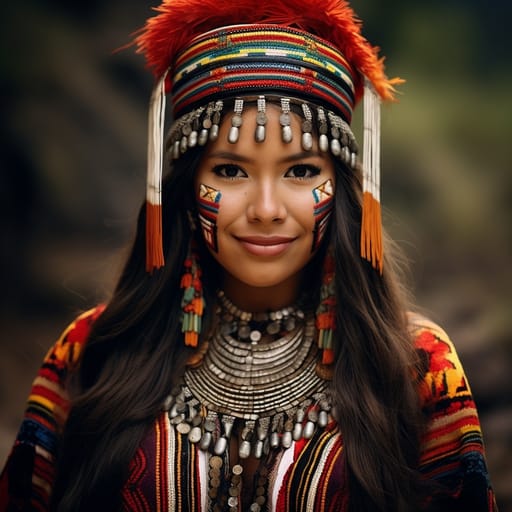
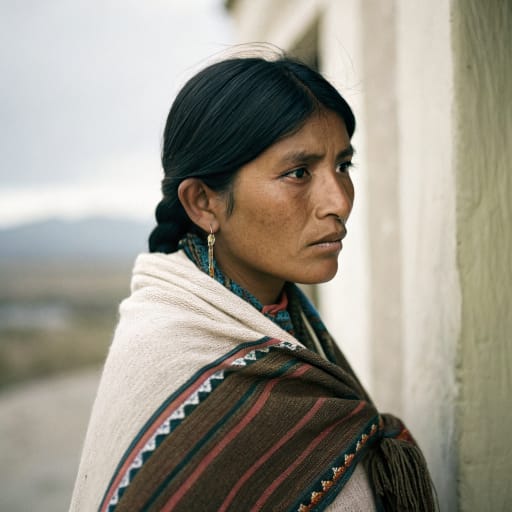
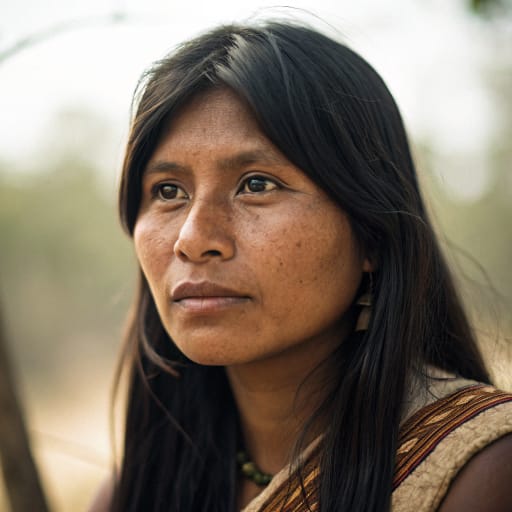
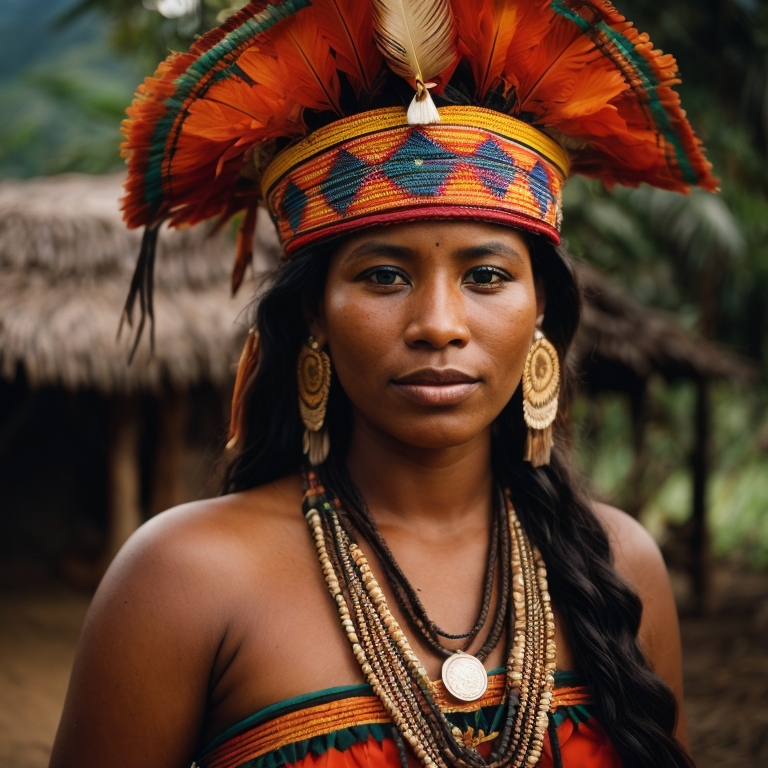
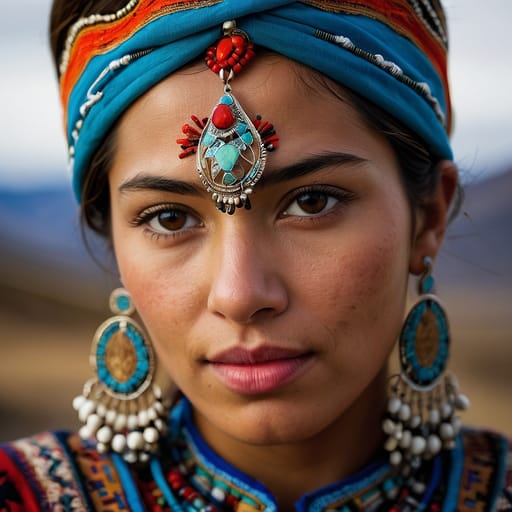
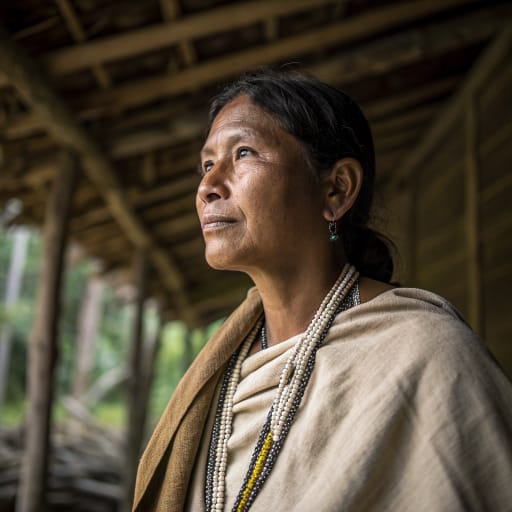
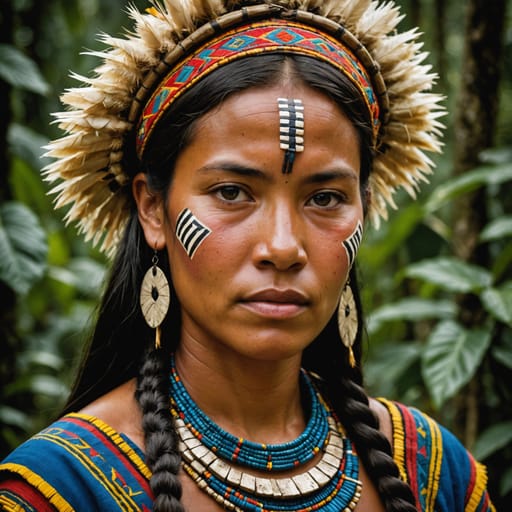
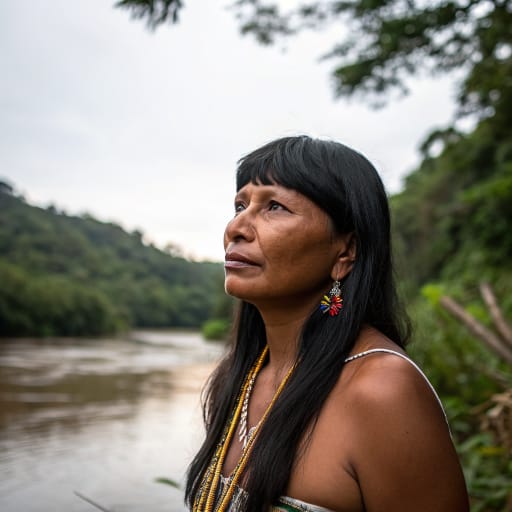
Typical Lache Phenotypes
Reference for AI generation: hair, eyes, skin, facial structure, build
Lache Body & Anatomy Reference
Anatomy by feature, South American Indigenous / European-Mestizo / Afro-Latino mix phenotype
Lache Boobs & Breasts
Bust reference for Lache women: medium-to-large cup, full, high projection, which is typical of South American Indigenous / European-Mestizo / Afro-Latino mix ancestry. Areolas measure about 32-46mm across, with medium-brown to dark-brown pigmentation. Body type (endomorph-to-mesomorph with high gluteal-femoral deposition) shapes the bust as well, so Lache tits are usually the classic Brazilian / Latina curvy bust profile in lowland populations; smaller and shorter-set in Andean Indigenous populations. In AI imagery, keep the forward-set shape rather than drifting toward the smaller bust profile of Andean Indigenous sub-populations.
Lache Ass & Hips
The Lache ass is typically full, high projection, the famous Brazilian / Latina bunda profile, which sets it apart from the slim narrow-hip East Asian profile. Underneath, the pelvis shows wide iliac crests, very full gluteal-femoral fat deposition (the hallmark Brazilian / Latina hip-to-waist ratio), part of the South American Indigenous / European-Mestizo / Afro-Latino mix skeletal pattern. For Lache butt pics and AI renders, match that silhouette and the overall build (endomorph-to-mesomorph with high gluteal-femoral deposition).
Lache Vagina & Pussy
Lache pussy and vulvar anatomy presents medium-brown to dark-brown labial pigmentation, fuller labia minora, consistent with the South American Indigenous / European-Mestizo / Afro-Latino mix phenotype's pigmentation pattern. Lache pubic hair is typically wavy-to-curly coarse dark texture, dense distribution, in the inverted-triangle pattern. For anatomically accurate Lache pussy renders the labial coloration should match the surrounding tan to deep-brown skin tone with a continuous gradient, and the hair should keep its wavy-to-curly coarse dark texture.
Lache Dicks & Penis
Lache dicks follow the South American Indigenous / European-Mestizo / Afro-Latino mix reference data: regional mean ~13cm erect; moderate-to-above-average girth; medium-brown shaft pigmentation. Shaft color should track the tan to deep-brown skin tone with a smooth change toward the glans, and Lache pubic hair keeps its wavy-to-curly coarse dark texture.
Lache Body, Curves & Build
Lache body type and overall build presents as endomorph-to-mesomorph with high gluteal-femoral deposition, with mean adult female BMI 25-28: the characteristic South American Indigenous / European-Mestizo / Afro-Latino mix habitus. Lache curves and proportions should keep the regional skeletal frame (height, shoulder-to-hip ratio, limb proportions) rather than a generic mesomorph default.
Lache Skin Tone & Hair Texture
Lache skin sits in the tan to deep-brown (Fitzpatrick III-VI) band. Hair is typically straight-to-curly 1A-3C, varies widely by ancestral composition, in keeping with the South American Indigenous / European-Mestizo / Afro-Latino mix phenotype. In nude renders the skin should stay one even tone from face to body, and body, pubic and head hair should match.
Explore phenotype categories
Structured taxonomy with peer-reviewed scales · 22 anatomical categories
Erotic Poses & Sex Positions
From the pose catalog: 219 named positions with reference skeletons
Frequently asked questions about Lache people
Where is the Lache homeland?
The Lache homeland is Highland valleys around the Sierra Nevada del Cocuy, in northern Boyacá and the adjoining part of Santander, Colombia in South America.
What language do Lache people speak?
Lache people primarily speak Lache, extinct and essentially unrecorded (Chibchan).
What religion do Lache people practice?
The predominant religion among Lache people is Indigenous religion that venerated stones as transformed ancestors and the human shadow as divine; survivors were converted to Catholicism under Spanish rule.






Make your own Lache images
Five a day, free, no credits to buy. The studio starts from this group's phenotype data, so you can set body type, pose and style and keep the traits accurate.
Start with Lache