Help us get this right
Does this portrait look right for Andaquí?
Nobody has judged this one yet. You would be the first.
Andaquí Erotic
Upper Magdalena valley (Suaza and Timaná area, Huila) and the Andean-Amazon piedmont of the upper Caquetá and Fragua rivers (Caquetá and Cauca), southern Colombia.
Andaquí, extinct (unclassified or isolate; proposed links to Páez, Chibchan and Tinigua-Pamigua are unproven). Descendants speak Spanish.
Indigenous religion, poorly documented; partial Catholic conversion under Franciscan missions in the 18th century.
No recorded branches. Counted among the upper Magdalena peoples alongside the Yalcón, Timaná, Páez (Nasa) and Pijao, and later among the piedmont groups of the Caquetá missions.
About Andaquí People
The Andaquí were an Indigenous people of southern Colombia who held the upper Magdalena valley and the forested eastern slopes of the Andes when the Spanish arrived in the 1530s, and who fought, retreated and finally dissolved as a distinct people over the four centuries that followed. Nobody speaks their language today. Their descendants are folded into the rural population of Huila and Caquetá and into neighboring Indigenous groups, and their name survives mostly on the map.
What set them apart in the colonial record was refusal. The Andaquí took part in the uprisings that shook the upper Magdalena in the years after the conquest, the same wave of resistance remembered through the cacica La Gaitana, and they kept raiding Spanish towns such as Timaná long after their neighbors had been broken or resettled. When the highland valleys became untenable they moved over the cordillera into the wet piedmont where the Caquetá and Fragua rivers begin their run toward the Amazon. That move turned a people of Andean valleys into a forest people, and it bought them generations of autonomy. Franciscan missionaries in the 1700s tried repeatedly to gather them into mission villages, with thin results. The missions did put one Andaquí product into wider circulation: a wild beeswax, collected in the forest and traded up into the highlands, that carried their name in colonial commerce.
Their language is the hardest loss. It is known only from a few word lists taken down by priests and travelers in the eighteenth and nineteenth centuries, enough to show it was its own thing and not enough to place it. Linguists have proposed links to Páez, to the Chibchan languages and to Tinigua-Pamigua, but none has been demonstrated, and Andaquí is usually listed as unclassified or as an isolate. Their religion is scarcely better recorded: what survives comes through mission reports, which were more interested in replacing it than describing it.
The legacy is a name and an argument. The town of Belén de los Andaquíes in Caquetá carries the name. The argument concerns the stone statues of San Agustín, which stand in old Andaquí country and which some early writers credited to them. Archaeology dates the sculptors many centuries before any record of the Andaquí, and no connection has been shown. The historian Juan Friede traced their story from 1538 to 1947 and read it as a case study in how a people disappears: not in one massacre, but through flight, missions, disease and slow absorption into the settler society that followed them downhill.
Related ethnic groups
Groups that share Andaquí's homeland, region, language, or religious tradition. These are likely candidates for comparative phenotype reference.
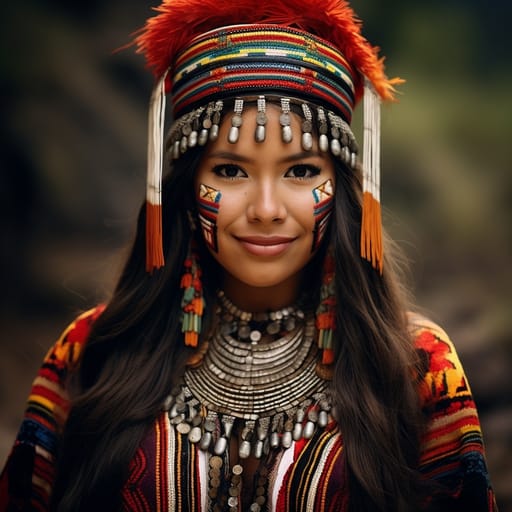
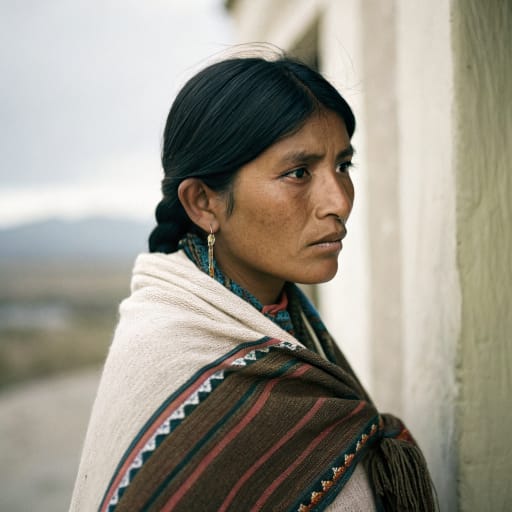
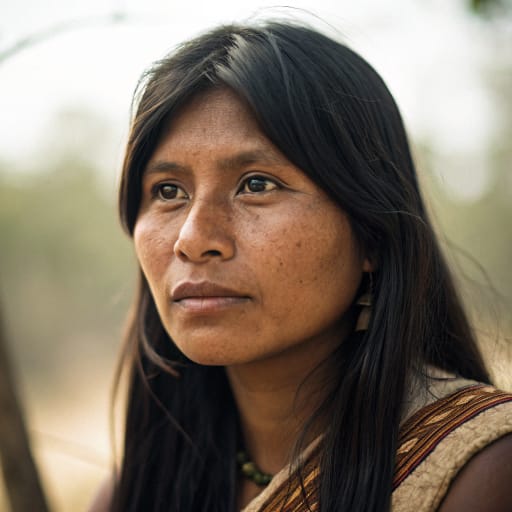
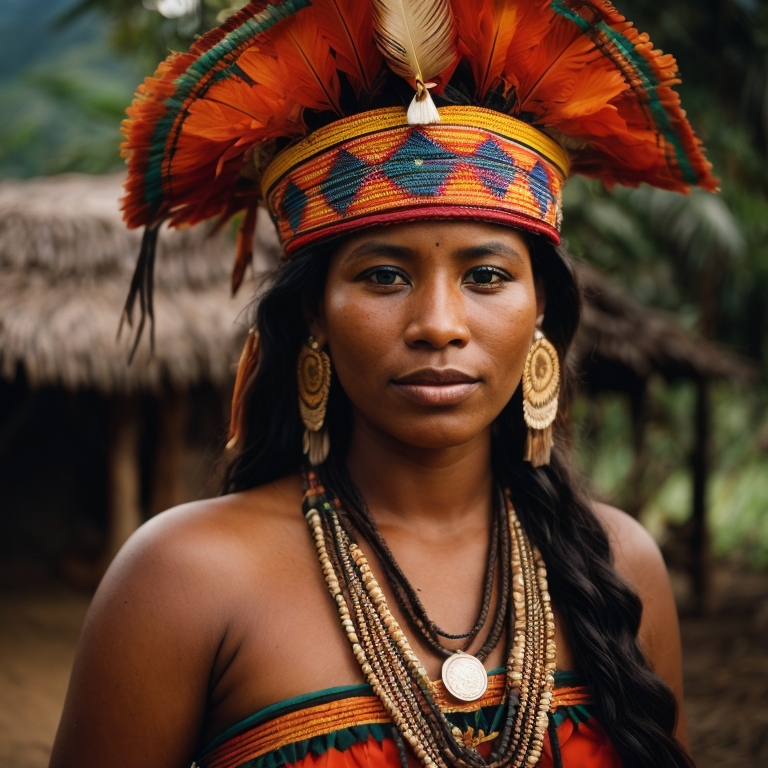
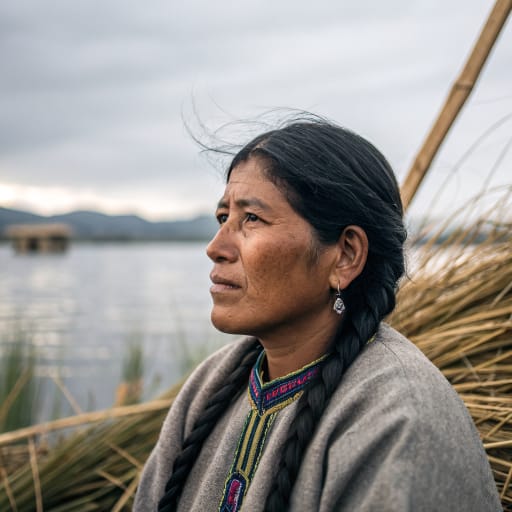
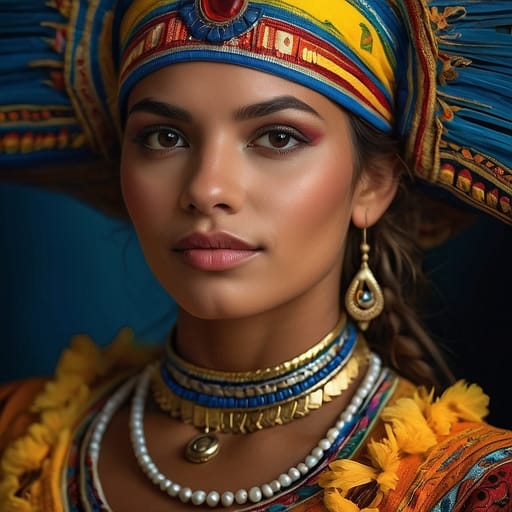
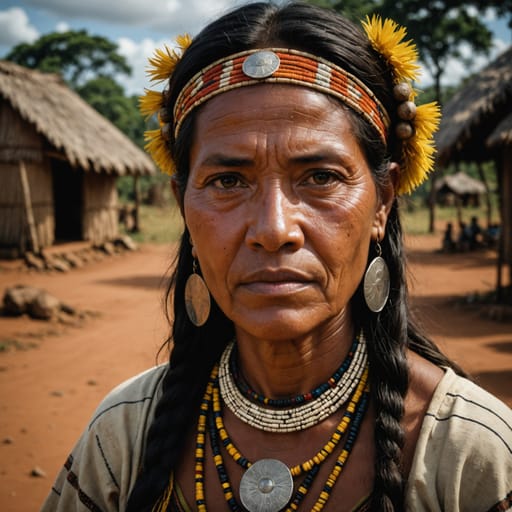
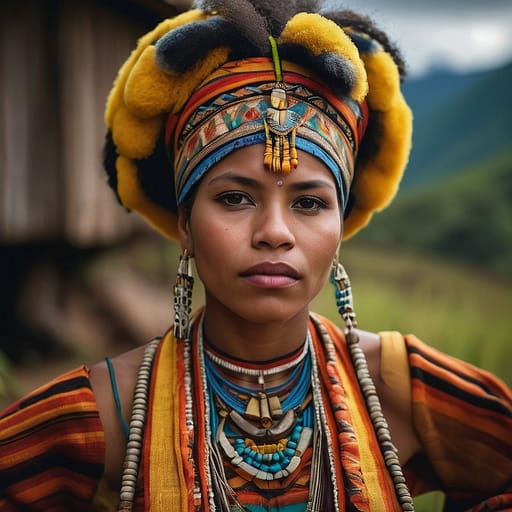
Typical Andaquí Phenotypes
Reference for AI generation: hair, eyes, skin, facial structure, build
Andaquí Body & Anatomy Reference
Per-feature anatomical profile for AI nude generation: South American Indigenous / European-Mestizo / Afro-Latino mix phenotype
Andaquí Boobs & Breasts
The typical Andaquí bust is medium-to-large cup, full, high projection, in line with the wider South American Indigenous / European-Mestizo / Afro-Latino mix pattern. Areolas usually fall in the 32-46mm range, with medium-brown to dark-brown areolar pigmentation against the tan-to-deep-brown skin tone. Compared with the smaller bust profile of Andean Indigenous sub-populations, Andaquí breasts sit forward and are generally the classic Brazilian / Latina curvy bust profile in lowland populations; smaller and shorter-set in Andean Indigenous populations. A faithful AI render of Andaquí tits keeps that shape and areola size.
Andaquí Ass & Hips
Butt shape among Andaquí women: full, high projection, the famous Brazilian / Latina bunda profile, over wide iliac crests, very full gluteal-femoral fat deposition (the hallmark Brazilian / Latina hip-to-waist ratio). This follows South American Indigenous / European-Mestizo / Afro-Latino mix ancestry and looks quite unlike the slim narrow-hip East Asian profile. An accurate Andaquí ass in adult AI imagery keeps both the silhouette and the overall build (endomorph-to-mesomorph with high gluteal-femoral deposition) instead of a generic average.
Andaquí Vagina & Pussy
Vulvar anatomy among Andaquí women: medium-brown to dark-brown labial pigmentation, fuller labia minora. Pubic hair tends to be wavy-to-curly coarse dark texture, dense distribution, in the usual inverted-triangle pattern. Both follow South American Indigenous / European-Mestizo / Afro-Latino mix pigmentation, which is why Andaquí pussy renders should not fall back on a pale, sparse Western template.
Andaquí Dicks & Penis
The Andaquí cock profile, from South American Indigenous / European-Mestizo / Afro-Latino mix anthropometric data: regional mean ~13cm erect; moderate-to-above-average girth; medium-brown shaft pigmentation. Pubic hair has a wavy-to-curly coarse dark texture and forms the usual inverted-V pattern. Whether Andaquí men are circumcised follows religious and cultural practice rather than phenotype.
Andaquí Body, Curves & Build
Build and curves among Andaquí women follow the South American Indigenous / European-Mestizo / Afro-Latino mix pattern: endomorph-to-mesomorph with high gluteal-femoral deposition, mean adult female BMI 25-28. Proportions matter as much as skin tone, so Andaquí figures should keep their regional height and limb ratios.
Andaquí Skin Tone & Hair Texture
The Andaquí skin range is tan to deep-brown (Fitzpatrick III-VI), and hair tends to be straight-to-curly 1A-3C, varies widely by ancestral composition. That combination marks the South American Indigenous / European-Mestizo / Afro-Latino mix phenotype, and skin tone is the trait AI generators most often get wrong for Andaquí women.
Explore phenotype categories
Structured taxonomy with peer-reviewed scales · 22 anatomical categories
Erotic Poses & Sex Positions
From the pose catalog: 219 named positions with reference skeletons
Frequently asked questions about Andaquí people
Where is the Andaquí homeland?
The Andaquí homeland is Upper Magdalena valley (Suaza and Timaná area, Huila) and the Andean-Amazon piedmont of the upper Caquetá and Fragua rivers (Caquetá and Cauca), southern Colombia. in South America.
What language do Andaquí people speak?
Andaquí people primarily speak Andaquí, extinct (unclassified or isolate; proposed links to Páez, Chibchan and Tinigua-Pamigua are unproven). Descendants speak Spanish..
What religion do Andaquí people practice?
The predominant religion among Andaquí people is Indigenous religion, poorly documented; partial Catholic conversion under Franciscan missions in the 18th century..






Make your own Andaquí images
Five a day, free, no credits to buy. The studio starts from this group's phenotype data, so you can set body type, pose and style and keep the traits accurate.
Start with Andaquí