No portrait yet
Ranquel Erotic
The caldén forest zone of the central Pampas (Mamüll Mapu): southern San Luis, southern Córdoba and northern La Pampa, Argentina
Ranquel (Rankülche), a nearly extinct form of Mapudungun (Araucanian); Spanish (Indo-European) in daily use
Mostly Christian (Catholic and evangelical), with a revival of traditional ceremonies rooted in Mapuche religion
Part of the wider Mapuche (Araucanian) world east of the Andes; formed from Mapuche migrants and local Pehuenche and other groups; historic chiefdoms led by Yanquetruz, Painé, Mariano Rosas and Baigorrita
About Ranquel People
The Ranquel took their name from the reeds. Rankül is the cane that grows around the lagoons of the Argentine pampa, and che means people, so the Rankülche are the people of the reed beds. They became a distinct nation in the eighteenth century, when Mapudungun-speaking families from across the Andes settled among Pehuenche and other groups already living in the caldén forests of what is now southern San Luis, southern Córdoba and northern La Pampa. They called that country Mamüll Mapu, the land of trees. It gave them water, firewood, shelter and pasture in a region where the open plain offered little of any of them.
They were a horse people through and through. Ranquel riders raided frontier ranches for cattle and horses, then drove them along the rastrilladas, deep trails worn across the plain, to sell in Chile. At different times they bargained, fought and allied with Buenos Aires, with Calfucurá's confederation at Salinas Grandes, and with whichever Argentine faction needed cavalry. Their camps also took in outsiders: army deserters, runaway gauchos, and beaten Unitarian officers such as Manuel Baigorria, who lived among them for years and gave his name to the cacique Baigorrita. Their best known leader, Panguitruz Guor, was captured as a boy and raised on an estate belonging to Juan Manuel de Rosas, who stood as his godfather at baptism. He escaped, went home, and ruled from Leubucó as Mariano Rosas.
Much of what outsiders know about Ranquel life comes from Lucio V. Mansilla, an Argentine colonel who rode to Leubucó in 1870 to negotiate peace. He wrote a lively, rambling book about the long formal speeches, the hospitality and the hard bargaining he found there. The peace did not hold. In the military campaigns of the late 1870s known as the Conquest of the Desert, the Argentine army broke the Ranquel chiefdoms and killed or captured their leaders. Survivors were scattered onto ranches, into the army and into settler households as servants. Mariano Rosas's grave was dug up and his skull ended up in the La Plata museum. It came back to Leubucó only in 2001, under a national law ordering its return.
Today most Ranquel are Spanish-speaking Argentines. They live in small towns and farm districts of La Pampa, San Luis and Córdoba, or in cities farther away. Their form of Mapudungun has very few speakers left, though linguists and community teachers have worked to record and teach it. Ceremonies rooted in the older Mapuche religion have come back alongside Catholic and evangelical churches. In southern San Luis, the province has returned land where a Ranquel community town now stands.
Related ethnic groups
Groups that share Ranquel's homeland, region, language, or religious tradition. These are likely candidates for comparative phenotype reference.
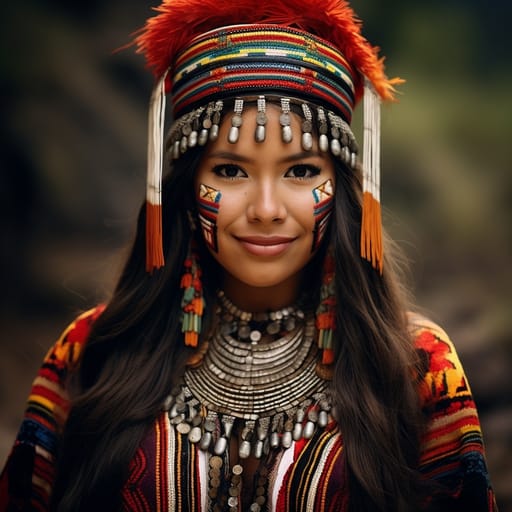
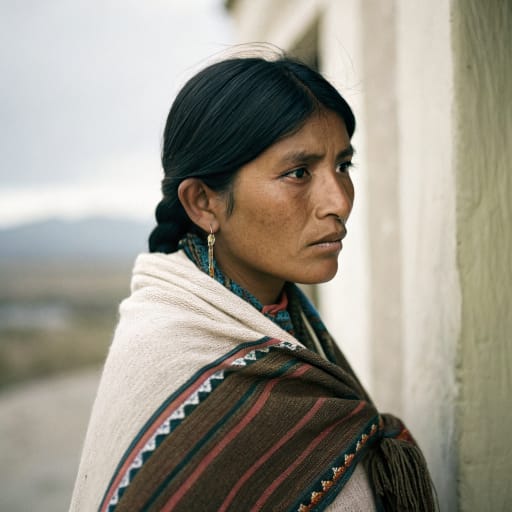
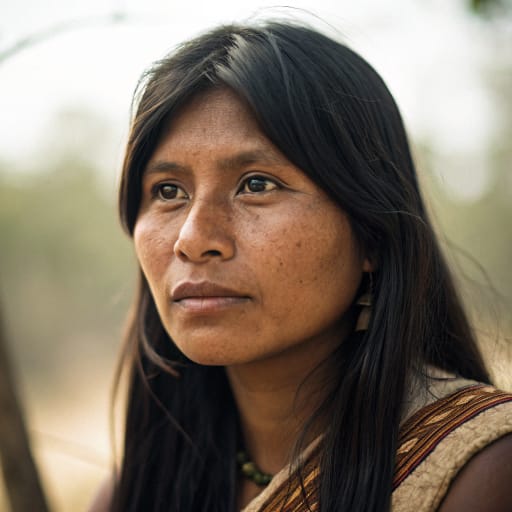
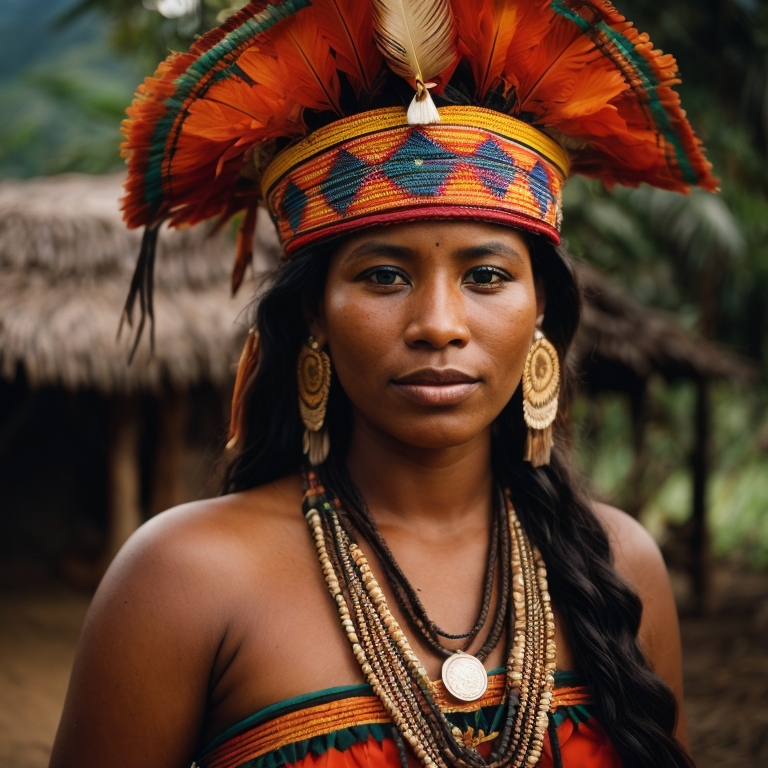
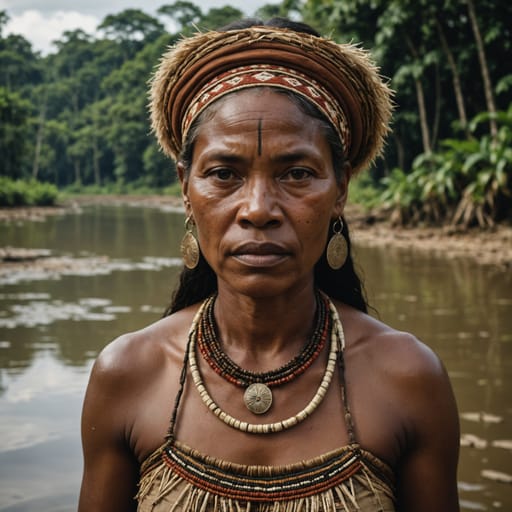
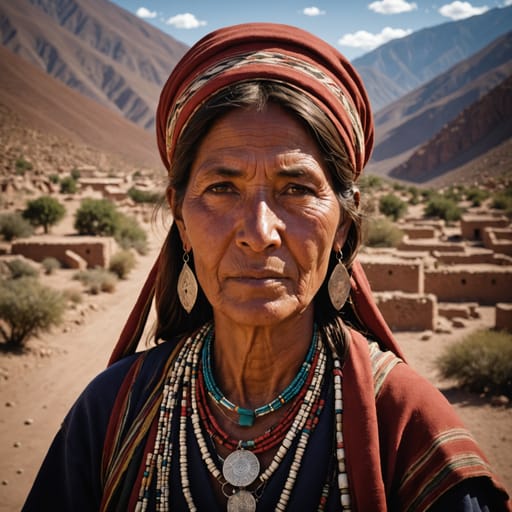
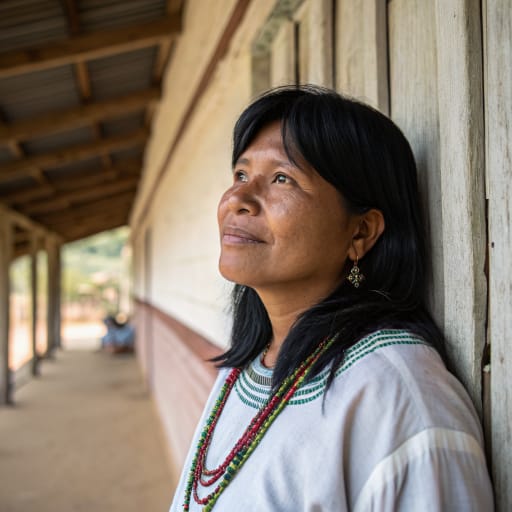
Typical Ranquel Phenotypes
Reference for AI generation: hair, eyes, skin, facial structure, build
Ranquel Body & Anatomy Reference
South American Indigenous / European-Mestizo / Afro-Latino mix phenotype: anatomy reference for AI nude generation
Ranquel Boobs & Breasts
Ranquel boobs follow the South American Indigenous / European-Mestizo / Afro-Latino mix profile: medium-to-large cup, full, high projection. Areolar diameter is usually 32-46mm, and the coloring is medium-brown to dark-brown areolar pigmentation against the tan-to-deep-brown skin tone. Breast shape tracks body composition (endomorph-to-mesomorph with high gluteal-femoral deposition, mean adult female BMI 25-28), so Ranquel breasts tend to be the classic Brazilian / Latina curvy bust profile in lowland populations; smaller and shorter-set in Andean Indigenous populations. Expect a forward-set shape, not the smaller bust profile of Andean Indigenous sub-populations.
Ranquel Ass & Hips
Ranquel ass and hip morphology presents as full, high projection, the famous Brazilian / Latina bunda profile, distinctly different from the slim narrow-hip East Asian profile. The Ranquel pelvic profile shows wide iliac crests, very full gluteal-femoral fat deposition (the hallmark Brazilian / Latina hip-to-waist ratio), anchored in the South American Indigenous / European-Mestizo / Afro-Latino mix skeletal pattern. Ranquel butt shots in adult AI imagery should render the full, high projection, the famous Brazilian / Latina bunda profile silhouette with the overall build (endomorph-to-mesomorph with high gluteal-femoral deposition) and the fat distribution typical of the South American Indigenous / European-Mestizo / Afro-Latino mix phenotype.
Ranquel Vagina & Pussy
Ranquel pussy anatomy typically shows medium-brown to dark-brown labial pigmentation, fuller labia minora. Pubic hair is usually wavy-to-curly coarse dark texture, dense distribution. In AI-generated Ranquel nudes, labial color should blend into the tan to deep-brown skin with a gradual transition, and the hair should keep its wavy-to-curly coarse dark texture.
Ranquel Dicks & Penis
Penis reference for Ranquel men: regional mean ~13cm erect, moderate-to-above-average girth. Coloring: medium-brown shaft pigmentation. An accurate Ranquel cock in AI imagery matches the surrounding tan to deep-brown skin rather than a generic porn default. Circumcision depends on religion and custom, not ancestry.
Ranquel Body, Curves & Build
The Ranquel figure is generally endomorph-to-mesomorph with high gluteal-femoral deposition, with mean adult female BMI 25-28, characteristic of South American Indigenous / European-Mestizo / Afro-Latino mix ancestry. AI image tools tend to flatten regional body types into a few stock shapes; here the Ranquel build is kept as its own reference.
Ranquel Skin Tone & Hair Texture
Skin: tan to deep-brown (Fitzpatrick III-VI). Hair: straight-to-curly 1A-3C, varies widely by ancestral composition. Both are typical of South American Indigenous / European-Mestizo / Afro-Latino mix ancestry. The most common mistake in AI nudes of Ranquel women is a body rendered lighter than the face.
Explore phenotype categories
Structured taxonomy with peer-reviewed scales · 22 anatomical categories
Erotic Poses & Sex Positions
From the pose catalog: 219 named positions with reference skeletons
Frequently asked questions about Ranquel people
Where is the Ranquel homeland?
The Ranquel homeland is The caldén forest zone of the central Pampas (Mamüll Mapu): southern San Luis, southern Córdoba and northern La Pampa, Argentina in South America.
What language do Ranquel people speak?
Ranquel people primarily speak Ranquel (Rankülche), a nearly extinct form of Mapudungun (Araucanian); Spanish (Indo-European) in daily use.
What religion do Ranquel people practice?
The predominant religion among Ranquel people is Mostly Christian (Catholic and evangelical), with a revival of traditional ceremonies rooted in Mapuche religion.






Make your own Ranquel images
Five a day, free, no credits to buy. The studio starts from this group's phenotype data, so you can set body type, pose and style and keep the traits accurate.
Start with Ranquel