Help us get this right
Does this portrait look right for Omaguaca?
One tap. It takes a second and it is recorded.
1 says it looks right, 0 say it looks off.
Omaguaca Erotic
Quebrada de Humahuaca in Jujuy Province, northwestern Argentina, around Tilcara and Humahuaca; historically also southern Tarija, Bolivia
Spanish today; historically Quechua (Quechuan) after Inca conquest, and an extinct, unrecorded Omaguaca language (unclassified)
Roman Catholic, alongside Andean observance such as August offerings to Pachamama
Valley communities including the Tilcara, Purmamarca, Tumbaya and Uquía; one of the Andean peoples of northwestern Argentina, alongside the Kolla and Atacama
About Omaguaca People
The Omaguaca are the people of the Quebrada de Humahuaca, the long, dry gorge in Argentina's Jujuy Province that climbs north toward the high plateau on the Bolivian border. Their range once reached into southern Tarija in Bolivia. They were never a single kingdom. They were a set of valley communities, several of whose names survive in the towns of Tilcara, Purmamarca, Tumbaya and Uquía, held together by a shared corridor of river and rock. Their way of life was built for altitude: terraced, irrigated fields of maize and potatoes, llama herds, and caravan trade between the Puna above and the forested lowlands to the east. They lived in pucarás, stone villages on high ground that was easy to defend. The one at Tilcara was partly rebuilt in the twentieth century and is the one most visitors walk through. Their potters painted in a recognizable black-on-red style. In the late fifteenth century the Inca took the valley and ran their royal road through it, and Quechua spread as the working language of empire. The original Omaguaca language was never properly recorded, died out, and remains unclassified.
The Spanish found the Quebrada hard to hold. Their attempts to plant a town in the region in the 1560s and 1570s failed, and San Salvador de Jujuy took root only in 1593. A year later they captured Viltipoco, a leader who had been building a broad alliance against them. Forced labor under the encomienda system followed. Over the colonial centuries the valley's people blended into a rural Andean population, often counted simply as mestizo or grouped under the wider Kolla name. The Omaguaca name did not vanish, though. In recent decades a number of Quebrada communities have taken it up again and registered as Indigenous communities with the Argentine state. Everyday life now runs in Spanish, and most people are Catholic in a way that sits comfortably beside older Andean observance. In August, households feed Pachamama, the earth, with food, coca leaves and drink placed in a hole dug in the ground. In Holy Week, pilgrims carry the Virgin of Copacabana down from her mountain sanctuary at Punta Corral to Tilcara, escorted by bands of siku panpipe players. Carnival opens by digging up a devil figure and closes by burying him again. The gorge itself, with its terraces, pucarás and adobe chapels, has been a UNESCO World Heritage Site since 2003.
Related ethnic groups
Groups that share Omaguaca's homeland, region, language, or religious tradition. These are likely candidates for comparative phenotype reference.
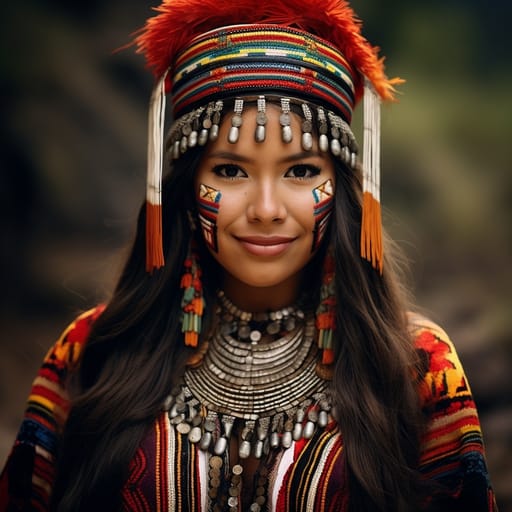
Quechua
same region (South America)
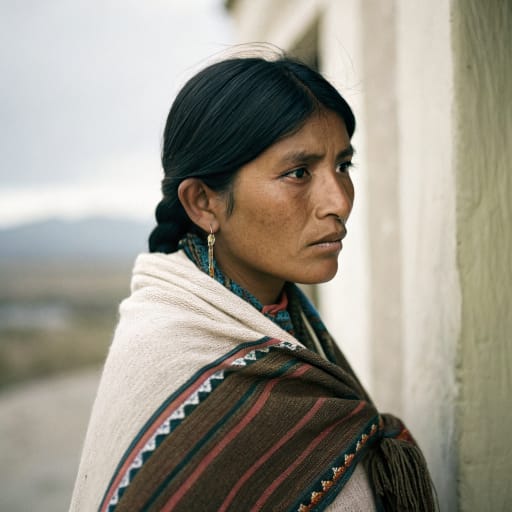
Aymara
same region (South America)
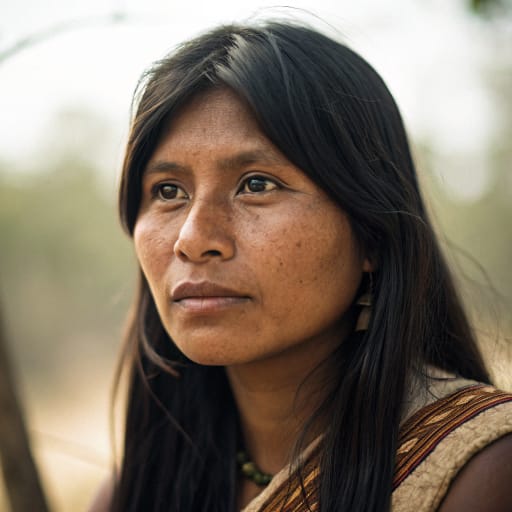
Guaraní
same region (South America)
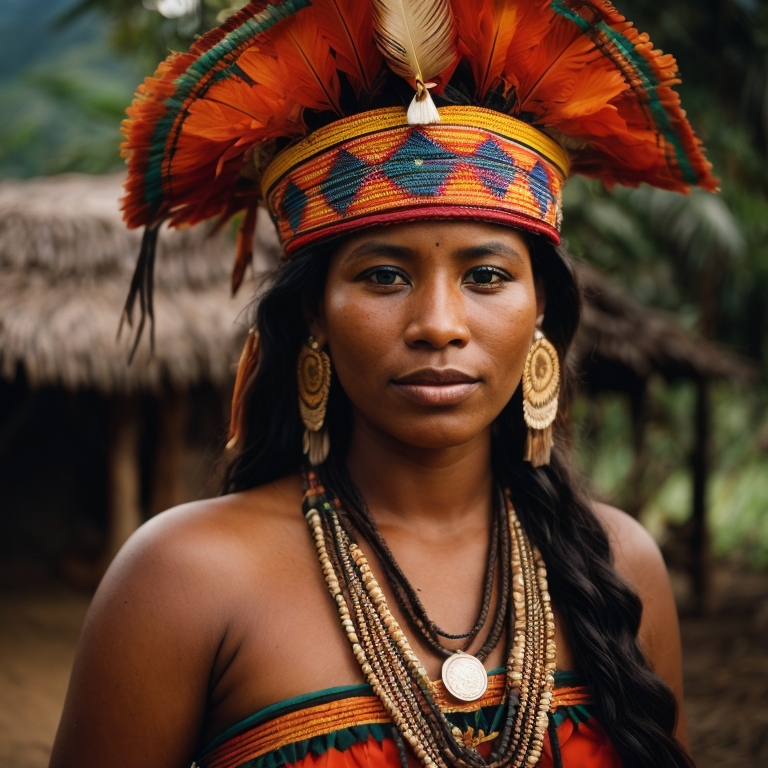
Emberá
same region (South America)
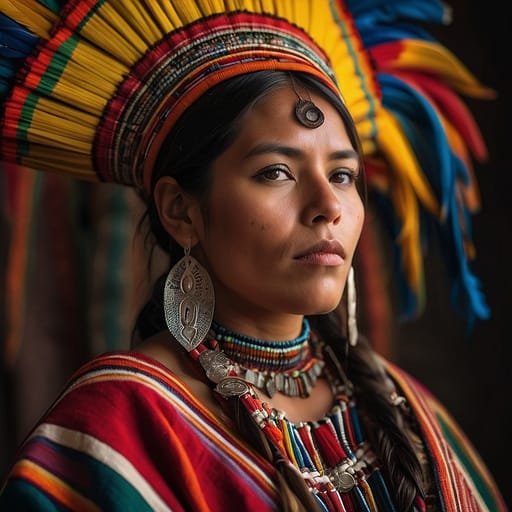
Mestizo Bolivian
same region (South America)
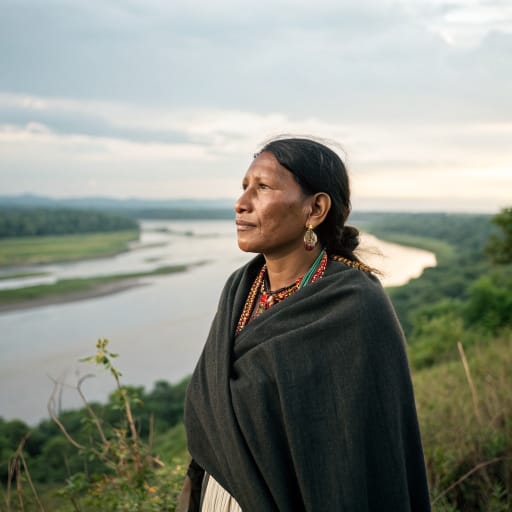
Guayupe
same region (South America)
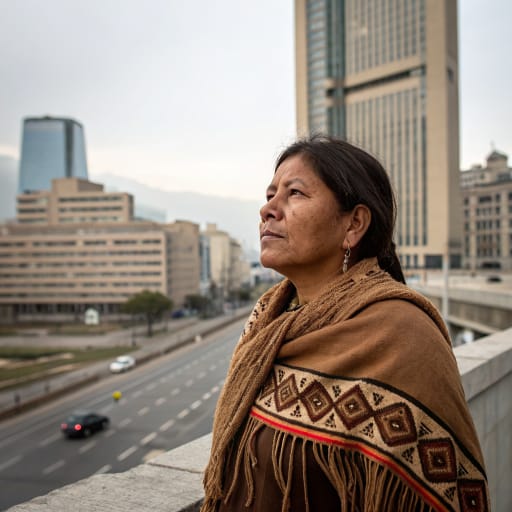
Chango
same region (South America)
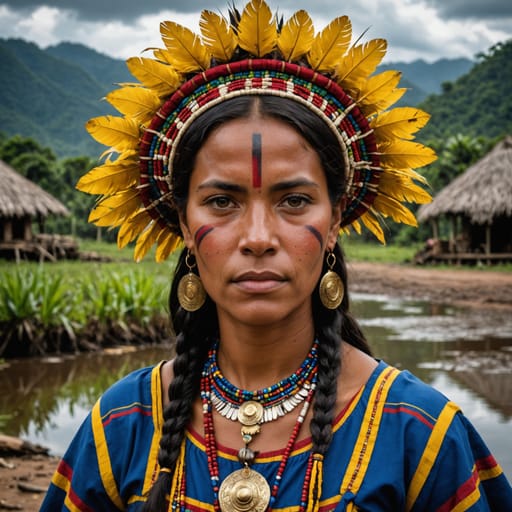
Amazonian Indigenous Venezuelan
same region (South America)
Typical Omaguaca Phenotypes
Reference for AI generation: hair, eyes, skin, facial structure, build
Omaguaca Body & Anatomy Reference
Anatomy by feature, South American Indigenous / European-Mestizo / Afro-Latino mix phenotype
Omaguaca Boobs & Breasts
Omaguaca tits and boobs run medium-to-large cup, full, high projection, the classic South American Indigenous / European-Mestizo / Afro-Latino mix bust profile. Omaguaca nipples and areolas show medium-brown to dark-brown areolar pigmentation against the tan-to-deep-brown skin tone, with areolar diameter typically in the 32-46mm range and forward-set positioning rather than the smaller bust profile of Andean Indigenous sub-populations. Omaguaca breasts trend the classic Brazilian / Latina curvy bust profile in lowland populations; smaller and shorter-set in Andean Indigenous populations, a function of the endomorph-to-mesomorph with high gluteal-femoral deposition body habitus and the mean adult female BMI 25-28. For anatomically accurate AI-generated Omaguaca nudes the render preserves the medium-to-large cup, full, high projection shape, 32-46mm areolas with medium-brown to dark-brown pigmentation, and the torso proportions of the South American Indigenous / European-Mestizo / Afro-Latino mix phenotype.
Omaguaca Ass & Hips
Omaguaca hips and butt usually read as full, high projection, the famous Brazilian / Latina bunda profile. The skeletal base is wide iliac crests, very full gluteal-femoral fat deposition (the hallmark Brazilian / Latina hip-to-waist ratio), the South American Indigenous / European-Mestizo / Afro-Latino mix pattern. Set against the slim narrow-hip East Asian profile, the difference is easy to see, and the hip-to-waist ratio is often what identifies Omaguaca women in photos.
Omaguaca Vagina & Pussy
Expect medium-brown to dark-brown labial pigmentation, fuller labia minora on Omaguaca women, in keeping with South American Indigenous / European-Mestizo / Afro-Latino mix ancestry. The pubic hair is wavy-to-curly coarse dark texture, dense distribution. Coloring should run evenly from the tan to deep-brown skin of the thighs to the labia, and Omaguaca nude imagery should keep the hair's wavy-to-curly coarse dark texture.
Omaguaca Dicks & Penis
Omaguaca dick and penile anatomy in adult AI generation should anchor on the regional reference data: regional mean ~13cm erect, moderate-to-above-average girth, and medium-brown shaft pigmentation. The Omaguaca cock profile reflects the South American Indigenous / European-Mestizo / Afro-Latino mix population's anthropometric measurements. The shaft pigmentation should track the surrounding tan to deep-brown skin tone, and the pubic hair should keep its wavy-to-curly coarse dark texture in the typical inverted-V escutcheon.
Omaguaca Body, Curves & Build
Omaguaca body type: endomorph-to-mesomorph with high gluteal-femoral deposition, with mean adult female BMI 25-28. This is the typical South American Indigenous / European-Mestizo / Afro-Latino mix build. Height range, shoulder-to-hip ratio and fat distribution all follow from it, which is what an accurate Omaguaca nude body should show.
Omaguaca Skin Tone & Hair Texture
Omaguaca skin tone falls in the tan to deep-brown (Fitzpatrick III-VI) band, the surface signal most often miscalibrated by generic AI nude generators. Omaguaca hair texture is typically straight-to-curly 1A-3C, varies widely by ancestral composition, characteristic of the South American Indigenous / European-Mestizo / Afro-Latino mix phenotype. In Omaguaca nude renders the skin should hold that band consistently across the body.
Explore phenotype categories
Structured taxonomy with peer-reviewed scales · 22 anatomical categories
Erotic Poses & Sex Positions
From the pose catalog: 219 named positions with reference skeletons
Frequently asked questions about Omaguaca people
Where is the Omaguaca homeland?
The Omaguaca homeland is Quebrada de Humahuaca in Jujuy Province, northwestern Argentina, around Tilcara and Humahuaca; historically also southern Tarija, Bolivia in South America.
What language do Omaguaca people speak?
Omaguaca people primarily speak Spanish today; historically Quechua (Quechuan) after Inca conquest, and an extinct, unrecorded Omaguaca language (unclassified).
What religion do Omaguaca people practice?
The predominant religion among Omaguaca people is Roman Catholic, alongside Andean observance such as August offerings to Pachamama.






Make your own Omaguaca images
Five a day, free, no credits to buy. The studio starts from this group's phenotype data, so you can set body type, pose and style and keep the traits accurate.
Start with Omaguaca