Help us get this right
Does this portrait look right for Munji?
One tap. It takes a second and it is recorded.
1 says it looks right, 0 say it looks off.
Munji Erotic
Munjan valley at the head of the Kokcha river, Kuran wa Munjan district, Badakhshan province, Afghanistan; the closely related Yidgha live in Chitral, Pakistan
Munji (Indo-European, Iranian, Eastern Iranian, Pamir group); Dari Persian widely spoken as a second language
Ismaili Shia Islam (Nizari), following the Aga Khan
One of the Pamiri peoples of Badakhshan; closely related to the Yidgha of Chitral's Lotkuh valley, whose ancestors came from Munjan
About Munji People
The Munji are defined by a valley and a language. The valley is Munjan, a high, narrow cut through the Hindu Kush near the head of the Kokcha river in Afghanistan's Badakhshan province. The language, also called Munji, is spoken there and almost nowhere else. Only a few thousand people speak it, and they are easy to overlook among the Dari speakers who make up most of the province. At home, in their own speech, the difference is plain.
Munji is an Eastern Iranian language. Linguists group it with the Pamir languages to the north, and it is only distantly related to Persian, the language of Afghan public life. Its closest relative lies across the mountains: Yidgha, spoken in the Lotkuh valley of Chitral in Pakistan by the descendants of settlers from Munjan. The Norwegian linguist Georg Morgenstierne described both languages in a landmark 1938 study, and Soviet linguists later published a detailed grammar and dictionary of Munji. Munji has no settled written form. Most adults also speak Dari, which they use for school, trade and government. Munji stays the language of family, fields and neighbors.
Like most Pamiri communities, the Munji are Ismaili Shia Muslims who look to the Aga Khan as their imam, in a province where most people are Sunni. The Ismailis of Badakhshan trace their tradition to the eleventh-century poet and missionary Nasir Khusraw. His shrine at Yamgan is in the same province, and his verse still carries devotional weight. Being a religious minority as well as a linguistic one links the Munji to Ismaili institutions that reach into Tajikistan and Pakistan. It also leaves them exposed whenever the government in Kabul turns hostile to Shia communities.
Daily life follows the altitude. Families work small irrigated plots of wheat and barley through a short summer and take sheep, goats and cattle up to higher pastures as the snow retreats. Then they sit out long winters after snow closes the passes. The same district holds the Sar-e Sang mines, where lapis lazuli has been dug for thousands of years and carried as far as Mesopotamia and Egypt. This corner of the Hindu Kush has fed long-distance trade since before writing. Dari gains ground on Munji with every generation that leaves for school or work, and the language holds on best where families stay in the valley.
Related ethnic groups
Groups that share Munji's homeland, region, language, or religious tradition. These are likely candidates for comparative phenotype reference.
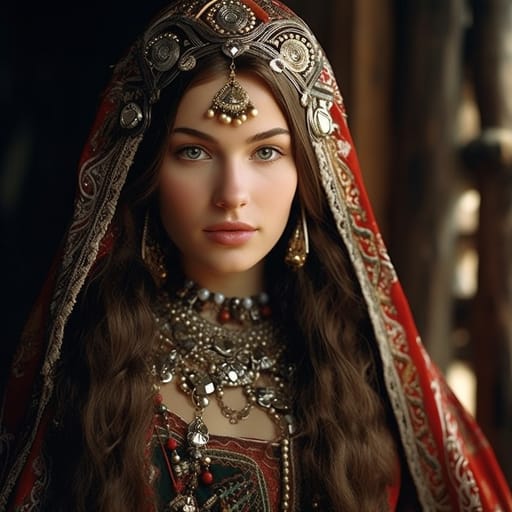
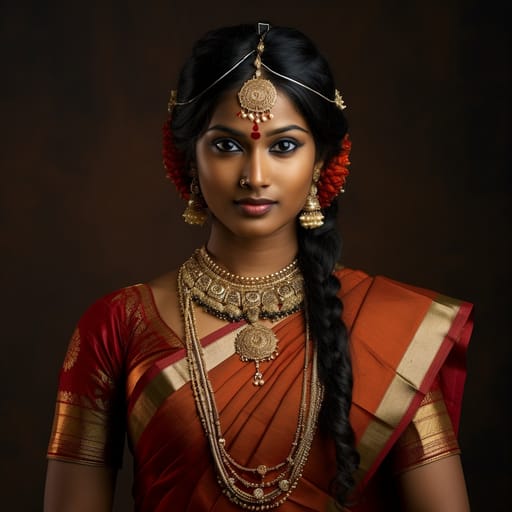
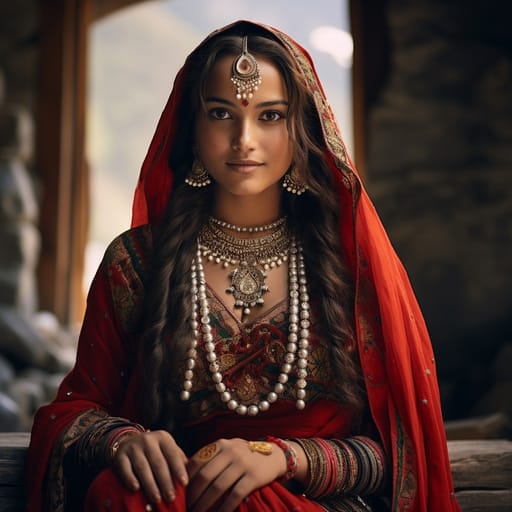
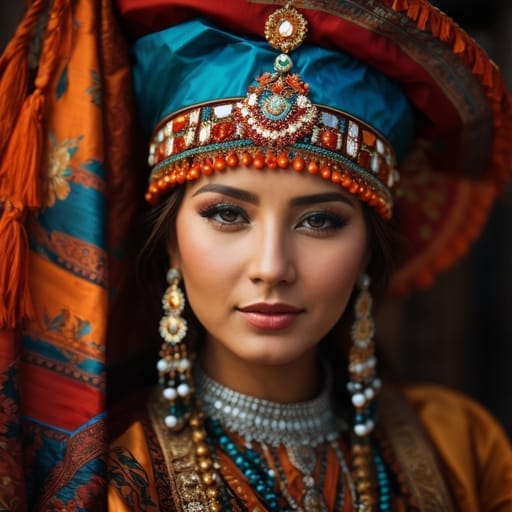
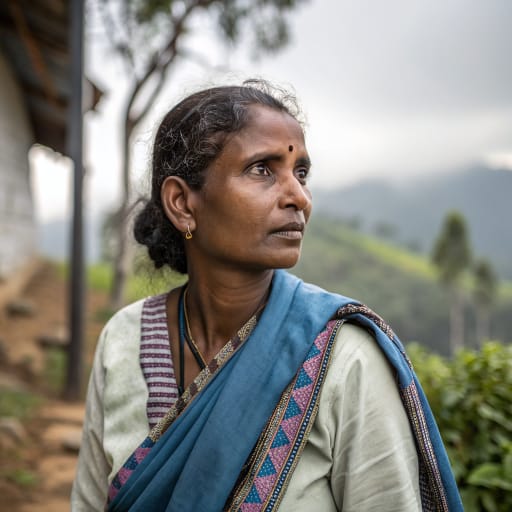
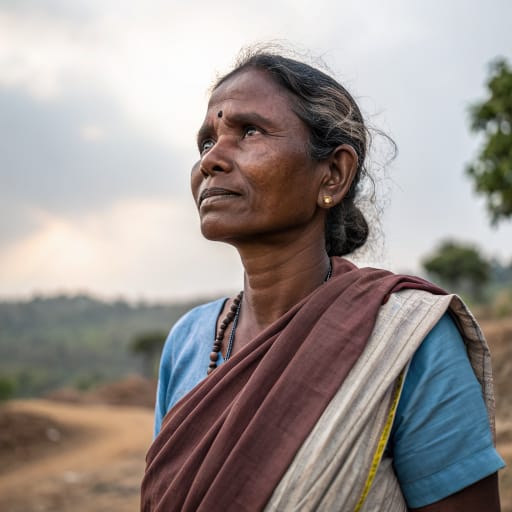
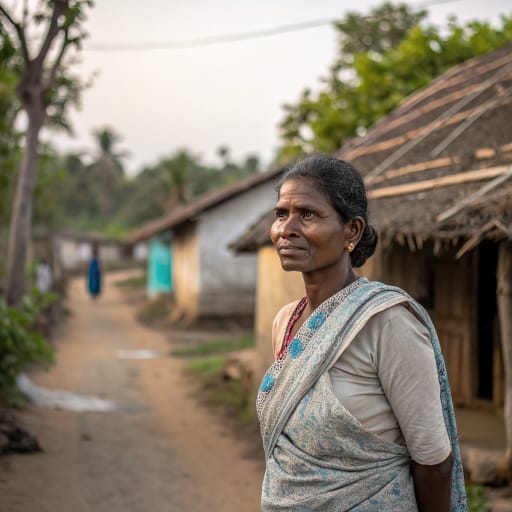
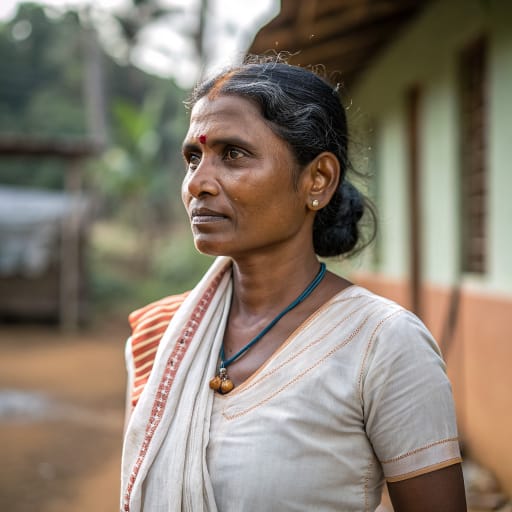
Typical Munji Phenotypes
Reference for AI generation: hair, eyes, skin, facial structure, build
Munji Body & Anatomy Reference
Anatomy by feature, Indo-Aryan / Dravidian South Asian phenotype
Munji Boobs & Breasts
The typical Munji bust is medium-to-large cup, moderate-to-full projection, in line with the wider Indo-Aryan / Dravidian South Asian pattern. Areolas usually fall in the 32-46mm range, with medium-brown to dark-brown areolar pigmentation against the wheatish-to-brown skin tone. Compared with the smaller East Asian bust profile, Munji breasts sit forward and are generally full and soft, generally fuller than the East Asian norm. A faithful AI render of Munji tits keeps that shape and areola size.
Munji Ass & Hips
Butt shape among Munji women: medium-to-full, moderate-to-high projection, classic curvy hip profile, over medium-to-wide iliac crests, full gluteal-femoral fat distribution. This follows Indo-Aryan / Dravidian South Asian ancestry and looks quite unlike the slim hip profile of East Asian women. An accurate Munji ass in adult AI imagery keeps both the silhouette and the overall build (endomorph-to-mesomorph with fuller hip deposition) instead of a generic average.
Munji Vagina & Pussy
Vulvar anatomy among Munji women: medium-brown to dark-brown labial pigmentation, fuller labia minora projection. Pubic hair tends to be straight-to-wavy coarse texture, dense distribution, in the usual inverted-triangle pattern. Both follow Indo-Aryan / Dravidian South Asian pigmentation, which is why Munji pussy renders should not fall back on a pale, sparse Western template.
Munji Dicks & Penis
The Munji cock profile, from Indo-Aryan / Dravidian South Asian anthropometric data: regional mean ~13cm erect; moderate girth; medium-brown shaft pigmentation. Pubic hair has a straight-to-wavy coarse texture and forms the usual inverted-V pattern. Whether Munji men are circumcised follows religious and cultural practice rather than phenotype.
Munji Body, Curves & Build
Build and curves among Munji women follow the Indo-Aryan / Dravidian South Asian pattern: endomorph-to-mesomorph with fuller hip deposition, mean adult female BMI 22-25. Proportions matter as much as skin tone, so Munji figures should keep their regional height and limb ratios.
Munji Skin Tone & Hair Texture
The Munji skin range is wheatish to brown (Fitzpatrick III-V), and hair tends to be straight-to-wavy 1A-2B, dense, dark-brown to black. That combination marks the Indo-Aryan / Dravidian South Asian phenotype, and skin tone is the trait AI generators most often get wrong for Munji women.
Explore phenotype categories
Structured taxonomy with peer-reviewed scales · 22 anatomical categories
Erotic Poses & Sex Positions
From the pose catalog: 219 named positions with reference skeletons
Frequently asked questions about Munji people
Where is the Munji homeland?
The Munji homeland is Munjan valley at the head of the Kokcha river, Kuran wa Munjan district, Badakhshan province, Afghanistan; the closely related Yidgha live in Chitral, Pakistan in Southern Asia.
What language do Munji people speak?
Munji people primarily speak Munji (Indo-European, Iranian, Eastern Iranian, Pamir group); Dari Persian widely spoken as a second language.
What religion do Munji people practice?
The predominant religion among Munji people is Ismaili Shia Islam (Nizari), following the Aga Khan.






Make your own Munji images
Five a day, free, no credits to buy. The studio starts from this group's phenotype data, so you can set body type, pose and style and keep the traits accurate.
Start with Munji