Help us get this right
Does this portrait look right for Mnong?
Nobody has judged this one yet. You would be the first.
Mnong Erotic
Central Highlands of Vietnam, chiefly Dak Nong, Dak Lak and Lam Dong provinces, and Mondulkiri province in northeastern Cambodia
Mnong, with several dialects (Austroasiatic, South Bahnaric branch); Vietnamese or Khmer as a second language
Traditional animism centered on spirit propitiation, ancestor obligation and buffalo sacrifice, with a substantial Protestant Christian minority and some Catholics
Mnong Gar, Mnong Rlam, Mnong Preh, Mnong Nong, Mnong Chil, Mnong Bunor and others; part of the Bahnaric-speaking highland peoples grouped as Montagnard or Degar
About Mnong People
The Mnong hold the high red-earth plateaus where southern Vietnam runs into northeastern Cambodia: basalt soil, monsoon forest, rivers that cut hard through it. Outsiders file them under the collective labels Montagnard or Degar, but the Mnong are specific. They reckon descent through the mother, a husband moves into his wife's household, and daughters inherit the gongs and the ceramic jars that hold a family's real wealth. Their language belongs to the Bahnaric branch of Austroasiatic, which makes them close kin to the Stieng and the Koho and puts them in an unusual spot on the map, because their immediate neighbors the Ede and the Jarai speak Austronesian languages carried inland from the Cham coast. The Central Highlands is one of the few places on earth where those two language families live within sight of each other's villages and trade the same buffalo. Something over a hundred thousand Mnong live in Dak Nong, Dak Lak and Lam Dong; a smaller population sits across the border in Mondulkiri, where they call themselves Bunong. The Khmer word Phnong got attached to them and to highlanders generally, and it carries the sense of savage, which is why the self-name is worth using.
Subgroups run past a dozen: Mnong Gar, Mnong Rlam around Lak Lake, Mnong Preh, Mnong Nong, Mnong Chil, each with its dialect and its opinions about the others. Older practice is animist, directed at spirits resident in forest, rice, water and house, with buffalo sacrifice at the center of the large occasions and rice beer drunk through reed straws from a shared jar. Gong ensembles are the ceremonial instrument, part of the Central Highlands gong tradition UNESCO recognized in 2005. The Mnong also carry the Ot Ndrong, a linked cycle of sung epics that can run for several nights. Mnong men were among the region's elephant catchers, taking wild animals with buffalo-hide lassos from the backs of trained mounts; that trade is finished, ended by collapsing herds and by law. Georges Condominas spent 1948 and 1949 in the Mnong Gar village of Sar Luk and wrote We Have Eaten the Forest, a title meant literally, since a year is named for the patch of forest cleared and burned to plant it. The war put the Ho Chi Minh trail through these hills, and what came after changed more: bans on swidden farming, then Kinh migration into the coffee frontier. In Mondulkiri the pressure is rubber and cashew concessions granted over land held by custom rather than title.
Related ethnic groups
Groups that share Mnong's homeland, region, language, or religious tradition. These are likely candidates for comparative phenotype reference.
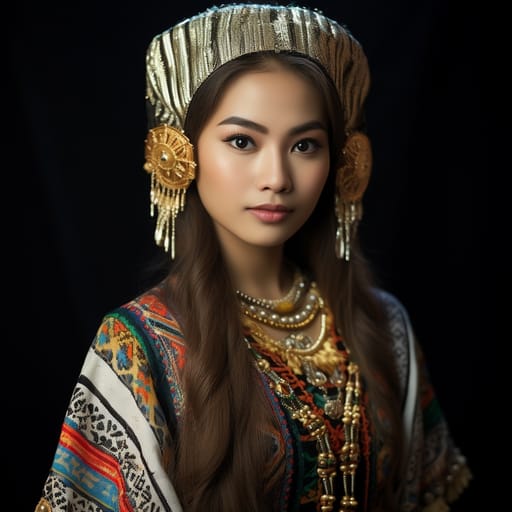
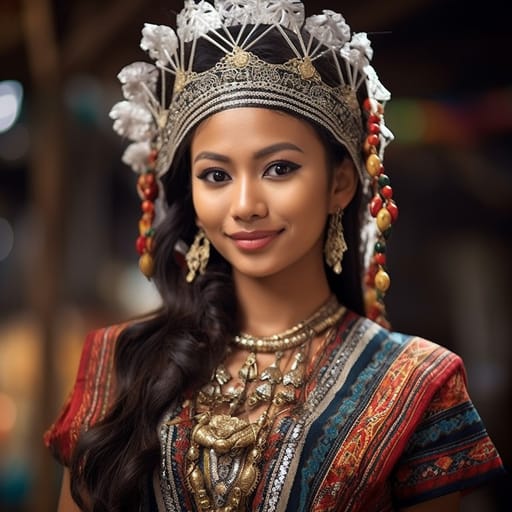
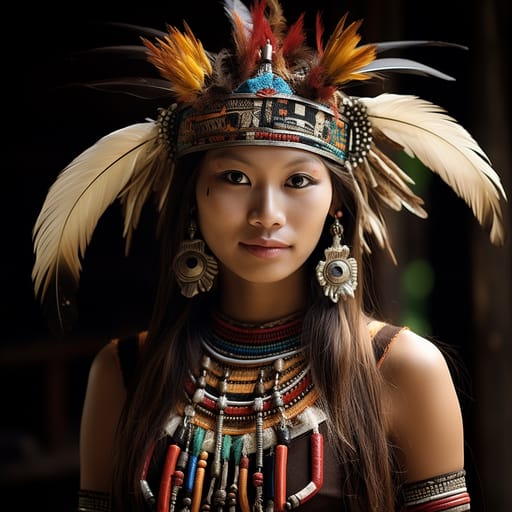
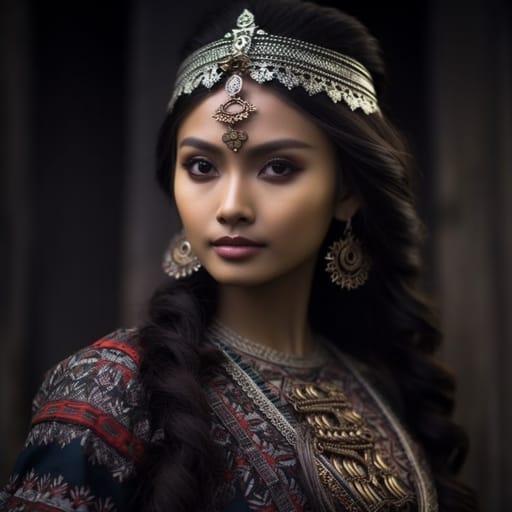
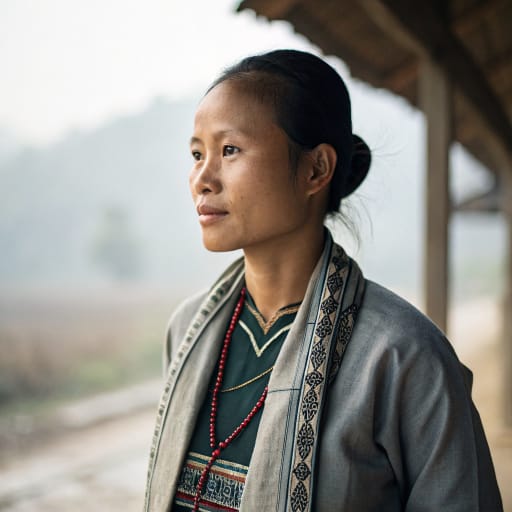
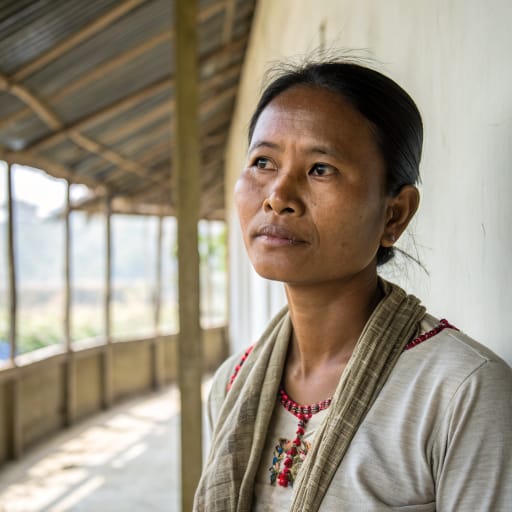
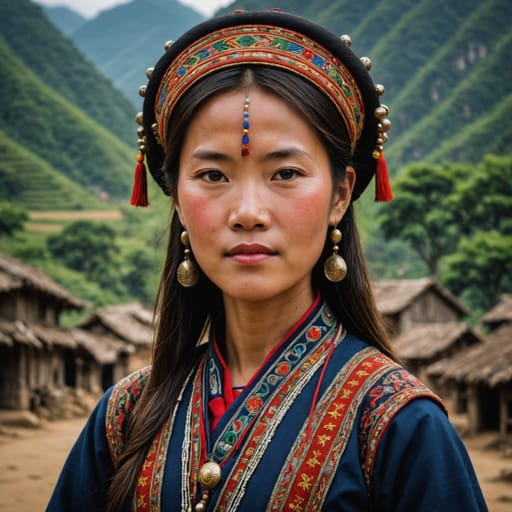
Typical Mnong Phenotypes
Reference for AI generation: hair, eyes, skin, facial structure, build
Mnong Body & Anatomy Reference
Anatomy by feature, Southeast Asian Austronesian / Austroasiatic phenotype
Mnong Boobs & Breasts
Bust reference for Mnong women: small-to-medium cup, modest projection, which is typical of Southeast Asian Austronesian / Austroasiatic ancestry. Areolas measure about 26-38mm across, with medium-brown to dark-brown pigmentation. Body type (ectomorph, petite frame) shapes the bust as well, so Mnong tits are usually firm, modest projection. In AI imagery, keep the forward-set shape rather than drifting toward the fuller South Asian or Polynesian bust.
Mnong Ass & Hips
The Mnong ass is typically small-to-medium, modest projection, narrower hip profile, which sets it apart from the fuller glutes of the Pacific Islander phenotype. Underneath, the pelvis shows narrow-to-medium iliac crests, part of the Southeast Asian Austronesian / Austroasiatic skeletal pattern. For Mnong butt pics and AI renders, match that silhouette and the overall build (ectomorph, petite frame).
Mnong Vagina & Pussy
Mnong pussy and vulvar anatomy presents medium-brown to dark-brown labial pigmentation, consistent with the Southeast Asian Austronesian / Austroasiatic phenotype's pigmentation pattern. Mnong pubic hair is typically straight-to-wavy fine-to-medium texture, in the inverted-triangle pattern. For anatomically accurate Mnong pussy renders the labial coloration should match the surrounding tan to medium-brown skin tone with a continuous gradient, and the hair should keep its straight-to-wavy fine-to-medium texture.
Mnong Dicks & Penis
Mnong dicks follow the Southeast Asian Austronesian / Austroasiatic reference data: regional mean ~11cm erect; moderate girth; medium-brown shaft pigmentation. Shaft color should track the tan to medium-brown skin tone with a smooth change toward the glans, and Mnong pubic hair keeps its straight-to-wavy fine-to-medium texture.
Mnong Body, Curves & Build
Mnong body type and overall build presents as ectomorph, petite frame, with mean adult female BMI 20-23: the characteristic Southeast Asian Austronesian / Austroasiatic habitus. Mnong curves and proportions should keep the regional skeletal frame (height, shoulder-to-hip ratio, limb proportions) rather than a generic mesomorph default.
Mnong Skin Tone & Hair Texture
Mnong skin sits in the tan to medium-brown (Fitzpatrick III-V) band. Hair is typically straight-to-wavy 1A-2A, dark-brown to black, in keeping with the Southeast Asian Austronesian / Austroasiatic phenotype. In nude renders the skin should stay one even tone from face to body, and body, pubic and head hair should match.
Explore phenotype categories
Structured taxonomy with peer-reviewed scales · 22 anatomical categories
Erotic Poses & Sex Positions
From the pose catalog: 219 named positions with reference skeletons
Frequently asked questions about Mnong people
Where is the Mnong homeland?
The Mnong homeland is Central Highlands of Vietnam, chiefly Dak Nong, Dak Lak and Lam Dong provinces, and Mondulkiri province in northeastern Cambodia in Southeast Asia.
What language do Mnong people speak?
Mnong people primarily speak Mnong, with several dialects (Austroasiatic, South Bahnaric branch); Vietnamese or Khmer as a second language.
What religion do Mnong people practice?
The predominant religion among Mnong people is Traditional animism centered on spirit propitiation, ancestor obligation and buffalo sacrifice, with a substantial Protestant Christian minority and some Catholics.






Make your own Mnong images
Five a day, free, no credits to buy. The studio starts from this group's phenotype data, so you can set body type, pose and style and keep the traits accurate.
Start with Mnong