Help us get this right
Does this portrait look right for Mhallami?
Nobody has judged this one yet. You would be the first.
Mhallami Erotic
Villages between Mardin and Midyat in Mardin Province, southeastern Turkey; large communities in Beirut, Lebanon, and in Germany, Sweden and Denmark.
Mhallami Arabic, a qeltu dialect of Mesopotamian Arabic (Afroasiatic, Semitic); many also speak Turkish, Kurdish, Lebanese Arabic or German.
Sunni Islam
Village communities of Mardin Province in Turkey; Lebanese Mhallami, often counted among Lebanon's Kurds; diaspora communities in Germany, Sweden and Denmark.
About Mhallami People
The Mhallami are a Sunni Muslim, Arabic-speaking people whose ancestral villages sit on the limestone uplands between Mardin and Midyat in southeastern Turkey, in a district known by the same name. What marks them out is how poorly they fit the boxes around them. They speak Arabic in a province where Kurdish and Turkish are heard more often, and their villages border Tur Abdin, the old heartland of Syriac Christianity. Outsiders have filed them as Arabs, Kurds or Turks, depending on who was counting. Many simply call themselves Mhallami.
Their speech belongs to the qeltu branch of Mesopotamian Arabic, named for the way its speakers say I said. It is much closer to the traditional Arabic of Mardin and Mosul than to anything spoken in Damascus or Beirut. Centuries alongside other languages have filled it with Turkish, Kurdish and Aramaic loanwords, and most Mhallami grow up using at least one other language as well.
Their origins are still disputed. A widely repeated account holds that their ancestors were Syriac Christians who converted to Islam under Ottoman rule. Other versions trace them to Arab tribes that settled the area, or to Kurdish lineages that took up Arabic. None of these accounts has settled the question.
The twentieth century scattered them. Economic hardship pushed many south to Beirut from the 1920s onward, where they took whatever work the city offered. Many lived there for decades without Lebanese citizenship, until a 1994 naturalization decree finally granted it to large numbers of them, and Lebanese society often counted them among the Kurds. The civil war sent another wave to West Germany, Sweden and Denmark in the 1970s and 1980s. In Germany, years on insecure residence status that barred or limited work left a lasting mark. Crimes tied to a handful of large extended families have also produced press coverage that too often treats the whole community as suspect.
Whether in a Mardin village or a Berlin housing block, the extended family is still the unit that matters. Kin networks traced through lineage and village of origin shape marriages, business and mutual support. Sunni observance sets the calendar: Ramadan, the two Eids, and the weddings that bring relatives back together from three or four countries.
Related ethnic groups
Groups that share Mhallami's homeland, region, language, or religious tradition. These are likely candidates for comparative phenotype reference.
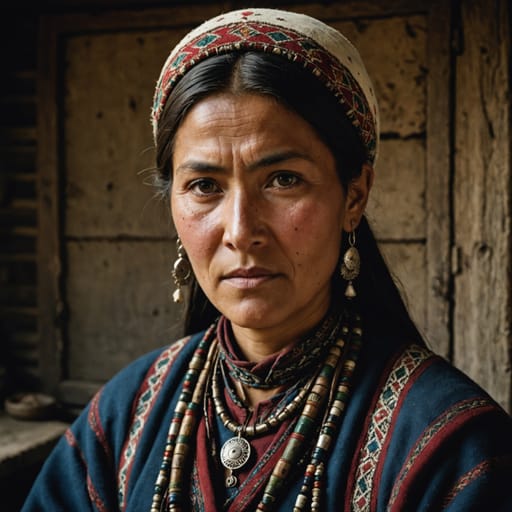
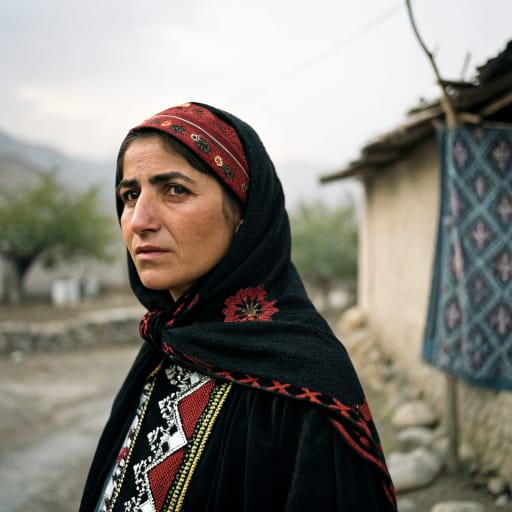
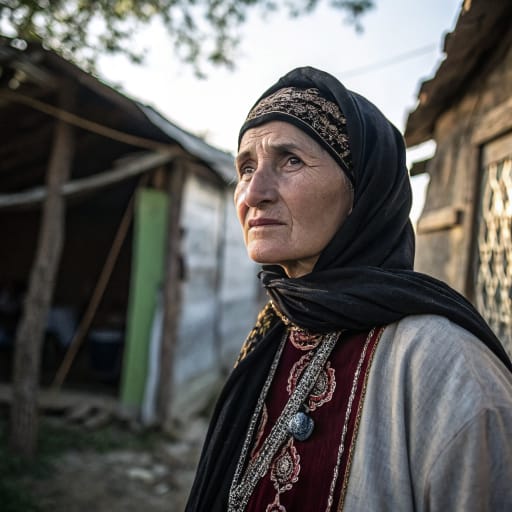
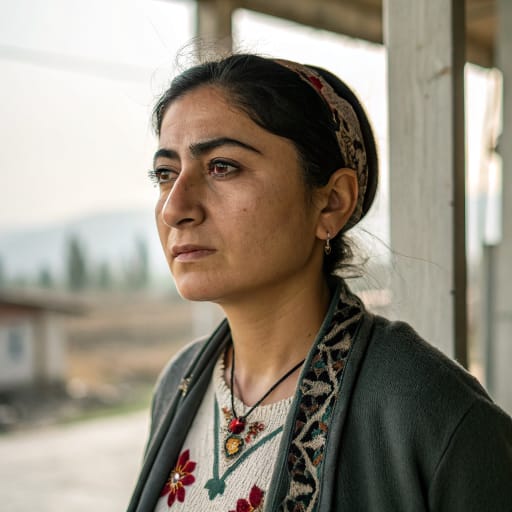
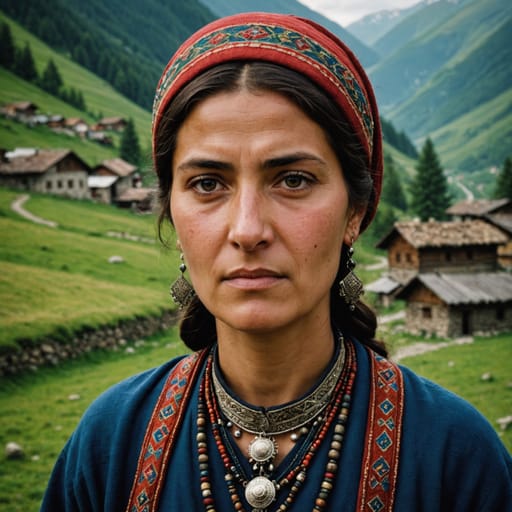
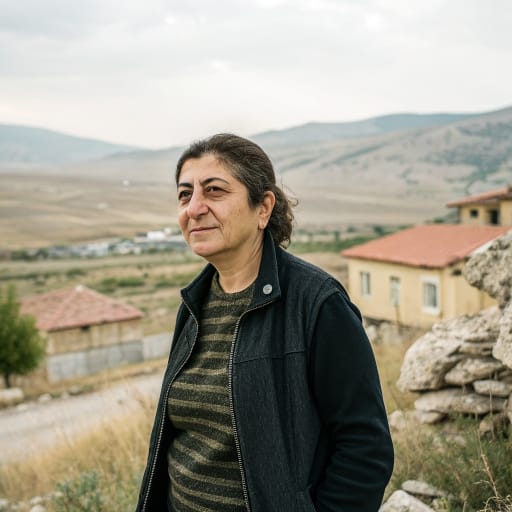
Typical Mhallami Phenotypes
Reference for AI generation: hair, eyes, skin, facial structure, build
Mhallami Body & Anatomy Reference
Levantine / Mediterranean Middle Eastern phenotype: anatomy reference for AI nude generation
Mhallami Boobs & Breasts
Bust reference for Mhallami women: medium-to-large cup, full, moderate-to-high projection, which is typical of Levantine / Mediterranean Middle Eastern ancestry. Areolas measure about 32-46mm across, with medium-brown to dark-brown pigmentation. Body type (mesomorph with fuller hip-and-bust deposition) shapes the bust as well, so Mhallami tits are usually full and soft, fuller projection than the North-African Berber norm. In AI imagery, keep the forward-set shape rather than drifting toward the smaller East Asian bust profile.
Mhallami Ass & Hips
The Mhallami ass is typically medium-to-full, moderate projection, broader hip profile, which sets it apart from the slim East Asian narrow-hip profile. Underneath, the pelvis shows medium-to-wide iliac crests, fuller gluteal-femoral deposition, part of the Levantine / Mediterranean Middle Eastern skeletal pattern. For Mhallami butt pics and AI renders, match that silhouette and the overall build (mesomorph with fuller hip-and-bust deposition).
Mhallami Vagina & Pussy
Mhallami pussy and vulvar anatomy presents medium-brown to dark-brown labial pigmentation, fuller labia minora, consistent with the Levantine / Mediterranean Middle Eastern phenotype's pigmentation pattern. Mhallami pubic hair is typically wavy-to-coiled medium-coarse dark texture, dense distribution, in the inverted-triangle pattern. For anatomically accurate Mhallami pussy renders the labial coloration should match the surrounding olive to medium-brown skin tone with a continuous gradient, and the hair should keep its wavy-to-coiled medium-coarse dark texture.
Mhallami Dicks & Penis
Mhallami dicks follow the Levantine / Mediterranean Middle Eastern reference data: regional mean ~14cm erect; moderate-to-above-average girth; medium-brown shaft pigmentation. Shaft color should track the olive to medium-brown skin tone with a smooth change toward the glans, and Mhallami pubic hair keeps its wavy-to-coiled medium-coarse dark texture.
Mhallami Body, Curves & Build
Mhallami body type and overall build presents as mesomorph with fuller hip-and-bust deposition, with mean adult female BMI 25-28: the characteristic Levantine / Mediterranean Middle Eastern habitus. Mhallami curves and proportions should keep the regional skeletal frame (height, shoulder-to-hip ratio, limb proportions) rather than a generic mesomorph default.
Mhallami Skin Tone & Hair Texture
Mhallami skin sits in the olive to medium-brown (Fitzpatrick III-V) band. Hair is typically wavy-to-curly 2B-3B, predominantly dark-brown to black, in keeping with the Levantine / Mediterranean Middle Eastern phenotype. In nude renders the skin should stay one even tone from face to body, and body, pubic and head hair should match.
Explore phenotype categories
Structured taxonomy with peer-reviewed scales · 22 anatomical categories
Erotic Poses & Sex Positions
From the pose catalog: 219 named positions with reference skeletons
Frequently asked questions about Mhallami people
Where is the Mhallami homeland?
The Mhallami homeland is Villages between Mardin and Midyat in Mardin Province, southeastern Turkey; large communities in Beirut, Lebanon, and in Germany, Sweden and Denmark. in Western Asia.
What language do Mhallami people speak?
Mhallami people primarily speak Mhallami Arabic, a qeltu dialect of Mesopotamian Arabic (Afroasiatic, Semitic); many also speak Turkish, Kurdish, Lebanese Arabic or German..
What religion do Mhallami people practice?
The predominant religion among Mhallami people is Sunni Islam.






Make your own Mhallami images
Five a day, free, no credits to buy. The studio starts from this group's phenotype data, so you can set body type, pose and style and keep the traits accurate.
Start with Mhallami