Help us get this right
Does this portrait look right for Cappadocian Greeks?
Nobody has judged this one yet. You would be the first.
Cappadocian Greeks Erotic
Cappadocia in central Anatolia, Turkey, around Kayseri, Niğde and Nevşehir; since the 1923 population exchange, mainly Greece, including Macedonia, Thessaly and Euboea.
Modern Greek (Indo-European, Hellenic); heritage Cappadocian Greek (Indo-European, Hellenic), now endangered; historically Karamanli Turkish (Turkic) in some communities.
Eastern Orthodox Christianity
Part of the Anatolian (Asia Minor) Greeks; includes Greek-speaking village communities such as Sinasos, Mistí and Ulağaç, plus the Pharasiots; overlaps with the Turkish-speaking Orthodox Karamanlides.
About Cappadocian Greeks People
Cappadocian Greeks trace their line to the Orthodox Christians of central Anatolia's volcanic plateau. Their community held onto a form of Greek for about nine centuries after Byzantium lost the region. Faith defined the group more than speech did. Some villages spoke Greek. Others spoke Turkish and wrote it in Greek letters. All of them counted themselves among the Rum, the Orthodox subjects of the Ottoman order. The land still carries their traces, from the rock-cut churches around Göreme to the stone mansions of Sinasos, now called Mustafapaşa.
Their Greek is what draws linguists. The Seljuk advance that followed Manzikert in 1071 cut these villages off from the Greek-speaking coasts. Cappadocian Greek then grew up beside Turkish and took in an unusual amount of it: vocabulary, vowel harmony, Turkish-style suffixes and, in many varieties, the loss of grammatical gender. R. M. Dawkins recorded the language village by village before the First World War. He summed it up in a line people still quote: the body had stayed Greek, but the soul had turned Turkish. The dialects changed noticeably from one village to the next. Pharasa, in the east, spoke a variety so distinct that scholars often treat it on its own.
Religion shaped their history, including how it ended in Anatolia. This was the home ground of Basil of Caesarea, Gregory of Nazianzus and Gregory of Nyssa, and village life centered on the parish church and its feast days. Many men spent long stretches in Constantinople as merchants and tradesmen, and their earnings built schools and churches back home. Then came the 1923 population exchange between Greece and Turkey, which sorted people by religion, not language. Greek-speaking and Turkish-speaking Orthodox alike were sent to a country most of them had never seen.
In Greece they rebuilt under familiar names. Refugees from Prokopi, today Ürgüp, founded Nea Prokopi on Euboea. They brought the relics of Saint John the Russian, now the focus of one of the country's busiest pilgrimages. Others settled Nea Sinasos and Nea Karvali. Within two generations the dialects were widely written off as extinct. Then researchers in the 2000s found elderly speakers still using them, mostly of the Mistiot variety. Today descendants carry the identity through heritage associations, feast days, the spiced cured beef Greeks call pastourmas, and a small but determined effort to keep the language alive.
Related ethnic groups
Groups that share Cappadocian Greeks's homeland, region, language, or religious tradition. These are likely candidates for comparative phenotype reference.
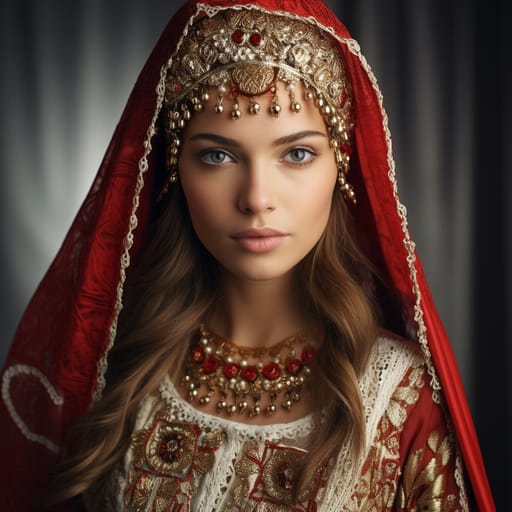
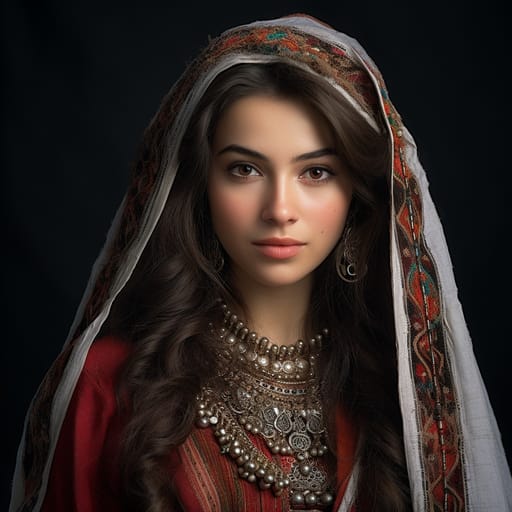
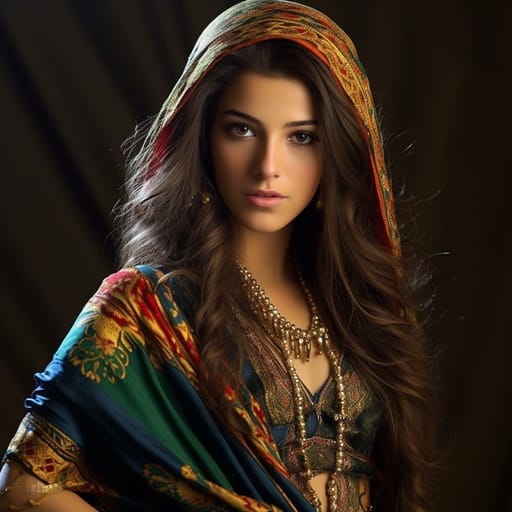
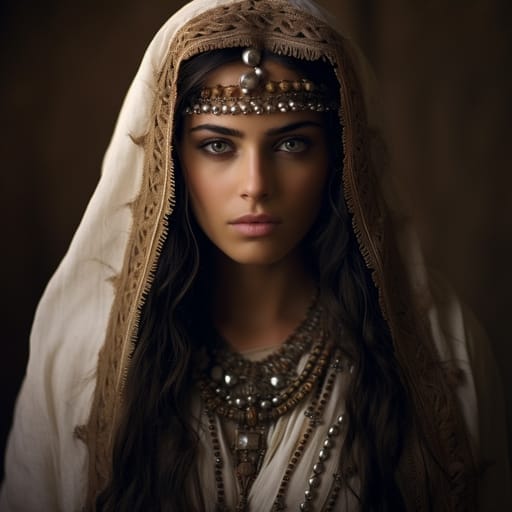
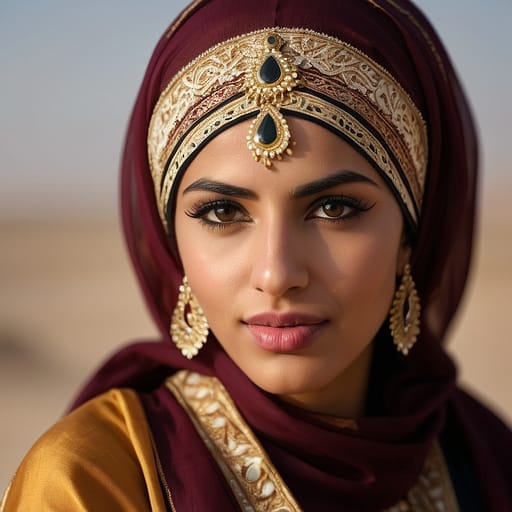
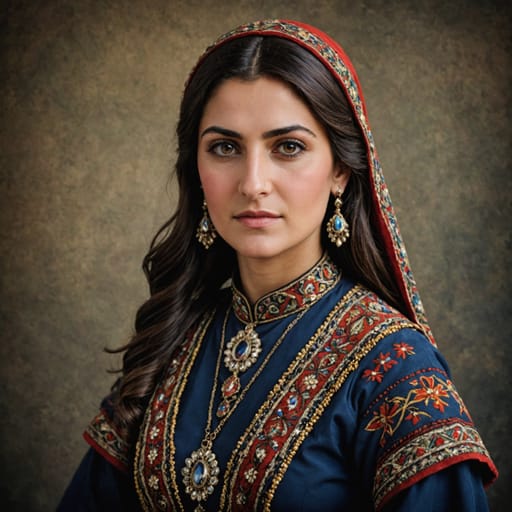
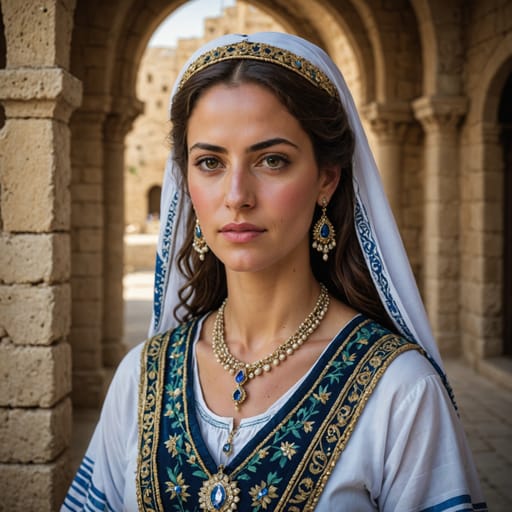
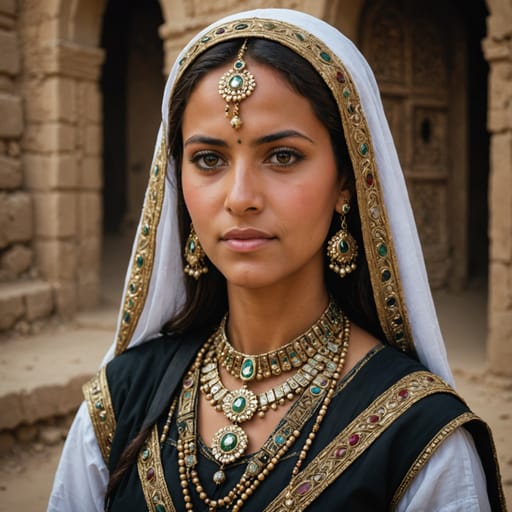
Typical Cappadocian Greeks Phenotypes
Reference for AI generation: hair, eyes, skin, facial structure, build
Cappadocian Greeks Body & Anatomy Reference
Levantine / Mediterranean Middle Eastern phenotype: anatomy reference for AI nude generation
Cappadocian Greeks Boobs & Breasts
Cappadocian Greeks tits and boobs run medium-to-large cup, full, moderate-to-high projection, the classic Levantine / Mediterranean Middle Eastern bust profile. Cappadocian Greeks nipples and areolas show medium-brown to dark-brown areolar pigmentation against the olive-to-light-brown skin tone, with areolar diameter typically in the 32-46mm range and forward-set positioning rather than the smaller East Asian bust profile. Cappadocian Greeks breasts trend full and soft, fuller projection than the North-African Berber norm, a function of the mesomorph with fuller hip-and-bust deposition body habitus and the mean adult female BMI 25-28. For anatomically accurate AI-generated Cappadocian Greeks nudes the render preserves the medium-to-large cup, full, moderate-to-high projection shape, 32-46mm areolas with medium-brown to dark-brown pigmentation, and the torso proportions of the Levantine / Mediterranean Middle Eastern phenotype.
Cappadocian Greeks Ass & Hips
Cappadocian Greeks hips and butt usually read as medium-to-full, moderate projection, broader hip profile. The skeletal base is medium-to-wide iliac crests, fuller gluteal-femoral deposition, the Levantine / Mediterranean Middle Eastern pattern. Set against the slim East Asian narrow-hip profile, the difference is easy to see, and the hip-to-waist ratio is often what identifies Cappadocian Greeks women in photos.
Cappadocian Greeks Vagina & Pussy
Expect medium-brown to dark-brown labial pigmentation, fuller labia minora on Cappadocian Greeks women, in keeping with Levantine / Mediterranean Middle Eastern ancestry. The pubic hair is wavy-to-coiled medium-coarse dark texture, dense distribution. Coloring should run evenly from the olive to medium-brown skin of the thighs to the labia, and Cappadocian Greeks nude imagery should keep the hair's wavy-to-coiled medium-coarse dark texture.
Cappadocian Greeks Dicks & Penis
Cappadocian Greeks dick and penile anatomy in adult AI generation should anchor on the regional reference data: regional mean ~14cm erect, moderate-to-above-average girth, and medium-brown shaft pigmentation. The Cappadocian Greeks cock profile reflects the Levantine / Mediterranean Middle Eastern population's anthropometric measurements. The shaft pigmentation should track the surrounding olive to medium-brown skin tone, and the pubic hair should keep its wavy-to-coiled medium-coarse dark texture in the typical inverted-V escutcheon.
Cappadocian Greeks Body, Curves & Build
Cappadocian Greeks body type: mesomorph with fuller hip-and-bust deposition, with mean adult female BMI 25-28. This is the typical Levantine / Mediterranean Middle Eastern build. Height range, shoulder-to-hip ratio and fat distribution all follow from it, which is what an accurate Cappadocian Greeks nude body should show.
Cappadocian Greeks Skin Tone & Hair Texture
Cappadocian Greeks skin tone falls in the olive to medium-brown (Fitzpatrick III-V) band, the surface signal most often miscalibrated by generic AI nude generators. Cappadocian Greeks hair texture is typically wavy-to-curly 2B-3B, predominantly dark-brown to black, characteristic of the Levantine / Mediterranean Middle Eastern phenotype. In Cappadocian Greeks nude renders the skin should hold that band consistently across the body.
Explore phenotype categories
Structured taxonomy with peer-reviewed scales · 22 anatomical categories
Erotic Poses & Sex Positions
From the pose catalog: 219 named positions with reference skeletons
Frequently asked questions about Cappadocian Greeks people
Where is the Cappadocian Greeks homeland?
The Cappadocian Greeks homeland is Cappadocia in central Anatolia, Turkey, around Kayseri, Niğde and Nevşehir; since the 1923 population exchange, mainly Greece, including Macedonia, Thessaly and Euboea. in Western Asia.
What language do Cappadocian Greeks people speak?
Cappadocian Greeks people primarily speak Modern Greek (Indo-European, Hellenic); heritage Cappadocian Greek (Indo-European, Hellenic), now endangered; historically Karamanli Turkish (Turkic) in some communities..
What religion do Cappadocian Greeks people practice?
The predominant religion among Cappadocian Greeks people is Eastern Orthodox Christianity.






Make your own Cappadocian Greeks images
Five a day, free, no credits to buy. The studio starts from this group's phenotype data, so you can set body type, pose and style and keep the traits accurate.
Start with Cappadocian Greeks