Help us get this right
Does this portrait look right for Meskhetians?
One tap. It takes a second and it is recorded.
1 says it looks right, 0 say it looks off.
Meskhetians Erotic
Meskheti (Samtskhe-Javakheti), southwestern Georgia, on the Turkish border; deported 1944 and now scattered across Kazakhstan, Azerbaijan, Russia, Kyrgyzstan, Uzbekistan, Turkey, Ukraine and the United States
Meskhetian Turkish, an eastern Anatolian dialect of Turkish (Turkic, Oghuz branch), with Georgian and Russian loanwords; Russian is the usual second language
Sunni Islam, Hanafi school; observance is family-centered and shaped by decades of Soviet secularism
Ethnic subgroup of Turks, kin to the Turks of Kars and Ardahan; today split by host country (Kazakhstan, Azerbaijan, Russia, Kyrgyzstan, Turkey, United States); deported in 1944 alongside Meskheti's Kurds, Hemshin and Karapapakhs
About Meskhetians People
The Meskhetians, who mostly call themselves Ahıska Turks, are a Turkish-speaking Muslim people named for a homeland almost none of them have seen. Meskheti is the upland country around Akhaltsikhe in southwestern Georgia, hard against the Turkish frontier. For two and a half centuries of Ottoman rule its villages spoke Turkish and prayed as Sunni Muslims while Georgian neighbors stayed Orthodox, and whether the people who came out of that were Turkic settlers or Georgians who changed language and faith is still argued, with Tbilisi and Ankara each preferring the answer that suits them. Soviet passports hedged, registering them variously as Turks, Azerbaijanis or Georgians. The Meskhetians themselves settle it simply: they are Turks, from Ahıska. The language is a Turkish close to that of Kars and Ardahan across the border, seasoned with Georgian and then Russian loanwords, and nearly everyone is fluent in Russian as well. Religion is Sunni, Hanafi, and practical rather than austere: circumcision feasts, Ramadan and burial rites hold, while daily life looks like that of any post-Soviet town. Households are large and marry within the community, elders still arbitrate quarrels, and weddings run for days to accordion and drum. In exile the kitchen is the surest badge of identity: hinkal, a boiled dumpling cousin of Georgian khinkali, and silor, ribbons of flatbread dressed with butter and yogurt.
What welded them into one people was November 1944. Over ten days the Soviet state loaded some ninety thousand of them into freight cars and sent them to Uzbekistan, Kazakhstan and Kyrgyzstan, citing the border they lived on as reason enough. Thousands died on the way or in the first winter. Most other deported peoples were allowed home after Stalin. The Meskhetians never were, and Georgia has let back only a trickle, despite a promise to the Council of Europe in 1999 and a repatriation law in 2007. A second uprooting came in June 1989, when pogroms in the Fergana Valley killed about a hundred people and drove most of Uzbekistan's Meskhetians out again, to Azerbaijan, to Ukraine, to Krasnodar in southern Russia, where officials refused them residence papers for more than a decade and left whole villages stateless. The United States took in more than ten thousand of those between 2004 and 2007, and Dayton, Ohio, now holds one of the largest Meskhetian communities in the West. Kazakhstan has the most, Turkey a growing share. Every 14 November, from Almaty to Bursa to Ohio, the scattered communities mark the deportation with a day of mourning, and a small, stubborn stream of families keeps applying to move to Georgian villages their grandparents were driven from.
Related ethnic groups
Groups that share Meskhetians's homeland, region, language, or religious tradition. These are likely candidates for comparative phenotype reference.
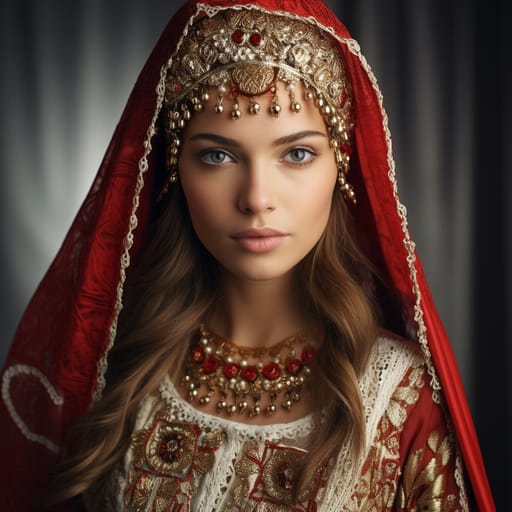
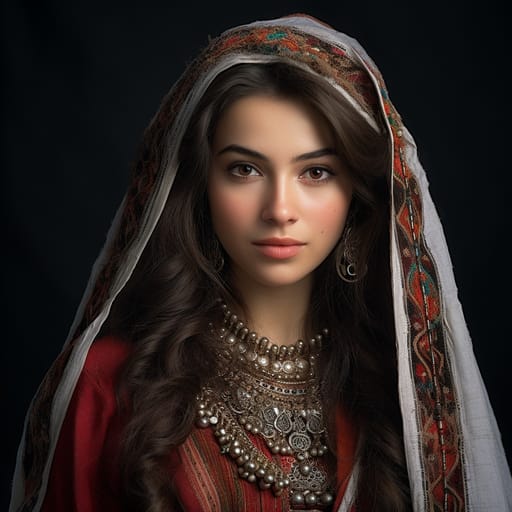
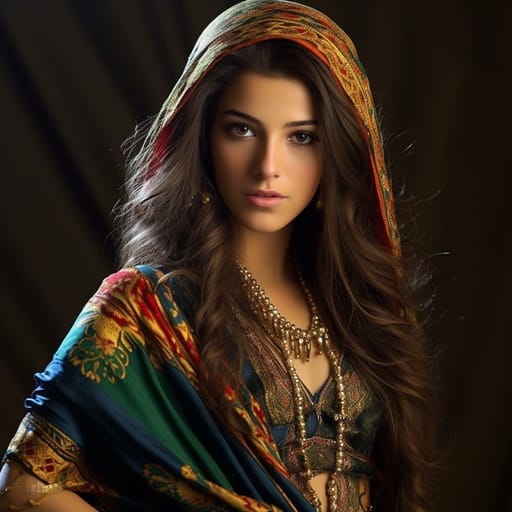
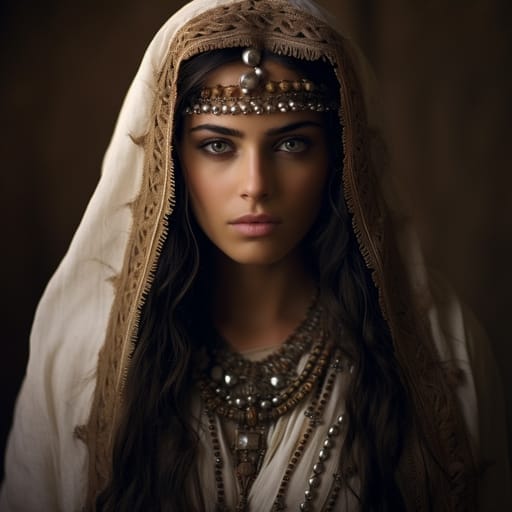
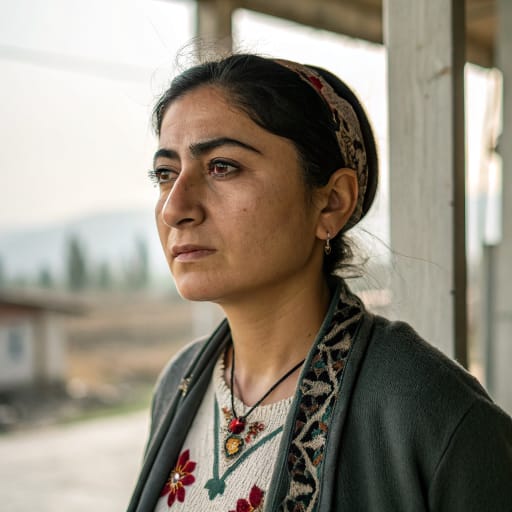
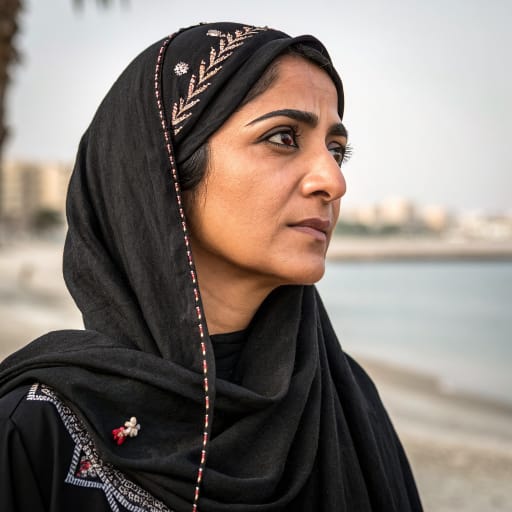
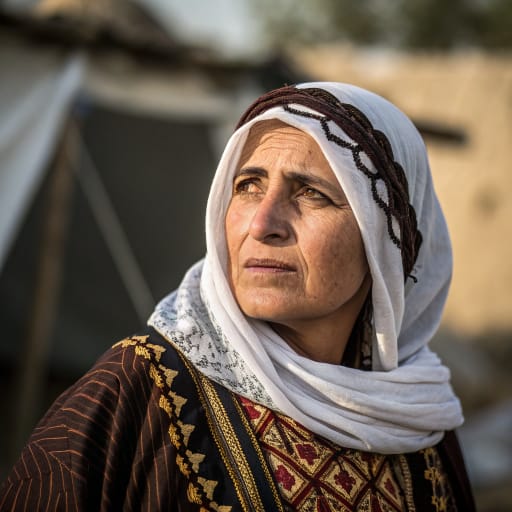
Typical Meskhetians Phenotypes
Reference for AI generation: hair, eyes, skin, facial structure, build
Meskhetians Body & Anatomy Reference
Anatomy by feature, Levantine / Mediterranean Middle Eastern phenotype
Meskhetians Boobs & Breasts
Meskhetians tits and boobs run medium-to-large cup, full, moderate-to-high projection, the classic Levantine / Mediterranean Middle Eastern bust profile. Meskhetians nipples and areolas show medium-brown to dark-brown areolar pigmentation against the olive-to-light-brown skin tone, with areolar diameter typically in the 32-46mm range and forward-set positioning rather than the smaller East Asian bust profile. Meskhetians breasts trend full and soft, fuller projection than the North-African Berber norm, a function of the mesomorph with fuller hip-and-bust deposition body habitus and the mean adult female BMI 25-28. For anatomically accurate AI-generated Meskhetians nudes the render preserves the medium-to-large cup, full, moderate-to-high projection shape, 32-46mm areolas with medium-brown to dark-brown pigmentation, and the torso proportions of the Levantine / Mediterranean Middle Eastern phenotype.
Meskhetians Ass & Hips
Meskhetians hips and butt usually read as medium-to-full, moderate projection, broader hip profile. The skeletal base is medium-to-wide iliac crests, fuller gluteal-femoral deposition, the Levantine / Mediterranean Middle Eastern pattern. Set against the slim East Asian narrow-hip profile, the difference is easy to see, and the hip-to-waist ratio is often what identifies Meskhetians women in photos.
Meskhetians Vagina & Pussy
Expect medium-brown to dark-brown labial pigmentation, fuller labia minora on Meskhetians women, in keeping with Levantine / Mediterranean Middle Eastern ancestry. The pubic hair is wavy-to-coiled medium-coarse dark texture, dense distribution. Coloring should run evenly from the olive to medium-brown skin of the thighs to the labia, and Meskhetians nude imagery should keep the hair's wavy-to-coiled medium-coarse dark texture.
Meskhetians Dicks & Penis
Meskhetians dick and penile anatomy in adult AI generation should anchor on the regional reference data: regional mean ~14cm erect, moderate-to-above-average girth, and medium-brown shaft pigmentation. The Meskhetians cock profile reflects the Levantine / Mediterranean Middle Eastern population's anthropometric measurements. The shaft pigmentation should track the surrounding olive to medium-brown skin tone, and the pubic hair should keep its wavy-to-coiled medium-coarse dark texture in the typical inverted-V escutcheon.
Meskhetians Body, Curves & Build
Meskhetians body type: mesomorph with fuller hip-and-bust deposition, with mean adult female BMI 25-28. This is the typical Levantine / Mediterranean Middle Eastern build. Height range, shoulder-to-hip ratio and fat distribution all follow from it, which is what an accurate Meskhetians nude body should show.
Meskhetians Skin Tone & Hair Texture
Meskhetians skin tone falls in the olive to medium-brown (Fitzpatrick III-V) band, the surface signal most often miscalibrated by generic AI nude generators. Meskhetians hair texture is typically wavy-to-curly 2B-3B, predominantly dark-brown to black, characteristic of the Levantine / Mediterranean Middle Eastern phenotype. In Meskhetians nude renders the skin should hold that band consistently across the body.
Explore phenotype categories
Structured taxonomy with peer-reviewed scales · 22 anatomical categories
Erotic Poses & Sex Positions
From the pose catalog: 219 named positions with reference skeletons
Frequently asked questions about Meskhetians people
Where is the Meskhetians homeland?
The Meskhetians homeland is Meskheti (Samtskhe-Javakheti), southwestern Georgia, on the Turkish border; deported 1944 and now scattered across Kazakhstan, Azerbaijan, Russia, Kyrgyzstan, Uzbekistan, Turkey, Ukraine and the United States in Western Asia.
What language do Meskhetians people speak?
Meskhetians people primarily speak Meskhetian Turkish, an eastern Anatolian dialect of Turkish (Turkic, Oghuz branch), with Georgian and Russian loanwords; Russian is the usual second language.
What religion do Meskhetians people practice?
The predominant religion among Meskhetians people is Sunni Islam, Hanafi school; observance is family-centered and shaped by decades of Soviet secularism.






Make your own Meskhetians images
Five a day, free, no credits to buy. The studio starts from this group's phenotype data, so you can set body type, pose and style and keep the traits accurate.
Start with Meskhetians