- Home/
- World/
- Western Asia/
- Huwala
Huwala Erotic
Historically the Iranian coast and islands of the Persian Gulf (Lingeh, Kong, Charak, Qeshm, Kish); now mainly Bahrain, the UAE, Qatar, Kuwait and eastern Saudi Arabia
Gulf Arabic (Afro-Asiatic, Semitic); some families historically spoke Achomi or Persian (Indo-European, Iranian)
Sunni Islam
Gulf Arabs; Arab clans once based on the Iranian shore (Lingeh, Charak, Kong) alongside Sunni families of Larestani and Bastaki origin; distinct from the Shia Ajam
About Huwala People
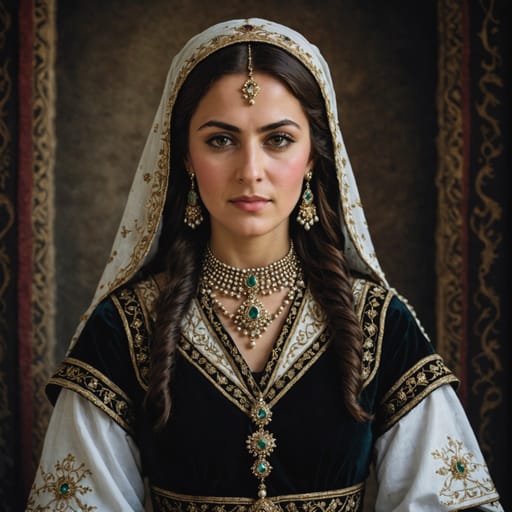
The Huwala are defined less by a single place than by a crossing. They are Sunni families of the Persian Gulf whose recent ancestors lived on the Iranian shore, in ports and island towns such as Lingeh, Kong, Charak, Qeshm and Kish, and who later moved back across the water to Bahrain, the United Arab Emirates, Qatar, Kuwait and eastern Saudi Arabia. The name is commonly linked to the Arabic root for shifting or moving, and it fits: this is a people whose identity was shaped in transit, by dhow, between two coasts that were never as separate as modern borders suggest.
Most Huwala regard themselves as Arabs whose tribes settled the northern shore of the Gulf when Persian central authority there was weak. On that coast they ran trade, pearling and local rule. The Qawasim governed Lingeh for more than a century and made it one of the busiest ports in the region. Other families who carry the name have Persian roots in the Sunni hinterland of Larestan and Bastak, and some spoke Achomi before Arabic. That mixed ancestry is why the label has been politically loaded. In Gulf societies organized around tribal lineage, Huwala have at times had to defend their Arab credentials. In Bahrain they are sharply distinguished from the Ajam, the Shia community of Persian descent.
The return came in waves. Persia deposed the Qasimi ruler of Lingeh in 1887, and new customs rules around the turn of the twentieth century pushed merchants toward Dubai, where the ruler courted them with low duties. Reza Shah's policies in the 1920s and 1930s drove many more families across: conscription, heavier taxes and the 1936 decree banning the veil, which conservative Sunni towns on the coast resented bitterly. The wind towers of Dubai's old Bastakiya quarter still stand as a physical record of that movement.
Today Huwala speak Gulf Arabic, though Persian or Achomi lingers in some older households. Sunni Islam anchors community life, and on the Iranian shore it was part of what set these towns apart from a Shia state. Huwala are largely urban now, merchant families among them became prominent in Gulf trade, and in public they wear the same kandura, ghutra and abaya as their neighbors. The Iranian coast survives most clearly at the table: mahyawa, a pungent fermented fish sauce spread on thin bread, came across with families from that shore and remains a familiar breakfast in Bahrain and the Emirates.
Related ethnic groups
Groups that share Huwala's homeland, region, language, or religious tradition — likely candidates for comparative phenotype reference.
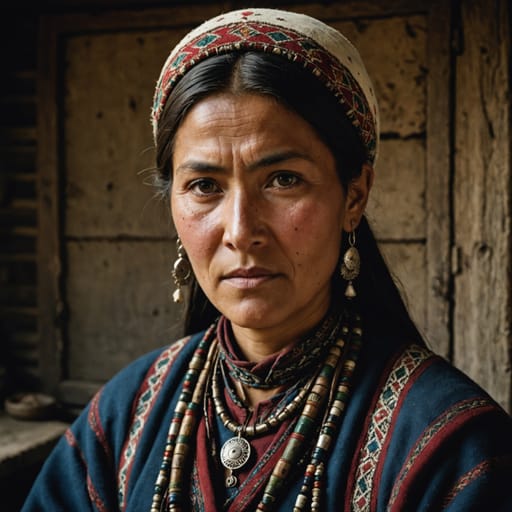
Typical Huwala Phenotypes
Reference for AI generation — hair, eyes, skin, facial structure, build
Huwala Body & Anatomy Reference
Per-feature anatomical profile for AI nude generation — Levantine / Mediterranean Middle Eastern phenotype
Huwala Boobs & Breasts
Huwala tits and boobs run medium-to-large cup, full, moderate-to-high projection — the classic Levantine / Mediterranean Middle Eastern bust profile. Huwala nipples and areolas show medium-brown to dark-brown areolar pigmentation against the olive-to-light-brown skin tone, with areolar diameter typically in the 32-46mm range and forward-set positioning rather than the the smaller East Asian bust profile. Huwala breasts trend full and soft, fuller projection than the North-African Berber norm, a function of the mesomorph with fuller hip-and-bust deposition body habitus and the mean adult female BMI 25-28. For anatomically-accurate AI-generated Huwala nudes the render preserves: medium-to-large cup, full, moderate-to-high projection shape, 32-46mm areolas with medium-brown to dark-brown pigmentation, and the torso proportions of the Levantine / Mediterranean Middle Eastern phenotype.
Huwala Ass & Hips
Huwala ass and hip morphology presents as medium-to-full, moderate projection, broader hip profile — distinctly different from the slim East Asian narrow-hip profile. The Huwala pelvic profile shows medium-to-wide iliac crests, fuller gluteal-femoral deposition, anchored in the Levantine / Mediterranean Middle Eastern skeletal pattern. Huwala butt shots in adult AI imagery should render the medium-to-full, moderate projection, broader hip profile silhouette with the mesomorph with fuller hip-and-bust deposition build and the gluteal-femoral fat distribution typical of the Levantine / Mediterranean Middle Eastern phenotype rather than defaulting to a globally-averaged "ethnic" butt that generic AI generators produce. The hip-to-waist ratio characteristic of Huwala women is one of the identifying features of the Levantine / Mediterranean Middle Eastern regional phenotype.
Huwala Vagina & Pussy
Huwala pussy and vulvar anatomy presents medium-brown to dark-brown labial pigmentation, fuller labia minora — consistent with the Levantine / Mediterranean Middle Eastern phenotype's pigmentation pattern. Huwala pubic hair is typically wavy-to-coiled medium-coarse dark texture, dense distribution, distributed in the inverted-triangle pattern with regional-typical density. AI-generated Huwala nude imagery should preserve the medium-brown to dark-brown labial pigmentation and the wavy-to-coiled medium-coarse dark texture hair texture rather than defaulting to a Western-European pink-and-sparse template. For anatomically-accurate Huwala pussy renders the labial pigmentation and coloration should match the surrounding olive to medium-brown skin tone of the Levantine / Mediterranean Middle Eastern phenotype, with continuous gradient rather than an abrupt color transition.
Huwala Dicks & Penis
Huwala dick and penile anatomy in adult AI generation should anchor on the regional reference data: regional mean ~14cm erect, moderate-to-above-average girth, and medium-brown shaft pigmentation. The Huwala cock profile reflects the Levantine / Mediterranean Middle Eastern ancestral population's anthropometric measurements rather than a globally-averaged Western-pornography default. For anatomically-accurate Huwala nude male imagery the shaft pigmentation should track the surrounding olive to medium-brown skin tone, the glans-to-shaft pigmentation transition should be continuous, and the pubic hair pattern should match wavy-to-coiled medium-coarse dark texture texture distributed in the typical inverted-V escutcheon. Circumcision status in Huwala populations varies by religious-cultural tradition rather than ancestral phenotype.
Huwala Body, Curves & Build
Huwala body type and overall build presents as mesomorph with fuller hip-and-bust deposition, with mean adult female BMI 25-28 — the characteristic Levantine / Mediterranean Middle Eastern habitus. Huwala curves and proportions in adult AI imagery should preserve the regional skeletal frame (height, shoulder-to-hip ratio, limb proportions) rather than scaling to a Western-European mesomorph default. The Huwala nude female form, when rendered with anatomical fidelity, shows the height range, frame width, and adipose distribution pattern typical of the Levantine / Mediterranean Middle Eastern phenotype. Generic AI image generators tend to collapse regional body types into a few default shapes; the EthnicErotic phenotype-anchored approach preserves the Huwala build as its own reference category.
Huwala Skin Tone & Hair Texture
Huwala skin tone falls in the olive to medium-brown (Fitzpatrick III-V) band — the surface signal most often miscalibrated by generic AI nude generators trained on Western-photographic datasets. Huwala hair texture is typically wavy-to-curly 2B-3B, predominantly dark-brown to black, characteristic of the Levantine / Mediterranean Middle Eastern phenotype. For anatomically-accurate Huwala nude renders the skin should hold the Fitzpatrick band consistently across body surface rather than showing the lighter-than-face body shading that AI generators default to. Huwala hair pigmentation and texture on body, pubic, and head should match across the figure rather than mixing textures (a common AI artefact).
Explore phenotype categories
Structured taxonomy with peer-reviewed scales · 22 anatomical categories
Erotic Poses & Sex Positions
From the pose catalog — 219 named positions with reference skeletons
Frequently asked questions about Huwala people
Where is the Huwala homeland?
The Huwala homeland is Historically the Iranian coast and islands of the Persian Gulf (Lingeh, Kong, Charak, Qeshm, Kish); now mainly Bahrain, the UAE, Qatar, Kuwait and eastern Saudi Arabia in Western Asia.
What language do Huwala people speak?
Huwala people primarily speak Gulf Arabic (Afro-Asiatic, Semitic); some families historically spoke Achomi or Persian (Indo-European, Iranian).
What religion do Huwala people practice?
The predominant religion among Huwala people is Sunni Islam.

What does a typical Huwala woman look like?
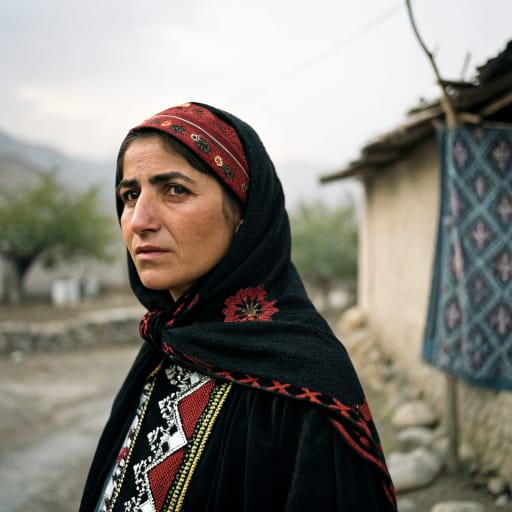
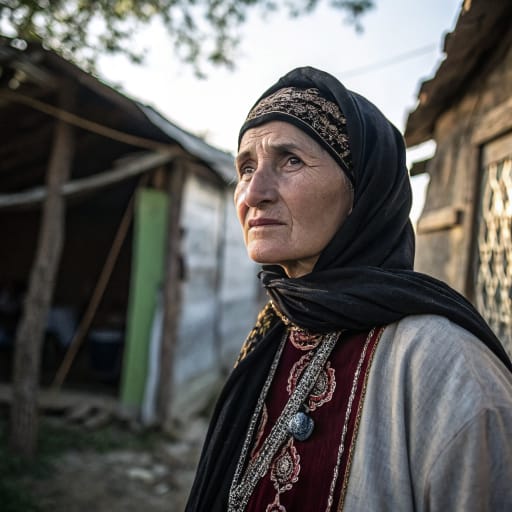
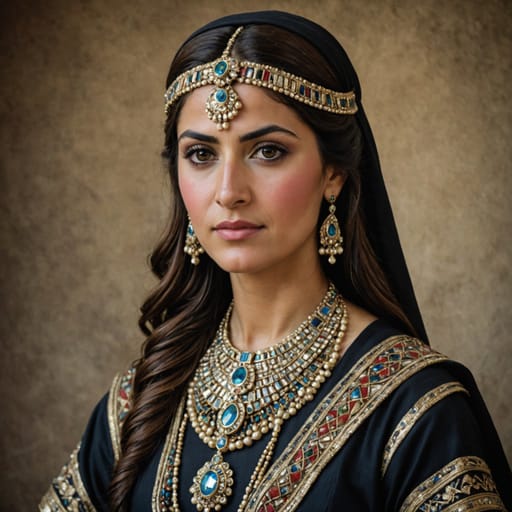
Appearance is typical of Gulf populations, with skin ranging from light olive to medium brown and dark hair and eyes. Men wear the ankle-length kandura or thobe with a ghutra headcloth, and women wear the abaya and shayla.
Make your own Huwala images
Five a day, free, no credits to buy. The studio starts from this group's phenotype data, so you can set body type, pose and style and keep the traits accurate.
Start with Huwala