No portrait yet
Mboko Erotic
Cuvette department in the northern Republic of the Congo, with a sizable community in Brazzaville
Mboko (Bantu, Mbosi group, Guthrie C21); Lingala and French widely spoken as second languages
Mostly Christian (Catholic, Protestant and revivalist churches), with ancestor veneration and traditional healing still practiced
Part of the Mbosi (Mbochi) language cluster of northern Congo, alongside the Mbochi, Kouyou, Akwa and Ngare
About Mboko People
The Mboko are a Bantu-speaking people of the northern Republic of the Congo, and what marks them out in a crowded corner of the map is, above all, their language. Mboko belongs to the Mbosi cluster, a tight family of related tongues that also includes Mbochi and Kouyou. The family resemblance is obvious, yet the Mboko hold on to their own name and their own villages. Their home is the Cuvette department, astride the equator, where open savanna meets swamp forest and slow rivers drain toward the Congo. Rural life runs on the water and the fields: fishing, cassava and plantain gardens, hunting at the forest edge. Roads and river traffic tie the region to Brazzaville, and, as across the rural north, many younger people have moved to the capital for school and work.
Mboko is rarely anyone's only language. Lingala, the trade language of the river, is the everyday bridge to other northern peoples, and French arrives with school, government and church. Most Mboko are Christian, in Catholic and Protestant congregations and in the revivalist churches that have multiplied in recent decades. Older ideas have not gone away: respect for ancestors and recourse to traditional healers still shape how many families handle illness, death and mourning. Colonial rule landed heavily here. When France governed the territory as part of French Equatorial Africa, the northern Congo basin was parceled out to concession companies whose demands for rubber and labor brought forced work and population loss to much of the region early in the twentieth century. Independence reshuffled the order. Since 1968, when Marien Ngouabi took power, the country has been led for most years by men from the Cuvette, and national politics is still often read along a north-south line that puts the Mboko, like their Mbosi-speaking neighbors, on the northern side. One note for readers searching the name: the Mboko are not the Mbuko of far northern Cameroon, whose language is Chadic rather than Bantu.
Related ethnic groups
Groups that share Mboko's homeland, region, language, or religious tradition. These are likely candidates for comparative phenotype reference.
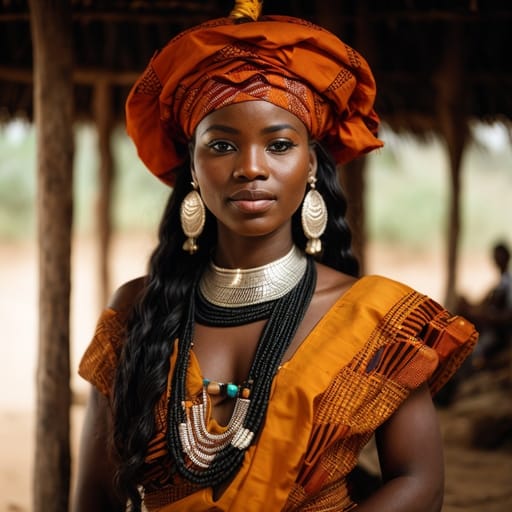
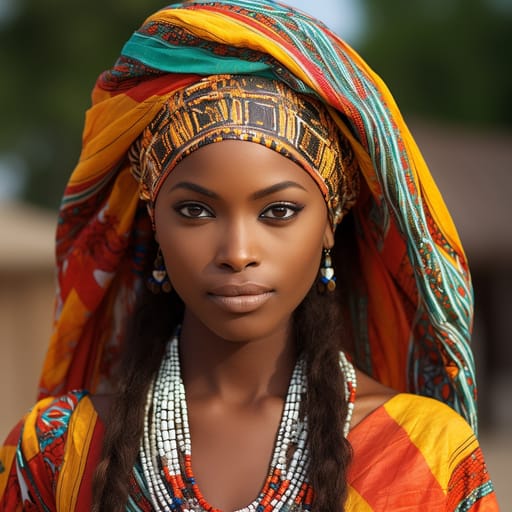
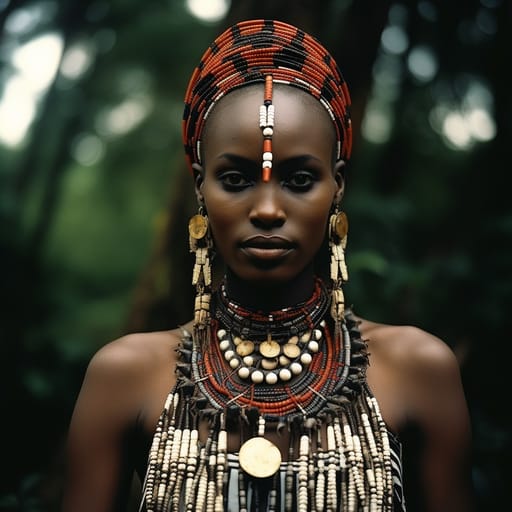
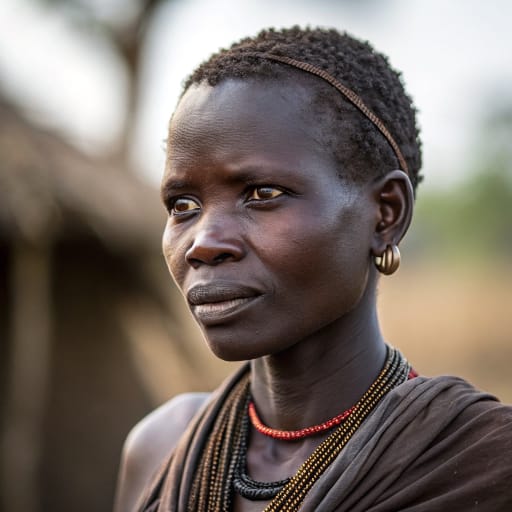
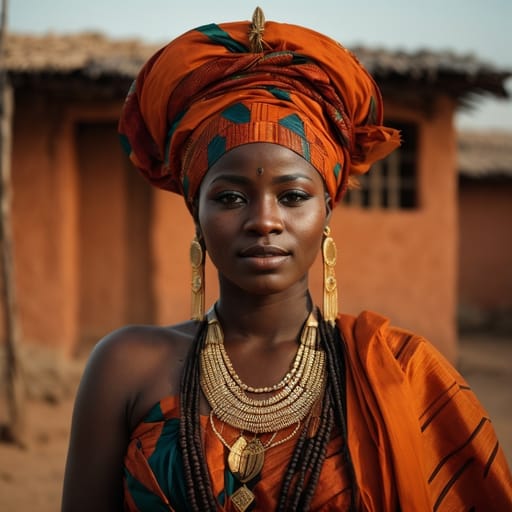
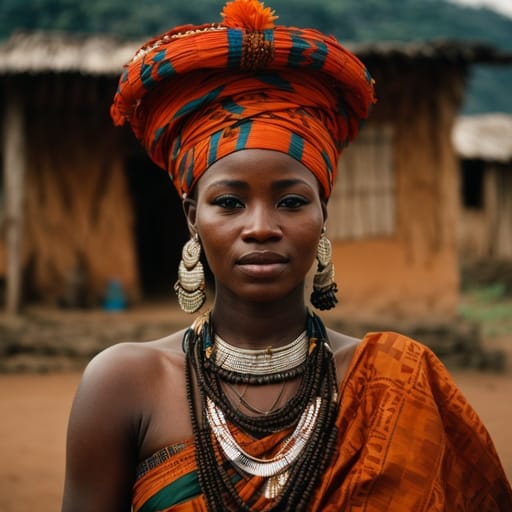
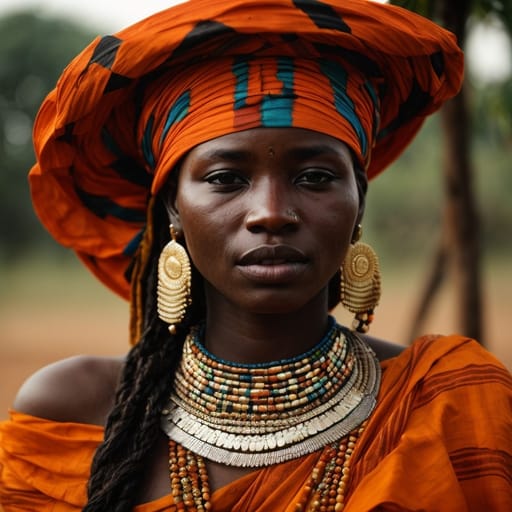
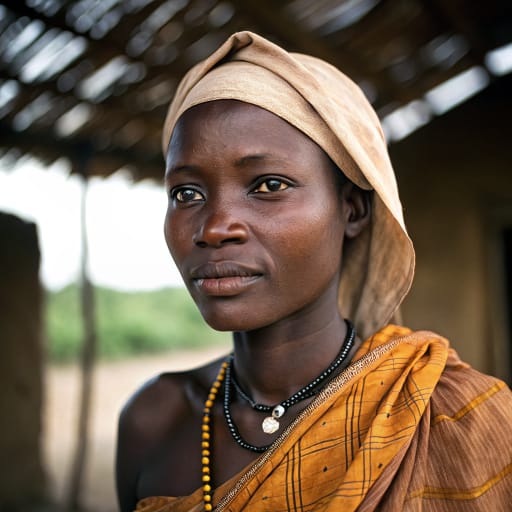
Typical Mboko Phenotypes
Reference for AI generation: hair, eyes, skin, facial structure, build
Mboko Body & Anatomy Reference
Bantu / Central African Niger-Congo phenotype: anatomy reference for AI nude generation
Mboko Boobs & Breasts
Mboko boobs follow the Bantu / Central African Niger-Congo profile: medium-to-large cup, full, projecting. Areolar diameter is usually 32-48mm, and the coloring is deep-brown areolar pigmentation against the deep-brown skin tone. Breast shape tracks body composition (mesomorph with strong gluteal-femoral fat deposition, mean adult female BMI 23-26), so Mboko breasts tend to be fuller projection than East African; comparable to West African norm. Expect a forward-set shape, not the smaller East African conical profile.
Mboko Ass & Hips
Mboko ass and hip morphology presents as full, projected, wide-set glutes, distinctly different from the slim narrow-hip Cushitic East African profile. The Mboko pelvic profile shows broad iliac crests, gynoid pelvic pattern, anchored in the Bantu / Central African Niger-Congo skeletal pattern. Mboko butt shots in adult AI imagery should render the full, projected, wide-set glutes silhouette with the overall build (mesomorph with strong gluteal-femoral fat deposition) and the fat distribution typical of the Bantu / Central African Niger-Congo phenotype.
Mboko Vagina & Pussy
Mboko pussy anatomy typically shows deep-brown labial pigmentation, fuller labia minora. Pubic hair is usually tightly-coiled coarse texture, dense distribution. In AI-generated Mboko nudes, labial color should blend into the deep-brown skin with a gradual transition, and the hair should keep its tightly-coiled coarse texture.
Mboko Dicks & Penis
Penis reference for Mboko men: regional mean ~14cm erect, above-average girth. Coloring: deep-brown shaft pigmentation. An accurate Mboko cock in AI imagery matches the surrounding deep-brown skin rather than a generic porn default. Circumcision depends on religion and custom, not ancestry.
Mboko Body, Curves & Build
The Mboko figure is generally mesomorph with strong gluteal-femoral fat deposition, with mean adult female BMI 23-26, characteristic of Bantu / Central African Niger-Congo ancestry. AI image tools tend to flatten regional body types into a few stock shapes; here the Mboko build is kept as its own reference.
Mboko Skin Tone & Hair Texture
Skin: deep-brown (Fitzpatrick VI). Hair: tight 4A-4C coil. Both are typical of Bantu / Central African Niger-Congo ancestry. The most common mistake in AI nudes of Mboko women is a body rendered lighter than the face.
Explore phenotype categories
Structured taxonomy with peer-reviewed scales · 22 anatomical categories
Erotic Poses & Sex Positions
From the pose catalog: 219 named positions with reference skeletons
Frequently asked questions about Mboko people
Where is the Mboko homeland?
The Mboko homeland is Cuvette department in the northern Republic of the Congo, with a sizable community in Brazzaville in Central Africa.
What language do Mboko people speak?
Mboko people primarily speak Mboko (Bantu, Mbosi group, Guthrie C21); Lingala and French widely spoken as second languages.
What religion do Mboko people practice?
The predominant religion among Mboko people is Mostly Christian (Catholic, Protestant and revivalist churches), with ancestor veneration and traditional healing still practiced.






Make your own Mboko images
Five a day, free, no credits to buy. The studio starts from this group's phenotype data, so you can set body type, pose and style and keep the traits accurate.
Start with Mboko