Help us get this right
Does this portrait look right for Marakwet?
Nobody has judged this one yet. You would be the first.
Marakwet Erotic
Kerio Valley escarpment and Cherangany Hills of Elgeyo-Marakwet County, western Kenya, with communities in neighboring Trans Nzoia and Uasin Gishu.
Marakwet (Markweeta), a Kalenjin language (Southern Nilotic, Nilo-Saharan); Swahili and English widely spoken.
Mostly Christian (Catholic, Africa Inland Church), with older beliefs in Asis, the sun deity, and Ilat, spirit of thunder and rain.
A Kalenjin people. Territorial sections: Almoo, Endoow, Markweta, Sombirir, Kiptaani, and the Cherangany (Sengwer), who often identify separately.
About Marakwet People
The Marakwet are the people of the furrows. Along the western wall of Kenya's Kerio Valley, where the Cherangany Hills drop from above 3,000 meters to a hot, dry floor near 1,000, they built and still run a network of gravity-fed irrigation channels that predates colonial rule by centuries. The furrows tap rivers coming off the hills, cross gullies on hollowed logs and stone embankments, and water millet, sorghum, maize and, these days, mango orchards below. Each furrow belongs to the clans that dug it. Men of those clans repair it, ration the flow and settle disputes over it, and that shared labor defines who belongs where as firmly as any genealogy. They are one of the Kalenjin peoples, Southern Nilotic speakers whose common label was coined only in the mid twentieth century. Marakwet itself is a colonial rendering of Markweta, one of several territorial sections alongside the Almoo, Endoow, Sombirir and Kiptaani. The Cherangany, or Sengwer, forest people of the high country, are usually counted in as well, though many of them insist they are a separate nation and have fought repeated evictions from Embobut forest. Marakwet speech sits close to Keiyo and Tugen, while Pokot, to the north, is a more distant cousin.
Kinship has not kept the peace with the Pokot: cattle raiding between the two has a long history. The 2001 attack on Murkutwo, where Pokot raiders killed dozens of villagers, is still a reference point, and many families keep their homes up on the escarpment ledges, above the valley floor, as their grandparents did. Most Marakwet are Christian now, Catholic or Africa Inland Church for the most part, and the mission hospital at Kapsowar has been a local fixture since the colonial era. Older ideas persist underneath: Asis, the sun, as the distant supreme power, and Ilat, the spirit of thunder and rain, who matters a great deal to people whose harvest depends on water arriving on schedule. Cyclical age-sets still rank men by generation, and boys enter them through circumcision and seclusion. The cutting of girls, once the parallel rite, has been illegal in Kenya since 2011 and is contested within the community, with churches and local groups promoting alternative ceremonies. The anthropologist Henrietta Moore made Endo Marakwet households the subject of a well known study of gender and space, down to the rules about where ash, chaff and goat dung may be thrown. The wider world mostly meets the Marakwet without knowing it, on the track: steeplechase champions Moses Kiptanui and Ezekiel Kemboi both come from these hills.
Related ethnic groups
Groups that share Marakwet's homeland, region, language, or religious tradition. These are likely candidates for comparative phenotype reference.
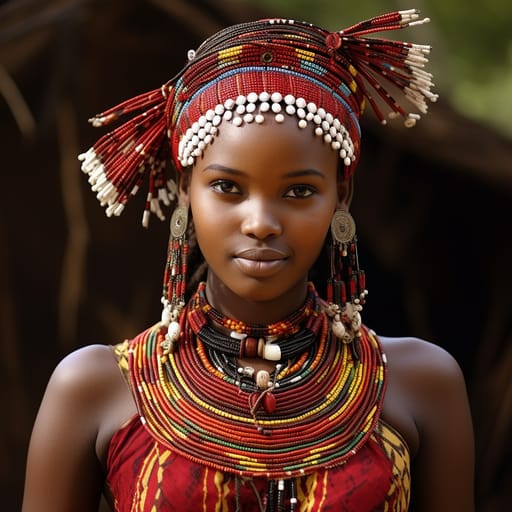
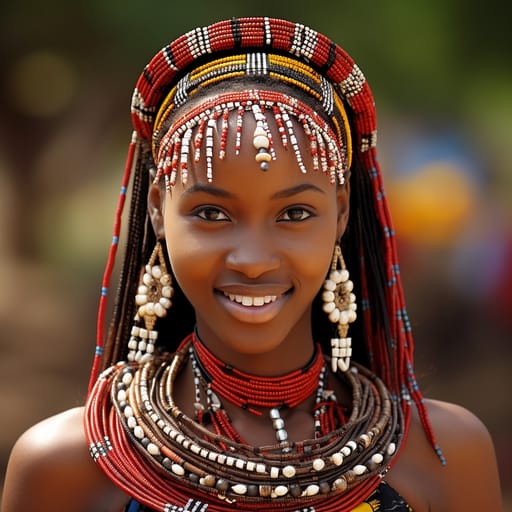
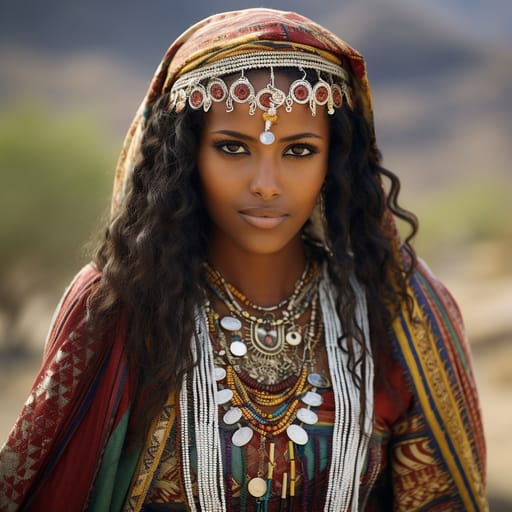
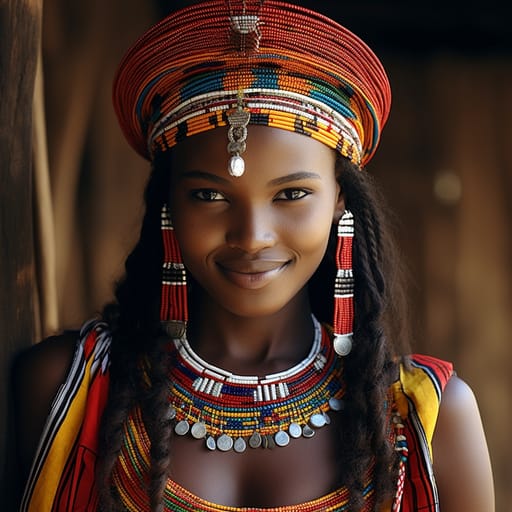
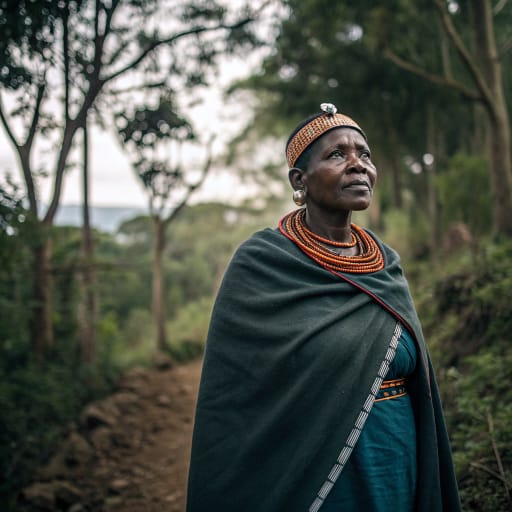
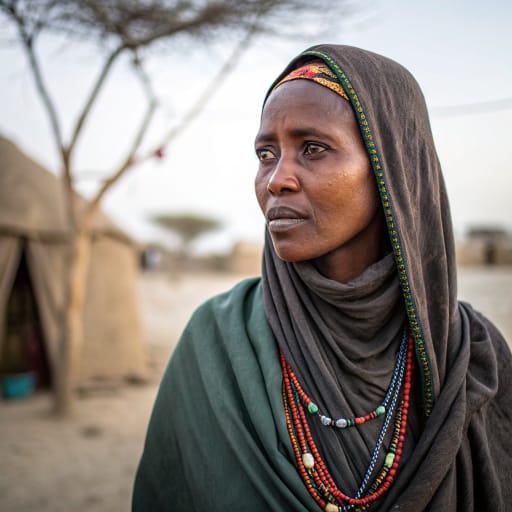
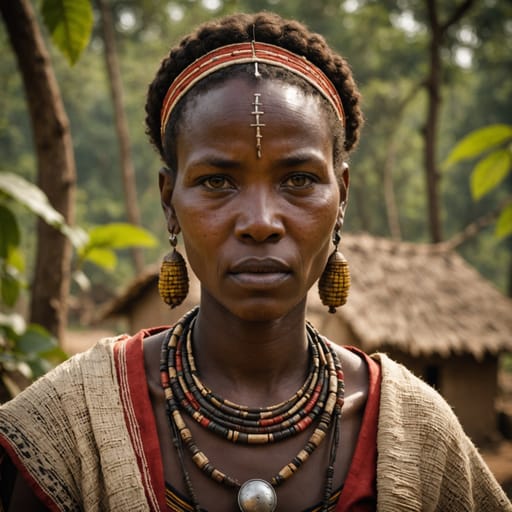
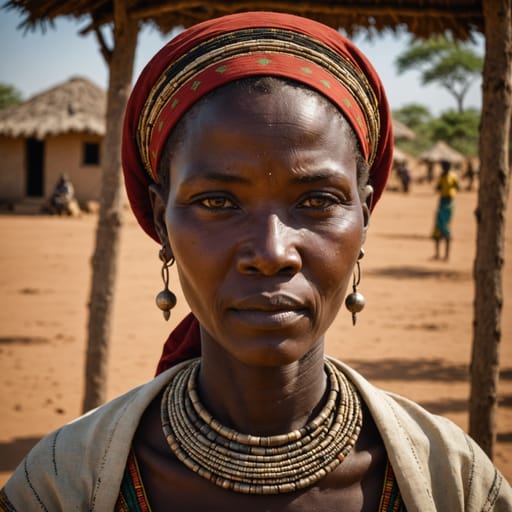
Typical Marakwet Phenotypes
Reference for AI generation: hair, eyes, skin, facial structure, build
Marakwet Body & Anatomy Reference
Anatomy by feature, Cushitic / Nilo-Cushitic East African phenotype
Marakwet Boobs & Breasts
Marakwet boobs follow the Cushitic / Nilo-Cushitic East African profile: small-to-medium-cup, high-set, conical. Areolar diameter is usually 28-38mm, and the coloring is moderate-to-high areolar pigmentation against the brown-to-deep-brown skin tone. Breast shape tracks body composition (lean ectomorph-to-mesomorph, mean adult female BMI 19-22), so Marakwet breasts tend to be firmer and less projecting than the African-American or West African norm. Expect a forward-set shape, not the lateral spread of the West African phenotype.
Marakwet Ass & Hips
Marakwet ass and hip morphology presents as small-to-medium, high-set, rounded, distinctly different from the wide-set heavy-projection West African or African-American norm. The Marakwet pelvic profile shows narrow-to-medium iliac crests, longer torso-to-leg ratio, anchored in the Cushitic / Nilo-Cushitic East African skeletal pattern. Marakwet butt shots in adult AI imagery should render the small-to-medium, high-set, rounded silhouette with the overall build (lean ectomorph-to-mesomorph) and the fat distribution typical of the Cushitic / Nilo-Cushitic East African phenotype.
Marakwet Vagina & Pussy
Marakwet pussy anatomy typically shows brown-to-deep-brown labial pigmentation, narrow-to-medium labia minora projection. Pubic hair is usually tightly-coiled coarse texture, densely distributed. In AI-generated Marakwet nudes, labial color should blend into the brown to deep brown skin with a gradual transition, and the hair should keep its tightly-coiled coarse texture.
Marakwet Dicks & Penis
Penis reference for Marakwet men: regional mean ~13.5cm erect, moderate girth, ~12cm circumference. Coloring: deeper-pigmented than the West African norm. An accurate Marakwet cock in AI imagery matches the surrounding brown to deep brown skin rather than a generic porn default. Circumcision depends on religion and custom, not ancestry.
Marakwet Body, Curves & Build
The Marakwet figure is generally lean ectomorph-to-mesomorph, with mean adult female BMI 19-22, characteristic of Cushitic / Nilo-Cushitic East African ancestry. AI image tools tend to flatten regional body types into a few stock shapes; here the Marakwet build is kept as its own reference.
Marakwet Skin Tone & Hair Texture
Skin: brown to deep brown (Fitzpatrick V-VI). Hair: tight 4A-4C coil, often worn natural or in braided/twisted protective styles. Both are typical of Cushitic / Nilo-Cushitic East African ancestry. The most common mistake in AI nudes of Marakwet women is a body rendered lighter than the face.
Explore phenotype categories
Structured taxonomy with peer-reviewed scales · 22 anatomical categories
Erotic Poses & Sex Positions
From the pose catalog: 219 named positions with reference skeletons
Frequently asked questions about Marakwet people
Where is the Marakwet homeland?
The Marakwet homeland is Kerio Valley escarpment and Cherangany Hills of Elgeyo-Marakwet County, western Kenya, with communities in neighboring Trans Nzoia and Uasin Gishu. in Eastern Africa.
What language do Marakwet people speak?
Marakwet people primarily speak Marakwet (Markweeta), a Kalenjin language (Southern Nilotic, Nilo-Saharan); Swahili and English widely spoken..
What religion do Marakwet people practice?
The predominant religion among Marakwet people is Mostly Christian (Catholic, Africa Inland Church), with older beliefs in Asis, the sun deity, and Ilat, spirit of thunder and rain..






Make your own Marakwet images
Five a day, free, no credits to buy. The studio starts from this group's phenotype data, so you can set body type, pose and style and keep the traits accurate.
Start with Marakwet