Help us get this right
Does this portrait look right for Mangalorean Catholics?
Nobody has judged this one yet. You would be the first.
Mangalorean Catholics Erotic
Coastal Karnataka, India, chiefly Dakshina Kannada and Udupi districts around Mangalore, with large communities in Mumbai, Bengaluru and the Persian Gulf states
Mangalorean Konkani, written in Kannada script (Indo-European, Indo-Aryan); also Tulu and Kannada (Dravidian) and English
Roman Catholic (Latin Rite), organized mainly under the dioceses of Mangalore and Udupi
Part of the wider Konkani Catholic community descended from Goan Catholic migrants, related to Goan and Karwari Catholics; keeps caste labels inherited from Goa, such as Bamonn and Charodi
About Mangalorean Catholics People
Mangalorean Catholics are Konkani-speaking Latin Rite Catholics from the coast of Karnataka. They are centered on Mangalore, which they call Kodial, and neighboring Udupi. They are bound less by a single birthplace than by a shared migration story. Most descend from Catholic families who left Goa between the late sixteenth and mid eighteenth centuries, heading south to escape the Portuguese Inquisition, war and famine. The local Keladi Nayaka rulers welcomed them as capable rice farmers, and a separate community took root in the paddy country of Canara, out of reach of the Portuguese power that had converted their ancestors. They brought their language with them. Konkani is an Indo-Aryan language, and here it sits among Dravidian neighbors, Tulu and Kannada, borrowing from both. Goans mostly write Konkani in Roman or Devanagari script, but Mangaloreans write it in Kannada script, a quiet sign of how fully they settled in. They also brought caste. Labels carried over from Goa, such as Bamonn and Charodi, have not entirely faded, and they still come up when families talk about marriage.
Captivity and after
The event that shaped them most came in 1784. On Ash Wednesday that year, Tipu Sultan, ruler of Mysore, who suspected the community of helping the British, had the Catholics of Canara rounded up. Tens of thousands were marched over the Western Ghats to Seringapatam, and their churches were torn down. The captivity ended only with Tipu's death in 1799, and just a fraction of the captives made it home. That memory is still central to how the community sees itself. The nineteenth century brought rebuilding around parishes, schools, colleges and hospitals, several of them founded by Jesuits. Education became a family priority, and it pushed people outward, first to Bombay and later to the Persian Gulf and beyond. Their harvest roots still show in the calendar. Monti Fest, on September 8, marks the Nativity of Mary and blesses sheaves of new rice, which families carry home for a vegetarian feast. Before a wedding, the roce ceremony sees the bride and groom each anointed with coconut milk and oil at home. At the table, steamed sanna eaten with pork curry comes close to a community signature.
Related ethnic groups
Groups that share Mangalorean Catholics's homeland, region, language, or religious tradition. These are likely candidates for comparative phenotype reference.
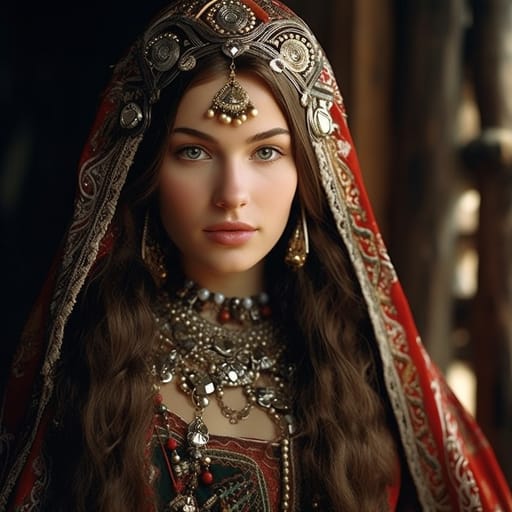
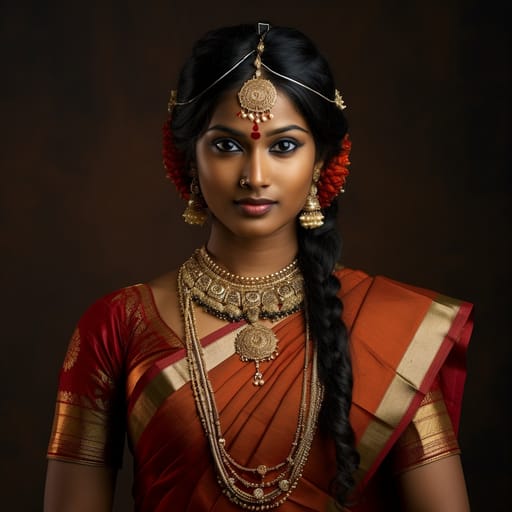
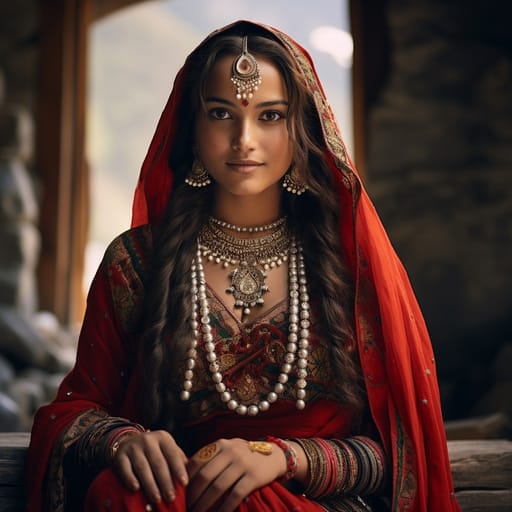
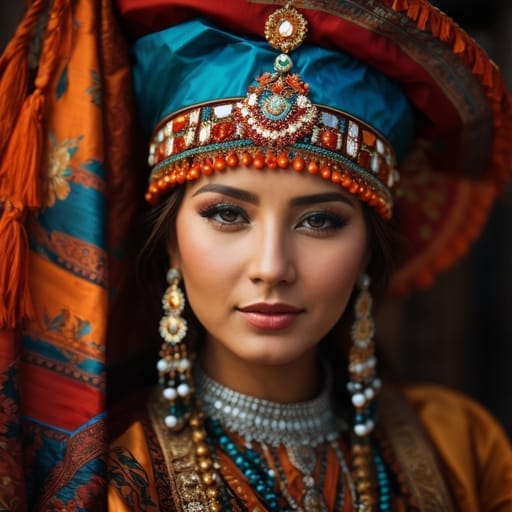
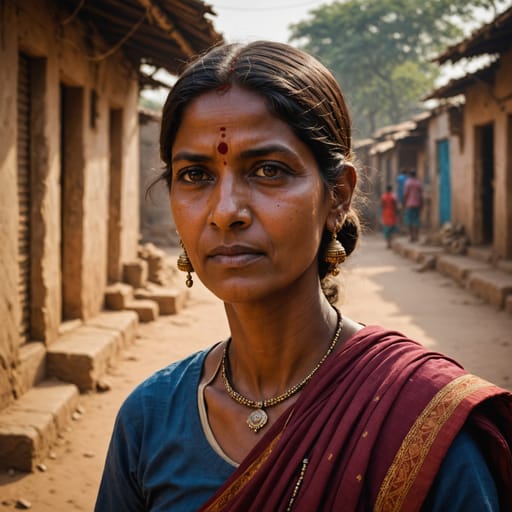
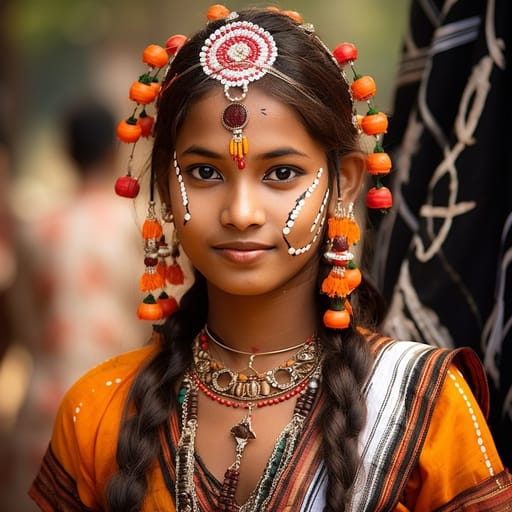
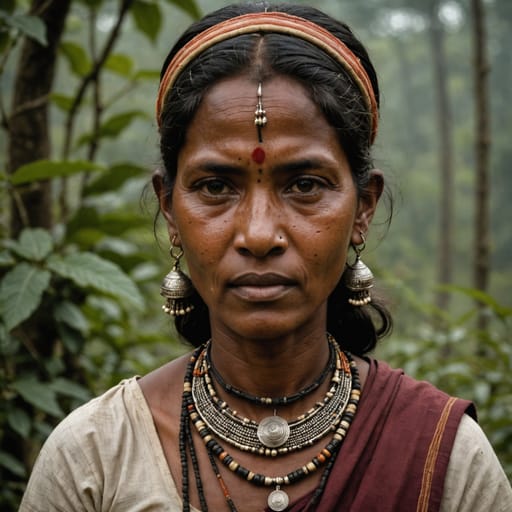
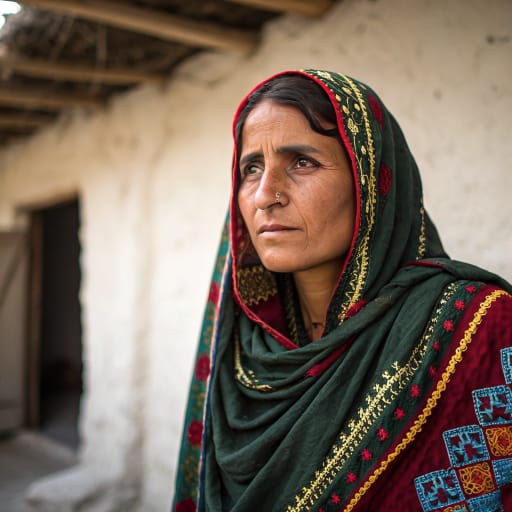
Typical Mangalorean Catholics Phenotypes
Reference for AI generation: hair, eyes, skin, facial structure, build
Mangalorean Catholics Body & Anatomy Reference
Indo-Aryan / Dravidian South Asian phenotype: anatomy reference for AI nude generation
Mangalorean Catholics Boobs & Breasts
Bust reference for Mangalorean Catholics women: medium-to-large cup, moderate-to-full projection, which is typical of Indo-Aryan / Dravidian South Asian ancestry. Areolas measure about 32-46mm across, with medium-brown to dark-brown pigmentation. Body type (endomorph-to-mesomorph with fuller hip deposition) shapes the bust as well, so Mangalorean Catholics tits are usually full and soft, generally fuller than the East Asian norm. In AI imagery, keep the forward-set shape rather than drifting toward the smaller East Asian bust profile.
Mangalorean Catholics Ass & Hips
The Mangalorean Catholics ass is typically medium-to-full, moderate-to-high projection, classic curvy hip profile, which sets it apart from the slim hip profile of East Asian women. Underneath, the pelvis shows medium-to-wide iliac crests, full gluteal-femoral fat distribution, part of the Indo-Aryan / Dravidian South Asian skeletal pattern. For Mangalorean Catholics butt pics and AI renders, match that silhouette and the overall build (endomorph-to-mesomorph with fuller hip deposition).
Mangalorean Catholics Vagina & Pussy
Mangalorean Catholics pussy and vulvar anatomy presents medium-brown to dark-brown labial pigmentation, fuller labia minora projection, consistent with the Indo-Aryan / Dravidian South Asian phenotype's pigmentation pattern. Mangalorean Catholics pubic hair is typically straight-to-wavy coarse texture, dense distribution, in the inverted-triangle pattern. For anatomically accurate Mangalorean Catholics pussy renders the labial coloration should match the surrounding wheatish to brown skin tone with a continuous gradient, and the hair should keep its straight-to-wavy coarse texture.
Mangalorean Catholics Dicks & Penis
Mangalorean Catholics dicks follow the Indo-Aryan / Dravidian South Asian reference data: regional mean ~13cm erect; moderate girth; medium-brown shaft pigmentation. Shaft color should track the wheatish to brown skin tone with a smooth change toward the glans, and Mangalorean Catholics pubic hair keeps its straight-to-wavy coarse texture.
Mangalorean Catholics Body, Curves & Build
Mangalorean Catholics body type and overall build presents as endomorph-to-mesomorph with fuller hip deposition, with mean adult female BMI 22-25: the characteristic Indo-Aryan / Dravidian South Asian habitus. Mangalorean Catholics curves and proportions should keep the regional skeletal frame (height, shoulder-to-hip ratio, limb proportions) rather than a generic mesomorph default.
Mangalorean Catholics Skin Tone & Hair Texture
Mangalorean Catholics skin sits in the wheatish to brown (Fitzpatrick III-V) band. Hair is typically straight-to-wavy 1A-2B, dense, dark-brown to black, in keeping with the Indo-Aryan / Dravidian South Asian phenotype. In nude renders the skin should stay one even tone from face to body, and body, pubic and head hair should match.
Explore phenotype categories
Structured taxonomy with peer-reviewed scales · 22 anatomical categories
Erotic Poses & Sex Positions
From the pose catalog: 219 named positions with reference skeletons
Frequently asked questions about Mangalorean Catholics people
Where is the Mangalorean Catholics homeland?
The Mangalorean Catholics homeland is Coastal Karnataka, India, chiefly Dakshina Kannada and Udupi districts around Mangalore, with large communities in Mumbai, Bengaluru and the Persian Gulf states in Southern Asia.
What language do Mangalorean Catholics people speak?
Mangalorean Catholics people primarily speak Mangalorean Konkani, written in Kannada script (Indo-European, Indo-Aryan); also Tulu and Kannada (Dravidian) and English.
What religion do Mangalorean Catholics people practice?
The predominant religion among Mangalorean Catholics people is Roman Catholic (Latin Rite), organized mainly under the dioceses of Mangalore and Udupi.






Make your own Mangalorean Catholics images
Five a day, free, no credits to buy. The studio starts from this group's phenotype data, so you can set body type, pose and style and keep the traits accurate.
Start with Mangalorean Catholics