Help us get this right
Does this portrait look right for Khonds?
One tap. It takes a second and it is recorded.
1 says it looks right, 0 say it looks off.
Khonds Erotic
Kandhamal (India)
Hinduism
About Khonds People
The Khonds live in the forested hill country of Kandhamal and the Eastern Ghats spilling across Odisha into bits of Andhra Pradesh, a landscape of sal trees, narrow valleys, and red lateritic soil that has kept them somewhat apart from the plains for most of their recorded history. They speak Kui, a Dravidian tongue that sits oddly far north of its linguistic cousins; a related variety, Kuvi, is spoken by a southern branch, and the split between Kui-speaking Khonds and Kuvi-speaking Khonds is one of the basic internal divisions of the people. Outsiders historically distinguished further between the Kutia Khonds of the deeper hills, who farmed by shifting cultivation, and the Desia Khonds of the lower country, who took up plough agriculture and absorbed more Odia influence. Self-identification is by clan and village before it is by any pan-Khond label.
Their religious life is usually catalogued as Hinduism, and the upper layer is — Hindu festivals, Hindu deities slotted into the pantheon, intermarriage of categories with Odia neighbors — but the underlying frame is an indigenous earth religion organized around a creator goddess and her consort, with village priests, sacred groves, and sacrifice as the central act of worship. The Khonds entered colonial archives largely because of one practice: the meriah, a human sacrifice offered to the earth goddess to secure the fertility of the soil and the turmeric crop in particular. The British suppressed it through a series of military campaigns in the 1830s and 1840s and substituted buffalo. The episode hardened a stereotype that has clung to the group in outside writing ever since, often at the cost of attention to anything else they do.
What they do, mostly, is farm — turmeric, millet, rice, pulses — and gather from the forest, and conduct an elaborate marriage system involving bride-price, clan exogamy, and a long tradition of dormitory youth-houses where unmarried young people of the village socialised and paired off. Land is the running theme of recent Khond history: the encroachment of plains settlers, the loss of forest rights, the bauxite-mining disputes in the Niyamgiri hills, and the 2008 communal violence in Kandhamal between Khond Hindus and the substantial Khond Christian minority, which displaced tens of thousands and which the community is still working through.
Related ethnic groups
Groups that share Khonds's homeland, region, language, or religious tradition. These are likely candidates for comparative phenotype reference.
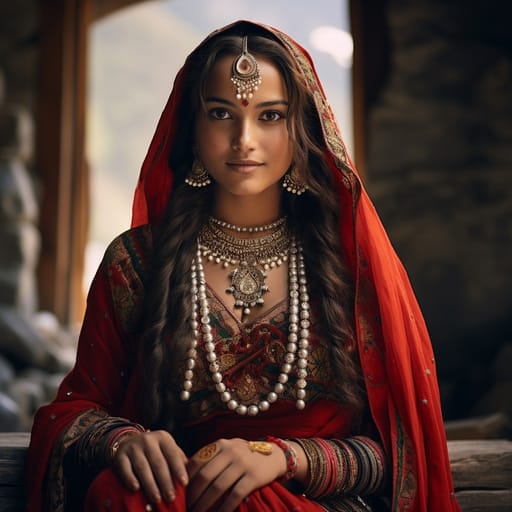
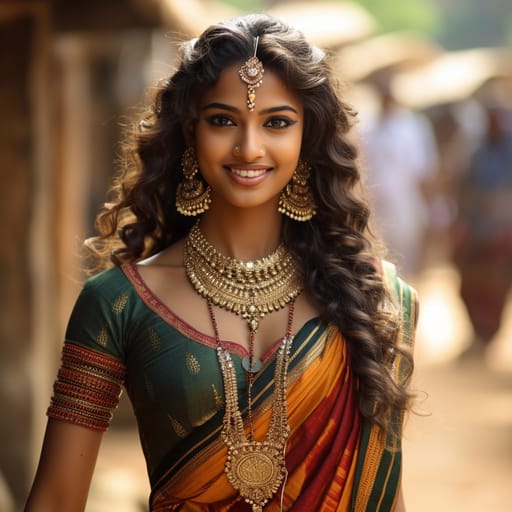
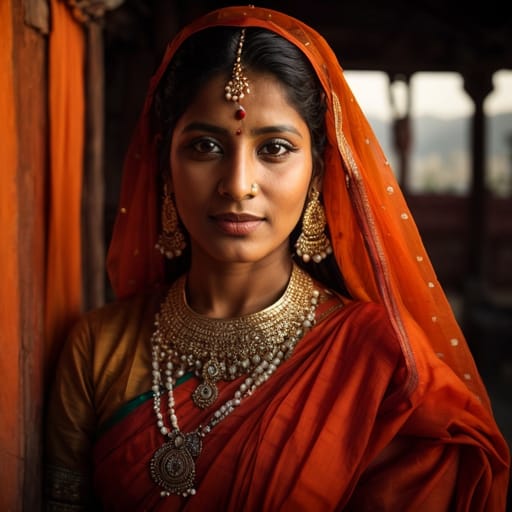
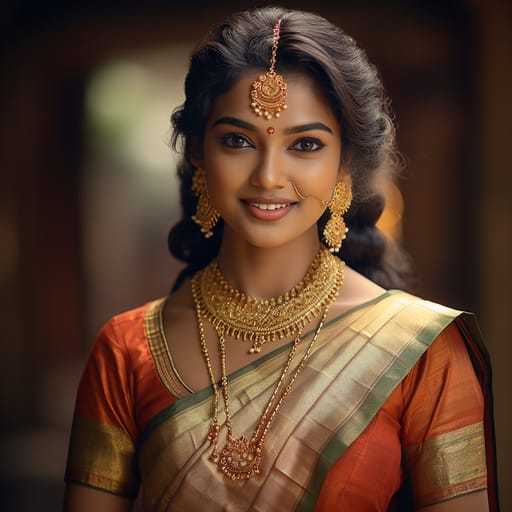
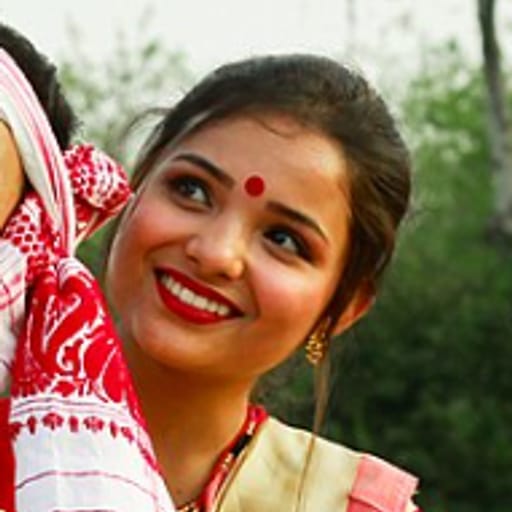
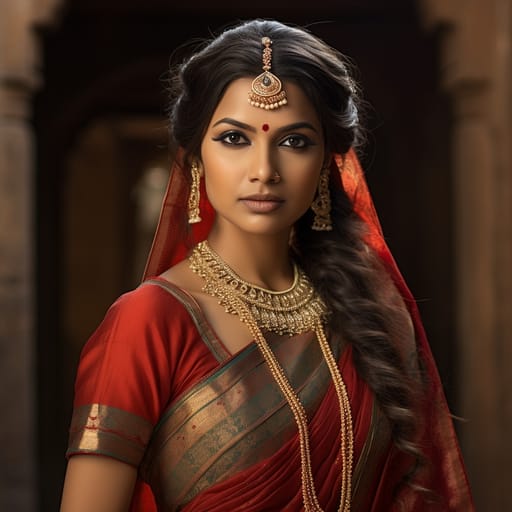
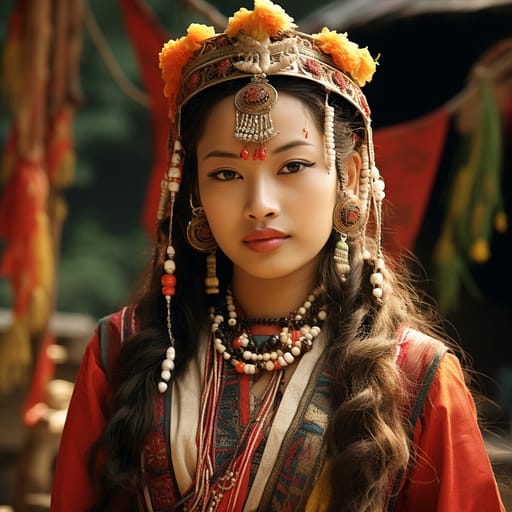
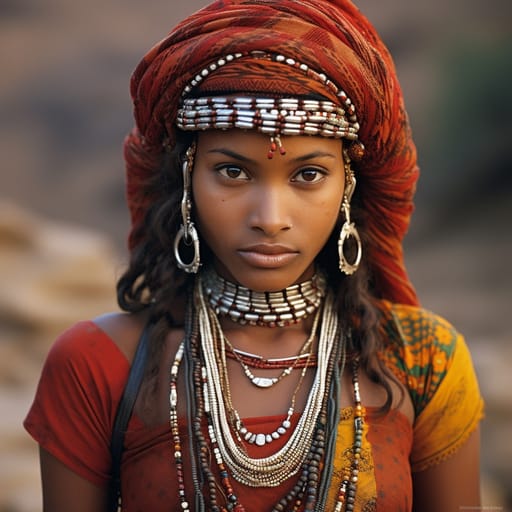
Typical Khonds Phenotypes
Reference for AI generation: hair, eyes, skin, facial structure, build
The Khonds are an Adivasi people of the Eastern Ghats — Dravidian-speaking tribal cultivators concentrated in Kandhamal, Rayagada, and Koraput districts of Odisha, with smaller pockets in Andhra Pradesh. Their phenotype sits closer to the older Dravidian-tribal substrate of peninsular India than to the lighter, more gracile look of plains-caste Odias, and the contrast is visible at a glance.
Hair is dark brown to true black, almost universally straight to gently wavy, with a fine to medium texture; the deep glossy black common across South Indian populations is the norm. Greying tends to come late. Beards in men are typically sparse to moderate rather than full. Eye color runs dark brown to near-black, with no epicanthic fold — eyes are wide-set and almond-shaped, often with a slight downward tilt at the outer corner and a pronounced upper-lid crease. Skin spans Fitzpatrick IV through VI, with the modal tone a warm, red-brown to deep umber; undertones lean copper and olive rather than the yellow cast more typical further east. Sun exposure from agricultural and forest work deepens the contrast between covered and exposed skin noticeably.
Facial structure is the most distinctive register. Noses are typically broad at the alar base with a low to medium bridge — wider than is typical for North Indian or upper-caste South Indian populations. Lips are medium-full to full, with a well-defined vermilion border. Cheekbones are moderately high and laterally set; jaws are squared rather than tapered, and the overall face shape reads as oval-to-round with strong horizontal proportions. Brow ridges are modest in women, more pronounced in men.
Build runs short and compactly muscular. Adult male stature typically falls in the 158–165 cm range, women 145–152 cm — short by national averages, with low body-fat composition shaped by subsistence agriculture. The Kutia Kondh sub-group is the most visibly distinct, retaining the deepest skin tones and the broadest nasal morphology, while Desia and Dongria Khonds trend slightly lighter and more gracile, with the Dongria additionally marked by their distinctive nose-ring and hair-clip ornamentation.
Khonds Body & Anatomy Reference
Anatomy by feature, Indo-Aryan / Dravidian South Asian phenotype
Khonds Boobs & Breasts
The typical Khonds bust is medium-to-large cup, moderate-to-full projection, in line with the wider Indo-Aryan / Dravidian South Asian pattern. Areolas usually fall in the 32-46mm range, with medium-brown to dark-brown areolar pigmentation against the wheatish-to-brown skin tone. Compared with the smaller East Asian bust profile, Khonds breasts sit forward and are generally full and soft, generally fuller than the East Asian norm. A faithful AI render of Khonds tits keeps that shape and areola size.
Khonds Ass & Hips
Butt shape among Khonds women: medium-to-full, moderate-to-high projection, classic curvy hip profile, over medium-to-wide iliac crests, full gluteal-femoral fat distribution. This follows Indo-Aryan / Dravidian South Asian ancestry and looks quite unlike the slim hip profile of East Asian women. An accurate Khonds ass in adult AI imagery keeps both the silhouette and the overall build (endomorph-to-mesomorph with fuller hip deposition) instead of a generic average.
Khonds Vagina & Pussy
Vulvar anatomy among Khonds women: medium-brown to dark-brown labial pigmentation, fuller labia minora projection. Pubic hair tends to be straight-to-wavy coarse texture, dense distribution, in the usual inverted-triangle pattern. Both follow Indo-Aryan / Dravidian South Asian pigmentation, which is why Khonds pussy renders should not fall back on a pale, sparse Western template.
Khonds Dicks & Penis
The Khonds cock profile, from Indo-Aryan / Dravidian South Asian anthropometric data: regional mean ~13cm erect; moderate girth; medium-brown shaft pigmentation. Pubic hair has a straight-to-wavy coarse texture and forms the usual inverted-V pattern. Whether Khonds men are circumcised follows religious and cultural practice rather than phenotype.
Khonds Body, Curves & Build
Build and curves among Khonds women follow the Indo-Aryan / Dravidian South Asian pattern: endomorph-to-mesomorph with fuller hip deposition, mean adult female BMI 22-25. Proportions matter as much as skin tone, so Khonds figures should keep their regional height and limb ratios.
Khonds Skin Tone & Hair Texture
The Khonds skin range is wheatish to brown (Fitzpatrick III-V), and hair tends to be straight-to-wavy 1A-2B, dense, dark-brown to black. That combination marks the Indo-Aryan / Dravidian South Asian phenotype, and skin tone is the trait AI generators most often get wrong for Khonds women.
Data depth
0/100Coverage of image-grounded phenotype observations · drives AI generation diversity
- Sample size
- 0/40· 0 images
- Image quality
- 0/30· 0% high
- Confidence
- 0/20
- Source diversity
- 0/10
- ·No image observations yet
Explore phenotype categories
Structured taxonomy with peer-reviewed scales · 22 anatomical categories
Erotic Poses & Sex Positions
From the pose catalog: 219 named positions with reference skeletons
Frequently asked questions about Khonds people
Where is the Khonds homeland?
The Khonds homeland is Kandhamal (India) in Southern Asia.
What language do Khonds people speak?
Khonds people primarily speak Dravidian / Kui.
What religion do Khonds people practice?
The predominant religion among Khonds people is Hinduism.






Make your own Khonds images
Five a day, free, no credits to buy. The studio starts from this group's phenotype data, so you can set body type, pose and style and keep the traits accurate.
Start with Khonds