Help us get this right
Does this portrait look right for Mallaah?
Nobody has judged this one yet. You would be the first.
Mallaah Erotic
Gangetic plain of northern and eastern India, chiefly Uttar Pradesh and Bihar, with communities in West Bengal, the Nepal Terai and Bangladesh; Muslim Mallaah along the Indus in Sindh, Pakistan.
No language of their own: Hindi, Bhojpuri, Maithili, Magahi, Awadhi and Bengali in India and Nepal, Sindhi in Pakistan (all Indo-Aryan, Indo-European).
Mostly Hindu, with devotion to the Ganges as a mother goddess and to Nishadraj Guha of the Ramayana; Sunni Muslim in Sindh and in parts of Uttar Pradesh.
An occupational cluster of boating and fishing castes including Kewat, Bind, Dhimar, Manjhi, Sahani, Turaha and Kashyap, grouped politically under the name Nishad; related to the Mohana and Mirbahar fishers of Sindh.
About Mallaah People
The Mallaah are the boat people of the north Indian rivers: ferrymen, fishers, divers and sand dredgers whose identity comes from the water, not from a single territory or a shared ancestor. The name is a borrowed job title, from the Arabic mallah, sailor, which reached the Gangetic plain through Persian and Urdu. That is why it covers a whole cluster of separate communities, among them Kewat, Bind, Dhimar, Manjhi, Sahani and Turaha, who marry within their own sections but increasingly rally under one political banner, Nishad. They live wherever the Ganges, Yamuna, Ghaghara, Gandak and Kosi run, thickest in Uttar Pradesh and Bihar, with smaller communities east into Bengal and north into the Nepal Terai. A separate Muslim Mallaah population fishes the Indus and its lakes in Sindh, Pakistan.
They have no language of their own. A Mallaah in Varanasi speaks Bhojpuri and Hindi, one in Darbhanga speaks Maithili, one in Thatta speaks Sindhi. Most in India are Hindu, and their Hinduism leans on the river: Ganga is addressed as a mother, not a resource. The community's proudest story comes from the Ramayana, where the Nishad chief Guha shelters the exiled Rama and a boatman, Kewat, refuses to ferry him over the Ganges until he has washed the prince's feet. It is a charter myth with an edge, since it puts a low-ranked caste in the position of doing a god a favor.
The last two centuries were hard on the trade. Railways and bridges took cargo and passengers off the rivers, colonial officials listed Mallaah groups under the Criminal Tribes Act, and rights over fishing grounds and sandbanks passed to contractors and landlords, leaving boatmen to work water they did not control. Many families now farm small plots, labor for wages or migrate to cities. Others still row pilgrims at the ghats of Varanasi and at the confluence in Prayagraj, where boatmen defend customary claims to particular landings.
Numbers have turned grievance into leverage. Bihar's 2023 caste survey counted Mallaah at about 2.6 percent of the state, enough to swing seats along the rivers, and parties built on the boatman vote now bargain in both Patna and Lucknow. The standing demand is a move from Other Backward Class to Scheduled Caste or Scheduled Tribe status, with the quotas that follow. The best-known Mallaah of all remains Phoolan Devi, born in a village in Jalaun district, who went from bandit to member of parliament for Mirzapur and was shot dead in Delhi in 2001.
Related ethnic groups
Groups that share Mallaah's homeland, region, language, or religious tradition. These are likely candidates for comparative phenotype reference.
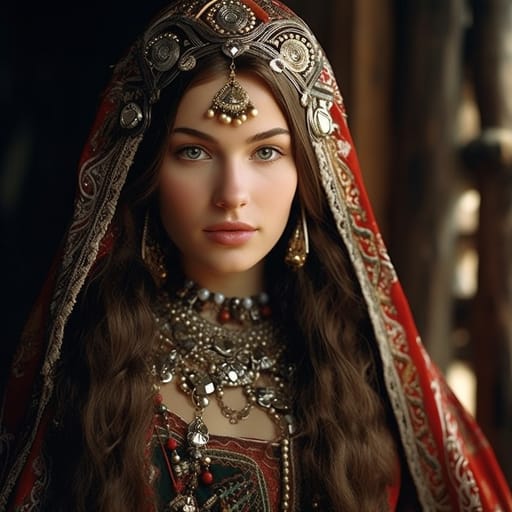
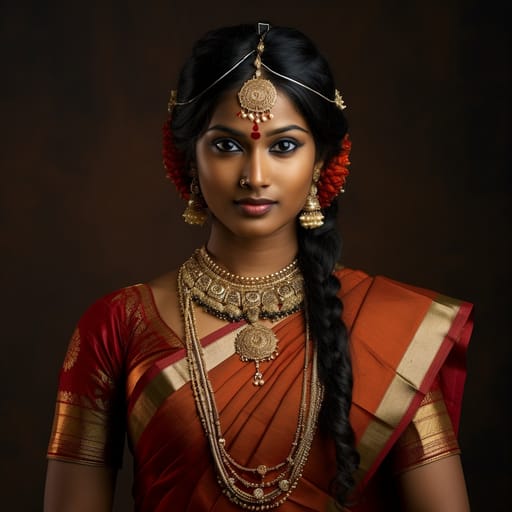
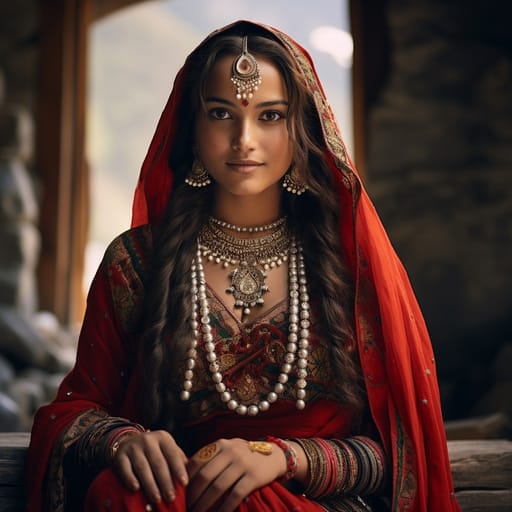
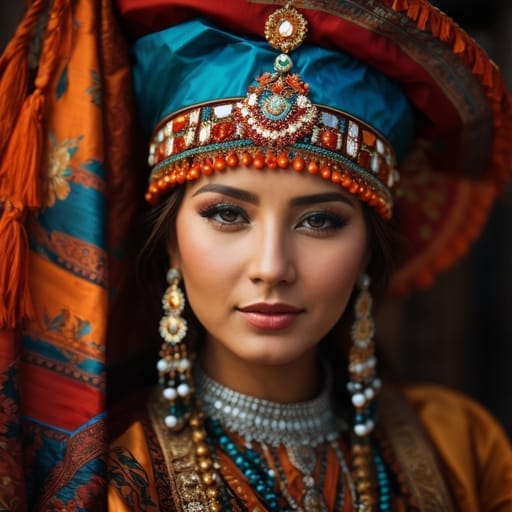
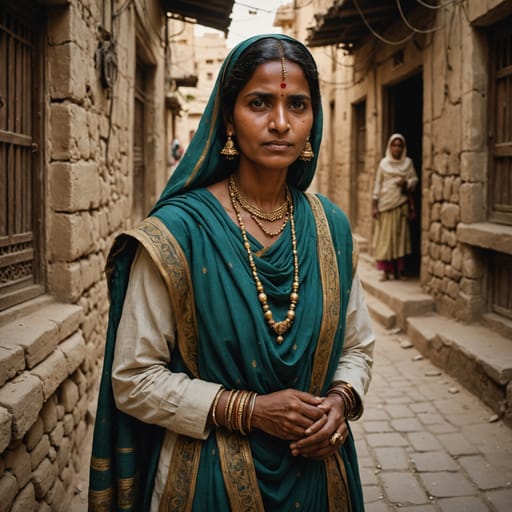
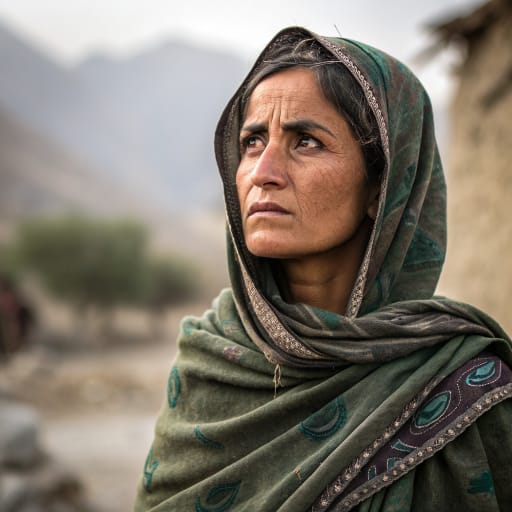
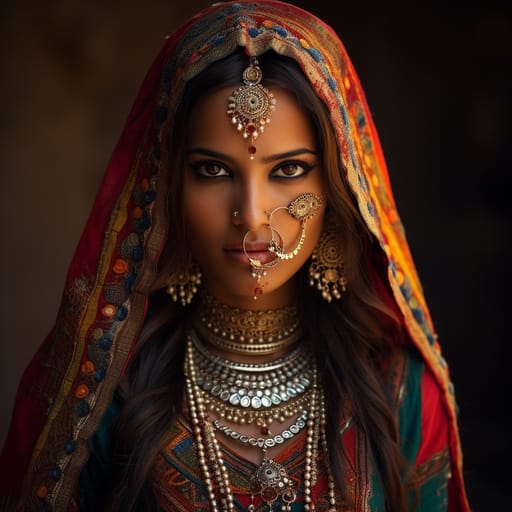
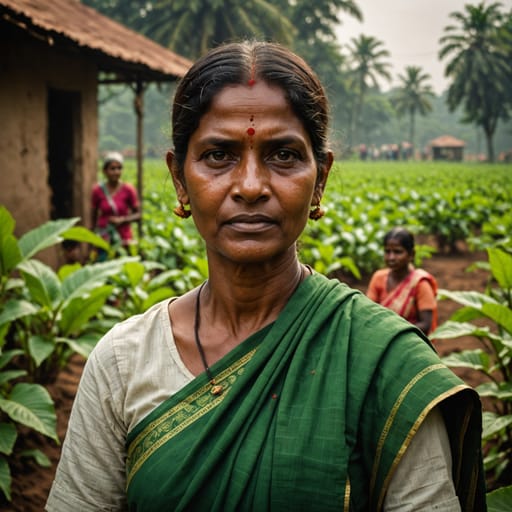
Typical Mallaah Phenotypes
Reference for AI generation: hair, eyes, skin, facial structure, build
Mallaah Body & Anatomy Reference
Anatomy by feature, Indo-Aryan / Dravidian South Asian phenotype
Mallaah Boobs & Breasts
Mallaah tits and boobs run medium-to-large cup, moderate-to-full projection, the classic Indo-Aryan / Dravidian South Asian bust profile. Mallaah nipples and areolas show medium-brown to dark-brown areolar pigmentation against the wheatish-to-brown skin tone, with areolar diameter typically in the 32-46mm range and forward-set positioning rather than the smaller East Asian bust profile. Mallaah breasts trend full and soft, generally fuller than the East Asian norm, a function of the endomorph-to-mesomorph with fuller hip deposition body habitus and the mean adult female BMI 22-25. For anatomically accurate AI-generated Mallaah nudes the render preserves the medium-to-large cup, moderate-to-full projection shape, 32-46mm areolas with medium-brown to dark-brown pigmentation, and the torso proportions of the Indo-Aryan / Dravidian South Asian phenotype.
Mallaah Ass & Hips
Mallaah hips and butt usually read as medium-to-full, moderate-to-high projection, classic curvy hip profile. The skeletal base is medium-to-wide iliac crests, full gluteal-femoral fat distribution, the Indo-Aryan / Dravidian South Asian pattern. Set against the slim hip profile of East Asian women, the difference is easy to see, and the hip-to-waist ratio is often what identifies Mallaah women in photos.
Mallaah Vagina & Pussy
Expect medium-brown to dark-brown labial pigmentation, fuller labia minora projection on Mallaah women, in keeping with Indo-Aryan / Dravidian South Asian ancestry. The pubic hair is straight-to-wavy coarse texture, dense distribution. Coloring should run evenly from the wheatish to brown skin of the thighs to the labia, and Mallaah nude imagery should keep the hair's straight-to-wavy coarse texture.
Mallaah Dicks & Penis
Mallaah dick and penile anatomy in adult AI generation should anchor on the regional reference data: regional mean ~13cm erect, moderate girth, and medium-brown shaft pigmentation. The Mallaah cock profile reflects the Indo-Aryan / Dravidian South Asian population's anthropometric measurements. The shaft pigmentation should track the surrounding wheatish to brown skin tone, and the pubic hair should keep its straight-to-wavy coarse texture in the typical inverted-V escutcheon.
Mallaah Body, Curves & Build
Mallaah body type: endomorph-to-mesomorph with fuller hip deposition, with mean adult female BMI 22-25. This is the typical Indo-Aryan / Dravidian South Asian build. Height range, shoulder-to-hip ratio and fat distribution all follow from it, which is what an accurate Mallaah nude body should show.
Mallaah Skin Tone & Hair Texture
Mallaah skin tone falls in the wheatish to brown (Fitzpatrick III-V) band, the surface signal most often miscalibrated by generic AI nude generators. Mallaah hair texture is typically straight-to-wavy 1A-2B, dense, dark-brown to black, characteristic of the Indo-Aryan / Dravidian South Asian phenotype. In Mallaah nude renders the skin should hold that band consistently across the body.
Explore phenotype categories
Structured taxonomy with peer-reviewed scales · 22 anatomical categories
Erotic Poses & Sex Positions
From the pose catalog: 219 named positions with reference skeletons
Frequently asked questions about Mallaah people
Where is the Mallaah homeland?
The Mallaah homeland is Gangetic plain of northern and eastern India, chiefly Uttar Pradesh and Bihar, with communities in West Bengal, the Nepal Terai and Bangladesh; Muslim Mallaah along the Indus in Sindh, Pakistan. in Southern Asia.
What language do Mallaah people speak?
Mallaah people primarily speak No language of their own: Hindi, Bhojpuri, Maithili, Magahi, Awadhi and Bengali in India and Nepal, Sindhi in Pakistan (all Indo-Aryan, Indo-European)..
What religion do Mallaah people practice?
The predominant religion among Mallaah people is Mostly Hindu, with devotion to the Ganges as a mother goddess and to Nishadraj Guha of the Ramayana; Sunni Muslim in Sindh and in parts of Uttar Pradesh..






Make your own Mallaah images
Five a day, free, no credits to buy. The studio starts from this group's phenotype data, so you can set body type, pose and style and keep the traits accurate.
Start with Mallaah