Help us get this right
Does this portrait look right for Maina?
Nobody has judged this one yet. You would be the first.
Maina Erotic
Upper Marañón River just below the Pongo de Manseriche, in the northern Peruvian Amazon (present-day Loreto, Peru)
Maina (extinct and barely recorded; unclassified)
Pre-contact beliefs went largely unrecorded; Catholicism came through the Jesuit Missions of Maynas from 1638
No recorded branches; a small lowland nation of the upper Marañón whose name was later given to the Jesuit Missions of Maynas and the colonial government of Maynas
About Maina People
The Maina were an Amazonian people of the upper Marañón River in what is now northern Peru. Spaniards first recorded them in the early 1600s, and they had disappeared as a distinct community by the end of the colonial era. Any descendants who survived were absorbed into the mixed mission and river populations of Loreto. What stands out about them is strange: almost nothing of their own lives was written down, yet their name spread across a huge stretch of the western Amazon, and it is still on the map.
Their country lay just below the Pongo de Manseriche, the gorge where the Marañón leaves the Andean foothills and enters the flat forest. It was a crossroads, with Jivaroan peoples holding the hills and rivers around them. In 1619 Spanish adventurers founded the town of San Francisco de Borja in Maina territory and divided the people among themselves in encomiendas. These were colonial grants that turned a conquered community into forced labor for private settlers. It went the way such arrangements usually went. Abuse led to a revolt in the 1630s in which Spaniards were killed, and the colonial response was to call in the Jesuits, who arrived in 1638.
The mission that followed is the main reason anyone remembers the Maina. For more than a century, until the crown expelled the order in 1767, Jesuits working out of Borja pushed downriver and up the tributaries. They gathered people from dozens of nations into mission villages, and the whole enterprise carried the Maina name: the Missions of Maynas. The mission towns also crowded people together, which made epidemics far deadlier, and a small nation living beside the Spanish base had little chance of coming through intact. What the Maina believed before the priests came was never properly recorded. So little of their language was written down that linguists cannot say with confidence what family it belonged to.
The name outlasted the people. Maynas became a colonial government covering a vast area of the upper Amazon. A royal order of 1802 moved it from Quito's authority toward Lima, and that order became a founding document in the long border dispute between Ecuador and Peru. The dispute broke into fighting more than once before a settlement in 1998. Today Maynas Province, centered on the river city of Iquitos, carries the name hundreds of kilometers from the gorge where the Maina actually lived. Many small Amazonian nations share that fate: they are remembered less for who they were than for what outsiders built on top of them.
Related ethnic groups
Groups that share Maina's homeland, region, language, or religious tradition. These are likely candidates for comparative phenotype reference.
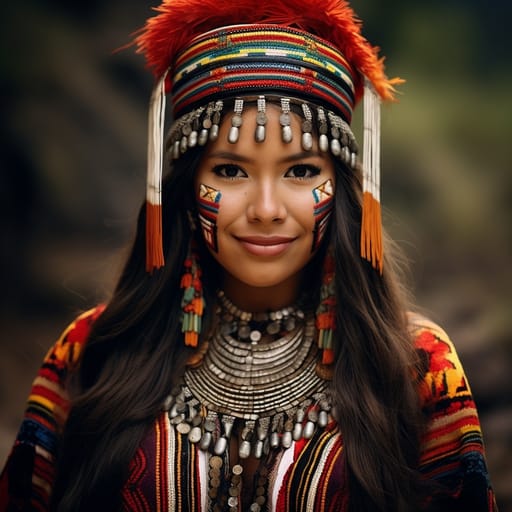
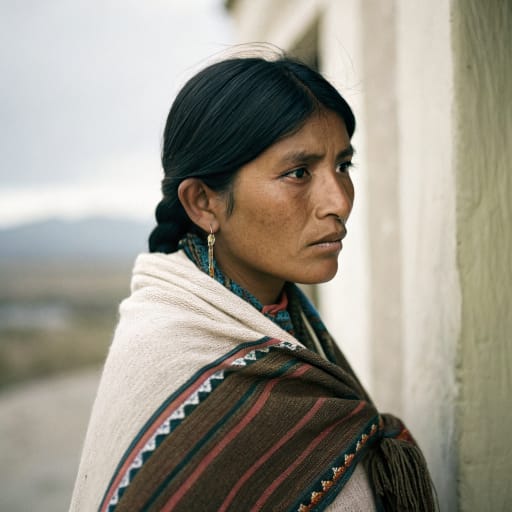
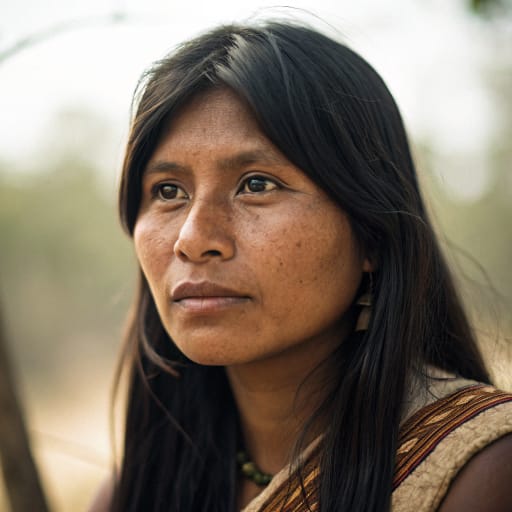
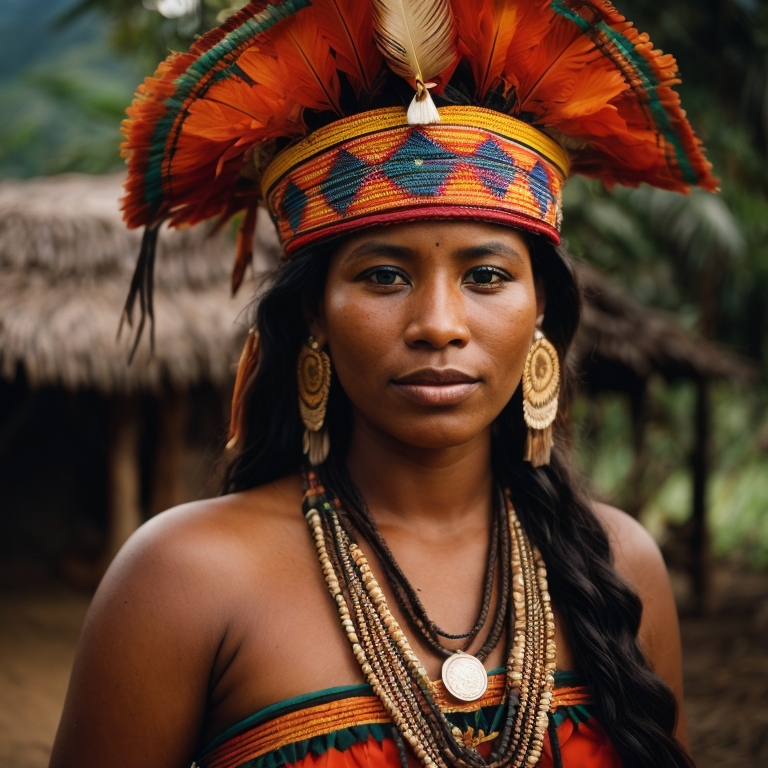
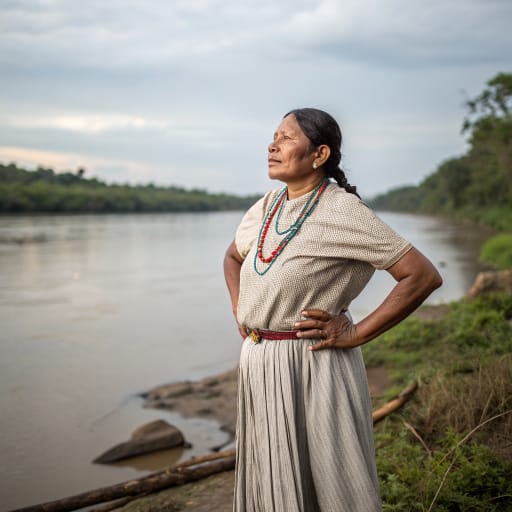
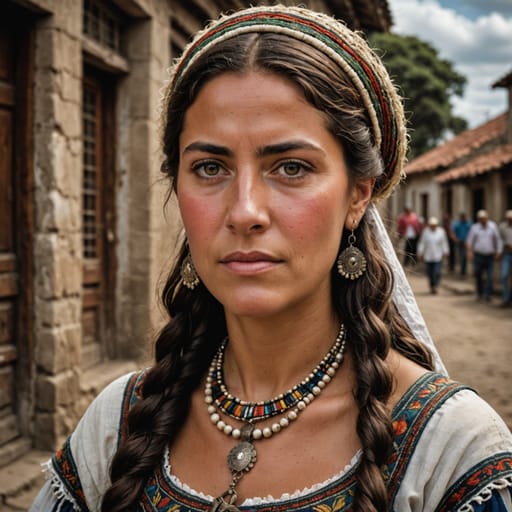
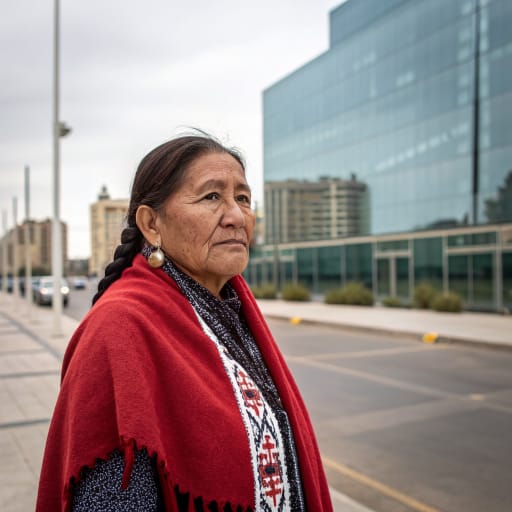
Typical Maina Phenotypes
Reference for AI generation: hair, eyes, skin, facial structure, build
Maina Body & Anatomy Reference
Anatomy by feature, South American Indigenous / European-Mestizo / Afro-Latino mix phenotype
Maina Boobs & Breasts
Maina tits and boobs run medium-to-large cup, full, high projection, the classic South American Indigenous / European-Mestizo / Afro-Latino mix bust profile. Maina nipples and areolas show medium-brown to dark-brown areolar pigmentation against the tan-to-deep-brown skin tone, with areolar diameter typically in the 32-46mm range and forward-set positioning rather than the smaller bust profile of Andean Indigenous sub-populations. Maina breasts trend the classic Brazilian / Latina curvy bust profile in lowland populations; smaller and shorter-set in Andean Indigenous populations, a function of the endomorph-to-mesomorph with high gluteal-femoral deposition body habitus and the mean adult female BMI 25-28. For anatomically accurate AI-generated Maina nudes the render preserves the medium-to-large cup, full, high projection shape, 32-46mm areolas with medium-brown to dark-brown pigmentation, and the torso proportions of the South American Indigenous / European-Mestizo / Afro-Latino mix phenotype.
Maina Ass & Hips
Maina hips and butt usually read as full, high projection, the famous Brazilian / Latina bunda profile. The skeletal base is wide iliac crests, very full gluteal-femoral fat deposition (the hallmark Brazilian / Latina hip-to-waist ratio), the South American Indigenous / European-Mestizo / Afro-Latino mix pattern. Set against the slim narrow-hip East Asian profile, the difference is easy to see, and the hip-to-waist ratio is often what identifies Maina women in photos.
Maina Vagina & Pussy
Expect medium-brown to dark-brown labial pigmentation, fuller labia minora on Maina women, in keeping with South American Indigenous / European-Mestizo / Afro-Latino mix ancestry. The pubic hair is wavy-to-curly coarse dark texture, dense distribution. Coloring should run evenly from the tan to deep-brown skin of the thighs to the labia, and Maina nude imagery should keep the hair's wavy-to-curly coarse dark texture.
Maina Dicks & Penis
Maina dick and penile anatomy in adult AI generation should anchor on the regional reference data: regional mean ~13cm erect, moderate-to-above-average girth, and medium-brown shaft pigmentation. The Maina cock profile reflects the South American Indigenous / European-Mestizo / Afro-Latino mix population's anthropometric measurements. The shaft pigmentation should track the surrounding tan to deep-brown skin tone, and the pubic hair should keep its wavy-to-curly coarse dark texture in the typical inverted-V escutcheon.
Maina Body, Curves & Build
Maina body type: endomorph-to-mesomorph with high gluteal-femoral deposition, with mean adult female BMI 25-28. This is the typical South American Indigenous / European-Mestizo / Afro-Latino mix build. Height range, shoulder-to-hip ratio and fat distribution all follow from it, which is what an accurate Maina nude body should show.
Maina Skin Tone & Hair Texture
Maina skin tone falls in the tan to deep-brown (Fitzpatrick III-VI) band, the surface signal most often miscalibrated by generic AI nude generators. Maina hair texture is typically straight-to-curly 1A-3C, varies widely by ancestral composition, characteristic of the South American Indigenous / European-Mestizo / Afro-Latino mix phenotype. In Maina nude renders the skin should hold that band consistently across the body.
Explore phenotype categories
Structured taxonomy with peer-reviewed scales · 22 anatomical categories
Erotic Poses & Sex Positions
From the pose catalog: 219 named positions with reference skeletons
Frequently asked questions about Maina people
Where is the Maina homeland?
The Maina homeland is Upper Marañón River just below the Pongo de Manseriche, in the northern Peruvian Amazon (present-day Loreto, Peru) in South America.
What language do Maina people speak?
Maina people primarily speak Maina (extinct and barely recorded; unclassified).
What religion do Maina people practice?
The predominant religion among Maina people is Pre-contact beliefs went largely unrecorded; Catholicism came through the Jesuit Missions of Maynas from 1638.






Make your own Maina images
Five a day, free, no credits to buy. The studio starts from this group's phenotype data, so you can set body type, pose and style and keep the traits accurate.
Start with Maina