Help us get this right
Does this portrait look right for Lule?
Nobody has judged this one yet. You would be the first.
Lule Erotic
The western Gran Chaco and the Tucumán region of northwest Argentina, historically across the provinces of Salta, Tucumán and Santiago del Estero.
Lule (Lule-Vilela family, extinct); Spanish (Indo-European) today
Roman Catholic since the Jesuit missions of the 18th century; little is recorded of earlier beliefs.
Colonial-era bands including the Isistiné, Toquistiné and Oristiné; linked by language to the Vilela in the proposed Lule-Vilela family.
About Lule People
The Lule are an Indigenous people of northwestern Argentina, and for most of the last five centuries other people have told their story. Spanish chroniclers of the 1500s used the name for mobile bands on the western edge of the Gran Chaco who fought both the farming villages and the new colonial towns of the Tucumán region. Later officials wrote the Lule off as a people who had simply dissolved into the rural population. Their descendants in Salta, Tucumán and Santiago del Estero have spent recent decades saying otherwise.
Before the missions and ranches came, the Lule lived off the dry thorn forest and its rivers by hunting, fishing and gathering. Their language is known mostly from a grammar and vocabulary published in 1732 by the Jesuit Antonio Machoni. Linguists usually group it with Vilela in a small Lule-Vilela family. It was not related to Quechua, which the colonial church spread across the region as a common language, or to the Guaycuruan and Matacoan languages spoken deeper in the Chaco. Scholars still argue about whether the Lule in the early chronicles and the Lule in Machoni's book were the same people at all. That argument shows how loosely Spanish writers handed out ethnic names.
The turning point came in the early 1700s, when Jesuits gathered Lule bands, among them the Isistiné, Toquistiné and Oristiné, into missions along the Salado River in Salta. Mission life meant Catholic teaching, planted fields, cattle and a church bell that set the hours of the day. After the Spanish Crown expelled the Jesuits in 1767 the missions declined. Over the next century Spanish replaced the Lule language, and Catholicism became the ordinary faith. The town of Lules, just outside San Miguel de Tucumán, still carries the name.
In 1994 Argentina changed its constitution to recognize that Indigenous peoples were there before the nation. That gave families who had long been counted as criollos a way to organize as Lule communities. The language survives only on paper, so the revival relies on family trees, family memory, place names and the colonial records themselves, now read by descendants instead of missionaries. Most Lule today are Catholic. For them, being Lule is less about bringing back a lost world than about not being left as a footnote in someone else's archive.
Related ethnic groups
Groups that share Lule's homeland, region, language, or religious tradition. These are likely candidates for comparative phenotype reference.

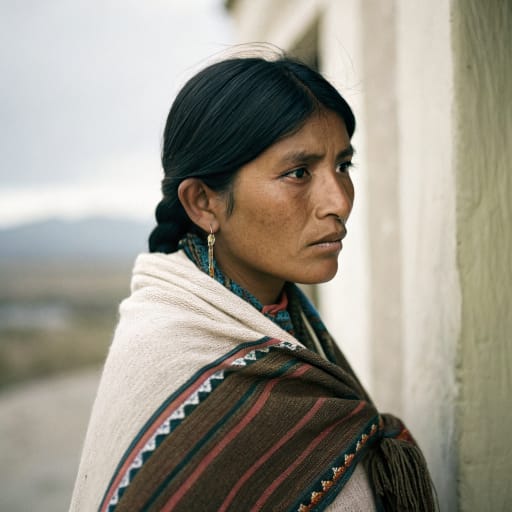
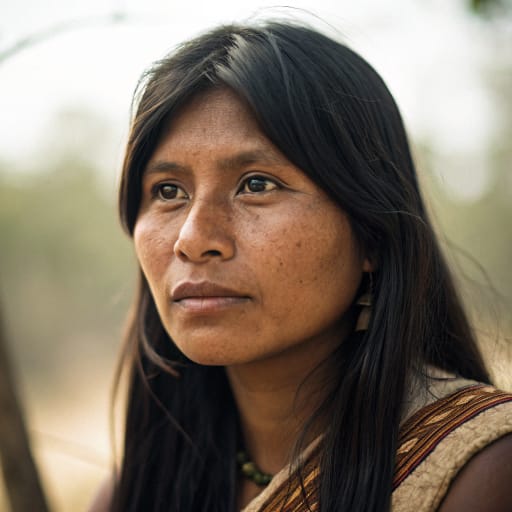
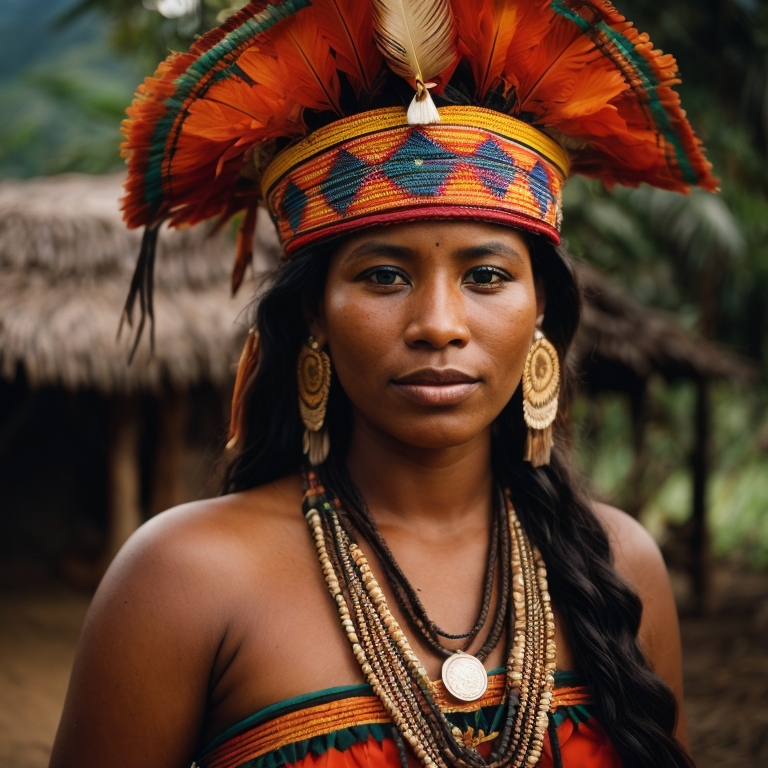
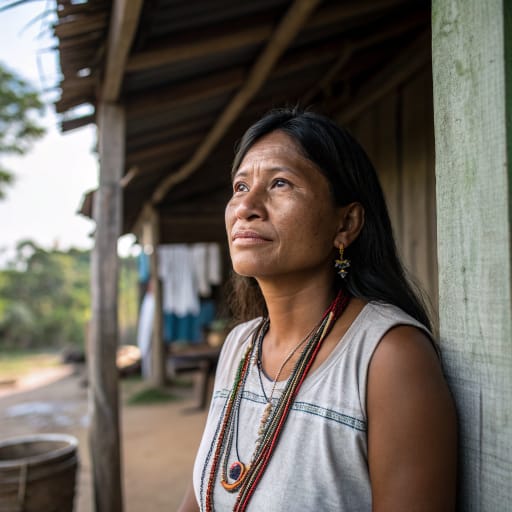
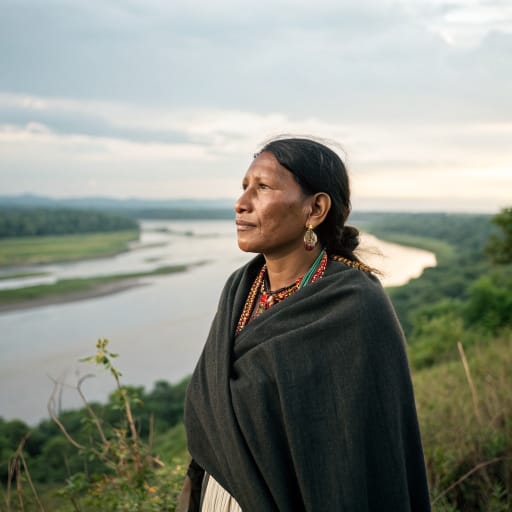
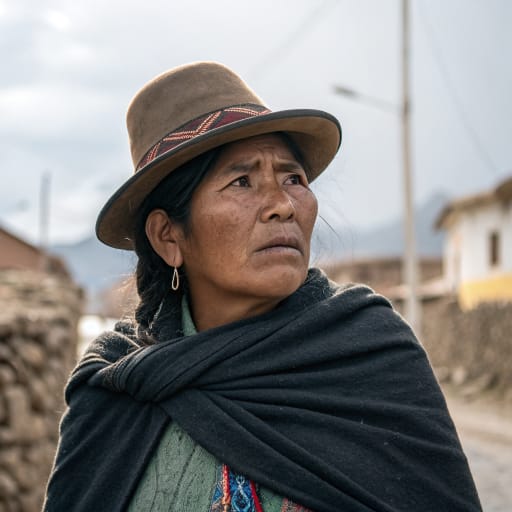
Typical Lule Phenotypes
Reference for AI generation: hair, eyes, skin, facial structure, build
Lule Body & Anatomy Reference
Anatomy by feature, South American Indigenous / European-Mestizo / Afro-Latino mix phenotype
Lule Boobs & Breasts
Lule boobs follow the South American Indigenous / European-Mestizo / Afro-Latino mix profile: medium-to-large cup, full, high projection. Areolar diameter is usually 32-46mm, and the coloring is medium-brown to dark-brown areolar pigmentation against the tan-to-deep-brown skin tone. Breast shape tracks body composition (endomorph-to-mesomorph with high gluteal-femoral deposition, mean adult female BMI 25-28), so Lule breasts tend to be the classic Brazilian / Latina curvy bust profile in lowland populations; smaller and shorter-set in Andean Indigenous populations. Expect a forward-set shape, not the smaller bust profile of Andean Indigenous sub-populations.
Lule Ass & Hips
Lule ass and hip morphology presents as full, high projection, the famous Brazilian / Latina bunda profile, distinctly different from the slim narrow-hip East Asian profile. The Lule pelvic profile shows wide iliac crests, very full gluteal-femoral fat deposition (the hallmark Brazilian / Latina hip-to-waist ratio), anchored in the South American Indigenous / European-Mestizo / Afro-Latino mix skeletal pattern. Lule butt shots in adult AI imagery should render the full, high projection, the famous Brazilian / Latina bunda profile silhouette with the overall build (endomorph-to-mesomorph with high gluteal-femoral deposition) and the fat distribution typical of the South American Indigenous / European-Mestizo / Afro-Latino mix phenotype.
Lule Vagina & Pussy
Lule pussy anatomy typically shows medium-brown to dark-brown labial pigmentation, fuller labia minora. Pubic hair is usually wavy-to-curly coarse dark texture, dense distribution. In AI-generated Lule nudes, labial color should blend into the tan to deep-brown skin with a gradual transition, and the hair should keep its wavy-to-curly coarse dark texture.
Lule Dicks & Penis
Penis reference for Lule men: regional mean ~13cm erect, moderate-to-above-average girth. Coloring: medium-brown shaft pigmentation. An accurate Lule cock in AI imagery matches the surrounding tan to deep-brown skin rather than a generic porn default. Circumcision depends on religion and custom, not ancestry.
Lule Body, Curves & Build
The Lule figure is generally endomorph-to-mesomorph with high gluteal-femoral deposition, with mean adult female BMI 25-28, characteristic of South American Indigenous / European-Mestizo / Afro-Latino mix ancestry. AI image tools tend to flatten regional body types into a few stock shapes; here the Lule build is kept as its own reference.
Lule Skin Tone & Hair Texture
Skin: tan to deep-brown (Fitzpatrick III-VI). Hair: straight-to-curly 1A-3C, varies widely by ancestral composition. Both are typical of South American Indigenous / European-Mestizo / Afro-Latino mix ancestry. The most common mistake in AI nudes of Lule women is a body rendered lighter than the face.
Explore phenotype categories
Structured taxonomy with peer-reviewed scales · 22 anatomical categories
Erotic Poses & Sex Positions
From the pose catalog: 219 named positions with reference skeletons
Frequently asked questions about Lule people
Where is the Lule homeland?
The Lule homeland is The western Gran Chaco and the Tucumán region of northwest Argentina, historically across the provinces of Salta, Tucumán and Santiago del Estero. in South America.
What language do Lule people speak?
Lule people primarily speak Lule (Lule-Vilela family, extinct); Spanish (Indo-European) today.
What religion do Lule people practice?
The predominant religion among Lule people is Roman Catholic since the Jesuit missions of the 18th century; little is recorded of earlier beliefs..






Make your own Lule images
Five a day, free, no credits to buy. The studio starts from this group's phenotype data, so you can set body type, pose and style and keep the traits accurate.
Start with Lule