No portrait yet
Gavião Erotic
Mãe Maria Indigenous Territory near Marabá, Pará, Brazil; the Pykobjê in the Governador Indigenous Territory, Maranhão, Brazil
Timbira, in the Parkatêjê and Pykobjê varieties (Northern Jê, Macro-Jê); Portuguese widely spoken, especially among younger people
Indigenous Timbira ritual and ceremonial tradition
Parkatêjê, Kyikatêjê and Akrãtikatêjê in Pará, and the Pykobjê in Maranhão; part of the Timbira branch of the Northern Jê peoples
About Gavião People
Gavião is Portuguese for hawk. Settlers and officials gave these people that name, and it stuck. Underneath it they are Timbira, one of the Northern Jê peoples whose villages traditionally form a ring of houses around an open plaza. Among themselves they go by where each group comes from, not by the name outsiders gave them. In the Mãe Maria Indigenous Territory in southeastern Pará, not far from Marabá, live the Parkatêjê, the downriver people; the Kyikatêjê, the upriver people; and the Akrãtikatêjê, the people of the mountain. A related Gavião community, the Pykobjê, lives to the east in Maranhão.
The twentieth century hit them hard. Brazil nut gatherers pushed into the forests of the Tocantins valley, and contact with them and with government agents brought violence and disease that sharply cut the Gavião population. Then came the development projects. The reservoir of the Tucuruí dam flooded Akrãtikatêjê land, and that community was moved to Mãe Maria. The territory itself is crossed by a federal highway, high-voltage power lines and the Carajás railway, which carries iron ore to the Atlantic coast. The Gavião did not simply put up with this. They pushed the state and the companies involved for compensation. Under leaders such as Krohokrenhum they also took control of their own Brazil nut trade, so they no longer harvested for outside middlemen. That long record of hard bargaining is now as much a part of who they are as any ceremony.
Their language is a form of Timbira. It is close enough to the speech of the Krahô, Canela and Krikati that linguists treat all of them as dialects of one language. Among the Parkatêjê, most younger people now speak mainly Portuguese, and much of the work of keeping the language alive falls to elders and the village school. Ceremonial life has held up better. Log races are still a centerpiece: rival teams run long distances carrying heavy sections of palm trunk. There are also archery contests, and participants paint their bodies with red urucum and black genipapo. These events follow the paired ceremonial divisions that organize Timbira social life. They are one of the clearest ways the Gavião show themselves and their neighbors that getting through the last century did not mean disappearing into it.
Related ethnic groups
Groups that share Gavião's homeland, region, language, or religious tradition. These are likely candidates for comparative phenotype reference.
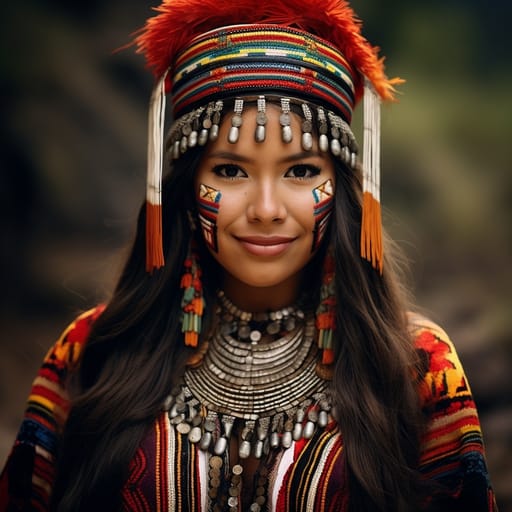
Quechua
same region (South America)
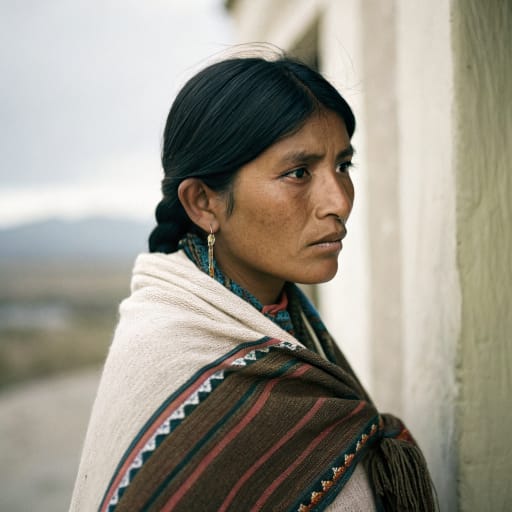
Aymara
same region (South America)
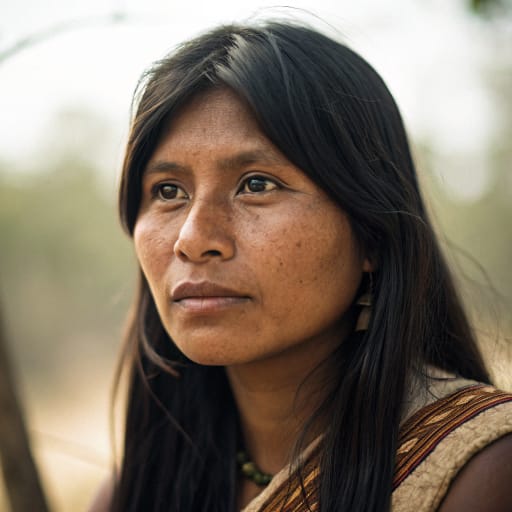
Guaraní
same region (South America)
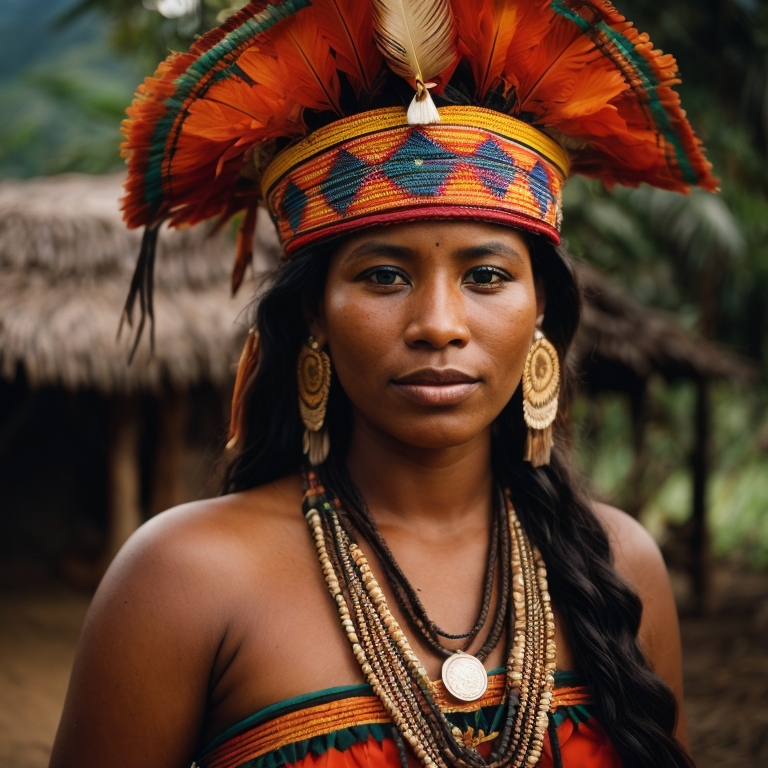
Emberá
same region (South America)
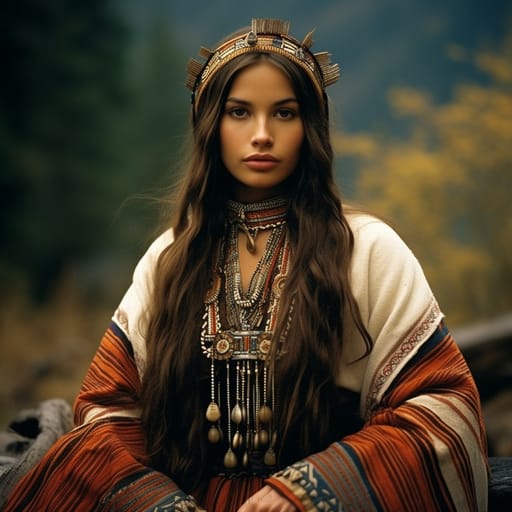
Mapuche
same region (South America)
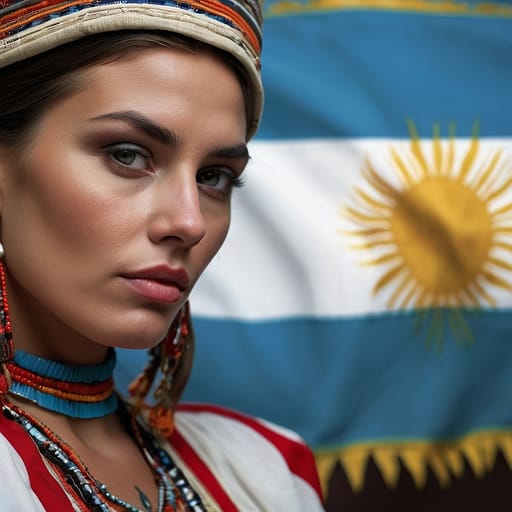
White Argentine
same region (South America)
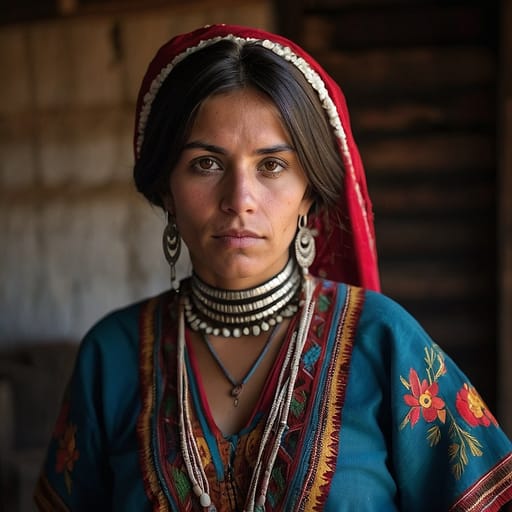
Mestizo Argentine
same region (South America)
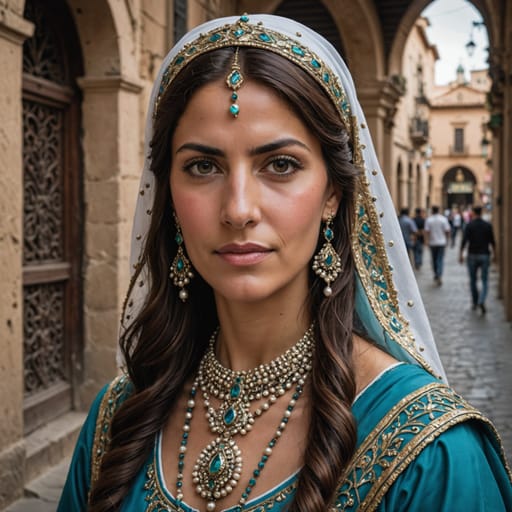
Middle Eastern Argentine
same region (South America)
Typical Gavião Phenotypes
Reference for AI generation: hair, eyes, skin, facial structure, build
Gavião Body & Anatomy Reference
Per-feature anatomical profile for AI nude generation: South American Indigenous / European-Mestizo / Afro-Latino mix phenotype
Gavião Boobs & Breasts
The typical Gavião bust is medium-to-large cup, full, high projection, in line with the wider South American Indigenous / European-Mestizo / Afro-Latino mix pattern. Areolas usually fall in the 32-46mm range, with medium-brown to dark-brown areolar pigmentation against the tan-to-deep-brown skin tone. Compared with the smaller bust profile of Andean Indigenous sub-populations, Gavião breasts sit forward and are generally the classic Brazilian / Latina curvy bust profile in lowland populations; smaller and shorter-set in Andean Indigenous populations. A faithful AI render of Gavião tits keeps that shape and areola size.
Gavião Ass & Hips
Butt shape among Gavião women: full, high projection, the famous Brazilian / Latina bunda profile, over wide iliac crests, very full gluteal-femoral fat deposition (the hallmark Brazilian / Latina hip-to-waist ratio). This follows South American Indigenous / European-Mestizo / Afro-Latino mix ancestry and looks quite unlike the slim narrow-hip East Asian profile. An accurate Gavião ass in adult AI imagery keeps both the silhouette and the overall build (endomorph-to-mesomorph with high gluteal-femoral deposition) instead of a generic average.
Gavião Vagina & Pussy
Vulvar anatomy among Gavião women: medium-brown to dark-brown labial pigmentation, fuller labia minora. Pubic hair tends to be wavy-to-curly coarse dark texture, dense distribution, in the usual inverted-triangle pattern. Both follow South American Indigenous / European-Mestizo / Afro-Latino mix pigmentation, which is why Gavião pussy renders should not fall back on a pale, sparse Western template.
Gavião Dicks & Penis
The Gavião cock profile, from South American Indigenous / European-Mestizo / Afro-Latino mix anthropometric data: regional mean ~13cm erect; moderate-to-above-average girth; medium-brown shaft pigmentation. Pubic hair has a wavy-to-curly coarse dark texture and forms the usual inverted-V pattern. Whether Gavião men are circumcised follows religious and cultural practice rather than phenotype.
Gavião Body, Curves & Build
Build and curves among Gavião women follow the South American Indigenous / European-Mestizo / Afro-Latino mix pattern: endomorph-to-mesomorph with high gluteal-femoral deposition, mean adult female BMI 25-28. Proportions matter as much as skin tone, so Gavião figures should keep their regional height and limb ratios.
Gavião Skin Tone & Hair Texture
The Gavião skin range is tan to deep-brown (Fitzpatrick III-VI), and hair tends to be straight-to-curly 1A-3C, varies widely by ancestral composition. That combination marks the South American Indigenous / European-Mestizo / Afro-Latino mix phenotype, and skin tone is the trait AI generators most often get wrong for Gavião women.
Explore phenotype categories
Structured taxonomy with peer-reviewed scales · 22 anatomical categories
Erotic Poses & Sex Positions
From the pose catalog: 219 named positions with reference skeletons
Frequently asked questions about Gavião people
Where is the Gavião homeland?
The Gavião homeland is Mãe Maria Indigenous Territory near Marabá, Pará, Brazil; the Pykobjê in the Governador Indigenous Territory, Maranhão, Brazil in South America.
What language do Gavião people speak?
Gavião people primarily speak Timbira, in the Parkatêjê and Pykobjê varieties (Northern Jê, Macro-Jê); Portuguese widely spoken, especially among younger people.
What religion do Gavião people practice?
The predominant religion among Gavião people is Indigenous Timbira ritual and ceremonial tradition.






Make your own Gavião images
Five a day, free, no credits to buy. The studio starts from this group's phenotype data, so you can set body type, pose and style and keep the traits accurate.
Start with Gavião