Help us get this right
Does this portrait look right for Chácobo?
Nobody has judged this one yet. You would be the first.
Chácobo Erotic
Northern Beni Department, Bolivia, along the Ivon, Benicito and Yata rivers near Riberalta
Chácobo (Panoan), closely related to Pacahuara; Spanish widely spoken as a second language
Mostly evangelical Protestant, following missionary work that began in the 1950s, with older beliefs about the forest and healing still present
Panoan-speaking people; share a communal territory with the closely related Pacahuara
About Chácobo People
The Chácobo are a small forest people of Bolivia's northern Amazon. They live along the Ivon, Benicito and Yata rivers in the Beni lowlands near Riberalta. In a region of cattle ranches and Spanish-speaking river towns, their language is what sets them apart. It belongs to the Panoan family, which is centered much farther north and west, in the Peruvian and Brazilian Amazon. Chácobo sits at the southeastern edge of that family. Its speakers live next to Tacanan-speaking neighbors such as the Ese Ejja and Cavineño, not next to close linguistic relatives. Its nearest relative is Pacahuara, spoken by a few families who came to live among the Chácobo in the twentieth century. Pacahuara is now nearly gone. Bolivia's 2009 constitution names Chácobo as one of the country's official languages, and it is still the language spoken at home in Chácobo villages.
The rubber boom of the late nineteenth and early twentieth centuries hit this corner of the Beni hard. Riberalta grew rich as a rubber port, and indigenous peoples across the region were forced into tapping crews or pushed deeper into the forest. The Chácobo got through it mostly by keeping their distance, though outside diseases cut their numbers. Lasting contact with outsiders came in the 1950s, when missionaries from the Summer Institute of Linguistics settled among them. The missionaries created a written form of the language and brought many families into evangelical Protestantism. Church life is now part of village routine, but older ideas about the forest and about healing have not disappeared.
Outside researchers usually notice the Chácobo's knowledge of the forest first. Botanists who worked with the community in the 1980s found that the Chácobo had a use for the great majority of tree species in a surveyed plot, as food, medicine, building material, fuel or tools. Later fieldwork has kept adding to that record. The same skill runs daily life. Families clear small swidden gardens for manioc, plantains, maize and rice. They hunt, fish the rivers and spend the rainy season gathering Brazil nuts, their main source of cash. Their villages sit on a collective territory that they share with the Pacahuara, titled under Bolivia's indigenous land laws. The Chácobo have been in steady contact with the rest of the country for generations. Many speak Spanish as well as their own language, and their nut harvest is sold on a global market. Still, their sense of who they are is tied to one particular stretch of river and forest.
Related ethnic groups
Groups that share Chácobo's homeland, region, language, or religious tradition. These are likely candidates for comparative phenotype reference.
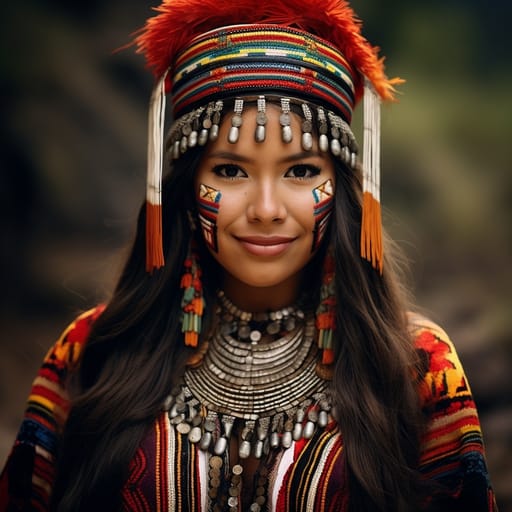
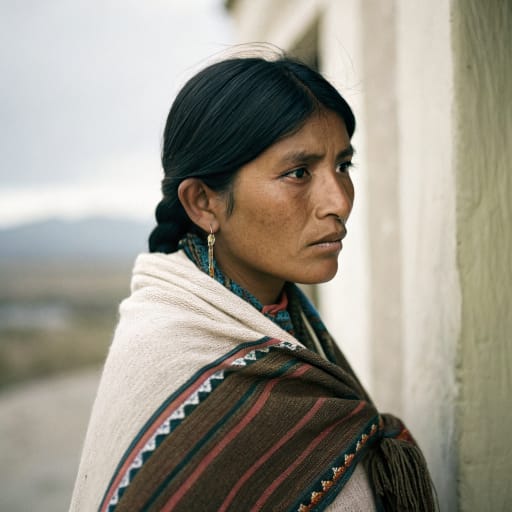
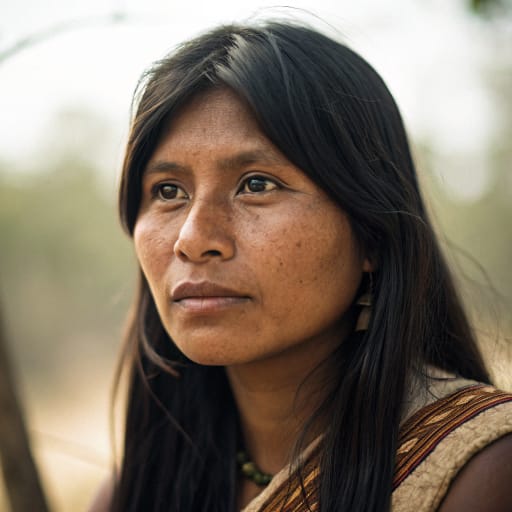
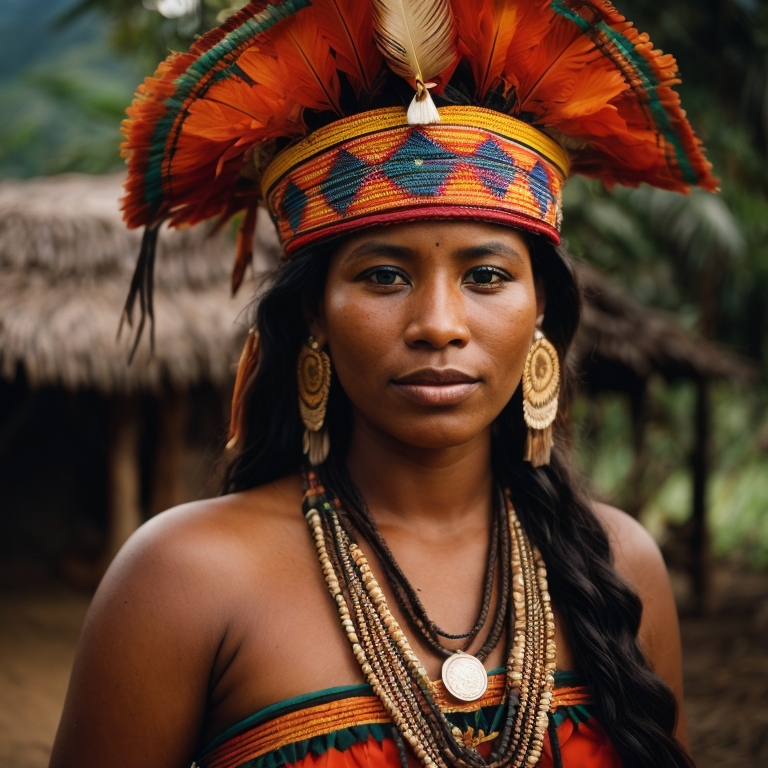
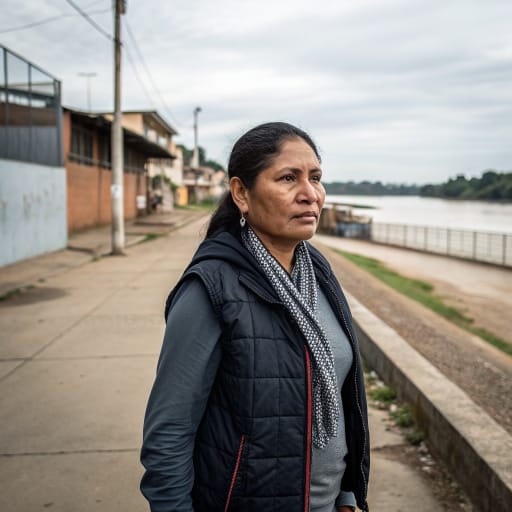
Typical Chácobo Phenotypes
Reference for AI generation: hair, eyes, skin, facial structure, build
Chácobo Body & Anatomy Reference
South American Indigenous / European-Mestizo / Afro-Latino mix phenotype: anatomy reference for AI nude generation
Chácobo Boobs & Breasts
Bust reference for Chácobo women: medium-to-large cup, full, high projection, which is typical of South American Indigenous / European-Mestizo / Afro-Latino mix ancestry. Areolas measure about 32-46mm across, with medium-brown to dark-brown pigmentation. Body type (endomorph-to-mesomorph with high gluteal-femoral deposition) shapes the bust as well, so Chácobo tits are usually the classic Brazilian / Latina curvy bust profile in lowland populations; smaller and shorter-set in Andean Indigenous populations. In AI imagery, keep the forward-set shape rather than drifting toward the smaller bust profile of Andean Indigenous sub-populations.
Chácobo Ass & Hips
The Chácobo ass is typically full, high projection, the famous Brazilian / Latina bunda profile, which sets it apart from the slim narrow-hip East Asian profile. Underneath, the pelvis shows wide iliac crests, very full gluteal-femoral fat deposition (the hallmark Brazilian / Latina hip-to-waist ratio), part of the South American Indigenous / European-Mestizo / Afro-Latino mix skeletal pattern. For Chácobo butt pics and AI renders, match that silhouette and the overall build (endomorph-to-mesomorph with high gluteal-femoral deposition).
Chácobo Vagina & Pussy
Chácobo pussy and vulvar anatomy presents medium-brown to dark-brown labial pigmentation, fuller labia minora, consistent with the South American Indigenous / European-Mestizo / Afro-Latino mix phenotype's pigmentation pattern. Chácobo pubic hair is typically wavy-to-curly coarse dark texture, dense distribution, in the inverted-triangle pattern. For anatomically accurate Chácobo pussy renders the labial coloration should match the surrounding tan to deep-brown skin tone with a continuous gradient, and the hair should keep its wavy-to-curly coarse dark texture.
Chácobo Dicks & Penis
Chácobo dicks follow the South American Indigenous / European-Mestizo / Afro-Latino mix reference data: regional mean ~13cm erect; moderate-to-above-average girth; medium-brown shaft pigmentation. Shaft color should track the tan to deep-brown skin tone with a smooth change toward the glans, and Chácobo pubic hair keeps its wavy-to-curly coarse dark texture.
Chácobo Body, Curves & Build
Chácobo body type and overall build presents as endomorph-to-mesomorph with high gluteal-femoral deposition, with mean adult female BMI 25-28: the characteristic South American Indigenous / European-Mestizo / Afro-Latino mix habitus. Chácobo curves and proportions should keep the regional skeletal frame (height, shoulder-to-hip ratio, limb proportions) rather than a generic mesomorph default.
Chácobo Skin Tone & Hair Texture
Chácobo skin sits in the tan to deep-brown (Fitzpatrick III-VI) band. Hair is typically straight-to-curly 1A-3C, varies widely by ancestral composition, in keeping with the South American Indigenous / European-Mestizo / Afro-Latino mix phenotype. In nude renders the skin should stay one even tone from face to body, and body, pubic and head hair should match.
Explore phenotype categories
Structured taxonomy with peer-reviewed scales · 22 anatomical categories
Erotic Poses & Sex Positions
From the pose catalog: 219 named positions with reference skeletons
Frequently asked questions about Chácobo people
Where is the Chácobo homeland?
The Chácobo homeland is Northern Beni Department, Bolivia, along the Ivon, Benicito and Yata rivers near Riberalta in South America.
What language do Chácobo people speak?
Chácobo people primarily speak Chácobo (Panoan), closely related to Pacahuara; Spanish widely spoken as a second language.
What religion do Chácobo people practice?
The predominant religion among Chácobo people is Mostly evangelical Protestant, following missionary work that began in the 1950s, with older beliefs about the forest and healing still present.






Make your own Chácobo images
Five a day, free, no credits to buy. The studio starts from this group's phenotype data, so you can set body type, pose and style and keep the traits accurate.
Start with Chácobo