No portrait yet
Zenú Erotic
The Sinú and San Jorge river valleys of Córdoba and Sucre, Colombia, with communities in the Urabá region of Antioquia
Spanish (Indo-European); the ancestral Zenú language is extinct and its family unclassified
Roman Catholic, with local devotions and syncretic practice
Historically the provinces of Finzenú, Panzenú and Zenúfana; today organized through the resguardo of San Andrés de Sotavento and communities in Urabá
About Zenú People
The Zenú are known first for what they built. In the floodplains of the San Jorge and Sinú rivers, in the Caribbean lowlands of what is now Colombia, their ancestors cut a network of canals across the wetlands: long channels running with the current, shorter ones branching off in a fishbone pattern, spreading the annual flood over the fields instead of letting it wreck them. The system covered something on the order of half a million hectares and was maintained for roughly a thousand years, ending centuries before any Spaniard saw it. Colonial accounts describe a confederation of three provinces: Finzenú in the Sinú valley, which held the ceremonial center and the dead; Panzenú on the San Jorge, which grew the food; and Zenúfana on the lower Cauca and Nechí, which controlled metal. Zenú goldsmiths cast in false filigree, laying up wax threads into ear ornaments and staff finials and then casting them solid. That gold is also why the conquest landed the way it did: Spanish parties went at the burial mounds of the Sinú directly, digging for grave goods, and tomb looting became a trade with its own name in Colombian Spanish, guaquería.
Today the Zenú are one of the largest Indigenous populations in Colombia, counted in the hundreds of thousands, concentrated in Córdoba and Sucre with communities out in the Urabá region of Antioquia. Continuity has not been gentle. The colonial resguardo of San Andrés de Sotavento was dissolved by law in the early twentieth century, ranchers took the land, and getting parts of it back took decades of organizing, including the peasant land occupations that swept Córdoba and Sucre in the 1970s. The ancestral language is gone, and it was never documented well enough for anyone to say confidently what it was related to. People speak coastal Spanish and are, for the most part, Catholic in a local register. What has held is craft. Caña flecha, an arrow cane that grows in wet ground, is split into fine strips, part left pale and part dyed black with mud and plant dye, then braided into flat bands and coiled into the sombrero vueltiao. The braid count is the grade: a fifteen-vuelta hat is workaday, a twenty-seven is soft enough to roll up and carry, and the black and white figures worked into the band have names. Colombia made the hat a national cultural symbol in 2004, which put it on every souvenir stand in the country and did comparatively little for the weavers in Tuchín who make it.
Related ethnic groups
Groups that share Zenú's homeland, region, language, or religious tradition. These are likely candidates for comparative phenotype reference.
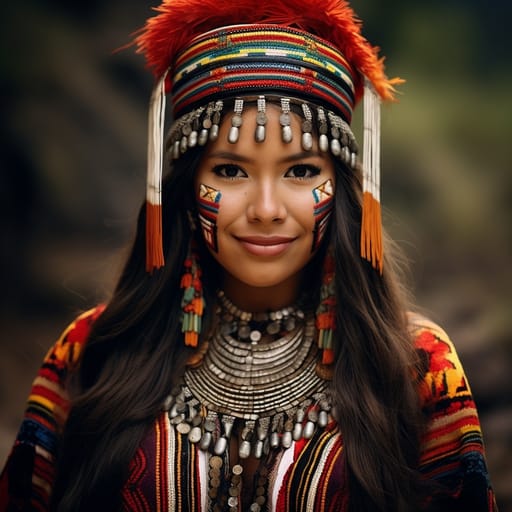
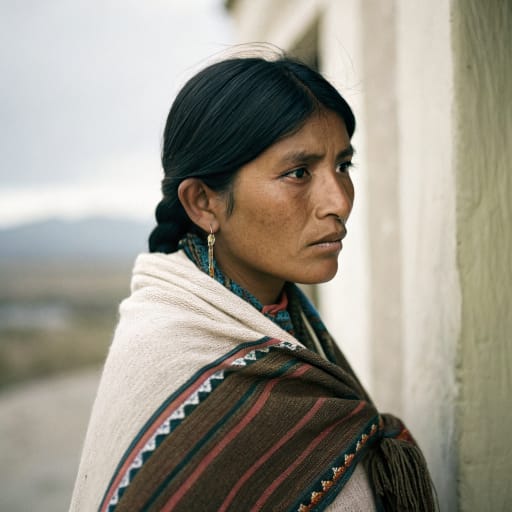
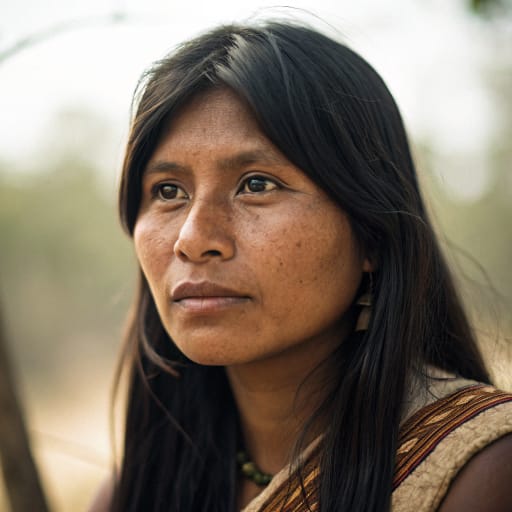
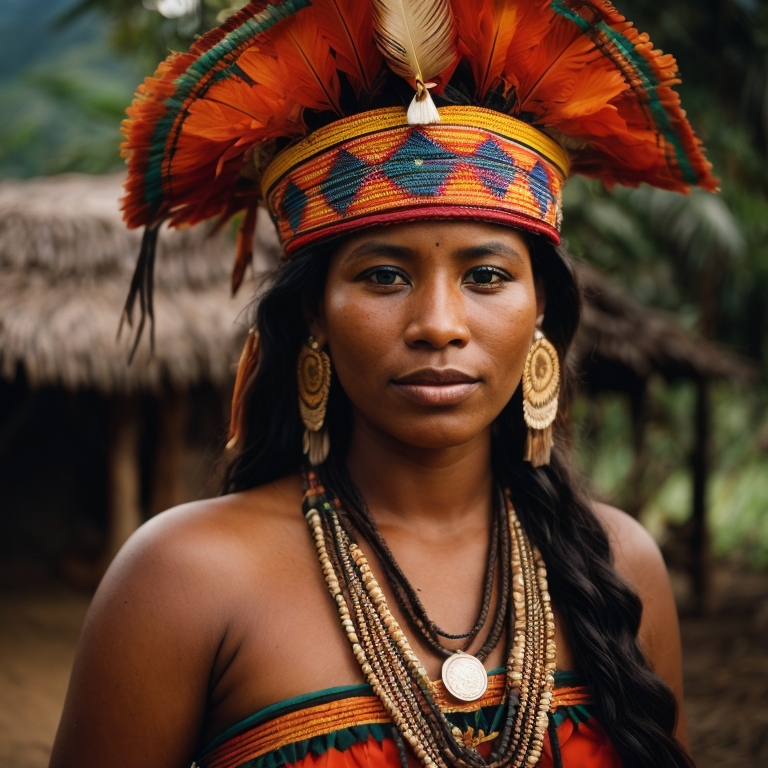
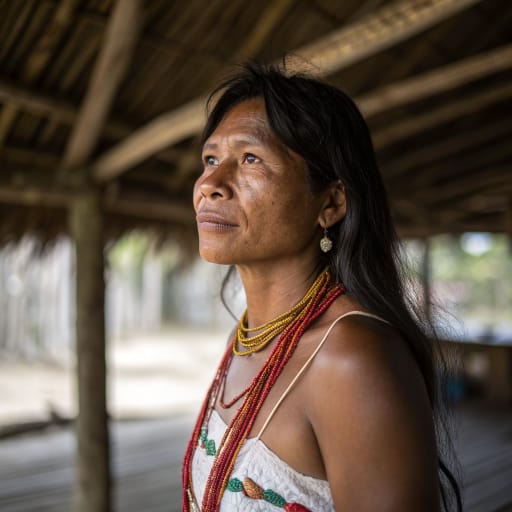
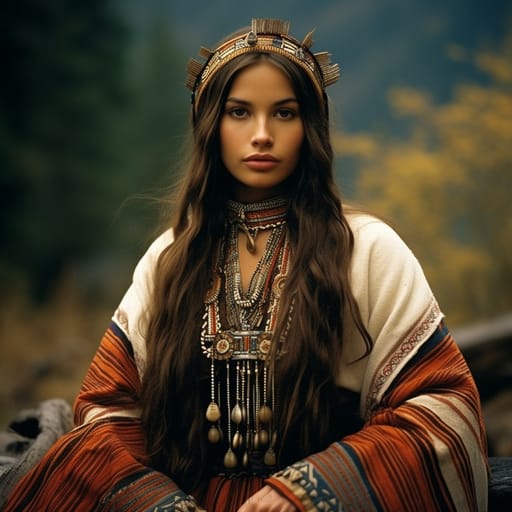
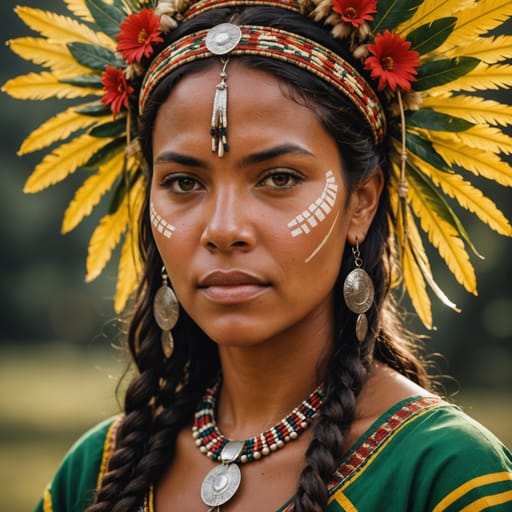
Typical Zenú Phenotypes
Reference for AI generation: hair, eyes, skin, facial structure, build
Zenú Body & Anatomy Reference
Per-feature anatomical profile for AI nude generation: South American Indigenous / European-Mestizo / Afro-Latino mix phenotype
Zenú Boobs & Breasts
Bust reference for Zenú women: medium-to-large cup, full, high projection, which is typical of South American Indigenous / European-Mestizo / Afro-Latino mix ancestry. Areolas measure about 32-46mm across, with medium-brown to dark-brown pigmentation. Body type (endomorph-to-mesomorph with high gluteal-femoral deposition) shapes the bust as well, so Zenú tits are usually the classic Brazilian / Latina curvy bust profile in lowland populations; smaller and shorter-set in Andean Indigenous populations. In AI imagery, keep the forward-set shape rather than drifting toward the smaller bust profile of Andean Indigenous sub-populations.
Zenú Ass & Hips
The Zenú ass is typically full, high projection, the famous Brazilian / Latina bunda profile, which sets it apart from the slim narrow-hip East Asian profile. Underneath, the pelvis shows wide iliac crests, very full gluteal-femoral fat deposition (the hallmark Brazilian / Latina hip-to-waist ratio), part of the South American Indigenous / European-Mestizo / Afro-Latino mix skeletal pattern. For Zenú butt pics and AI renders, match that silhouette and the overall build (endomorph-to-mesomorph with high gluteal-femoral deposition).
Zenú Vagina & Pussy
Zenú pussy and vulvar anatomy presents medium-brown to dark-brown labial pigmentation, fuller labia minora, consistent with the South American Indigenous / European-Mestizo / Afro-Latino mix phenotype's pigmentation pattern. Zenú pubic hair is typically wavy-to-curly coarse dark texture, dense distribution, in the inverted-triangle pattern. For anatomically accurate Zenú pussy renders the labial coloration should match the surrounding tan to deep-brown skin tone with a continuous gradient, and the hair should keep its wavy-to-curly coarse dark texture.
Zenú Dicks & Penis
Zenú dicks follow the South American Indigenous / European-Mestizo / Afro-Latino mix reference data: regional mean ~13cm erect; moderate-to-above-average girth; medium-brown shaft pigmentation. Shaft color should track the tan to deep-brown skin tone with a smooth change toward the glans, and Zenú pubic hair keeps its wavy-to-curly coarse dark texture.
Zenú Body, Curves & Build
Zenú body type and overall build presents as endomorph-to-mesomorph with high gluteal-femoral deposition, with mean adult female BMI 25-28: the characteristic South American Indigenous / European-Mestizo / Afro-Latino mix habitus. Zenú curves and proportions should keep the regional skeletal frame (height, shoulder-to-hip ratio, limb proportions) rather than a generic mesomorph default.
Zenú Skin Tone & Hair Texture
Zenú skin sits in the tan to deep-brown (Fitzpatrick III-VI) band. Hair is typically straight-to-curly 1A-3C, varies widely by ancestral composition, in keeping with the South American Indigenous / European-Mestizo / Afro-Latino mix phenotype. In nude renders the skin should stay one even tone from face to body, and body, pubic and head hair should match.
Explore phenotype categories
Structured taxonomy with peer-reviewed scales · 22 anatomical categories
Erotic Poses & Sex Positions
From the pose catalog: 219 named positions with reference skeletons
Frequently asked questions about Zenú people
Where is the Zenú homeland?
The Zenú homeland is The Sinú and San Jorge river valleys of Córdoba and Sucre, Colombia, with communities in the Urabá region of Antioquia in South America.
What language do Zenú people speak?
Zenú people primarily speak Spanish (Indo-European); the ancestral Zenú language is extinct and its family unclassified.
What religion do Zenú people practice?
The predominant religion among Zenú people is Roman Catholic, with local devotions and syncretic practice.






Make your own Zenú images
Five a day, free, no credits to buy. The studio starts from this group's phenotype data, so you can set body type, pose and style and keep the traits accurate.
Start with Zenú